TOC
- 1. What Is Sardonyx?
- 1-1. Sardonyx Quick Facts
- 1-2. Sardonyx vs. Onyx vs. Carnelian: What’s the Difference?
- 2. What Is Sardonyx Made Of? Sard and Onyx Layers
- 3. The History and Meaning of Sardonyx
- 3-1. Sardonyx Spiritual Meaning and Symbolism
- 4. Sardonyx Colors, Types, and Black Sardonyx
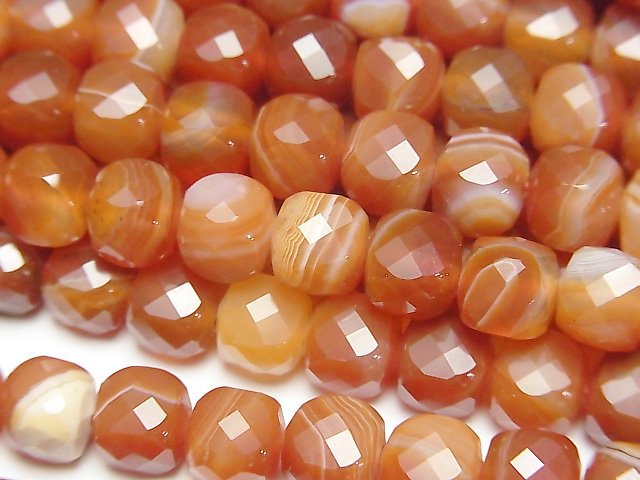
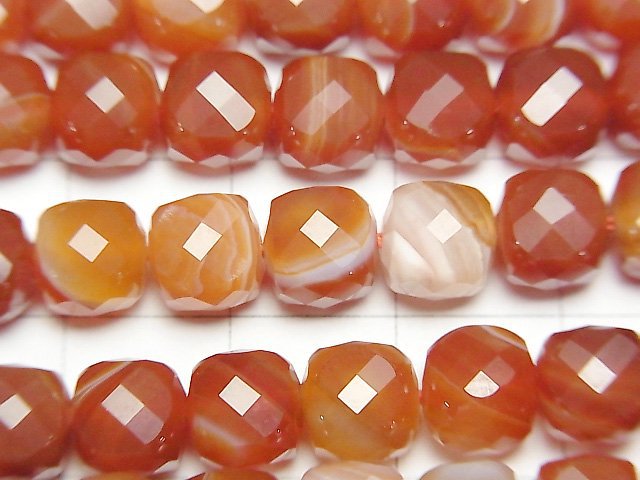
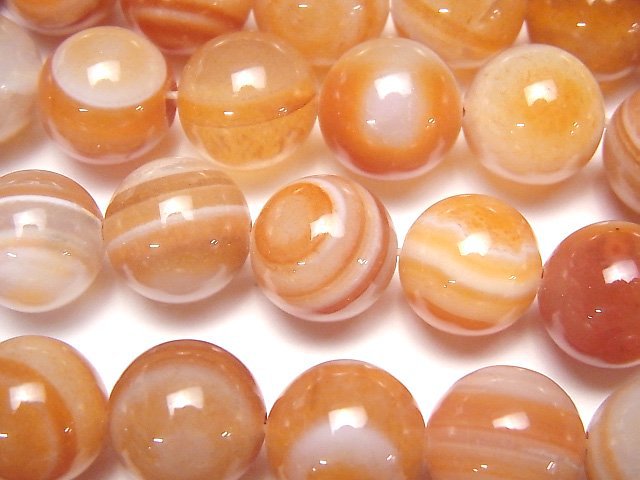
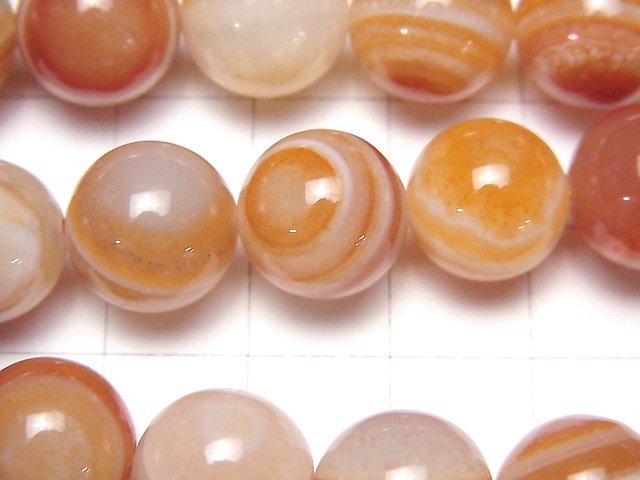
- 4-1. Red-and-White (Bullseye) Sardonyx
- 4-2. Black Sardonyx
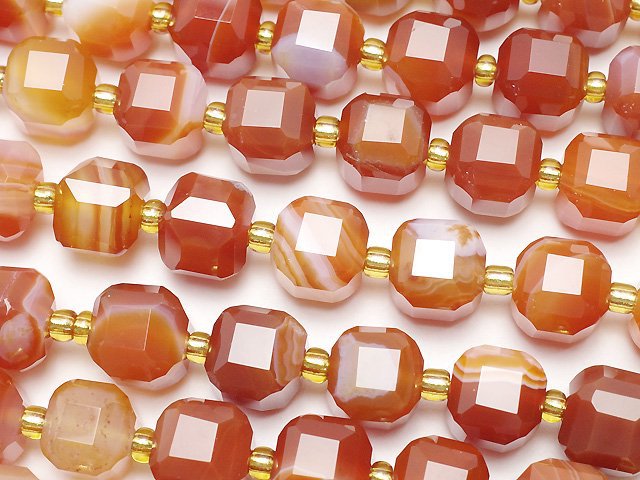
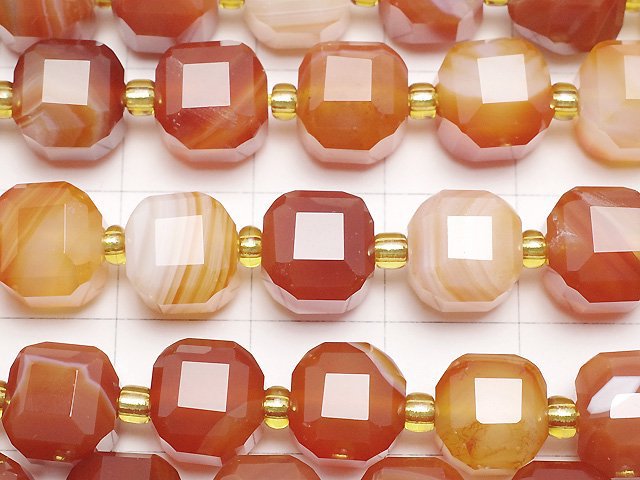
- 4-3. Other Looks and Trade Names
- 5. Sardonyx Metaphysical and Healing Properties
- 5-1. Chakra, Zodiac, Birthstone, and How People Use It
- 6. Sardonyx in History: Cameos, Signet Rings, and the Bible
- 7. Sardonyx Value: How Much Is It Worth?
- 8. How to Use and Care for Sardonyx
- 9. How to Tell Real Sardonyx
- 10. Frequently Asked Questions About Sardonyx
- 10-1. What is sardonyx?
- 10-2. What is sardonyx good for, and what does it mean?
- 10-3. What is black sardonyx?
- 10-4. Is sardonyx the same as onyx?
- 10-5. What month is sardonyx a birthstone for?
- 10-6. Is sardonyx dyed, and can it get wet?
- 11. Shop Sardonyx at KenKenGems

What Is Sardonyx?
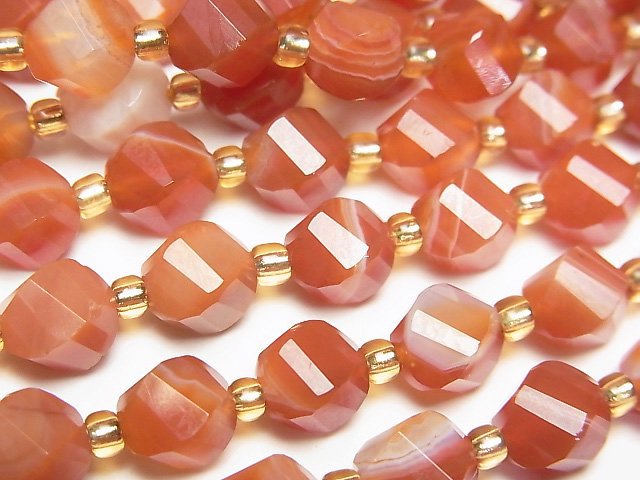
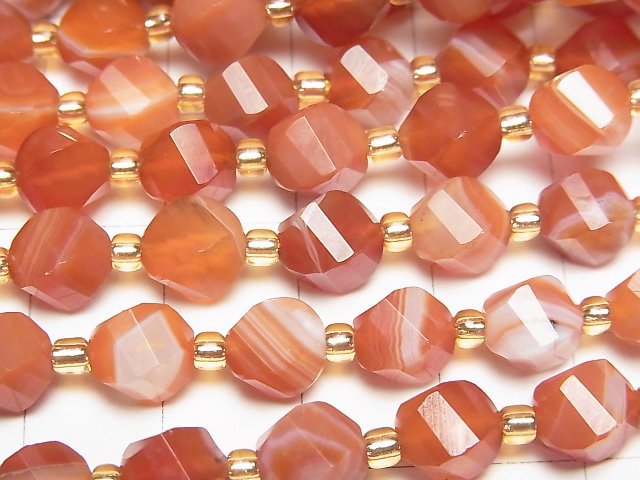
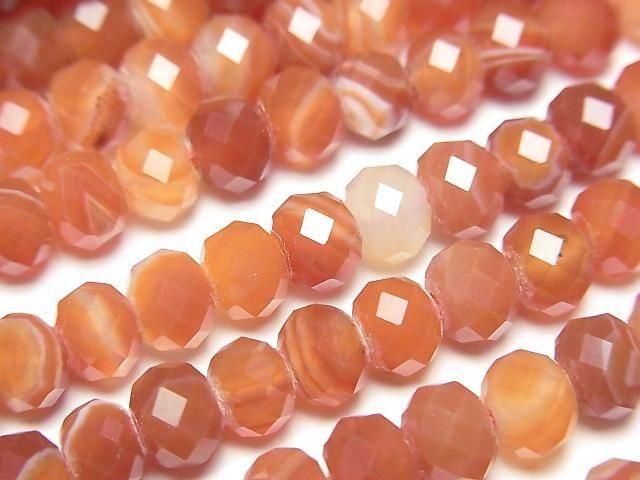
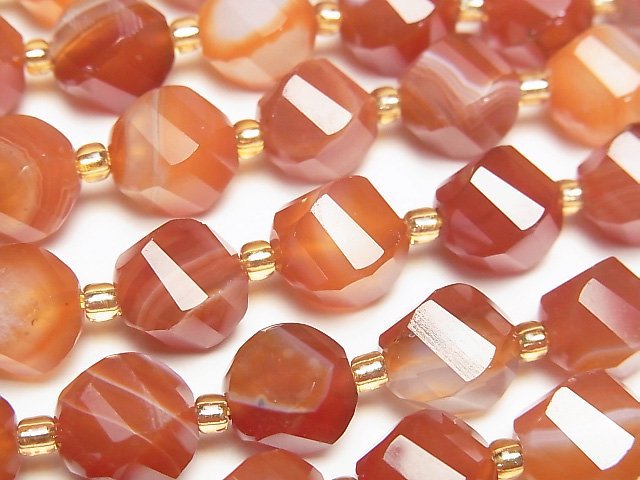
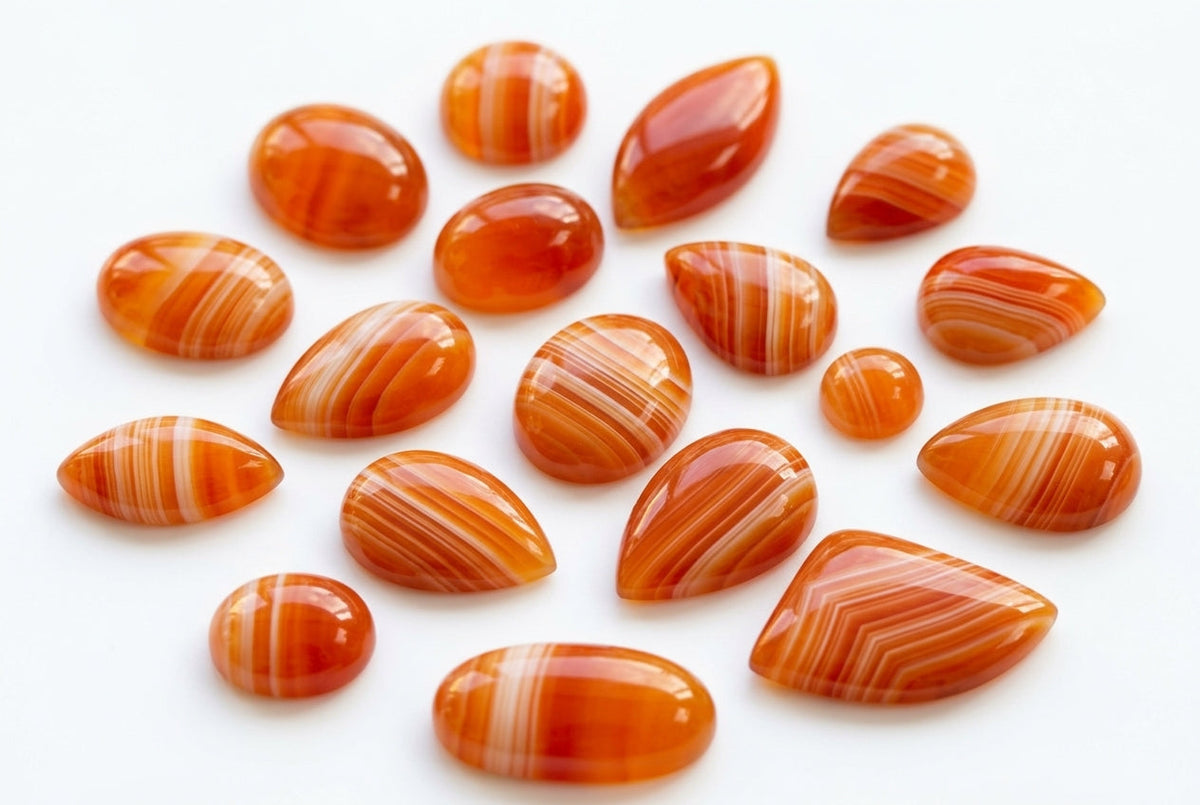
Sardonyx is a banded variety of chalcedony — a form of microcrystalline quartz (SiO2). Its name combines two layered minerals: sard, a warm orange-brown to reddish-brown chalcedony, and onyx, the black-and-white banded variety. Together they create sardonyx’s signature parallel stripes of reddish-brown, cream, black, and white.
Because the bands are straight and clearly defined, the sardonyx stone has been carved for thousands of years into cameos, intaglios, and signet rings. Today it is popular for beads, cabochons, and statement jewelry. Strictly speaking, sardonyx is a banded variety of quartz rather than a single distinct mineral species, which is why you will see the same material called a sardonyx gem, a sardonyx crystal, and a sardonyx stone interchangeably.

Sardonyx Quick Facts
| Property | Detail |
|---|---|
| Mineral | Banded chalcedony (microcrystalline quartz) |
| Chemical formula | SiO2 (silicon dioxide) |
| Hardness (Mohs) | 6.5 – 7 (durable, but softer than many gems) |
| Crystal system | Trigonal (cryptocrystalline) |
| Specific gravity | About 2.60 – 2.65 |
| Transparency | Opaque to translucent |
| Color | Reddish-brown and white bands; also black, cream, orange |
| Composition | Alternating layers of sard and onyx |
| Birthstone | August (with peridot and spinel) |
| Main sources | India, Brazil, Uruguay, Germany, Madagascar, USA |
Sardonyx vs. Onyx vs. Carnelian: What’s the Difference?
All three are chalcedony quartz, so the difference is color and banding. Onyx has parallel bands, most often black and white (and in the jewelry trade "onyx" alone usually means solid black). Carnelian is a solid, fairly translucent orange to red chalcedony with little or no banding. Sard is simply a darker, browner carnelian. Sardonyx is the banded combination — layers of reddish-brown sard alternating with white or black onyx. A quick rule of thumb: even reddish-brown bands beside white or black bands point to sardonyx, while a single even color points to carnelian or onyx.
What Is Sardonyx Made Of? Sard and Onyx Layers
Sardonyx forms the way other chalcedony does: silica-rich fluids deposit microscopic quartz fibers in layers, often lining cavities in volcanic or sedimentary rock. When bands of iron-colored sard alternate with bands of onyx, the result is sardonyx. The reddish-brown of sard comes from traces of iron oxide, while the darker onyx layers can be gray, black, or white.
Because natural banding is prized, much commercial sardonyx and agate is dyed to deepen or even out its colors. This is an old and legitimate craft: the cutting town of Idar-Oberstein, Germany perfected agate dyeing in the 1820s, using iron compounds to enhance reds and carbon to create deep blacks. Reputable sellers disclose any dyeing, and it is normal for banded chalcedony on the market to be color-enhanced.

The History and Meaning of Sardonyx
Sardonyx has been used for at least 4,000–4,500 years, from Ancient Egypt and the Minoan world through Greece and Rome. The "sard" part of the name is usually traced to Sardis, the ancient capital of Lydia (in modern Turkey), while "onyx" comes from the Greek word for a fingernail or claw, a nod to the stone’s translucent banding. The modern mineral name was recorded by the gemologist J.D. Dana in 1837.
Roman soldiers carried sardonyx engraved with Mars, the god of war, believing it lent courage and protection in battle, and the stone’s flat, hard layers made it ideal for signet rings used to press wax seals, because hot wax does not stick to it. In crystal tradition today, sardonyx is described as a stone of strength, protection, and lasting happiness — associations drawn from this long history rather than proven effects.
Sardonyx Spiritual Meaning and Symbolism
Sardonyx meaning centers on willpower, stability, and integrity. In crystal lore the red-and-white "bullseye" type is linked with courage, confidence, and vitality, while black-and-white sardonyx is tied to grounding, discipline, and balance. Many sources also connect its layered patterns with happy, lasting relationships, which is why it has long been given as a wedding or anniversary gift.
These are traditional beliefs and folklore, not medical claims. Crystals and stones are not a substitute for professional medical or mental-health care.
Sardonyx Colors, Types, and Black Sardonyx
Sardonyx is defined by its bands, so most "types" are named for their color combination. The most searched-for looks are below. Because banded chalcedony is often dyed, color names describe appearance rather than a guarantee of natural origin — always ask the seller.
Red-and-White (Bullseye) Sardonyx
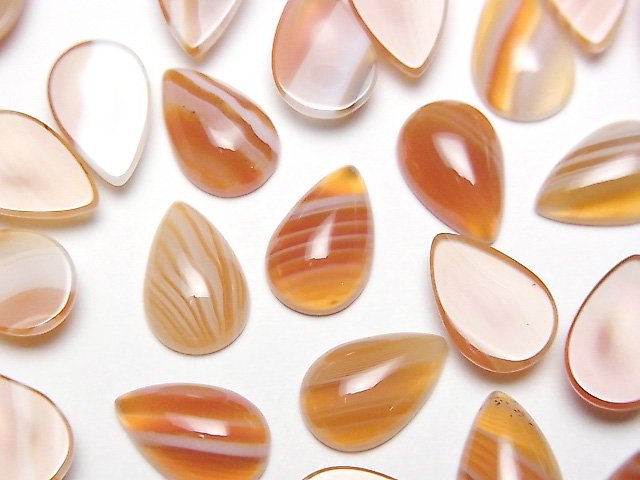
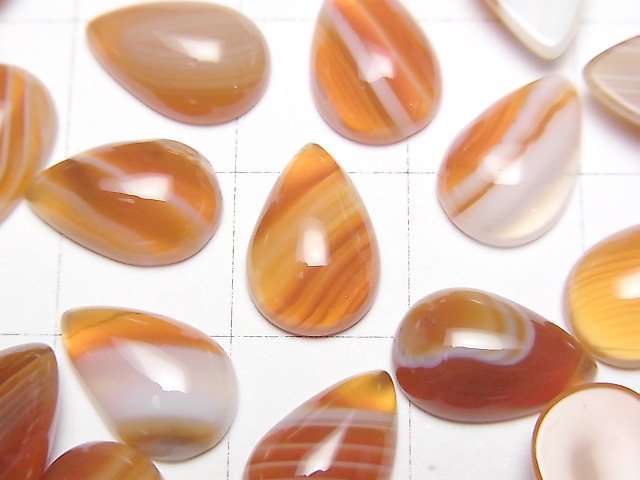
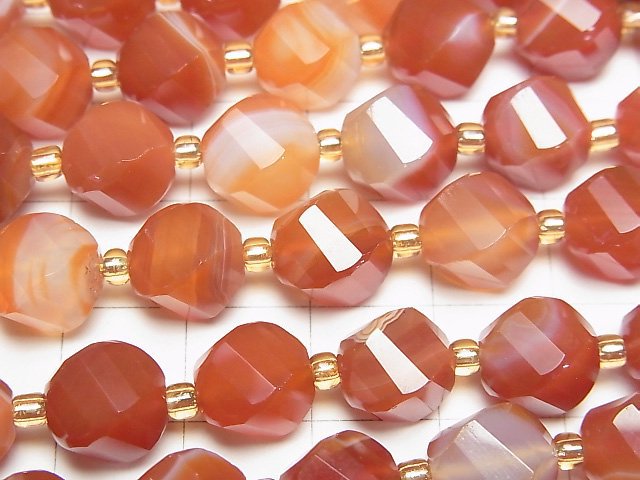
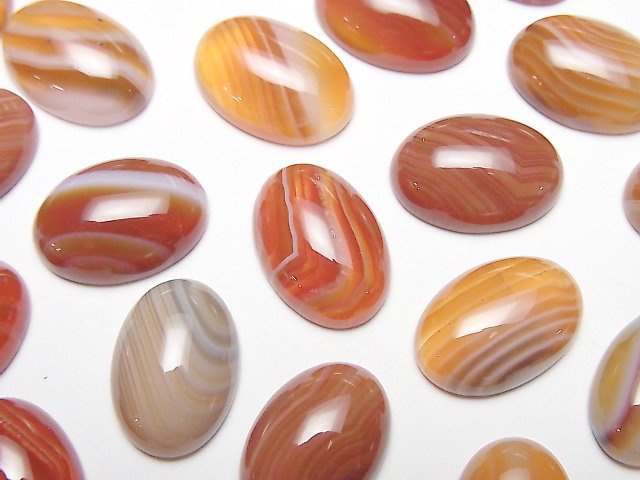
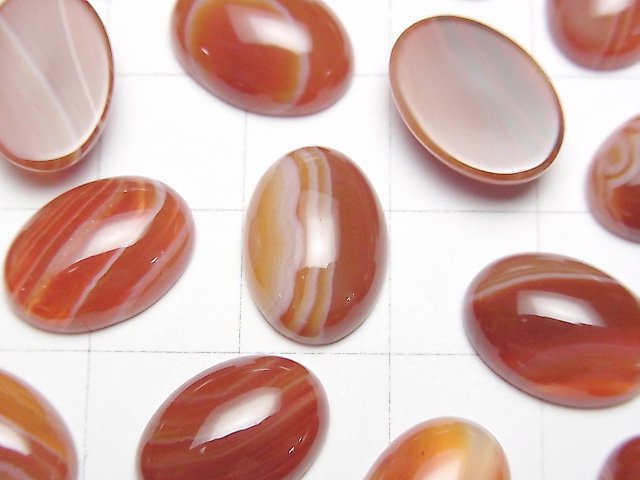
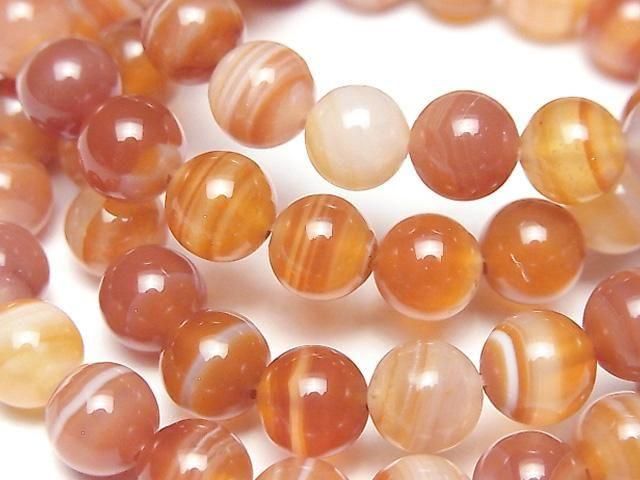
The classic sardonyx shows warm reddish-brown sard alternating with white or cream onyx. When the bands form concentric circles, the stone is called "bullseye" sardonyx, a pattern long favored for carved cameos and talismans. The finest material shows clean, sharp contrast between the light and dark layers, which is one of the main things that sets sardonyx apart from plain carnelian.

Black Sardonyx
Black sardonyx pairs deep black onyx layers with bands of reddish-brown sard (and often white), giving a bold, high-contrast look popular in men’s jewelry, signet rings, and beads. Because truly even, jet-black bands are uncommon in nature, much black sardonyx and onyx on the market is dyed with carbon to deepen the color — a long-standing, accepted treatment that reputable sellers disclose. In crystal lore, black-and-red sardonyx is considered especially grounding and protective.

Other Looks and Trade Names
- Sardian onyx — another name for sardonyx, emphasising the sard (reddish-brown) layer within banded onyx.
- Brown-and-white sardonyx — softer tan-and-cream banding, common in beads and tumbled stones.
- Sard — the solid reddish-brown layer on its own, a darker cousin of carnelian.
- Onyx — the black-and-white (or solid black) banded chalcedony that forms sardonyx’s dark layers.
- Carnelian — a related orange-red chalcedony often sold alongside sardonyx.
Sardonyx Metaphysical and Healing Properties
In crystal-healing tradition, the sardonyx crystal is regarded as a stone of strength, protection, and steady willpower. Practitioners describe it as helping people stay disciplined, communicate clearly, and feel confident — and, because of its historic link to marriage, as a symbol of stable, happy partnerships. Red-brown bands are associated in folklore with energy and courage, black-and-white bands with grounding and focus.
Important: these descriptions reflect folklore and personal practice, not scientific or medical fact. Sardonyx cannot diagnose, treat, cure, or prevent any illness, and it is not a substitute for professional care. These are traditional beliefs, not medical claims.
Chakra, Zodiac, Birthstone, and How People Use It
In tradition, sardonyx is most often linked to the root chakra (and sometimes the sacral), to the planet Mars, the element of fire and earth, and to the zodiac signs Leo and Virgo. It is also recognized as a modern birthstone for August, alongside peridot and spinel. People commonly wear it as beads, a ring, or a pendant, keep a tumbled stone as a pocket piece, or hold it during meditation as a focus for intention — simple practices many enjoy regardless of belief.
Sardonyx in History: Cameos, Signet Rings, and the Bible
Few gems have as rich a record as sardonyx. Its parallel layers let ancient carvers cut down through a pale band into a darker one, creating raised cameos and sunken intaglios with natural light-on-dark contrast. The Assyrians, the Indus Valley civilization, the Mycenaeans, Greeks, and Romans all prized it, and Roman officials used sardonyx signet rings to seal letters and documents in wax.
Sardonyx also appears in the Bible: it is named among the twelve foundation stones of the New Jerusalem in Revelation 21:20, and banded sard/onyx stones are traditionally associated with the High Priest’s breastplate. This deep cultural history is a large part of why sardonyx is still valued today as a meaningful, heirloom-style gem.

Sardonyx Value: How Much Is It Worth?
The sardonyx gemstone is affordable, which is part of its appeal for jewelry makers and collectors. As a rough guide in the US and Canada (prices in USD and not guaranteed, since quality varies): tumbled stones and small beads often run a few dollars each, bead strands commonly fall around $8–$30 depending on size and banding, and finely carved cameos or crisp bullseye cabochons command more. Antique hand-carved pieces can be worth considerably more for their craftsmanship.
Value comes down to color contrast, banding, and finish: clean, well-defined bands of rich red-brown against bright white or deep black, an even polish, and intact (uncracked) material raise a piece’s worth. Because much sardonyx is dyed, naturally colored stones with sharp banding are generally more prized — another reason to buy from sellers who disclose any treatment.
How to Use and Care for Sardonyx
At about 6.5–7 on the Mohs scale, sardonyx is durable enough for everyday jewelry such as earrings, pendants, bracelets, and beads, and it is a classic choice for signet rings and carved cameos. Like all chalcedony it can still be scratched by harder gems or chipped by a sharp knock, so set rings in protective mountings and store pieces separately.
Care is simple: clean with lukewarm water, mild soap, and a soft brush or cloth. Avoid harsh household chemicals, and skip ultrasonic and steam cleaners — especially for dyed stones, which can be sensitive to heat. Keep sardonyx out of prolonged direct sunlight, as color-enhanced material can fade over time.
How to Tell Real Sardonyx
Genuine sardonyx shows natural, slightly irregular parallel banding, a cool and fairly dense feel, and a quartz-hard surface (about 6.5–7 Mohs) that will not scratch with a steel blade. Warning signs of imitation include a warm, light, plasticky feel (dyed glass or plastic), perfectly even color with no natural variation, and bands that look printed rather than layered.
Dyeing is not fakery — it is a normal, centuries-old treatment — but it should be disclosed, because naturally colored stones are usually more valuable. When buying, ask whether the color is natural or enhanced, and favor sellers who state the stone’s treatment and origin as standard.

Frequently Asked Questions About Sardonyx
What is sardonyx?
To define sardonyx simply: it is a banded variety of chalcedony quartz made of alternating layers of sard (reddish-brown) and onyx (black and white). This sardonyx stone has been used for thousands of years for cameos, signet rings, and beads, and is a birthstone for August.
What is sardonyx good for, and what does it mean?
In tradition, sardonyx symbolizes strength, protection, courage, and lasting happiness, and it is often given to support stable relationships. These are folkloric meanings, not medical claims. Practically, it is a durable, affordable gem for everyday jewelry.
What is black sardonyx?
Black sardonyx has deep black onyx bands combined with reddish-brown sard (often with white). Because even, jet-black bands are uncommon in nature, much black sardonyx is dyed with carbon — a long-standing treatment that reputable sellers disclose.
Is sardonyx the same as onyx?
No. Onyx is banded (usually black-and-white) chalcedony, and in the trade "onyx" alone often means solid black. Sardonyx adds bands of reddish-brown sard, so it is the layered sard-plus-onyx combination rather than plain onyx.
What month is sardonyx a birthstone for?
Sardonyx is a birthstone for August, along with peridot and spinel. It is also traditionally linked to the zodiac signs Leo and Virgo.
Is sardonyx dyed, and can it get wet?
Much sardonyx is color-enhanced (dyed), which is normal and should be disclosed. It is fine to rinse briefly in water, but avoid long soaks, harsh chemicals, ultrasonic or steam cleaners, and prolonged sunlight, especially for dyed stones.
Shop Sardonyx at KenKenGems
Ready to add sardonyx to your designs or collection? KenKenGems supplies sardonyx and related chalcedony as bead strands, tumbled stones, and cabochons, chosen for clear banding and clean polish. Prices are listed in USD, with shipping across the United States and Canada. Browse the collection to find the red-and-white or black banding that speaks to you.