

TOC
- 1. What Is Kyanite?
- 2. Kyanite Meaning and Symbolism
- 2-1. Kyanite Spiritual Meaning
- 2-2. Blue, Black, Green and Other Kyanite Colors
- 3. Kyanite Properties: Physical and Chemical
- 4. History and Industrial Uses of Kyanite
- 5. Kyanite Value: How Much Is It Worth?
- 6. Kyanite Healing Properties (Traditional Beliefs)
- 7. Kyanite Metaphysical Properties
- 7-1. Kyanite and the Chakras
- 7-2. Kyanite Crystal Benefits
- 8. Kyanite and Zodiac Signs
- 9. Kyanite vs Sapphire and Other Blue Stones
- 10. How to Identify and Care for Kyanite
- 11. Frequently Asked Questions About Kyanite
- 11-1. What is kyanite?
- 11-2. What does kyanite mean spiritually?
- 11-3. Which chakra is kyanite?
- 11-4. Does kyanite need to be cleansed?
- 11-5. Is blue kyanite natural or treated?
- 11-6. How much is kyanite worth?
- 11-7. Is kyanite a good stone for a ring?
- 11-8. Can kyanite get wet?
- 12. Shop Kyanite at KenKenGems

What Is Kyanite?
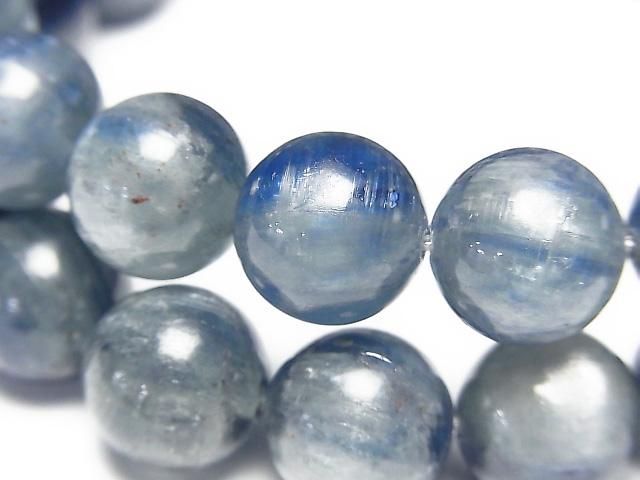
Kyanite is a blue aluminum silicate mineral (chemical formula Al2SiO5) prized for its calm, sapphire-like color and silky-to-pearly sheen. Its name comes from the Greek kyanos, meaning "blue," and while blue is by far the best-known shade, kyanite also occurs in green, black, gray, orange, yellow, and indigo. Long overlooked next to flashier blue gems, the kyanite crystal has become a favorite among collectors and crystal enthusiasts alike.
Mineralogically, kyanite forms as long, bladed crystals in a triclinic crystal system and is one of three minerals that share the Al2SiO5 formula. Its two relatives, andalusite and sillimanite, are polymorphs: same chemistry, different structures created at different pressures and temperatures. Kyanite is the high-pressure form, which is why geologists treat its presence in metamorphic rock as a clue to how a rock formed.

Kyanite Meaning and Symbolism
In crystal tradition, the meaning of kyanite centers on communication, clarity, and "alignment." It is often described as a stone of self-expression and honest speech, and as a symbolic "bridge" said to bring different energies into balance.
One of kyanite's best-known associations is the idea that it does not hold onto negative energy. Because of this, some crystal traditions say kyanite rarely needs energetic cleansing or recharging. This is a traditional belief rather than a proven property of the stone, and it is one reason kyanite has such a devoted following in the crystal community. These are cultural and spiritual meanings, not statements of fact or medical claims.
Kyanite Spiritual Meaning
Spiritually, kyanite is described in folklore as a stone of alignment and honest expression. Practitioners traditionally associate it with clearing mental fog, encouraging calm and truthful communication, and supporting meditation by helping quiet the mind.
Because it is said not to accumulate negativity, kyanite is often used in crystal practice as an energetic "tuning" stone to bring intentions into balance. These are traditional beliefs and personal experiences, not medical claims or proven psychological effects.
Blue, Black, Green and Other Kyanite Colors
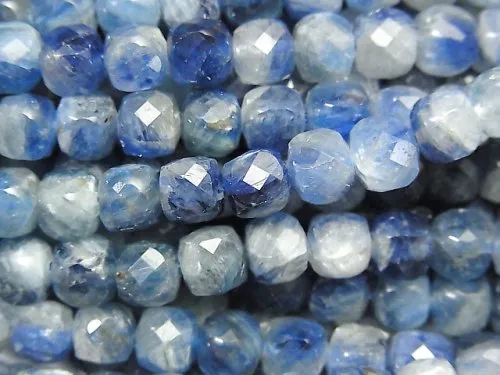
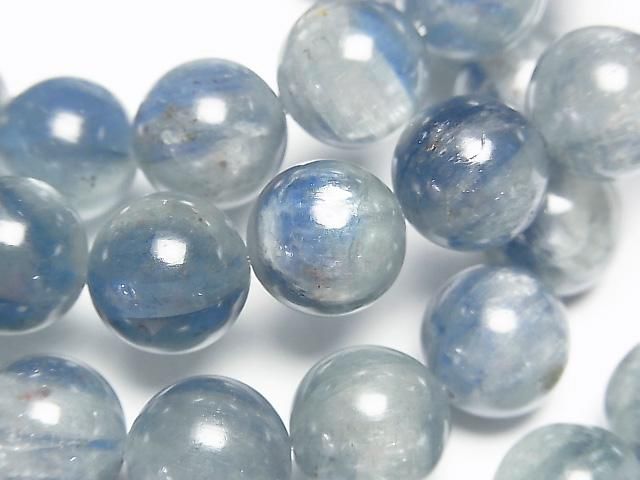
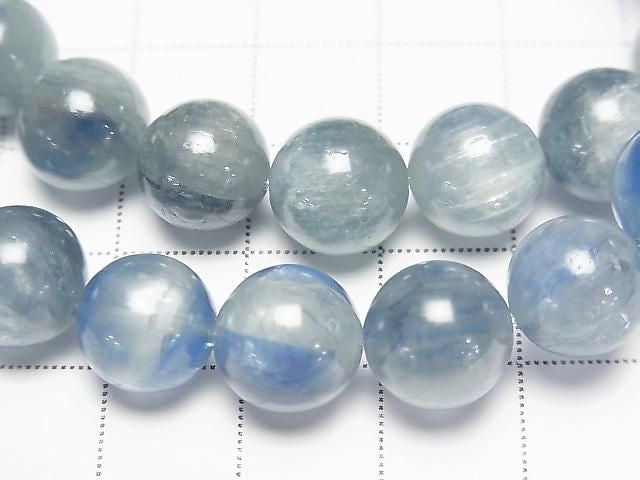
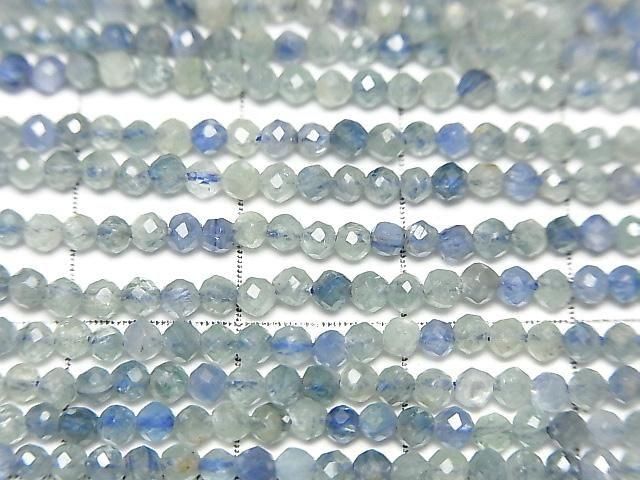
All kyanite shares the same mineral identity; color comes from trace elements such as titanium, iron, manganese, and chromium, and from an optical effect called pleochroism (the stone can show different hues from different viewing angles).
- Blue kyanite — the classic, most sought-after variety, ranging from pale sky blue to deep indigo. In lore it is linked to the throat chakra and clear communication. Blue kyanite's color is typically natural.
- Black kyanite — often found in fan-shaped or bladed "broom" clusters; associated in tradition with grounding and protection.
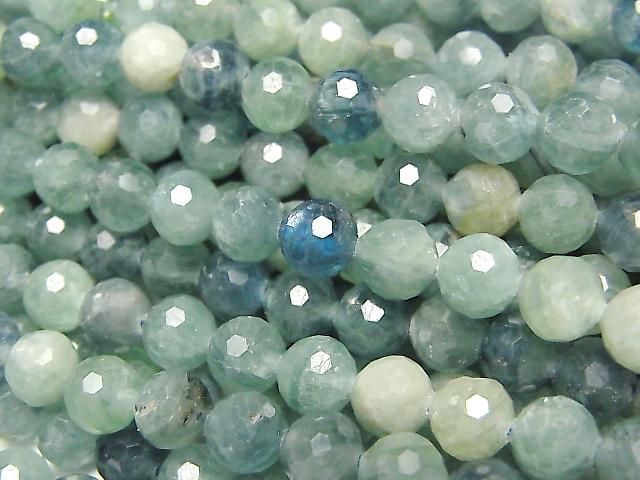
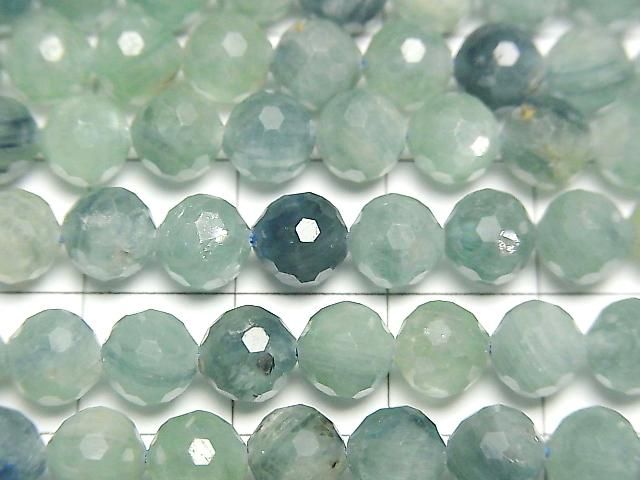
- Green kyanite — a rarer color tied in lore to the heart. Note that some green and teal material on the market may be color-treated (see disclosure below).
- Orange kyanite — a scarce color, mainly from Tanzania, colored by manganese.
- Ruby in kyanite — a decorative combination of red corundum (ruby) in a blue-green kyanite matrix, popular for cabochons and beads.
- Gray, yellow and indigo — additional natural shades, sometimes with color zoning within a single crystal.
Treatment and disclosure: Blue kyanite is generally sold in its natural color. However, some green, teal, or unusually vivid stones (and some "kyanite" beads) can be dyed, heat-treated, or coated to enhance or change color. Reputable sellers disclose any treatment. At KenKenGems we describe our kyanite honestly, and if a stone has been treated we say so.
Kyanite Properties: Physical and Chemical
Kyanite's most remarkable feature is its anisotropic (directional) hardness — it is noticeably harder across the crystal than along its length. Along the length of a blade it registers roughly 4.5–5 on the Mohs scale, while across the width it climbs to about 6.5–7 (some references cite a range of 4 to 7.5 depending on direction). This unusual behavior is why an older name for the stone is disthene, from the Greek for "two strengths."
Formed under great pressure in metamorphic rock, kyanite has a silky-to-pearly luster, perfect cleavage in one direction, and long bladed crystals. Its directional hardness and easy cleavage make it beautiful but genuinely tricky to cut and set.
| Property | Value |
|---|---|
| Mineral / class | Aluminum silicate (nesosilicate) |
| Chemical formula | Al2SiO5 |
| Crystal system | Triclinic; bladed, columnar, sometimes fibrous habit |
| Mohs hardness | ~4.5–5 along the blade; ~6.5–7 across it (anisotropic) |
| Specific gravity | 3.53–3.68 |
| Refractive index | ~1.71–1.73 |
| Birefringence | 0.012–0.016 |
| Cleavage | Perfect in one direction; splintery fracture; brittle |
| Luster | Vitreous to pearly / silky |
| Pleochroism | Trichroic — colorless to pale blue to blue |
| Color | Blue (most common); also green, black, gray, orange, yellow, indigo |
| Color cause | Trace titanium, iron, manganese, chromium |
| Polymorphs | Andalusite (low pressure), sillimanite (high temperature) |
| Name origin | Greek kyanos, "blue" (also called disthene) |
| Main sources | Brazil, Nepal, India, Myanmar, Kenya, Tanzania, USA, Switzerland, Austria |
History and Industrial Uses of Kyanite
Because kyanite forms deep underground under intense pressure, it was largely unknown to ancient cultures, and those who did find it often mistook it for sapphire. Its story really began in the 20th century, when its heat- and chemical-resistant (refractory) qualities made it valuable in industry.
Today, most mined kyanite goes to industry rather than jewelry. When heated, kyanite converts to mullite, a tough, heat-stable mineral used across many high-temperature products:
- Refractory bricks, mortars, and kiln furniture for high-temperature furnaces
- Foundry molds for casting high-temperature metals
- Porcelain spark-plug insulators, sinks, and sanitary ware
- Grinding and cutting wheels, where it acts as a heat-resistant binder
- Brake shoes and clutch facings (via mullite) in the automotive and rail industries
In jewelry, kyanite is popular as an affordable, sapphire-like blue, though its complex internal structure lets experts tell it apart from true sapphire.
Kyanite Value: How Much Is It Worth?
Kyanite value depends mainly on color, transparency, cut, and size. Deep, evenly saturated blue commands the most, followed by clean, well-cut stones. Because its directional hardness and cleavage make faceting difficult, gem-quality faceted kyanite is relatively scarce.
- Faceted gem-quality kyanite: generally around $150–$300 per carat (USD), with rich, even blue at the top of the range.
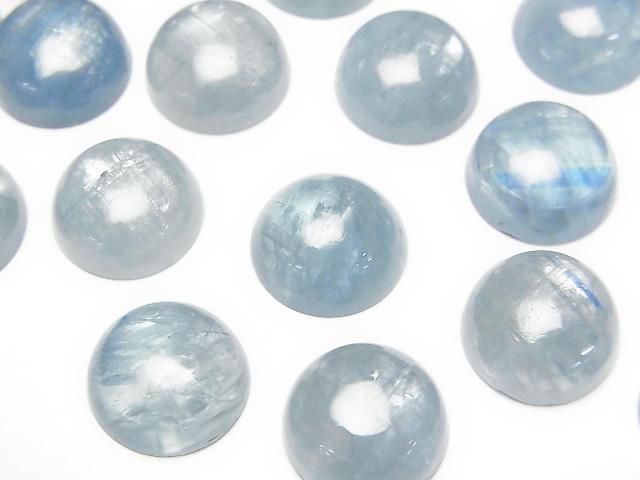
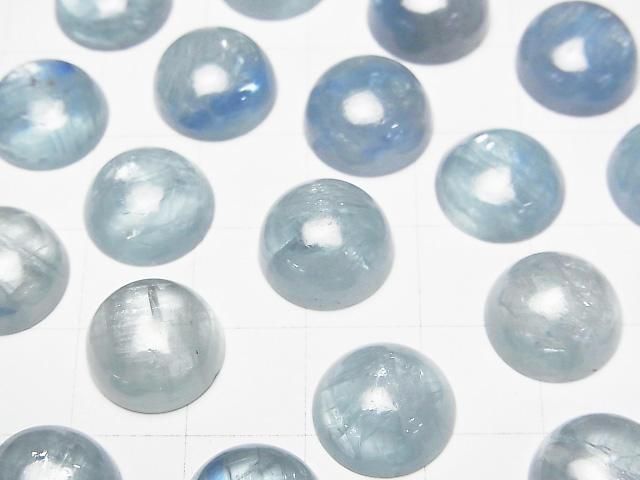
- Ornamental (translucent to opaque) kyanite: more affordable, with cabochons roughly $100–$150 per carat (USD); these show a silky, pearlescent shimmer and occasionally a cat's-eye effect.
- Beads and rough: the most accessible way to enjoy kyanite, priced by strand or by weight.
As with any gemstone, prices vary by seller and quality. Choose kyanite for its color and beauty that you will enjoy, rather than as a financial investment.

Kyanite Healing Properties (Traditional Beliefs)
In crystal-healing tradition, kyanite is described as a calming, clarifying stone associated with balance and clear communication. It is important to understand these as traditional beliefs and personal practices, not medical facts.
These are traditional beliefs, not medical claims. Kyanite and other crystals are not medicine. They cannot diagnose, treat, cure, or prevent any illness or condition, and they are not a substitute for professional medical care. Any sense of calm that comes from a mindful routine is a personal experience rather than a property of the stone itself.
Within crystal traditions, kyanite is used as a meditative aid — a symbolic tool for feeling centered and expressing yourself clearly.

Kyanite Metaphysical Properties
In folklore, kyanite stands out as a stone said not to absorb negative energy — instead it is described as accumulating positive, high-frequency energy, which is why it is a traditional favorite among people who work closely with others. In crystal lore it is also associated with focus, determination, and clear decision-making (a popular "success" stone for entrepreneurs), with harmony between partners, and with calm for hot-tempered temperaments.
Historically, kyanite was even used as a rudimentary compass, suspended on a thread to point north. These are cultural and spiritual beliefs, not established facts or medical claims.

Kyanite and the Chakras
In crystal tradition, kyanite is best known as a throat-chakra (Vishuddha) stone for communication and truth, and it is also linked to the third-eye chakra for intuition. In folklore, kyanite is said to help align and balance the chakras, which is why practitioners use it as a "tuning" stone in energy work. Black kyanite is more often used for grounding, and green kyanite for the heart.
A common practice is to place kyanite at the throat or brow during meditation to focus on clear expression and insight. These are traditional beliefs, not medical claims.
Kyanite Crystal Benefits
Within crystal lore, kyanite is traditionally associated with:
- Clear communication and honest self-expression
- Mental clarity and calm focus
- Energetic balance and "alignment"
- Not holding negativity — in crystal lore, said to rarely need cleansing
These descriptions reflect spiritual traditions and personal experiences, not proven physical or psychological effects, and are not medical claims.
Kyanite and Zodiac Signs
Kyanite is not a traditional birthstone, but in astrological lore it is linked to several signs. It is described as an encouraging stone for Cancer, Libra, and Pisces — said in tradition to awaken confidence and optimism — and as a focusing aid for Sagittarius and Gemini. Taurus and Aries are associated with its energizing, creative side, and Aquarius with protection from negativity.
As with all such lore, this reflects tradition and personal preference rather than established fact.
Kyanite vs Sapphire and Other Blue Stones
Because blue kyanite can look like sapphire at a glance, it helps to know how it compares with other popular blue gems. Kyanite is softer and more directional than most, so identification often comes down to hardness, luster, and its telltale bladed, striated crystals.
| Stone | Mohs hardness | How to tell it apart |
|---|---|---|
| Kyanite | 4.5–7 (directional) | Bladed crystals, silky sheen, visible striations, strong pleochroism |
| Blue sapphire | 9 | Much harder and more uniform; higher brilliance and no cleavage |
| Tanzanite | 6–7 | Strong violet-blue pleochroism; softer and more heat-sensitive |
| Aquamarine | 7.5–8 | Lighter sea-blue, hexagonal crystals, higher hardness |
| Blue topaz | 8 | Very clean, often treated blue; harder with different cleavage |
| Iolite | 7–7.5 | Also strongly pleochroic but harder and usually more violet |
Kyanite is not a substitute for sapphire in value, but it offers a similar blue at a far more accessible price, which is a large part of its appeal.
How to Identify and Care for Kyanite
A few practical points help you buy and keep kyanite well:
- Durability from its structure: Kyanite's directional hardness and perfect cleavage mean it can scratch or split more easily along the length of the blade than across it. This is normal for the mineral, not a defect — it simply means kyanite needs gentler handling than a harder stone like sapphire.
- Best jewelry uses: Because of that fragility, kyanite is best set in protective mountings, or worn as earrings, pendants, and brooches rather than in rings that take daily knocks.
- Vs sapphire: Kyanite is softer, shows bladed crystals and a silky sheen, and often has visible internal striations, while sapphire is harder and more uniform.
- Cleaning: Clean with lukewarm water, mild soap, and a soft cloth. Avoid ultrasonic and steam cleaners and harsh chemicals, and store pieces separately to prevent knocks and scratches.
- Treatment check: Blue kyanite is usually natural in color, but ask your seller to disclose any dyeing, heat treatment, or coating — especially for very vivid green, teal, or dyed bead material.
In crystal tradition, kyanite is also said to rarely need energetic cleansing — a folklore belief that many collectors enjoy, though it has no bearing on the physical care above.
Frequently Asked Questions About Kyanite
What is kyanite?
Kyanite is a blue aluminum silicate mineral (Al2SiO5) known for its silky sheen, bladed crystals, and the unusual trait of being harder across the crystal than along its length.
What does kyanite mean spiritually?
In crystal tradition, kyanite is associated with communication, clarity, and "alignment," and is known in lore for not holding onto negative energy. These are traditional beliefs, not medical claims.
Which chakra is kyanite?
Kyanite is mainly a throat-chakra stone in folklore and is also linked to the third eye; some traditions say it helps align the chakras. This is a cultural belief rather than an established fact.
Does kyanite need to be cleansed?
In crystal tradition, kyanite is one of the few stones said to rarely need energetic cleansing because it is believed not to accumulate negativity. This is folklore, not a physical property.
Is blue kyanite natural or treated?
Blue kyanite is typically natural in color. Some green, teal, or vivid stones and dyed beads may be color-treated, so ask your seller to disclose any dyeing, heat treatment, or coating.
How much is kyanite worth?
Faceted gem-quality kyanite runs roughly $150–$300 per carat (USD); ornamental cabochons are more affordable at about $100–$150 per carat. Prices vary by color, clarity, and seller.
Is kyanite a good stone for a ring?
Kyanite can be worn in rings, but because of its directional hardness and cleavage it is safest in protective settings; earrings, pendants, and brooches are easier long-term choices.
Can kyanite get wet?
Brief contact with water is fine, but avoid long soaks, ultrasonic cleaners, and harsh chemicals, and handle it gently because of its directional cleavage.
Shop Kyanite at KenKenGems
KenKenGems is a dedicated kyanite supplier with a wide, carefully sourced selection. Whether you want beads in strands, loose stones, or kyanite in a setting, we have you covered — in round, oval, drop, pear, and chestnut shapes, plus rarer faceted stones.
We source worldwide for consistent quality, offering traditional blue kyanite along with rarer green, orange, and indigo varieties, and we disclose any treatment. Every piece is priced in USD and shipped across the US and Canada. Explore our kyanite collection to find your stone.


![[One of a kind] Indigo Blue Kyanite AAA- Pendant Silver925 No.54](http://store.kenkengems.com/cdn/shop/files/184407787.jpg?v=1739864646&width=640)
![[One of a kind] Indigo Blue Kyanite AAA- Pendant Silver925 No.54](http://store.kenkengems.com/cdn/shop/files/184407787_o1.jpg?v=1739864641&width=640)




![[One of a kind] Kyanite AAA- Round 11mm Bracelet No.4](http://store.kenkengems.com/cdn/shop/files/190407938.jpg?v=1772524404&width=640)
![[One of a kind] Kyanite AAA- Round 11mm Bracelet No.4](http://store.kenkengems.com/cdn/shop/files/190407938_o1.jpg?v=1772524418&width=640)

![[One of a kind] Indigo Blue Kyanite AAA- Pendant Silver925 No.61](http://store.kenkengems.com/cdn/shop/files/189908011.jpg?v=1768897463&width=640)
![[One of a kind] Indigo Blue Kyanite AAA- Pendant Silver925 No.61](http://store.kenkengems.com/cdn/shop/files/189908011_o1.jpg?v=1768897450&width=640)

![[One of a kind] Kyanite AAA- Round 11mm Bracelet No.5](http://store.kenkengems.com/cdn/shop/files/190407944.jpg?v=1772524450&width=640)
![[One of a kind] Kyanite AAA- Round 11mm Bracelet No.5](http://store.kenkengems.com/cdn/shop/files/190407944_o1.jpg?v=1772524432&width=640)


