
TOC
- 1. What Is Labradorite? Stone Meaning and Definition at a Glance
- 1-1. Labradorite Quick Facts
- 2. Labradorite Meaning and Symbolism: What Does Labradorite Symbolize?
- 2-1. Labradorite Spiritual Meaning
- 3. Labradorite Healing Properties and Benefits
- 3-1. Emotional and Mental Associations of Labradorite
- 3-2. Traditional Associations
- 4. Labradorite Metaphysical Properties: Magic, Chakras, and Zodiac
- 4-1. Labradorite Chakra Connections
- 4-2. Zodiac Signs and Birthstone Connections
- 5. The History of Labradorite: From Inuit Legend to Modern Gem
- 6. Labradorite Physical and Geological Properties
- 6-1. What Makes a Labradorite Flash Valuable?
- 7. Where Is Labradorite Found? Major Sources Around the World
- 8. Labradorite Colors: Blue, Green, Gray, White, and Full Spectrum
- 9. Types of Labradorite and Related Feldspars
- 9-1. Spectrolite: The Finnish Full-Spectrum Labradorite
- 9-2. Rainbow Moonstone: The White Labradorite
- 9-3. Sunstone and Oregon Sunstone
- 9-4. Andesine ("Red Labradorite"): What Buyers Should Know
- 10. Labradorite vs. Moonstone: What's the Difference?
- 11. Labradorite Value: How Much Is It Worth?
- 12. How to Use Labradorite
- 12-1. Wearing Labradorite Jewelry
- 12-2. Meditating with Labradorite
- 13. How to Clean, Cleanse, and Care for Labradorite
- 14. How to Tell Real Labradorite from Fake
- 15. Labradorite Bead Buying Guide: Sizes, Shapes, and Grading
- 16. Frequently Asked Questions About Labradorite
- 16-1. What is labradorite good for?
- 16-2. Can labradorite go in water?
- 16-3. What chakra is labradorite associated with?
- 16-4. Is labradorite rare or expensive?
- 16-5. Why does my labradorite only flash at certain angles?
- 16-6. How can I tell if my labradorite is real?
- 16-7. What does labradorite symbolize?
- 16-8. Who should wear labradorite?
- 17. Shop Labradorite Beads, Cabochons, and Loose Stones at KenKenGems

What Is Labradorite? Stone Meaning and Definition at a Glance
Labradorite (pronounced LAB-ruh-dor-ite) is a calcium-rich plagioclase feldspar mineral, best known for its iridescent play of color called labradorescence. Named after the Labrador Peninsula in Canada, where it was formally identified in 1770, it typically shows a gray to black body that erupts into flashes of blue, green, gold, and sometimes the full spectrum when light strikes it at the right angle. In crystal traditions the core labradorite meaning is transformation: it is nicknamed the "stone of transformation and magic" and is traditionally associated with intuition, protection, and support through periods of change. These are traditional beliefs, not medical claims. Labradorite is durable enough for most jewelry (Mohs 6–6.5) and remains one of the most affordable phenomenal ("wow-factor") gemstones you can buy.

Labradorite Quick Facts
| Property | Detail |
|---|---|
| Mineral | Plagioclase feldspar (calcium-sodium aluminum silicate) |
| Body color | Gray to black; flashes of blue, green, gold, orange, purple |
| Optical effect | Labradorescence (internal iridescent flash / schiller) |
| Hardness (Mohs) | 6–6.5 |
| Cleavage | Two directions — can chip if struck, handle with care |
| Chakras (lore) | Third eye, throat |
| Zodiac (lore) | Commonly linked to Leo, Scorpio, Sagittarius |
| Main sources | Canada, Madagascar, Finland, Norway, Russia, USA |
| Keywords (lore) | Transformation, intuition, protection, magic |
| Pronunciation | LAB-ruh-dor-ite |
Labradorite Meaning and Symbolism: What Does Labradorite Symbolize?
Labradorite is a calcium-rich plagioclase feldspar, and its meaning grows directly out of its most striking feature: color that hides in a plain gray stone until the light catches it. That "hidden light revealed at the right angle" is why, in crystal lore, labradorite became a symbol of transformation, hidden potential, and self-discovery.
In crystal traditions labradorite is called the stone of transformation and magic, and it is traditionally associated with intuition, protecting one's energy, and steadying people who are moving through change. These are traditional beliefs, not medical claims. Practically, it is durable enough for most jewelry (Mohs 6–6.5) and is one of the most affordable phenomenal gemstones you can buy.
Labradorite Spiritual Meaning
Spiritually, labradorite is described in crystal lore as a bridge between the everyday world and higher awareness — a legacy of its aurora-born legend. Practitioners think of it as a stone of awakening and, by tradition, say it is used to heighten intuition, deepen meditation, and "shield the aura" during inner work. Unlike more intense "psychic" stones, it is often recommended to beginners who simply want to trust their instincts more and fear change less. These are traditional beliefs, not medical claims.

Labradorite Healing Properties and Benefits
In crystal-healing tradition, labradorite is thought of as a stone of resilience: practitioners reach for it when they want a sense of calm, courage, and clarity during change. Its energy is described as steadying rather than stimulating — a folkloric companion for anxious minds and big transitions.
Important note: the labradorite "benefits" described below reflect metaphysical traditions and personal practice, not medical science. These are traditional beliefs, not medical claims. Crystals are not a substitute for professional medical or mental-health care, and no gemstone can diagnose, treat, cure, or prevent any condition.
Emotional and Mental Associations of Labradorite
Labradorite is most often worked with for the mind and emotions. In crystal lore, practitioners traditionally use it to:
- Quiet anxious, looping thoughts and self-doubt
- Build confidence before interviews, moves, and new chapters
- Spark creativity and fresh perspective when they feel stuck
- Soften fear of change and support steady decision-making
- Encourage restful sleep and vivid dreams when kept at the bedside
A simple practice many people enjoy: keep a labradorite palm stone within reach and hold it during stressful moments as a tactile reminder of your own hidden strength. These are traditional beliefs, not medical claims.
Traditional Associations
In folk and crystal-healing traditions, labradorite is kept simply as a comfort stone — a tactile focus during stressful stretches, and a bedside piece some people like to associate with unwinding at the end of the day. These are traditional beliefs, not medical claims. Labradorite is not a treatment for any condition and is no substitute for professional medical care; enjoy it as part of a mindful self-care routine only.

Labradorite Metaphysical Properties: Magic, Chakras, and Zodiac
Metaphysically, labradorite is nicknamed the "stone of magic" — a favorite of intuitives, energy workers, and anyone drawn to inner work. In crystal lore, practitioners believe it:
- Awakens intuition and psychic awareness
- Creates a protective "shield" around the aura, deflecting negativity
- Supports meditation, dreamwork, and exploring the subconscious
- Reveals hidden potential — helping you see yourself "in the right light"
Creative professionals often keep labradorite in their workspace, crediting its shifting colors with keeping imagination alive. It is welcoming to beginners: no experience required. These are traditional beliefs, not medical claims.
Labradorite Chakra Connections
In chakra tradition, labradorite is most strongly associated with the third eye chakra (intuition, inner vision) and the throat chakra (honest self-expression); some practitioners also connect its higher-vibration flash to the crown chakra. A stone may be placed on the brow to deepen meditation, or worn at the throat to support speaking your truth during times of change. These are traditional beliefs, not medical claims.
Zodiac Signs and Birthstone Connections
Labradorite is not a traditional birthstone, but it is most often linked to Leo, Scorpio, and Sagittarius — signs associated with transformation, intensity, and adventure. That said, crystal traditions consider it suitable for any sign, especially during periods of major life change.

The History of Labradorite: From Inuit Legend to Modern Gem
Labradorite's story begins in North America. According to Inuit legend, the Northern Lights were once trapped inside stones along the Labrador coast; a warrior struck the rocks with his spear to free the aurora, and the light that remained became labradorite. Archaeological evidence shows the stone was used by the Red Paint People of Maine more than a thousand years ago.
The mineral entered the scientific record in 1770, when Moravian missionaries identified it on the Isle of Paul near Nain, Labrador (Canada) and named it for the region. It quickly became fashionable in 18th- and 19th-century European jewelry. In the 1940s, a spectacular full-spectrum variety was discovered in Finland and given the trade name spectrolite — today among the most prized forms of labradorite.

Labradorite Physical and Geological Properties
Labradorite is not a rock or a type of granite — it is a mineral: a calcium-rich member of the plagioclase feldspar series. It forms in igneous rocks such as basalt, gabbro, and anorthosite, and large crystal masses are cut for gems. On the Mohs scale it measures 6–6.5, hard enough for most jewelry, though it has two directions of cleavage and can chip if struck hard — so treat rings and bracelets with some care.
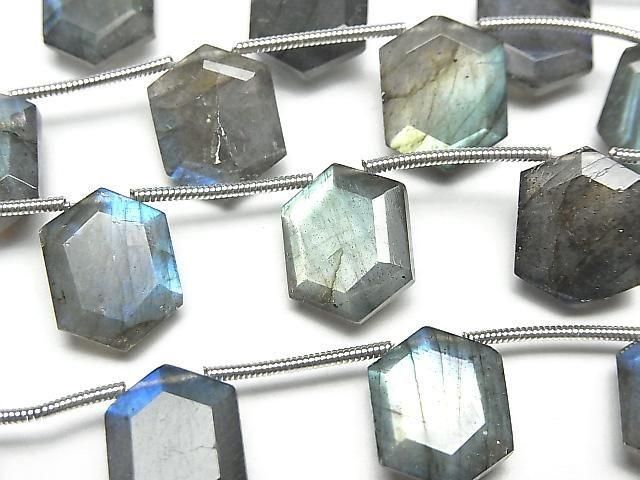
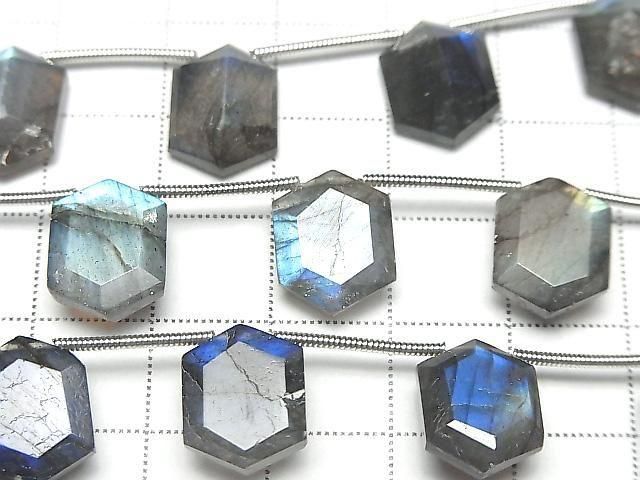
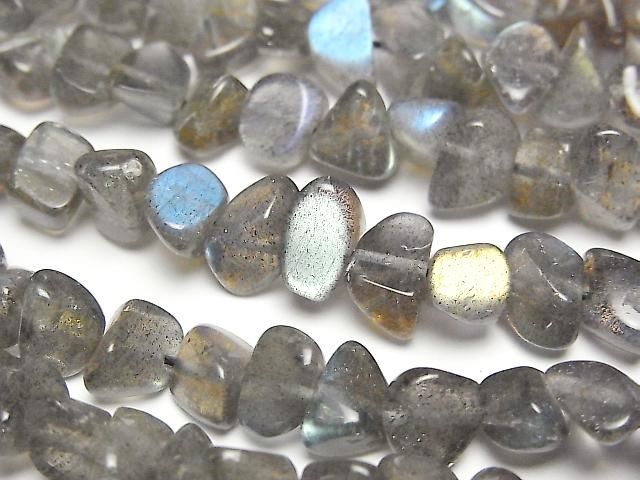
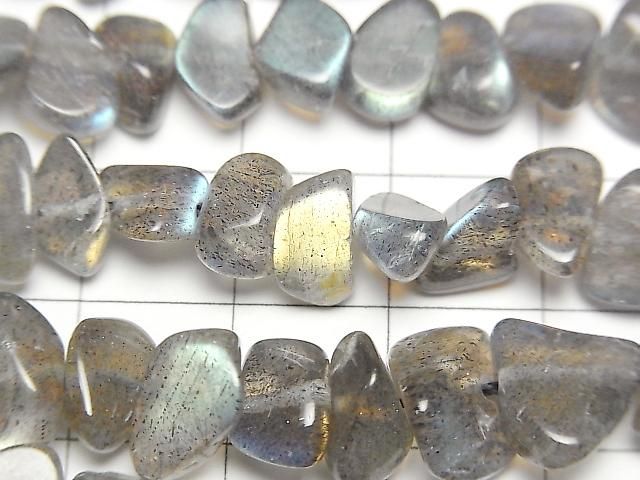
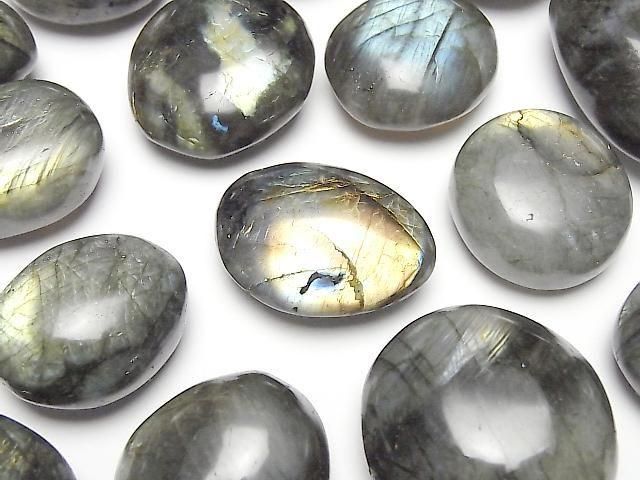
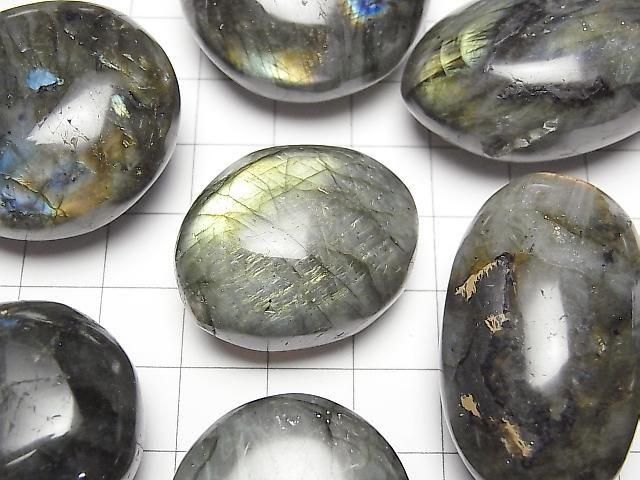
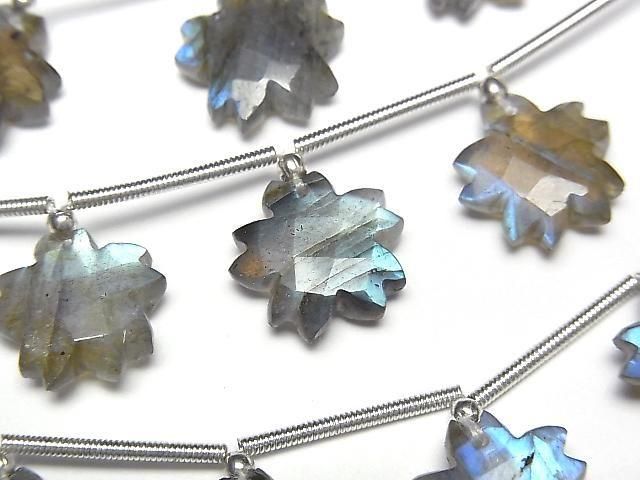
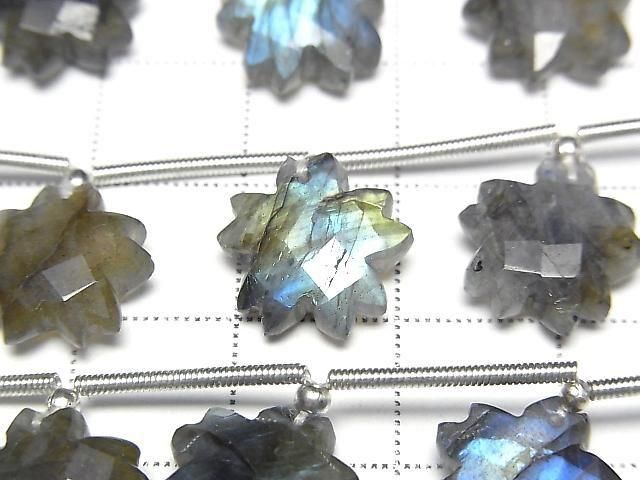
The stone's famous glow, labradorescence, is not surface shine. Light enters the stone and interferes with microscopically thin, layered lamellae (intergrowths) inside the feldspar; the reflected wavelengths create flashes of blue, green, gold, and sometimes red or purple that shift as you turn the stone. This is why raw labradorite can look plain gray until it is correctly oriented and polished by a skilled cutter, and why the effect is directional rather than an even, all-over shimmer. You can browse cut and polished labradorite for sale to see how orientation changes the flash.

What Makes a Labradorite Flash Valuable?
When comparing stones, gem buyers judge labradorescence on three points:
- Coverage — flash across the whole face beats a single bright patch
- Color — blue is classic; green and gold are common companions; purple, pink, and full-spectrum flash are the rarest
- Contrast — a darker body color makes the flash pop, which is why Finnish spectrolite commands premium prices
Tilt the stone under a single light source before you buy: a well-oriented cut flashes strongly face-up, not just from odd angles.
Where Is Labradorite Found? Major Sources Around the World
Labradorite is found on nearly every continent, but a handful of sources dominate the market. Canada's Labrador coast is the historic type locality and still produces classic blue-flash material. Madagascar is today's largest commercial source, supplying most of the cabochons, beads, and carvings sold in the United States and Canada. Finland's Ylämaa region yields spectrolite, the premium full-spectrum variety. Other notable sources include Norway, Russia, Mexico, and the United States — most famously Oregon, where copper-bearing labradorite is mined as Oregon sunstone. For bead buyers, origin matters less than flash quality: two strands from the same Madagascar mine can differ dramatically. That said, "Finnish spectrolite" and "Oregon sunstone" are origin-based trade names, so a seller using them should be able to state the source accurately.
Labradorite Colors: Blue, Green, Gray, White, and Full Spectrum
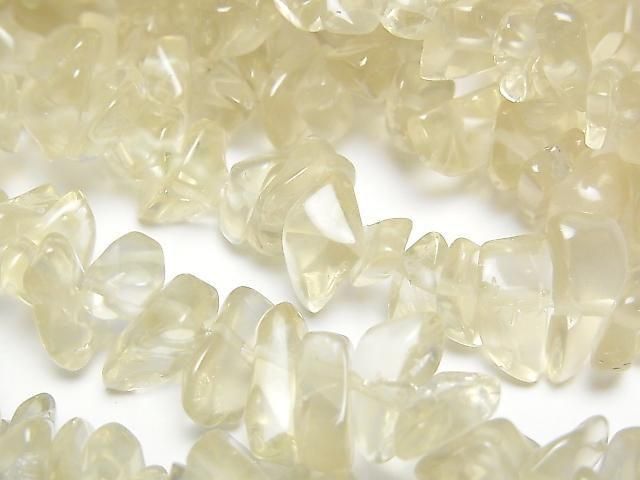
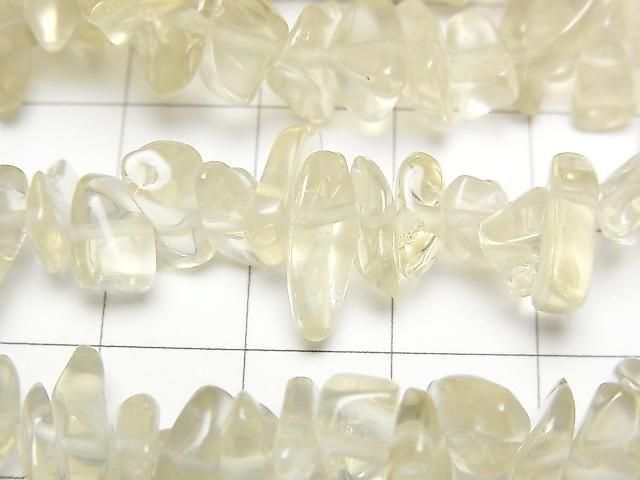
Labradorite's body color is usually gray, gray-green, or nearly black — the magic is in the flash. "Blue labradorite" refers to material dominated by electric-blue labradorescence, the most popular type for jewelry. Green labradorite shows sea-green to teal flash and often costs slightly less. Gray labradorite with a soft, silvery sheen is common in beads and carvings, while golden or champagne labradorite is a transparent yellow variety with little to no flash, usually faceted.
The rarest material displays multiple spectral colors in one stone — blue, green, gold, orange, and purple together — which is the hallmark of top-grade spectrolite.

Types of Labradorite and Related Feldspars
Labradorite belongs to the plagioclase feldspar series, and several popular gems are close relatives or trade-named varieties. Knowing the correct names helps you compare quality and spot any treatment or misnomer before you buy.
Spectrolite: The Finnish Full-Spectrum Labradorite
Spectrolite is a trade name for premium, full-spectrum labradorite originally mined in Finland. Discovered in the 1940s, it combines a nearly black body with intense multicolor flash — blue, green, gold, orange, and violet in a single stone. Genuine Finnish spectrolite is scarcer than standard labradorite and priced accordingly, making it a favorite of collectors and statement-jewelry designers. Because "spectrolite" is a variety/trade name rather than a separate mineral, it is still, gemologically, labradorite.
Rainbow Moonstone: The White Labradorite
Despite its name, rainbow moonstone is not a true moonstone — gemologically, it is a white to colorless variety of labradorite with a glowing blue (sometimes multicolor) sheen. Major sources include Madagascar and India. Its milky transparency and blue flash make it a bestseller for delicate jewelry designs, and it offers a bright alternative to classic dark-bodied labradorite.
Sunstone and Oregon Sunstone
Sunstone is a feldspar that sparkles with warm gold, orange, and red glitter (aventurescence) caused by tiny metallic platelets — typically hematite or copper. Of special interest to North American buyers: Oregon sunstone, the official state gemstone of Oregon, is a true labradorite feldspar containing copper inclusions, mined in the US. It ranges from champagne to vivid red and green, with the rarest "schiller" stones showing a metallic shimmer.
Andesine ("Red Labradorite"): What Buyers Should Know
Andesine is a related plagioclase feldspar sold under the trade name "red labradorite." Buyer's note: most red and green andesine on the market is produced by diffusion treatment (copper diffusion) of pale feldspar, and untreated natural red andesine is rare. There is nothing wrong with owning treated andesine — it can be beautiful and affordable — but under FTC Jewelry Guides a seller should disclose the treatment, and the price should reflect it. If a listing is silent about treatment on unusually vivid red or green feldspar, ask before you buy.

Labradorite vs. Moonstone: What's the Difference?
Labradorite and moonstone are both feldspars, but they are different minerals with different looks. Labradorite is a plagioclase feldspar with a dark gray-to-black body and multicolor labradorescence. True moonstone is an orthoclase (potassium) feldspar with a pale, often translucent body and a soft floating glow called adularescence. Rainbow moonstone sits in between: it glows like moonstone but is gemologically a white labradorite. Here is a quick comparison:
| Feature | Labradorite | Moonstone | Rainbow Moonstone |
|---|---|---|---|
| Mineral | Plagioclase feldspar | Orthoclase feldspar | Plagioclase (white labradorite) |
| Body color | Gray to black | White, peach, gray | White to colorless |
| Optical effect | Labradorescence (multicolor flash) | Adularescence (soft billowy glow) | Blue to rainbow sheen |
| Mohs hardness | 6–6.5 | 6–6.5 | 6–6.5 |
| Typical price | $ (affordable) | $$ (fine blue-sheen costs more) | $ |
In short: if the glow shifts in sharp, metallic flashes of blue and green, it's labradorite; if it floats like moonlight under the surface, it's moonstone.
Labradorite Value: How Much Is It Worth?
Labradorite is one of the most affordable phenomenal gemstones. Typical US retail ranges:
- Tumbled stones and palm stones: about $3–$25
- Bead strands (15–16 in): roughly $8–$50 depending on flash quality and cut
- Cabochons: a few dollars to about $50; large full-flash pieces more
- Fine jewelry-grade material: up to roughly $40+ per carat for exceptional stones
- Finnish spectrolite: commands a premium over standard material
Value is driven almost entirely by the labradorescence — its coverage, color rarity (blue is classic; purple and full-spectrum are rarest), and how well the cutter oriented the flash — plus body-color contrast and size. Prices vary by seller and market and are not guaranteed.

How to Use Labradorite
Labradorite is versatile: wear it to keep its flash close, or work with it during quiet meditation. Both uses are described below.
Wearing Labradorite Jewelry
Wearing labradorite keeps its flash — and its symbolism — with you all day. Pendants and earrings show off labradorescence best because the stone moves in the light; silver settings are a classic pairing that makes blue flash pop. At Mohs 6–6.5 with two directions of cleavage, labradorite suits daily wear but appreciates care: remove rings and bracelets before workouts, dishes, and heavy chores.
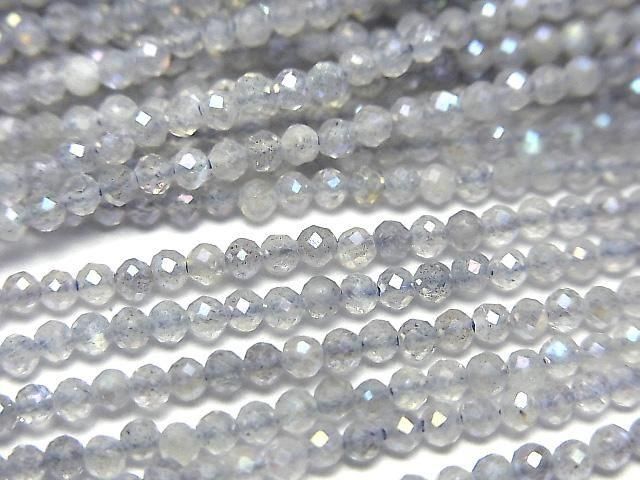
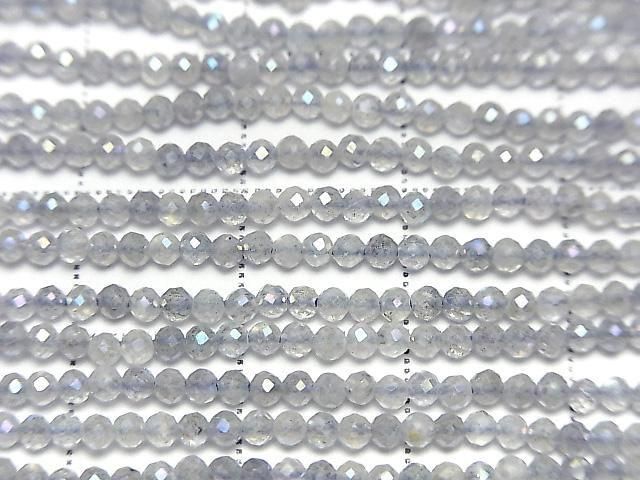
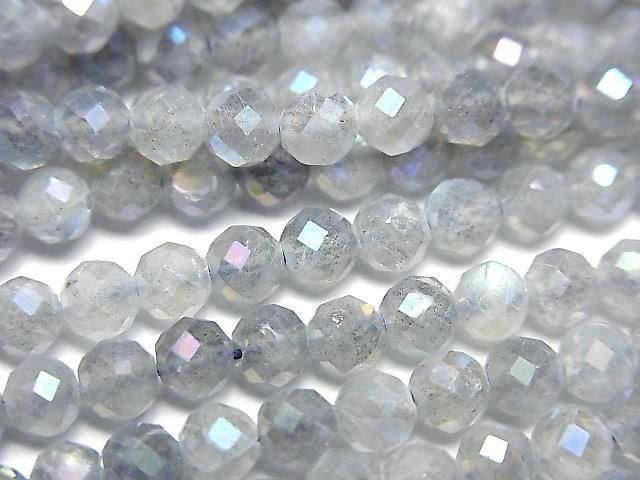
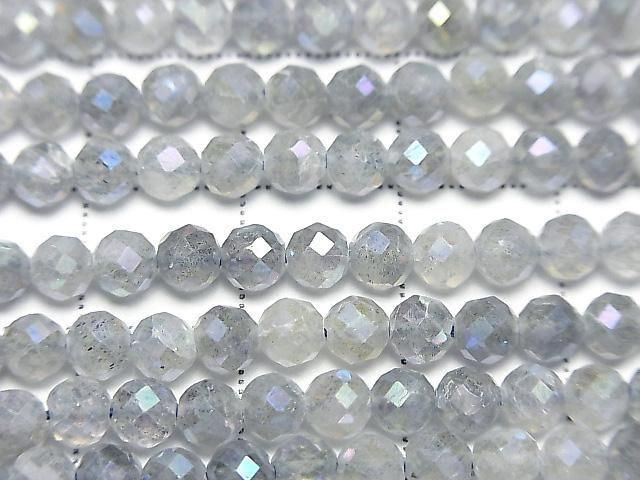
For jewelry makers, labradorite beads are a rewarding material — 6 mm to 10 mm rounds suit everyday bracelets, while large faceted or coin beads turn the flash into a focal point. Inspect strands under direct light to check how many beads carry strong flash.
Meditating with Labradorite
To meditate with labradorite, hold a palm stone in your hands or place a piece on your brow (third eye) while lying down. Begin with a few slow breaths, then softly gaze at the stone's flash before closing your eyes — the shifting color is a natural focus object, similar to candle gazing. Practitioners use labradorite meditation for intuition work, dream recall, and calming a racing mind before sleep. Even five minutes a day is enough to build the habit. These are traditional beliefs, not medical claims.

How to Clean, Cleanse, and Care for Labradorite
Physical care: wash briefly in lukewarm water with mild soap and a soft cloth, then dry — avoid ultrasonic and steam cleaners, long soaks, and hard knocks (the stone's cleavage can chip). Store it separately from harder gems like quartz and topaz to prevent scratches.
Energetic cleansing, if you practice it: moonlight is the traditional — and thematically fitting — method for this aurora-born stone. Smoke, sound, or a selenite plate also work. Keep prolonged direct sunlight to a minimum to protect the polish.
How to Tell Real Labradorite from Fake
Real labradorite is easy to verify once you know its signature behavior:
- Directional flash : genuine labradorescence appears and disappears as you tilt the stone. Imitations (AB-coated glass, foil-backed stones, or iridescent "mystic" coatings) shimmer evenly from every angle
- Look inside : real stones show flash from internal layers, often with natural lines or inclusions; glass may contain round air bubbles
- Body color : authentic material is gray to black (or milky white for rainbow moonstone) — vivid dyed colors are a red flag
- Don't confuse it with opalite : the glowing blue "sea opal" sold in bead shops is man-made glass, not labradorite
- Buy from suppliers who name the material, its source, and any treatment
Most natural labradorite reaches the market untreated, so its color and flash are natural. Where material is enhanced or assembled, US and Canadian rules (FTC Jewelry Guides; Competition Act) expect clear disclosure — for example, diffusion-treated andesine sold as "red labradorite," surface-coated stones, dyed material, or doublets. A reputable seller will tell you the mineral, the trade name, and whether anything was done to the stone.
Labradorite Bead Buying Guide: Sizes, Shapes, and Grading
If you make jewelry, labradorite beads offer strong flash per dollar. Here is what to check before you buy a strand. Sizes: round beads run from 4 mm (about 5/32 in) for delicate designs to 12 mm (about 1/2 in) for statement pieces; 6–8 mm is the everyday-bracelet sweet spot. Standard strands are about 15.5 in (39–40 cm) long — roughly 48 beads at 8 mm. Shapes: smooth rounds show broad, calm flash; faceted rounds and rondelles catch light at more angles and read brighter in finished jewelry; coins, marquise, and slab shapes give the largest flash "window" for focal pieces. Grading: there is no official grading system for labradorite, so compare strands on the same three points gem buyers use — flash coverage (what percentage of beads show strong flash face-up), flash color (blue is classic; multicolor commands more), and body-color contrast. A top-grade strand flashes on most beads as it turns; a budget strand may flash on only a third. Typical strand pricing in USD runs from under $10 for gray, low-flash material to $50+ for full-flash faceted strands. Buying tip: photos taken under a single strong light can exaggerate flash — look for sellers who show strands in even, diffused light or state a quality rank for each strand.

Frequently Asked Questions About Labradorite
What is labradorite good for?
In crystal lore, labradorite is traditionally associated with intuition, protection, and confidence during change. People wear it, meditate with it, or keep it in their space as a reminder of hidden potential — the way its gray surface hides brilliant color. These are traditional beliefs, not medical claims.
Can labradorite go in water?
Briefly, yes — a quick rinse with mild soap is fine. Avoid long soaks, salt water, and ultrasonic cleaners, which can stress the stone's natural cleavage and dull the polish.
What chakra is labradorite associated with?
In chakra tradition, primarily the third eye chakra (intuition) and the throat chakra (self-expression); some practitioners also link it to the crown chakra.
Is labradorite rare or expensive?
Standard labradorite is abundant and affordable — most beads and cabochons cost from a few dollars. Finnish spectrolite and stones with full-spectrum or purple flash are scarcer and priced higher.
Why does my labradorite only flash at certain angles?
That's normal — and a sign it's genuine. Labradorescence comes from light interfering with thin layers inside the stone, so the flash appears only when light strikes those layers at the right angle.
How can I tell if my labradorite is real?
Tilt it under one light source: real labradorite flashes directionally, shows internal color, and has a gray-to-black (or milky white) body. Even, angle-independent shimmer or round air bubbles indicate coated or man-made glass.
What does labradorite symbolize?
Labradorite symbolizes transformation — the hidden light within a person, revealed "at the right angle." In crystal lore it is also associated with intuition, protection, and new beginnings, which is why it's a popular gift for major life changes.
Who should wear labradorite?
In crystal traditions, labradorite suits anyone navigating change — new jobs, moves, or creative projects — and is considered gentle enough for beginners. It is most often linked to Leo, Scorpio, and Sagittarius, but no zodiac sign is excluded.
Shop Labradorite Beads, Cabochons, and Loose Stones at KenKenGems
Ready to work labradorite's flash into your designs? KenKenGems is a Japan-based gemstone bead supplier trusted by jewelry makers worldwide, and every labradorite strand we list is hand-selected for the strength and coverage of its labradorescence. You'll find:
- Labradorite bead strands — rounds, faceted cuts, coins, and fancy shapes
- Blue-flash and full-flash cabochons for rings and pendants
- Spectrolite, rainbow moonstone, sunstone, and andesine collections
Prices are listed in USD, and we ship to the United States and Canada.


![Labradorite AA++ Bezel Setting Freeform Rose Cut [One Side] Silver925 3pcs](http://store.kenkengems.com/cdn/shop/files/189227245.jpg?v=1764058092&width=640)
![Labradorite AA++ Bezel Setting Freeform Rose Cut [One Side] Silver925 3pcs](http://store.kenkengems.com/cdn/shop/files/189227245_o1.jpg?v=1764058073&width=640)
![[One of a kind] Blue Labradorite AAA Cabochon 1pc No.49](http://store.kenkengems.com/cdn/shop/files/190874152.jpg?v=1776775812&width=640)
![[One of a kind] Blue Labradorite AAA Cabochon 1pc No.49](http://store.kenkengems.com/cdn/shop/files/190874152_o1.jpg?v=1776775794&width=640)
![[One of a kind] Rainbow Labradorite AAA- Carved Pendant 18KGP No.50](http://store.kenkengems.com/cdn/shop/files/188884558_8bd62d61-0ad2-44c9-bbe5-314f40d17dc5.jpg?v=1761034529&width=640)
![[One of a kind] Rainbow Labradorite AAA- Carved Pendant 18KGP No.50](http://store.kenkengems.com/cdn/shop/files/188884558_o1_b6f99c33-481b-4361-8af2-5642065096d7.jpg?v=1761034534&width=640)
![[One of a kind] Rainbow Labradorite AAA- Carved Pendant Silver925 No.44](http://store.kenkengems.com/cdn/shop/files/188884550_0131a042-f78f-4b13-bfd6-617645e65d6c.jpg?v=1761034456&width=640)
![[One of a kind] Rainbow Labradorite AAA- Carved Pendant Silver925 No.44](http://store.kenkengems.com/cdn/shop/files/188884550_o1_fb29199d-c9fe-4e00-b399-96f7b58a6da9.jpg?v=1761034461&width=640)
![[One of a kind] Blue Labradorite AAA Cabochon 1pc No.38](http://store.kenkengems.com/cdn/shop/files/190618370.jpg?v=1772527012&width=640)
![[One of a kind] Blue Labradorite AAA Cabochon 1pc No.38](http://store.kenkengems.com/cdn/shop/files/190618370_o1.jpg?v=1772526998&width=640)