
TOC
- 1. What Is Sugilite? A Rare Purple Gemstone
- 2. History and Discovery of Sugilite
- 3. Sugilite Meaning and Symbolism
- 4. Physical and Chemical Properties of Sugilite
- 4-1. Hardness, Cleavage, and Durability
- 4-2. Color, Luster, and Pleochroism
- 5. Types of Sugilite Stone
- 5-1. Purple Sugilite
- 5-2. Plum Sugilite
- 5-3. Lilac Sugilite
- 5-4. Blue Sugilite
- 6. Where Is Sugilite Found? Mines and Deposits
- 7. How Much Is Sugilite Worth? Value and Price Guide
- 8. Sugilite Metaphysical Properties and Traditional Beliefs
- 8-1. Emotional and Spiritual Associations
- 8-2. Chakra Associations
- 8-3. How People Traditionally Use Sugilite
- 9. Sugilite vs Amethyst: How to Tell the Difference
- 10. How to Identify Real Sugilite (Natural vs Dyed)
- 11. How to Care for Sugilite Jewelry
- 12. Frequently Asked Questions About Sugilite
- 12-1. Is sugilite a rare stone?
- 12-2. What does sugilite mean spiritually?
- 12-3. What is purple sugilite?
- 12-4. Can sugilite get wet?
- 12-5. How can you tell if sugilite is fake?
- 12-6. Is sugilite worth buying?
- 13. Shop Authentic Sugilite at KenKenGems
![[One of a kind] Sugilite AAA- Loose stone 1pc No.141](http://store.kenkengems.com/cdn/shop/files/189030109.jpg?crop=center&height=400&v=1763451561&width=400)
What Is Sugilite? A Rare Purple Gemstone
Sugilite (pronounced "SOO-gi-lite") is a rare purple to violet gemstone and a manganese-bearing cyclosilicate mineral. Its full chemistry is a potassium sodium lithium iron-manganese-aluminum silicate, usually written as KNa2(Fe,Mn,Al)2Li3Si12O30, and it is the trace manganese content that gives the stone its characteristic purple color. Most sugilite is opaque and massive rather than forming clear crystals, which is one reason gem-grade translucent material is so uncommon.

As a sugilite crystal it is prized mainly for its color, from soft lilac to deep royal purple, and it is often compared with amethyst and charoite while remaining a distinct mineral. Because high-quality gem-grade sugilite is limited, most pieces on the market are cabochons, beads, and tumbled stones rather than faceted gems. Color and quality vary widely from stone to stone, and some purple material sold as sugilite is actually dyed or imitation, so it pays to know what to look for (covered further down this guide).

History and Discovery of Sugilite
Sugilite was first described in 1944 by the Japanese petrologist Ken-ichi Sugi, who found it while studying the geology of Iwagi Islet in southern Japan. The stone is named in his honor. Those early specimens were heavily included and unremarkable to look at, so for decades the mineral stayed mostly within academic and collector circles.
That changed in 1975, when miners at the Wessels Mine in South Africa’s Northern Cape reached a deposit of gem-quality sugilite with colors ranging from pale lilac to vivid royal purple. This South African material remains the source of nearly all the fine sugilite on the market today, and it is sometimes traded under names such as "wesselite," "lavulite," or "royal azel."

Sugilite Meaning and Symbolism
These are traditional beliefs, not medical claims. Sugilite is not medicine and cannot diagnose, treat, cure, or prevent any illness. For any health concern, please consult a qualified healthcare professional.
In crystal lore, sugilite is often called the "love stone for this age," and it is traditionally associated with spiritual love and emotional comfort. Its purple color links it, in tradition, with the crown and third-eye chakras, and many people keep it as a symbol of the qualities they want to focus on. Commonly cited traditional associations include:
- Spiritual protection and a sense of feeling shielded from negativity
- Compassion, forgiveness, and unconditional love
- Inner harmony and emotional balance
- Intuition and self-reflection
Because gem-quality sugilite is genuinely scarce, it is also seen as a symbol of finding something rare and one-of-a-kind — a meaningful keepsake for anyone marking a transformative chapter. These are cultural and folkloric associations, not statements of scientific or medical fact.

Physical and Chemical Properties of Sugilite
Sugilite is a manganese-bearing cyclosilicate, and its chemistry is what gives the stone both its color range and its typical appearance. The table below summarizes its key gemological properties.
| Property | Detail |
|---|---|
| Mineral class | Cyclosilicate (manganese-bearing) |
| Chemical formula | KNa2(Fe,Mn,Al)2Li3Si12O30 |
| Crystal system | Hexagonal |
| Mohs hardness | 5.5–6.5 (relatively soft – handle with care) |
| Color | Pale lilac to deep royal purple; rarer pink and blue material also occurs |
| Cause of color | Trace manganese (with some iron) |
| Luster | Vitreous to waxy when polished |
| Transparency | Usually opaque and massive; translucent gem-grade material is rare |
| Main source | Wessels Mine, Northern Cape, South Africa |
Hardness, Cleavage, and Durability
At a Mohs hardness of 5.5–6.5, sugilite is softer than quartz (7) and more fragile than many other purple gemstones. It also shows imperfect cleavage, so it can chip if knocked against a hard surface. If you wear sugilite jewelry, treat it as a protected piece — take it off before manual work, exercise, or swimming.
Color, Luster, and Pleochroism
Sugilite’s purple color comes from trace manganese, with iron also playing a part. The most admired pieces show a rich, even royal purple, but the stone is rarely uniform — most pieces display veining, swirls, or color zoning that make each one unique. Some translucent material shows a subtle pleochroic effect, with the hue shifting slightly depending on the viewing angle, which adds visual depth.

Types of Sugilite Stone
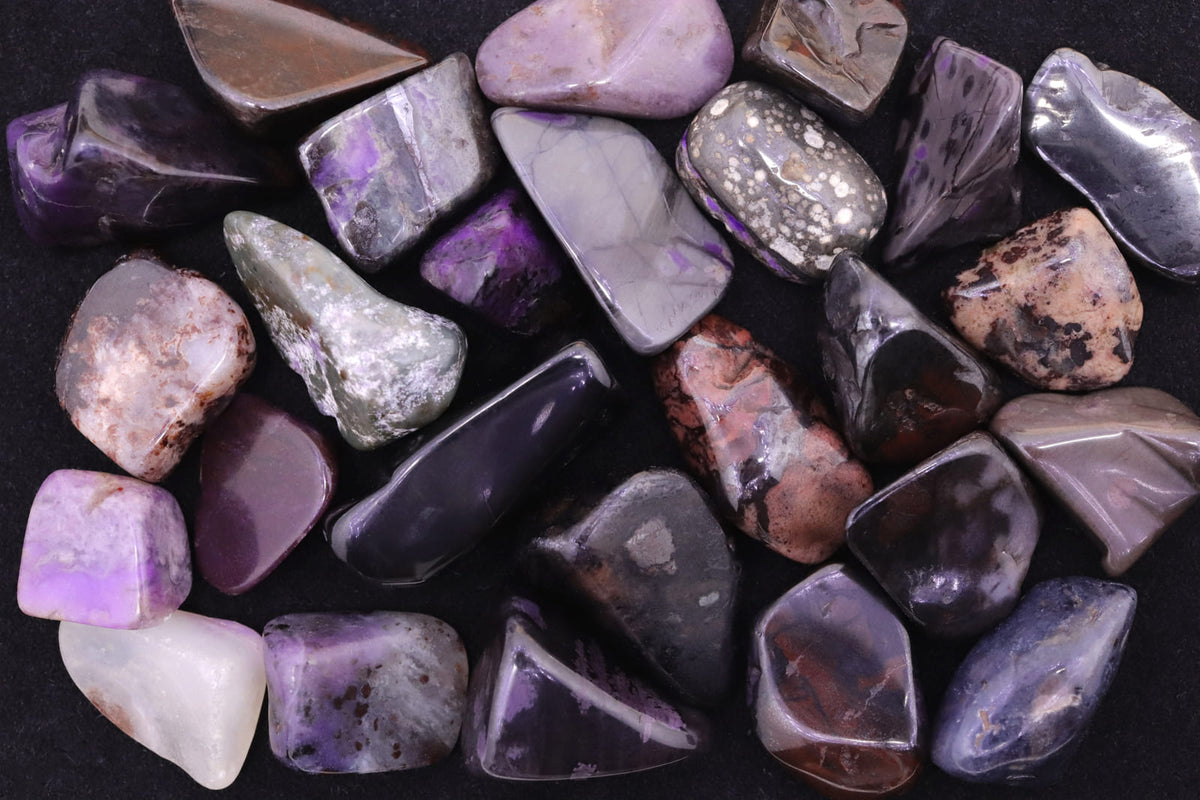
All sugilite shares the same core chemistry, but collectors and gemologists recognize several visual varieties. The four most widely traded types are described below, and several rarer patterned varieties also appear on the market:
- Webbed sugilite – an intricate web of veining in black, white, gray, pink, and yellow across a purple base.
- Leopard skin sugilite – a spotted look with contrasting white, black, brown, gray, and pink patches.
- Chalcedony sugilite – a natural blend of sugilite and chalcedony that yields reddish-purple stones on a dark matrix.
- Sugilite jade – a composite of sugilite with quartz, feldspar, limonite, and chlorite, often used for larger carvings.

Purple Sugilite
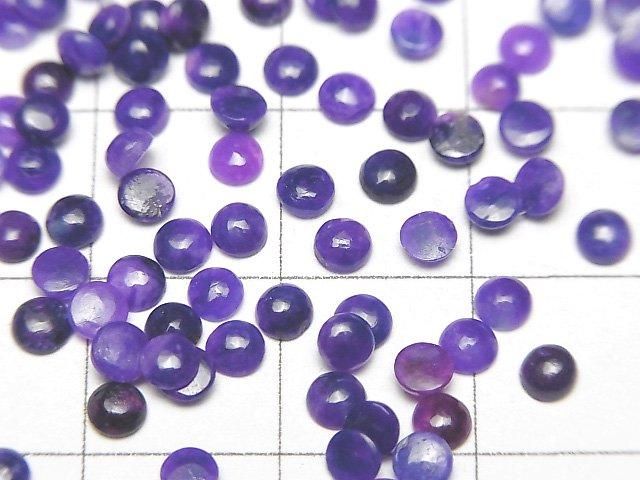
Purple sugilite is the classic variety, valued for its vivid, amethyst-like color, often blended with pale, near-white patches. It is the most widely traded form of the stone and the one most people picture when they think of sugilite.
Plum Sugilite
Sometimes called "plum rustica," plum sugilite is rare, with a saturated deep-purple body and bold, swirling black patterns that give each stone a dramatic look.
Lilac Sugilite
Lilac sugilite is a softer, lighter purple with lively gray, pink, and black inclusions. Its gentle tone makes it a favorite for delicate jewelry, and lighter pink-lilac pieces are among the color variations collectors seek out.
Blue Sugilite
Blue sugilite is an unusual variety in which royal blue dominates, accented by pink, purple, and gray swirls. It is one of the scarcer forms of the stone and is popular with collectors who want something beyond the usual purple.
Where Is Sugilite Found? Mines and Deposits
For decades the Wessels Mine in South Africa was the only commercially significant source of gem-quality sugilite, and most fine material still traces back to that single deposit, whose original reserves are now substantially depleted. Smaller occurrences have been documented in a handful of other locations:
- Japan (the original 1944 discovery site)
- Canada (Mont Saint-Hilaire, Quebec)
- India
- Australia
- Tajikistan
- Italy
None of these other localities have produced volumes comparable to South Africa. Only a modest quantity of sugilite has been mined since its discovery, which is why it is widely regarded as one of the scarcer gemstones on the market.

How Much Is Sugilite Worth? Value and Price Guide
Sugilite prices vary widely with color, transparency, pattern, and origin. The figures below are approximate market ranges in US dollars and change with quality, size, and availability:
- Tumbled stones and low-grade beads: roughly $5–$20 per piece.
- Mid-grade cabochons: roughly $30–$150 per carat.
- Gem-grade, translucent royal-purple material: roughly $200–$500 per carat.
- Highly translucent, evenly colored pieces are scarce and are priced well above the ranges above.
The single biggest price driver is color saturation. A vivid, evenly colored royal-purple stone with some translucency will typically command many times the price of an opaque, mottled piece of the same size.

Sugilite Metaphysical Properties and Traditional Beliefs
These are traditional beliefs, not medical claims. Sugilite is not medicine and cannot diagnose, treat, cure, or prevent any illness. For any health concern, please consult a qualified healthcare professional.
In crystal lore, sugilite is regarded as a high-vibration stone associated with the spirit and the emotions. These metaphysical properties are traditional beliefs drawn from folklore and personal practice rather than scientific evidence, and sugilite is best enjoyed as a beautiful, meaningful gemstone rather than as any kind of remedy.

Emotional and Spiritual Associations
Sugilite is especially treasured in crystal tradition for its emotional associations. People who work with it traditionally believe it helps them:
- Let go of anger and fear and process difficult feelings
- Encourage self-forgiveness and self-love
- Feel calmer and more grounded during change
- Settle into restful, peaceful sleep
These associations are part of crystal folklore and personal practice, not medical or psychological treatment.
Chakra Associations
In chakra tradition, sugilite is usually linked with the third-eye and crown chakras and is associated with intuition and spiritual awareness. Lighter pink-purple varieties are also said, in tradition, to connect with the heart chakra, tying together the ideas of love and compassion. These are traditional beliefs, not scientific claims.
How People Traditionally Use Sugilite
People who keep sugilite for its traditional associations tend to use it in a few simple ways:
- Wearing it as jewelry, often as a pendant or bracelet
- Holding a tumbled stone in the palm during a quiet or stressful moment
- Placing a piece nearby during meditation or reflection
- Keeping a stone by the bedside
However you use it, sugilite is a decorative gemstone and keepsake. It is not a substitute for professional care of any kind.

Sugilite vs Amethyst: How to Tell the Difference
Because both stones are purple, sugilite and amethyst are often confused, yet they are completely different minerals with different properties.
| Property | Sugilite | Amethyst |
|---|---|---|
| Mineral family | Cyclosilicate | Quartz (silicon dioxide) |
| Hardness (Mohs) | 5.5–6.5 | 7 |
| Transparency | Opaque to translucent | Transparent to translucent |
| Typical color | Royal purple with veining and patterning | Even violet to light purple |
| Rarity | Rare | Abundant |
| Approx. price | $30–$500+ per carat | $2–$30 per carat |
| Chakra (tradition) | Third-eye, crown (sometimes heart) | Third-eye, crown |
Quick visual guide: if a purple stone is opaque and shows white or pink veining, it is most likely sugilite; a fully transparent, evenly colored crystal is far more likely to be amethyst. Leave any scratch testing to the seller or a gemologist rather than risking a finished piece.

How to Identify Real Sugilite (Natural vs Dyed)
Because natural sugilite is scarce and can be costly, dyed and imitation material is common in online marketplaces — often dyed howlite or magnesite, or even plastic, colored to mimic sugilite’s purple. Use these checks to tell natural stones from dyed or imitation ones before you buy:
- Color depth: natural sugilite shows nuanced shifts from light to dark purple, not a flat, printed-looking color.
- Pattern: genuine sugilite almost always has veining, swirls, or color zoning; a perfectly uniform purple stone is a warning sign.
- Hardness: at Mohs 5.5–6.5 it should scratch glass but be scratched by quartz (leave testing to a professional so you do not damage a set piece).
- Specific gravity: sugilite is about 2.74, slightly heavier than dyed magnesite.
- Source and disclosure: buy from established sellers who will state the mineral identity and disclose any dyeing or treatment in writing.
A reputable seller should always be able to tell you whether a stone is natural sugilite, dyed material, or an imitation. If that information is missing, treat the listing with caution.

How to Care for Sugilite Jewelry
Sugilite is relatively soft (Mohs 5.5–6.5), so a little care keeps it looking its best:
- Clean with lukewarm water and a soft cloth — avoid ultrasonic and steam cleaners.
- Keep it away from harsh chemicals, perfumes, and household cleaners.
- Store it separately from harder stones such as diamond, quartz, and topaz to prevent scratches.
- Limit prolonged direct sunlight, which can slowly fade the purple color.
- If you like to cleanse crystals energetically, use moonlight or sound rather than salt water or long sun exposure.

Frequently Asked Questions About Sugilite

Is sugilite a rare stone?
Yes. Sugilite is one of the scarcer gemstones on the market. Only a modest quantity has been mined since its discovery in 1944, with most gem-quality material coming from a single deposit at the Wessels Mine in South Africa, which is now largely depleted.
What does sugilite mean spiritually?
In crystal lore, sugilite is known as the "love stone for this age" and is traditionally associated with intuition, emotional comfort, and a feeling of spiritual protection. These are traditional beliefs, not medical or scientific claims.
What is purple sugilite?
Purple sugilite is the classic and most widely traded variety, valued for its vivid, amethyst-like color, often mixed with pale, near-white patches. Deeper plum and lighter lilac tones are related variations of the same mineral.
Can sugilite get wet?
A brief rinse in lukewarm water is fine, but sugilite should not be soaked. Avoid salt water, which can dull the polish, and dry the stone with a soft cloth right after rinsing. Treat it as a decorative gemstone rather than something to prepare water for drinking.
How can you tell if sugilite is fake?
Natural sugilite shows color variation, veining, and a Mohs hardness of 5.5–6.5. Imitations are often dyed howlite or magnesite, which scratch easily and look flat and uniform in color. Buy from established sellers who state the mineral identity and disclose any dyeing or treatment.
Is sugilite worth buying?
If you are drawn to its color and rarity, sugilite is a rewarding stone to own. Beginners often start with a tumbled stone or a small bead before choosing a finer cabochon. Prices vary with quality, so compare options from a seller who is clear about grade and origin.
Shop Authentic Sugilite at KenKenGems
Looking to add this rare purple crystal to your collection? KenKenGems sources sugilite from established mines, including the well-known Wessels deposit in South Africa. Our sugilite selection includes:
- Royal-purple cabochons and gem-grade beads
- Polished strands for jewelry making
- One-of-a-kind specimens for collectors
Every piece is hand-selected for color, pattern, and quality, and orders over USD $300 ship with free worldwide delivery. Explore the collection and find a genuine sugilite stone for your collection or your next jewelry project.

![[One of a kind] Sugilite AAA 8Faceted Tube Bracelet No.9](http://store.kenkengems.com/cdn/shop/files/182691636.jpg?v=1730622548&width=640)
![[One of a kind] Sugilite AAA 8Faceted Tube Bracelet No.9](http://store.kenkengems.com/cdn/shop/files/182691636_o1.jpg?v=1730622542&width=640)
![[One of a kind] Sugilite AAA- Loose stone 1pc No.126](http://store.kenkengems.com/cdn/shop/files/187469224.jpg?v=1753359205&width=640)
![[One of a kind] Sugilite AAA- Loose stone 1pc No.126](http://store.kenkengems.com/cdn/shop/files/187469224_o1.jpg?v=1753359210&width=640)
![[One of a kind] [Certificate] Sugilite AAAAA Round 11.5mm Bracelet No.3](http://store.kenkengems.com/cdn/shop/files/180730324.jpg?v=1718720001&width=640)
![[One of a kind] [Certificate] Sugilite AAAAA Round 11.5mm Bracelet No.3](http://store.kenkengems.com/cdn/shop/files/180730324_o1.jpg?v=1718719996&width=640)
![[One of a kind] Sugilite AAA Round 10mm Bracelet No.105](http://store.kenkengems.com/cdn/shop/files/181086540.jpg?v=1718708691&width=640)
![[One of a kind] Sugilite AAA Round 10mm Bracelet No.105](http://store.kenkengems.com/cdn/shop/files/181086540_o1.jpg?v=1718708602&width=640)
![[One of a kind] Sugilite AAA- Loose stone 1pc No.129](http://store.kenkengems.com/cdn/shop/files/187469251.jpg?v=1753359240&width=640)
![[One of a kind] Sugilite AAA- Loose stone 1pc No.129](http://store.kenkengems.com/cdn/shop/files/187469251_o1.jpg?v=1753359246&width=640)
![[One of a kind] Sugilite AAA- Round 16.5mm Bracelet No.2](http://store.kenkengems.com/cdn/shop/files/184515553.jpg?v=1739867077&width=640)
![[One of a kind] Sugilite AAA- Round 16.5mm Bracelet No.2](http://store.kenkengems.com/cdn/shop/files/184515553_o1.jpg?v=1739867071&width=640)
![[One of a kind] Sugilite AAA Faceted Nugget 1strand beads (aprx.16inch/39cm) No.11](http://store.kenkengems.com/cdn/shop/files/187544175.jpg?v=1753359816&width=640)
![[One of a kind] Sugilite AAA Faceted Nugget 1strand beads (aprx.16inch/39cm) No.11](http://store.kenkengems.com/cdn/shop/files/187544175_o1.jpg?v=1753359824&width=640)
![[One of a kind] Sugilite AAA- Loose stone 5pcs set No.130](http://store.kenkengems.com/cdn/shop/files/187469272.jpg?v=1753359252&width=640)
![[One of a kind] Sugilite AAA- Loose stone 5pcs set No.130](http://store.kenkengems.com/cdn/shop/files/187469272_o1.jpg?v=1753359259&width=640)
![[One of a kind] Sugilite AAA- Loose stone 1pc No.141](http://store.kenkengems.com/cdn/shop/files/189030109.jpg?v=1763451561&width=640)
![[One of a kind] Sugilite AAA- Loose stone 1pc No.141](http://store.kenkengems.com/cdn/shop/files/189030109_o1.jpg?v=1763451555&width=640)
![[One of a kind] Sugilite AAA 8Faceted Tube Bracelet No.8](http://store.kenkengems.com/cdn/shop/files/182691635.jpg?v=1730622653&width=640)
![[One of a kind] Sugilite AAA 8Faceted Tube Bracelet No.8](http://store.kenkengems.com/cdn/shop/files/182691635_o1.jpg?v=1730622647&width=640)


