

TOC
- 1. What Is Garnet?
- 2. The Meaning and History of Garnet
- 2-1. Garnet Spiritual Meaning
- 3. Garnet Properties: Physical and Chemical
- 3-1. Garnet Crystal Structure and Shape
- 4. Types of Garnet
- 4-1. Star Garnet and Color-Change Garnet
- 5. Garnet Value, Pricing & Buying Guide
- 6. Garnet Healing Properties
- 7. Garnet Metaphysical Properties
- 7-1. Garnet and the Chakras
- 7-2. Garnet Crystal Benefits
- 8. Garnet Care and Cleaning
- 9. Frequently Asked Questions About Garnet
- 9-1. What is garnet?
- 9-2. What does garnet symbolize?
- 9-3. Is garnet a birthstone?
- 9-4. Which chakra is garnet?
- 9-5. What are the different types of garnet?
- 9-6. What is the crystal structure of garnet?
- 9-7. What is star garnet?
- 9-8. Is garnet expensive?
- 9-9. How can I tell real garnet from glass?
- 9-10. Can garnet get wet?
- 10. Shop Garnet at KenKenGems

What Is Garnet?
Garnet is not a single stone but a whole group of closely related silicate minerals, famous for a fiery red that rivals ruby at a far friendlier price. As the birthstone for January, garnet carries special meaning as a gift, and while red is its signature, the family also offers orange, yellow, green, and purple varieties. Semi-precious and widely available, garnet is a favorite for both everyday jewelry and talismans — a warm, wallet-friendly gemstone that is hard to ignore.
The Meaning and History of Garnet
The meaning of garnet centers on passion, vitality, and protection. Its very name evokes the pomegranate — from the Latin *granatus* ("seed-like"), a nod to the way clustered red crystals resemble the fruit's glistening seeds; the mineralogist Albertus Magnus is credited with the modern name in the 13th century, and older names include the Greek *anthrax* and the Roman *carbuncle*. Garnet has been treasured since antiquity: the oldest known garnet jewelry dates to around 1000 BC, biblical legend calls it the glowing light aboard Noah's Ark (hence its nickname, the "stone of travelers"), and in the Greek myth of Persephone the pomegranate seeds tie the gem to the turning of the seasons. Carried west during the Crusades and prized in Persia as a symbol of power, garnet became an emblem of honor, courage, and strength. These are historical and cultural traditions, not medical claims.

Garnet Spiritual Meaning
Spiritually, garnet is regarded as a stone of passion, energy, and grounded courage. In crystal tradition it is described as reigniting motivation and vitality, encouraging commitment in relationships and goals, and offering a sense of protection and safe return — the classic "stone of travelers." Because its color runs deep and warm, garnet is often associated with confidence and the drive to turn intention into action. These are cultural and spiritual associations rather than proven effects, and not medical claims.
Garnet Properties: Physical and Chemical
Among its defining properties, garnet is a family of silicate minerals that share a common SiO4 base but differ in the metals they contain — magnesium, iron, manganese, calcium, aluminum, or chromium — which is why garnet can appear in almost any color except blue. Its hardness ranges from about 6.5 to 7.5 on the Mohs scale, and stones can be transparent, translucent, or opaque, always with a glassy luster. A fun quirk: garnet is pyroelectric, so when rubbed it can build a static charge and attract light objects like a scrap of paper.
| Property | Value |
|---|---|
| Mineral group | Silicate group (garnet family) |
| General formula | R3R2(SiO4)3 (R = Mg, Fe, Mn, Ca / Al, Fe, Cr) |
| Hardness (Mohs) | 6.5 – 7.5 |
| Colors | Red, orange, yellow, green, purple (not blue) |
| Transparency | Transparent to opaque |
| Luster | Vitreous (glassy) |
| Birthstone | January |

Garnet Crystal Structure and Shape
Garnet crystallizes in the isometric (cubic) crystal system, and well-formed crystals most often grow as the rhombic dodecahedron (twelve diamond-shaped faces) or the trapezohedron (twelve kite-shaped faces) — frequently as a combination of the two. This blocky, many-faced habit is so distinctive that a rounded, well-shaped garnet crystal is often recognizable on sight. Garnet has no true cleavage (it is indistinct), breaks with a conchoidal to uneven fracture, and shows a vitreous to resinous luster.
| Gemological data | Value |
|---|---|
| Crystal system | Isometric (cubic) |
| Crystal habit / shape | Rhombic dodecahedron, trapezohedron, or a combination |
| Cleavage | Indistinct (none true) |
| Fracture | Conchoidal to uneven |
| Refractive index | about 1.72 – 1.94 (varies by species) |
| Specific gravity | about 3.1 – 4.3 (varies by species) |
| Optical character | Singly refractive |
Types of Garnet
Because garnet is a mineral group rather than a single species, correct naming matters: reputable sellers identify the specific variety (and disclose any dyed, treated, or composite material). Garnet's family includes several distinct, collectible varieties:
- Pyrope — blood-red to maroon-brown; its name comes from the Greek *pyropos*, "fiery."
- Almandine — the most popular type, a deep cherry-red (sometimes purplish) often compared to ruby.
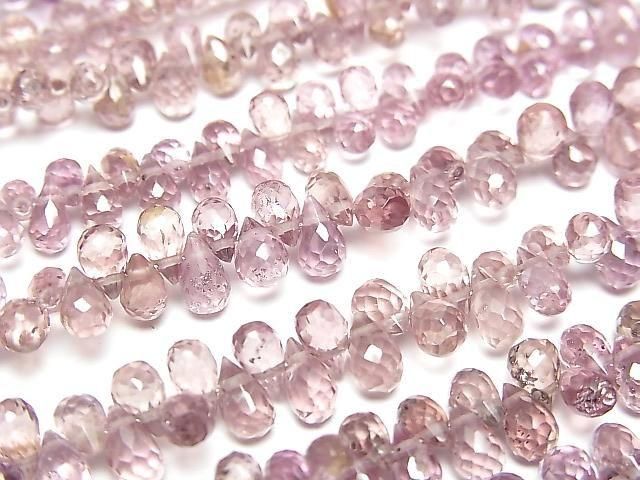
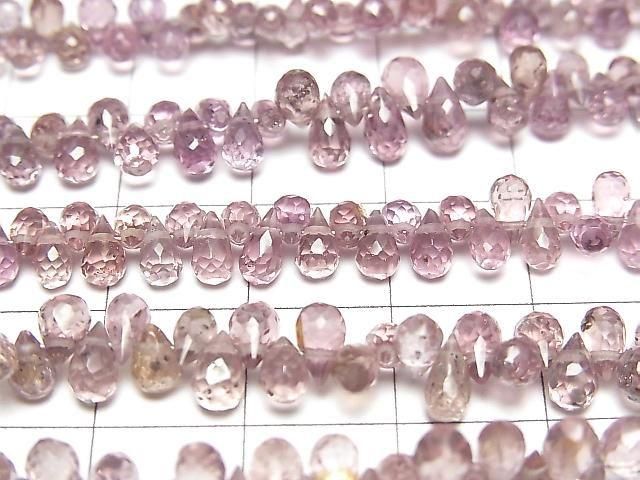
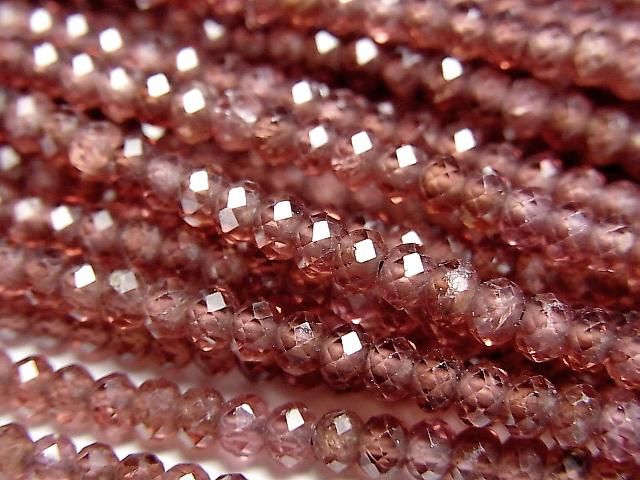
- Rhodolite — a beautiful blend from dark pink to purple that shimmers with raspberry tones in sunlight.
- Andradite — a broad subgroup with maroon, yellow, orange, and green stones, including the highly prized green demantoid.
- Spessartine — a rarer garnet in yellow, orange, pink, and brown, often with inclusions.
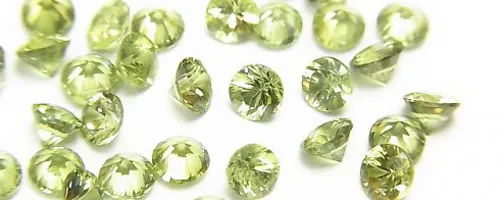
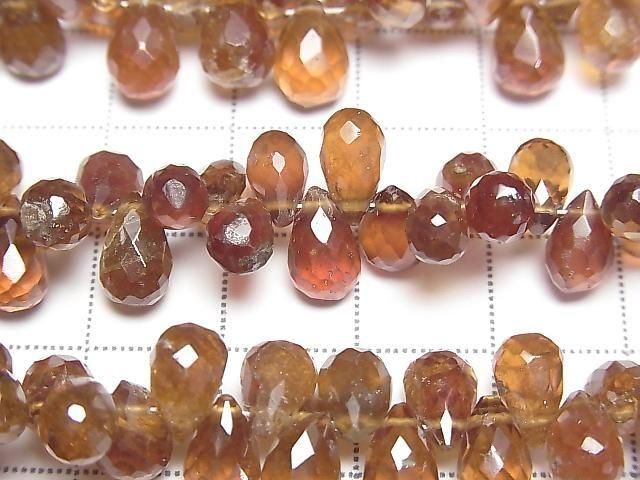
- Grossular — pale green to yellow-green; its varieties include the vivid green tsavorite and honey-toned hessonite.
- Uvarovite — a rare, bright emerald-green calcium-chromium garnet, usually found as tiny crystals and often set as a druzy.
The rarest and most valuable garnets — such as demantoid and tsavorite — can rival fine colored gemstones in price.




Star Garnet and Color-Change Garnet
Beyond its everyday colors, garnet includes a few prized optical rarities. Star garnet displays asterism — a four- or six-rayed star of light that glides across a polished cabochon, caused by needle-like inclusions. Fine star garnet comes mainly from India and from Idaho, where star garnet is the official state gemstone. Color-change garnet, usually a pyrope–spessartine blend, shifts hue with the light source — often greenish or bluish in daylight and reddish or purplish under incandescent light; the rare blue garnets from Madagascar belong to this group. Because these effects are natural and difficult to imitate, star and color-change garnets typically command a premium over ordinary material.

Garnet Value, Pricing & Buying Guide
Garnet is the birthstone for January, which makes it a popular and meaningful gift. As a gemstone, most garnet is semi-precious and affordable, so it offers rich color at a friendly price — but value varies widely by type. Common almandine and pyrope are budget-friendly, while rare varieties like green demantoid and tsavorite can be genuinely valuable, with rhodolite and vivid spessartine sitting in between.
When choosing a garnet, weigh these factors:
- Color — bright, saturated, evenly distributed hues rank highest; muddy or overly dark stones are worth less.
- Clarity — eye-clean stones are more desirable, though some varieties (like spessartine) are typically more included.
- Cut — a well-proportioned cut returns light and shows the color at its best.
- Carat / size — larger clean stones of the rarer types rise steeply in price.
- Variety and rarity — demantoid, tsavorite, and fine color-change or star garnets sit at the top; almandine and pyrope are the most accessible.
As with any gemstone, prices depend on the seller and quality, so choose a garnet for its color and meaning rather than as a financial investment.
Garnet Healing Properties
In crystal-healing tradition, garnet is described as an energizing, motivating stone associated with vitality, warmth, and confidence. It is important to understand these as traditional beliefs and personal practices, not medical facts. These are traditional beliefs, not medical claims.
*Important: garnet and other crystals are not medicine. They cannot diagnose, treat, cure, or prevent any illness, and they are not a substitute for professional medical or mental-health care.*
Within those traditions, people work with garnet as a symbolic spark — a reminder to re-engage with goals, relationships, and passions. Any boost in mood or motivation that comes from a mindful practice is a personal experience rather than a property of the stone itself.

Garnet Metaphysical Properties
Among its traditional metaphysical properties, garnet's associations are often tied to its color. Deep red almandine is described as a confidence-booster for decisions; fiery pyrope is linked to energy and passion for active, dynamic people; green garnets are seen as family talismans that strengthen bonds and communication; and yellow-to-orange garnets are called stones of reconciliation and justice, said to protect and support fairness. These are cultural and spiritual beliefs rather than established facts, and not medical claims.
Garnet and the Chakras
Red garnet is traditionally connected to the root chakra (Muladhara) — the center associated with grounding, security, and physical vitality — and, through its warmth, to the heart chakra as well. Practitioners place garnet low on the body during meditation, or carry a piece, to focus on feeling energized, safe, and motivated. Different colors are linked to different centers (for example, green garnet to the heart), but garnet as a whole is considered a grounding, revitalizing stone in crystal lore.
Garnet Crystal Benefits
Within crystal lore, garnet is associated with:
- Renewed energy, motivation, and drive
- Confidence and courage for decisions
- Passion and commitment in relationships and goals
- Grounding and a sense of protection
*These descriptions reflect spiritual traditions and personal experiences, not proven physical or psychological effects. These are traditional beliefs, not medical claims.*
Garnet Care and Cleaning
With a Mohs hardness of 6.5–7.5, garnet is durable enough for everyday jewelry but still benefits from sensible care. Clean it with warm water, mild soap, and a soft brush, then dry it thoroughly. Avoid harsh chemicals, prolonged soaking, and sudden temperature changes, and store garnet separately so harder stones do not scratch it. Ultrasonic cleaners are usually safe for clean, untreated garnet, but are best avoided for stones with visible inclusions or fractures.
Frequently Asked Questions About Garnet
What is garnet?
Garnet is a family of related silicate minerals, famous for fiery red but also found in orange, yellow, green, and purple. It is the January birthstone.
What does garnet symbolize?
In tradition, garnet symbolizes passion, vitality, protection, and safe travels — historically the "stone of travelers." These are cultural beliefs, not medical claims.
Is garnet a birthstone?
Yes. Garnet is the traditional birthstone for January.
Which chakra is garnet?
In crystal lore, red garnet is linked to the root chakra, and its warmth also connects it to the heart chakra.
What are the different types of garnet?
Main types include almandine, pyrope, rhodolite, spessartine, grossular (tsavorite, hessonite), andradite (demantoid), and uvarovite.
What is the crystal structure of garnet?
Garnet is isometric (cubic) and typically forms rhombic dodecahedron or trapezohedron crystals, with indistinct cleavage and a conchoidal to uneven fracture.
What is star garnet?
Star garnet is garnet that shows asterism — a four- or six-rayed star across a polished cabochon caused by tiny needle-like inclusions. It is the state gemstone of Idaho.
Is garnet expensive?
Most garnet is affordable and semi-precious. Rare varieties such as demantoid, tsavorite, and fine color-change or star garnet can be genuinely valuable.
How can I tell real garnet from glass?
Natural garnet is harder (6.5–7.5 Mohs), singly refractive, and feels weighty for its size. Some red imitations are glass, and some material may be dyed or composite; a reputable seller identifies the variety and discloses any treatment.
Can garnet get wet?
Yes, briefly. Garnet is durable (6.5–7.5 Mohs); avoid harsh chemicals and prolonged soaking, and dry it after cleaning.
Shop Garnet at KenKenGems
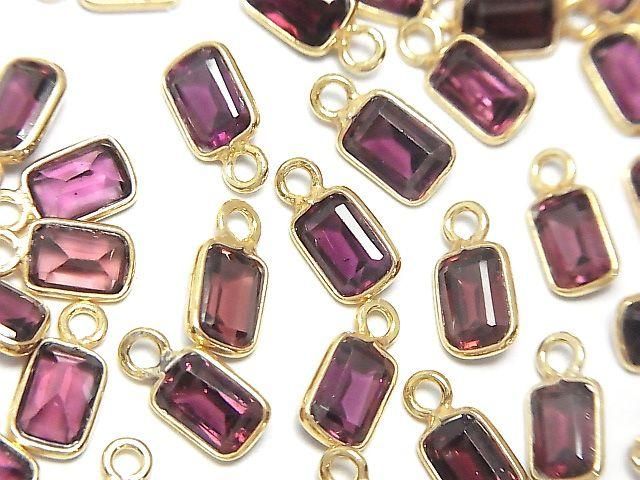
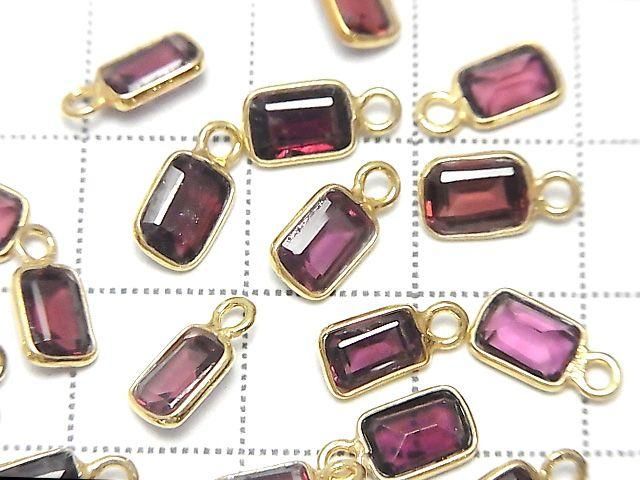
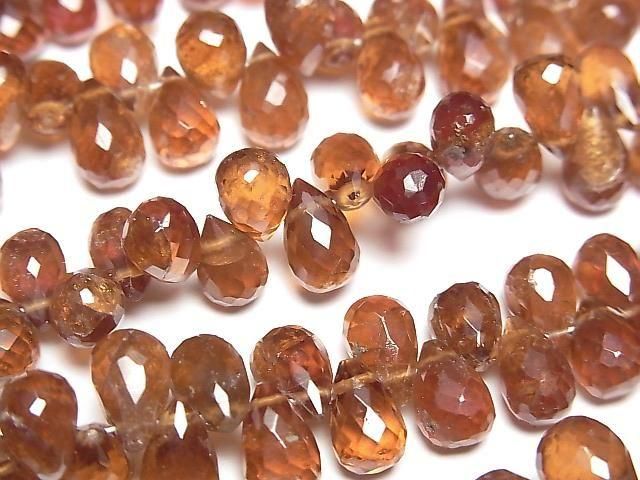
Looking for beautiful garnets? KenKenGems offers a wide selection of garnet for sale in strands, half-strands, and sets, along with large one-of-a-kind stones perfect for a talisman or a focal jewelry piece. Our garnets span the family's full color range — statement red, regal purple, sun-filled orange, and noble green — hand-selected for quality, priced in USD, and shipped across the US and Canada. Browse our garnet inventory to find the color and cut that is right for you.

Source: https://www.gia.edu/garnet

![[One of a kind] High Quality Hessonite Garnet AAA- Loose stone Faceted 1pc No.5](http://store.kenkengems.com/cdn/shop/files/190719008.jpg?v=1776779366&width=640)
![[One of a kind] High Quality Hessonite Garnet AAA- Loose stone Faceted 1pc No.5](http://store.kenkengems.com/cdn/shop/files/190719008_o1.jpg?v=1776779350&width=640)
![[One of a kind] High Quality Hessonite Garnet AAA- Loose stone Faceted 1pc No.9](http://store.kenkengems.com/cdn/shop/files/190719138.jpg?v=1776779245&width=640)
![[One of a kind] High Quality Hessonite Garnet AAA- Loose stone Faceted 1pc No.9](http://store.kenkengems.com/cdn/shop/files/190719138_o1.jpg?v=1776779231&width=640)
![[One of a kind] High Quality Color Change Garnet AAA- Loose stone Faceted 1pc No.13](http://store.kenkengems.com/cdn/shop/files/190722980.jpg?v=1776778468&width=640)
![[One of a kind] High Quality Color Change Garnet AAA- Loose stone Faceted 1pc No.13](http://store.kenkengems.com/cdn/shop/files/190722980_o1.jpg?v=1776778452&width=640)
![[One of a kind] High Quality Hessonite Garnet AAA- Loose stone Faceted 1pc No.4](http://store.kenkengems.com/cdn/shop/files/190718999.jpg?v=1776779392&width=640)
![[One of a kind] High Quality Hessonite Garnet AAA- Loose stone Faceted 1pc No.4](http://store.kenkengems.com/cdn/shop/files/190718999_o1.jpg?v=1776779379&width=640)
![[One of a kind] High Quality Color Change Garnet AAA- Loose stone Faceted 1pc No.14](http://store.kenkengems.com/cdn/shop/files/190722981.jpg?v=1776778420&width=640)
![[One of a kind] High Quality Color Change Garnet AAA- Loose stone Faceted 1pc No.14](http://store.kenkengems.com/cdn/shop/files/190722981_o1.jpg?v=1776778407&width=640)
![[One of a kind] High Quality Hessonite Garnet AAA- Loose stone Faceted 1pc No.7](http://store.kenkengems.com/cdn/shop/files/190719056.jpg?v=1776779305&width=640)
![[One of a kind] High Quality Hessonite Garnet AAA- Loose stone Faceted 1pc No.7](http://store.kenkengems.com/cdn/shop/files/190719056_o1.jpg?v=1776779290&width=640)
![High Quality Dragon Garnet (Malaya Garnet) AAA Drop Faceted Briolette [Pink] 1strand beads (approx. 5 inches/13 cm)](http://store.kenkengems.com/cdn/shop/files/191578784.jpg?v=1779798703&width=640)
![High Quality Dragon Garnet (Malaya Garnet) AAA Drop Faceted Briolette [Pink] 1strand beads (approx. 5 inches/13 cm)](http://store.kenkengems.com/cdn/shop/files/191578784_o1.jpg?v=1779798689&width=640)
![[One of a kind] High Quality Hessonite Garnet AAA- Loose stone Faceted 1pc No.8](http://store.kenkengems.com/cdn/shop/files/190719091.jpg?v=1776779272&width=640)
![[One of a kind] High Quality Hessonite Garnet AAA- Loose stone Faceted 1pc No.8](http://store.kenkengems.com/cdn/shop/files/190719091_o1.jpg?v=1776779259&width=640)


