

TOC
- 1. What Is Larimar?
- 2. Larimar Meaning and History
- 2-1. Larimar Spiritual Meaning
- 3. Larimar Properties: Physical and Chemical
- 4. Larimar Colors
- 5. Larimar Quality and Grades
- 6. Larimar Deposits, Rarity, and Value
- 7. Larimar vs. Turquoise vs. Amazonite
- 8. Larimar in Crystal Lore and Folklore
- 8-1. Emotional and Spiritual Associations
- 9. Metaphysical Associations of Larimar
- 9-1. Larimar and the Throat & Heart Chakras
- 10. How to Care for Larimar
- 11. How to Identify Real Larimar
- 12. Frequently Asked Questions About Larimar
- 12-1. What is larimar?
- 12-2. What does larimar symbolize?
- 12-3. Which chakra is larimar?
- 12-4. Is larimar rare?
- 12-5. Why is larimar so expensive?
- 12-6. Is larimar the same as turquoise?
- 12-7. Can larimar get wet?
- 12-8. Is there fake larimar?
- 13. Larimar Stones from KenKenGems
![Larimar Pectolite AA++ Round [9mm][10mm][11mm] 1strand beads (Bracelet)](http://store.kenkengems.com/cdn/shop/files/1_6b1a7043-f6a8-4402-b848-9132d5d93c1e.jpg?crop=center&height=400&v=1785397047&width=400)
What Is Larimar?
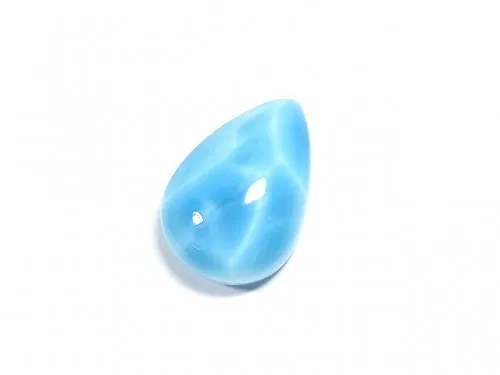
Larimar is a rare blue variety of the silicate mineral pectolite, prized for its sea-blue to turquoise color veined with soft white. It is found in gem quality in only one place on Earth: the Dominican Republic. That single-source origin is what makes the stone genuinely scarce and highly collectible, and it is a fact you can verify rather than a marketing claim.
Because of its ocean-like appearance, larimar is also known by several trade nicknames, including Atlantis stone, dolphin stone, and Dominican turquoise. Its turquoise-to-azure patterning, resembling sunlight scattered across tropical water, has inspired many legends. One popular story links the stone to the lost city of Atlantis. Whatever the folklore, the modern gem was reintroduced to the market in the 20th century and is today popular with jewelry lovers, gemstone collectors, and crystal enthusiasts.
This guide covers what larimar is, its physical and chemical properties, colors and quality grades, how it compares with other blue stones, its value and price, how to identify genuine material, and how to care for it. Larimar for sale.

Larimar Meaning and History
In crystal lore, the meaning of larimar centers on serenity, honest communication, and emotional balance, a stone often described as calm as the sea it resembles. These are traditional beliefs, not medical claims.
The documented history is more concrete. Dominican mining records show that Father Miguel Domingo Fuertes Loren of the Barahona parish requested permission in 1916 to explore a deposit of a blue rock he had found, but pectolite was not yet recognized in the country and the request was rejected. The stone was effectively rediscovered in 1974, when Dominican jeweler Miguel Mendez and Peace Corps volunteer Norman Rilling found blue pebbles on a beach at the foot of the Bahoruco Mountain Range.
Mendez created the name Larimar by combining Larissa, his young daughter's name, with mar, the Spanish word for sea, to evoke the colors of the Caribbean. Local people had long called it simply the 'blue stone,' believing it came from the ocean. The gem is also informally called Atlantis stone, pectolite jade, dolphin stone, and Dominican turquoise.

Larimar Spiritual Meaning
In crystal traditions, larimar is regarded as a stone of tranquility and truthful expression. It is traditionally associated with soothing intense feelings such as anger, worry, and fear, and with a sense of returning to a calm, settled state. It is sometimes called a stone of the goddess and linked to the water and air elements, and is used in practice to encourage serenity, honest communication, and an open heart.
These are traditional beliefs, not medical claims. Larimar is not a substitute for professional medical or psychological care.
Larimar Properties: Physical and Chemical
Larimar is a blue variety of pectolite, an inosilicate (chain silicate) of sodium and calcium with the formula NaCa2Si3O8(OH). It forms in cavities within Miocene-era volcanic rocks such as basalts and andesites. Its distinctive blue coloration is caused mainly by copper substituting for calcium in the pectolite structure, not by ordinary iron or vanadium coloring, which is one reason the color is so specific to this deposit.
Larimar is opaque to translucent with a fine, radiating fibrous structure that gives polished stones a silky, satin sheen. It has perfect cleavage and an uneven fracture. With a Mohs hardness of about 4.5 to 5, it is a relatively soft gem: it can be scratched, chipped, or abraded more easily than quartz-family stones, and prolonged sunlight or heat can fade its color. For this reason larimar is most often set in pendants, earrings, and bracelets, where it is exposed to less wear than in rings.
| Property | Value |
|---|---|
| Mineral | Blue pectolite (inosilicate) |
| Chemical formula | NaCa2Si3O8(OH) |
| Crystal system | Triclinic |
| Hardness (Mohs) | 4.5 - 5 |
| Specific gravity | 2.84 - 2.90 |
| Refractive index | approx. 1.59 - 1.64 |
| Cause of blue color | Copper substitution for calcium |
| Color range | Sky blue, turquoise, green-blue, white; rarely deeper blue |
| Luster | Silky to sub-vitreous |
| Transparency | Opaque to translucent |
| Origin | Dominican Republic (only commercial gem source) |
| Care note | Photosensitive; color fades with prolonged sun and heat |

Larimar Colors
Larimar's color comes from copper within the pectolite, and it ranges widely: from milky white and pale sky blue through green-blue and turquoise to a deeper, saturated 'volcanic blue.' Green tones, and occasional red or brown flecks, can appear where other minerals or oxidation are present.
The color is almost never uniform. Vivid blue zones are broken up by near-white veins, so every stone shows its own pattern, sometimes compared to sunlight on a lagoon, drifting clouds, or a 'turtleback' web. The most prized stones show an intense, even blue with strong, well-defined white contrast. Uniform, flat, or very vivid blue with no natural veining is a warning sign of imitation material (see the identification section below).

Larimar Quality and Grades
There is no single official grading laboratory scale for larimar the way there is for diamonds. Instead, quality is judged mainly by color and pattern. When you see labels such as AAA, AA, or A used by sellers, treat them as descriptive trade grades rather than certified standards, and always look at the actual stone. At KenKenGems we use these terms only to describe relative color and contrast, not as an independent certification.
- Color intensity: the deeper and more even the blue, the rarer and more valuable. Top 'volcanic blue' stones are scarce.
- Contrast and pattern: clean, well-defined blue-and-white marbling is prized; muddy or grayish tones are less desirable.
- Whiteness of veins: bright white webbing against strong blue is more attractive than dull, uneven veining.
- Absence of cracks: because larimar is soft with perfect cleavage, stones free of visible fractures are preferred.
- Size: large stones with even, saturated blue are much rarer and command a premium.
Higher-grade larimar is sometimes set in gold, while most jewelry is set in silver. Because grading is subjective, buying from a seller who describes color and origin honestly matters more than any single grade letter.
Larimar Deposits, Rarity, and Value
Gem-quality larimar comes almost entirely from one small area in the southwest of the Dominican Republic. The most important source is the Los Chupaderos mine near Los Checheses, about 10 km (6 miles) southwest of the city of Barahona, where a single mountainside is worked through roughly 2,000 hand-dug vertical shafts. Trace amounts of pectolite exist elsewhere in the world, but no other locality produces the blue gem material in commercial quantity.
Because the stone comes from this one small region and is extracted largely by hand, larimar is genuinely rare. Prices depend heavily on color, contrast, size, and finish. As a rough guide, small or paler stones can start under $50, while large, even, deep sky-blue pieces with strong white patterning are the most expensive. Prices vary by market and over time, so treat any figure as an estimate rather than a fixed rate.
Its combination of a single natural source, hand mining, and photosensitive color that must be cut and stored carefully all contribute to larimar's value as a collector's stone.
Larimar vs. Turquoise vs. Amazonite
Larimar is often confused with other blue-green stones, especially turquoise and amazonite. They look similar at a glance but differ in mineralogy, origin, and pattern.
| Feature | Larimar | Turquoise | Amazonite |
|---|---|---|---|
| Mineral | Blue pectolite | Copper aluminium phosphate | Microcline feldspar |
| Typical color | Sky-to-volcanic blue with white veins | Sky blue to green, often with brown/black matrix | Blue-green to green, often with white streaks |
| Pattern | Blue-and-white marbling / turtleback web | Web or matrix veining | Streaky, often more uniform green |
| Hardness (Mohs) | 4.5 - 5 | 5 - 6 | 6 - 6.5 |
| Main source | Dominican Republic only | USA, Iran, China and others | Brazil, Russia, USA and others |
| Note | Photosensitive; fades in strong light/heat | Often stabilized or treated | More durable than larimar |
The most reliable way to tell larimar apart is its unique sea-blue-and-white marbling combined with its single Dominican origin. If a 'larimar' looks like flat, uniform turquoise with no natural veining, be cautious.
Larimar in Crystal Lore and Folklore
Across crystal traditions, larimar is described as a calming, 'cooling' stone tied to water and the sky. In folklore it is associated with soothing strong emotions, encouraging patience, and supporting gentle, honest communication. Some practitioners like to hold or wear it over the chest during quiet reflection.
These associations are cultural and spiritual beliefs, not medical claims. Larimar is not a treatment for any physical or mental health condition, and no gemstone can diagnose, cure, treat, or prevent illness. For any health concern, please consult a qualified healthcare professional.

Emotional and Spiritual Associations
In crystal lore, larimar is best known as a stone of emotional calm. Practitioners traditionally associate it with:
- Easing feelings of stress and tension and 'cooling' intense emotions such as anger and fear
- Encouraging calm, patience, and a sense of inner peace
- Supporting clear, compassionate communication
- Comforting during times of grief and encouraging self-care
These are traditional beliefs, not medical claims, and larimar is not a substitute for professional care.
Metaphysical Associations of Larimar
In the Dominican Republic, larimar is traditionally seen as a stone of spirituality and a symbol of love and purity. In crystal lore it is worn as a talisman said to encourage self-reflection and a deeper connection with one's own feelings, and it is often associated with rediscovering affection, respect, and care in relationships.
Some practitioners also associate larimar with contemplation and meditation, and in folklore it is described as helping to clear away 'negative' energy and foster a peaceful atmosphere. These are traditional beliefs, not medical claims.
Larimar and the Throat & Heart Chakras
In chakra traditions, larimar is linked to two energy centers. Its sky-blue color is associated with the throat chakra (Vishuddha) and calm, honest self-expression, while its soothing energy is associated with the heart chakra (Anahata) and compassion. Practitioners sometimes place it at the throat or heart during meditation to focus on speaking kindly and openly.
These are traditional beliefs, not medical claims.
How to Care for Larimar
Larimar is beautiful but delicate. Because it is soft (Mohs 4.5 to 5), has perfect cleavage, and is photosensitive, a little care keeps its color and finish looking their best.
- Keep it out of prolonged sun and heat. Extended sunlight and heat can slowly fade larimar's blue color, so avoid leaving jewelry on a sunny windowsill or in a hot car.
- Avoid hard knocks. Store larimar separately from harder gems and metals to prevent scratches and chips; a soft pouch or lined box is ideal.
- Clean gently. Wipe with a soft, slightly damp cloth and mild soap if needed. Brief contact with water is fine, but avoid prolonged soaking, salt water, and harsh chemicals.
- Skip ultrasonic and steam cleaners, which can damage soft, cleavable stones.
- Choose settings wisely. Larimar is best suited to pendants, earrings, and occasional-wear bracelets rather than everyday rings.
With reasonable care, a larimar stone will keep its sea-blue glow for many years.
How to Identify Real Larimar
Because genuine larimar is rare and comes from only one place, imitations are common online. Under US and Canadian labeling standards, imitation and treated material must be clearly disclosed, and the following terms mean different things:
- Natural (genuine) larimar: untreated blue pectolite from the Dominican Republic.
- Imitation: materials sold to look like larimar, such as dyed howlite or magnesite, blue-dyed stone, or blue glass and resin. These are not larimar and should be labeled as imitation.
- Reconstituted / composite: larimar powder or fragments bonded with resin. This is not solid natural larimar and must be disclosed as reconstituted.
- Synthetic / lab-created: there is no true synthetic or lab-created larimar on the market, so any stone described that way is either mislabeled or an imitation.
To help tell genuine larimar apart:
- Pattern: real larimar shows natural blue-and-white marbling or a 'turtleback' web, not a flat, printed-looking blue.
- Color: authentic hues are soft sky-to-volcanic blue; an overly vivid, perfectly uniform blue is suspicious.
- Feel and weight: natural stone feels cool and dense to the touch.
- Source and disclosure: buy from sellers who confirm Dominican origin and clearly state any dyeing, stabilization, or reconstitution.
Also avoid long sun exposure, which can fade even genuine larimar over time.
Frequently Asked Questions About Larimar
What is larimar?
Larimar is a rare blue variety of the mineral pectolite, found in gem quality only in the Dominican Republic. It is prized for its sea-blue color veined with white.
What does larimar symbolize?
In crystal lore, larimar is traditionally associated with calm, serenity, and honest communication. These are traditional beliefs, not medical claims.
Which chakra is larimar?
In chakra traditions, larimar is mainly linked to the throat chakra and is also associated with the heart chakra. These are traditional beliefs, not medical claims.
Is larimar rare?
Yes. Gem-quality larimar comes from a single small area in the southwest of the Dominican Republic and is mined largely by hand, which makes fine, deep-blue stones genuinely scarce.
Why is larimar so expensive?
It comes from only one small deposit in the Dominican Republic and is hand-mined, so even, saturated sky-blue stones with strong white patterning are rare and cost more.
Is larimar the same as turquoise?
No. They look similar but are different minerals: larimar is blue pectolite from the Dominican Republic, while turquoise is a copper aluminium phosphate found in many countries.
Can larimar get wet?
Brief contact with water is fine, but avoid prolonged soaking and salt water. Keep larimar out of long, direct sunlight and heat, which can fade its color.
Is there fake larimar?
Yes. Dyed howlite, blue glass or resin, and reconstituted (resin-bonded) material are sold as imitations. Genuine larimar shows natural blue-and-white marbling and a Dominican origin, and any treatment should be disclosed.
Larimar Stones from KenKenGems
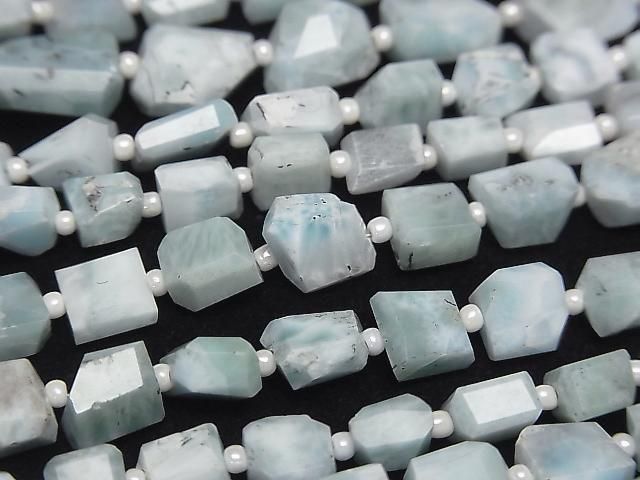
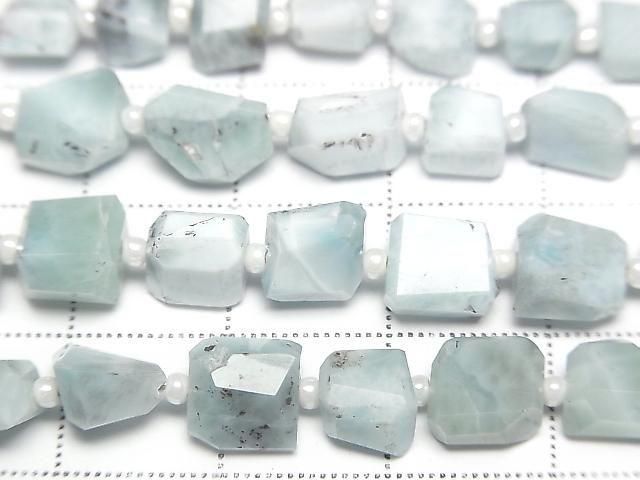
Larimar shows its beauty best when cut en cabochon. KenKenGems offers a wide selection of polished Dominican larimar in round, oval, pear, nugget, and freeform shapes, each with its own natural blue-and-white pattern. Because every stone is unique, larimar makes a thoughtful gift for jewelry makers and collectors.
We supply larimar in strands, necklaces, loose stones, and by the piece, and we clearly describe each item's color and origin so you know exactly what you are buying. We ship worldwide, so you can own a stone from the heart of the Dominican Republic without leaving home.


![[One of a kind] Larimar Pectolite AAA Cabochon 1pc No.643](http://store.kenkengems.com/cdn/shop/files/190782974.jpg?v=1776774434&width=640)
![[One of a kind] Larimar Pectolite AAA Cabochon 1pc No.643](http://store.kenkengems.com/cdn/shop/files/190782974_o1.jpg?v=1776774415&width=640)
![Larimar Pectolite AA++ Round [9mm][10mm][11mm] 1strand beads (Bracelet)](http://store.kenkengems.com/cdn/shop/files/1_6b1a7043-f6a8-4402-b848-9132d5d93c1e.jpg?v=1785397047&width=1280)
![Larimar Pectolite AA++ Round [9mm][10mm][11mm] 1strand beads (Bracelet)](http://store.kenkengems.com/cdn/shop/files/2_17bd5528-8cdf-4910-b388-656f01fa74d0.jpg?v=1785397014&width=1280)
![[One of a kind] Larimar Pectolite AA++ Pear shape (Smooth) 1strand beads (5pcs) No.17](http://store.kenkengems.com/cdn/shop/files/189524898.jpg?v=1765865158&width=640)
![[One of a kind] Larimar Pectolite AA++ Pear shape (Smooth) 1strand beads (5pcs) No.17](http://store.kenkengems.com/cdn/shop/files/189524898_o1.jpg?v=1765865152&width=640)
![[One of a kind] Larimar Pectolite AA++ Pear shape (Smooth) 1strand beads (5pcs) No.20](http://store.kenkengems.com/cdn/shop/files/189524943.jpg?v=1765865193&width=640)
![[One of a kind] Larimar Pectolite AA++ Pear shape (Smooth) 1strand beads (5pcs) No.20](http://store.kenkengems.com/cdn/shop/files/189524943_o1.jpg?v=1765865188&width=640)
![[One of a kind] Larimar Pectolite AAA Round 17mm Bracelet No.502](http://store.kenkengems.com/cdn/shop/files/188322198.jpg?v=1768890624&width=640)
![[One of a kind] Larimar Pectolite AAA Round 17mm Bracelet No.502](http://store.kenkengems.com/cdn/shop/files/188322198_o1.jpg?v=1768890652&width=640)
![[One of a kind] Larimar Pectolite AAA- Cabochon 1pc No.640](http://store.kenkengems.com/cdn/shop/files/189555763.jpg?v=1765863585&width=640)
![[One of a kind] Larimar Pectolite AAA- Cabochon 1pc No.640](http://store.kenkengems.com/cdn/shop/files/189555763_o1.jpg?v=1765863592&width=640)
![[One of a kind] Larimar Pectolite AAA Cabochon 1pc No.648](http://store.kenkengems.com/cdn/shop/files/190783003.jpg?v=1776774278&width=640)
![[One of a kind] Larimar Pectolite AAA Cabochon 1pc No.648](http://store.kenkengems.com/cdn/shop/files/190783003_o1.jpg?v=1776774264&width=640)
![[One of a kind] Larimar Pectolite AA++ Pear shape (Smooth) 1strand beads (5pcs) No.23](http://store.kenkengems.com/cdn/shop/files/189524987.jpg?v=1765865225&width=640)
![[One of a kind] Larimar Pectolite AA++ Pear shape (Smooth) 1strand beads (5pcs) No.23](http://store.kenkengems.com/cdn/shop/files/189524987_o1.jpg?v=1765865229&width=640)
![[One of a kind] Larimar Pectolite AAA- Round 19mm 1pc No.116](http://store.kenkengems.com/cdn/shop/files/188302922.jpg?v=1758615648&width=640)
![[One of a kind] Larimar Pectolite AAA- Round 19mm 1pc No.116](http://store.kenkengems.com/cdn/shop/files/188302922_o1.jpg?v=1758615732&width=640)
![[One of a kind] Larimar Pectolite AAA- Round 19mm 1pc No.111](http://store.kenkengems.com/cdn/shop/files/188302917.jpg?v=1758615678&width=640)
![[One of a kind] Larimar Pectolite AAA- Round 19mm 1pc No.111](http://store.kenkengems.com/cdn/shop/files/188302917_o1.jpg?v=1758615672&width=640)
![[One of a kind] Larimar Pectolite AA++ Pear shape (Smooth) 1strand beads (5pcs) No.12](http://store.kenkengems.com/cdn/shop/files/189524840.jpg?v=1765865092&width=640)
![[One of a kind] Larimar Pectolite AA++ Pear shape (Smooth) 1strand beads (5pcs) No.12](http://store.kenkengems.com/cdn/shop/files/189524840_o1.jpg?v=1765865098&width=640)


