
TOC
- 1. What Is K2 Stone? Definition and Quick Answer
- 1-1. K2 Stone Quick Facts
- 2. What K2 Stone Is Made Of (and Why It Looks Dyed)
- 2-1. K2 Azurite vs. K2 Jasper: What's the Difference?
- 3. K2 Stone Meaning and Symbolism
- 3-1. K2 Stone Spiritual Meaning
- 4. K2 Stone in Jewelry: Working With a Soft Stone
- 5. K2 Stone Value: How Much Is It Worth?
- 6. How to Tell Real K2 Stone from Dyed Imitations
- 7. K2 Stone Healing Properties and Benefits
- 7-1. Mental Clarity and Intuition
- 8. K2 Stone Metaphysical Properties
- 8-1. K2 Stone Chakra Connections
- 9. How to Clean and Care for K2 Stone
- 10. Frequently Asked Questions About K2 Stone
- 10-1. What is K2 stone good for?
- 10-2. Is K2 stone the same as K2 Jasper?
- 10-3. Is K2 stone natural or dyed?
- 10-4. Where does K2 stone come from?
- 10-5. Is K2 stone rare?
- 10-6. Can I wear K2 stone in a ring?
- 10-7. Can K2 stone go in water?
- 10-8. What chakra is K2 stone associated with?
- 11. Shop K2 Stone (K2 Azurite) Cabochons, Beads, and Loose Stones at KenKenGems
![[One of a kind] Himalayan K2 Azurite Angel No.25](http://store.kenkengems.com/cdn/shop/files/190799215.jpg?crop=center&height=400&v=1776773919&width=400)
What Is K2 Stone? Definition and Quick Answer
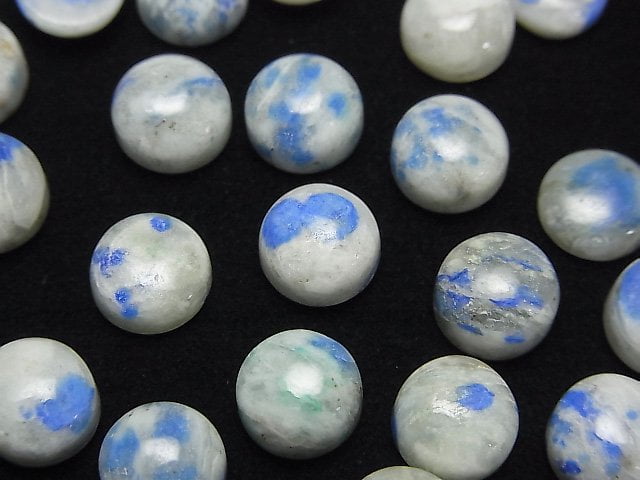
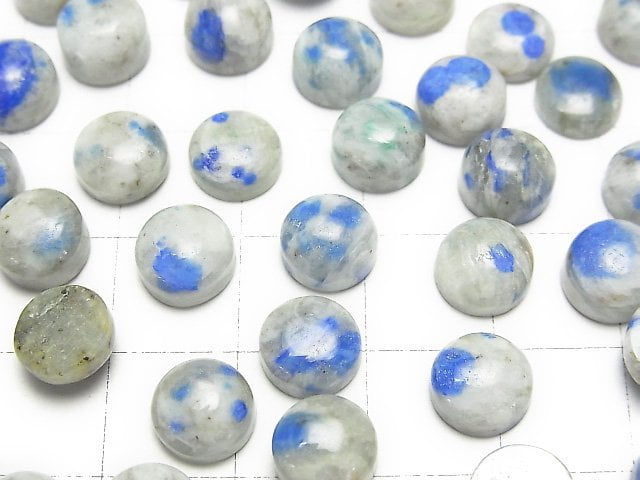
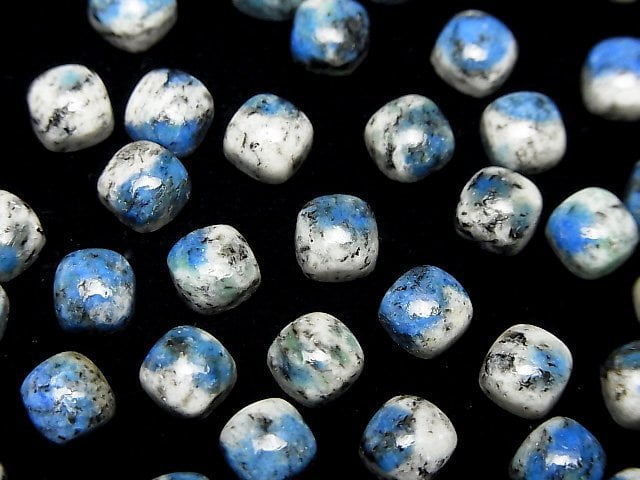
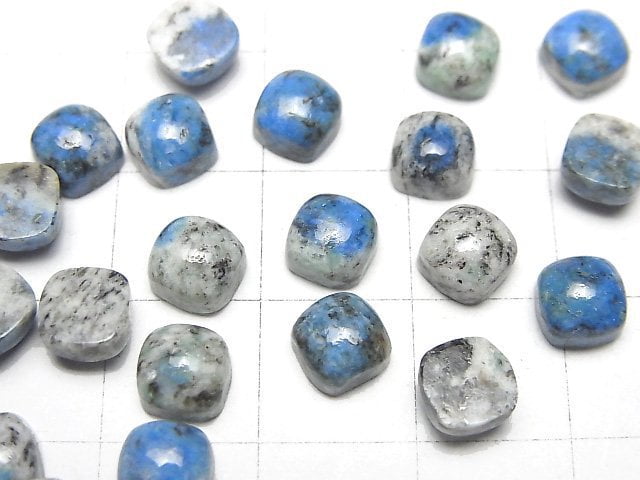
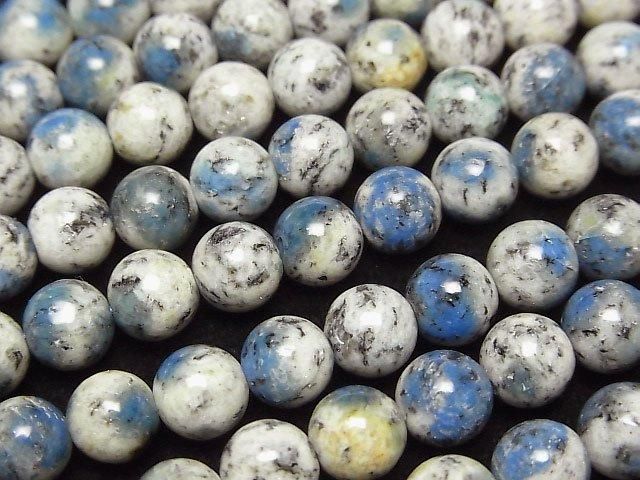
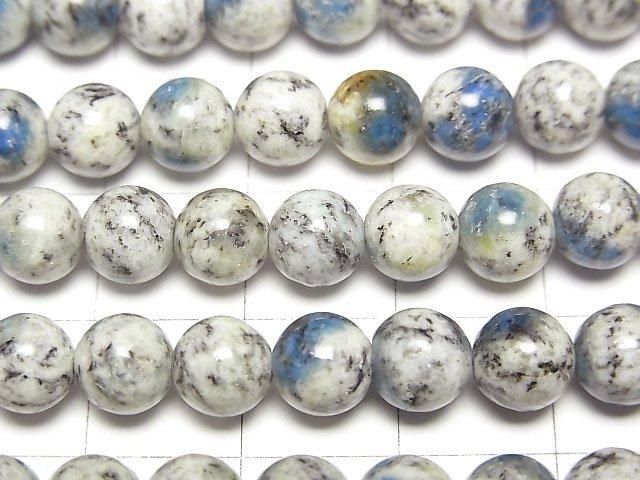
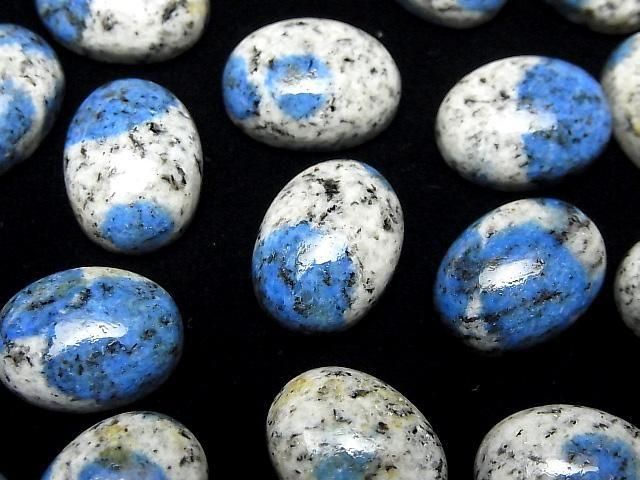
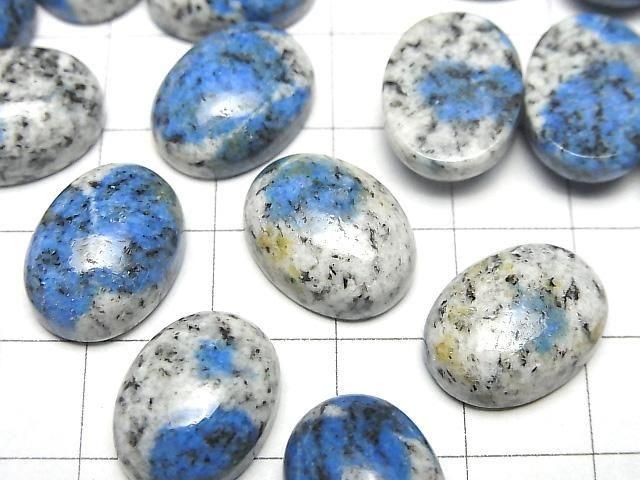
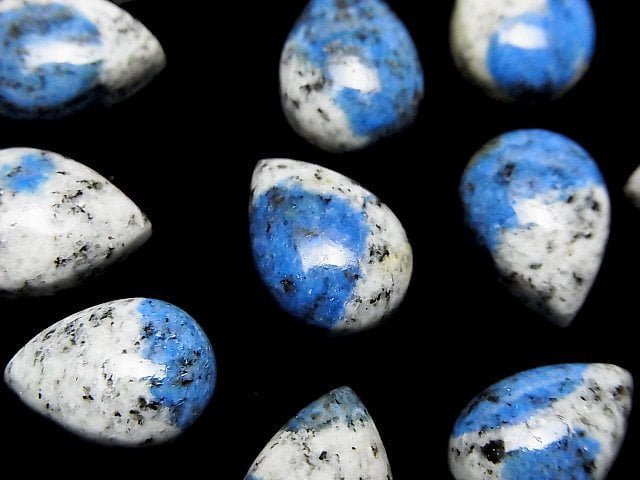
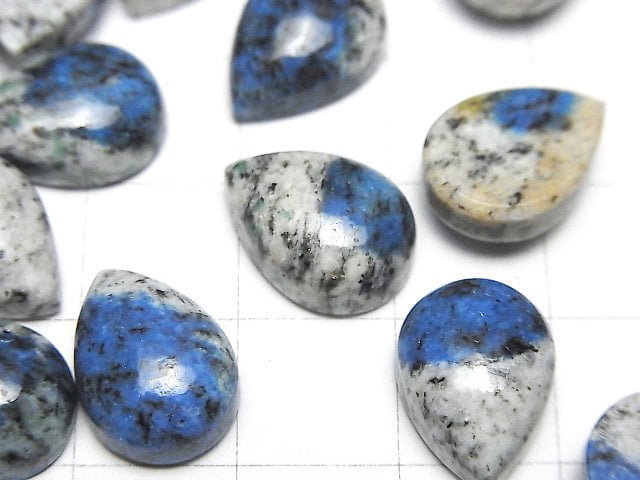
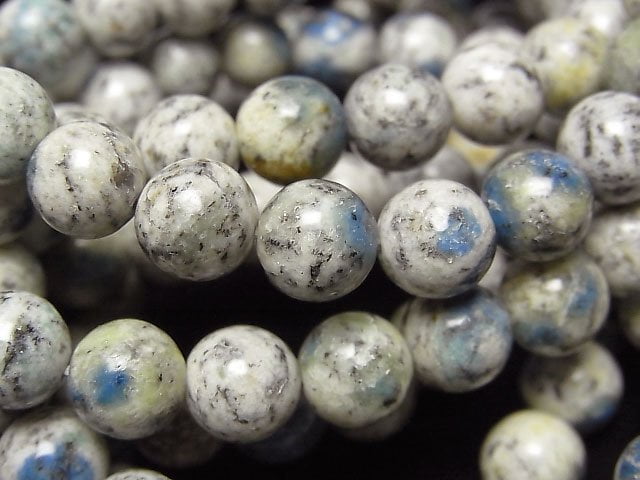
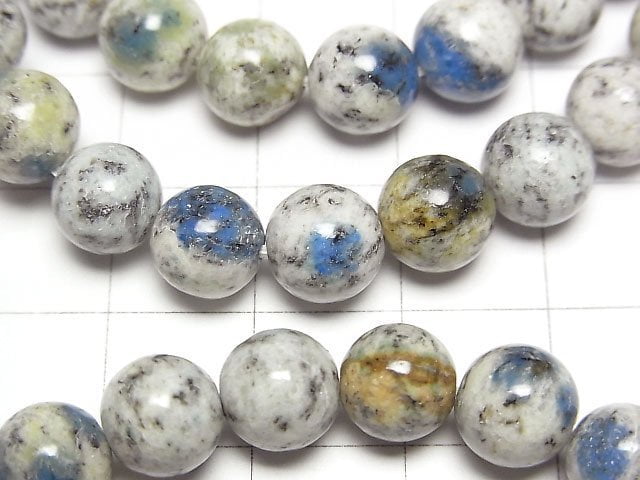
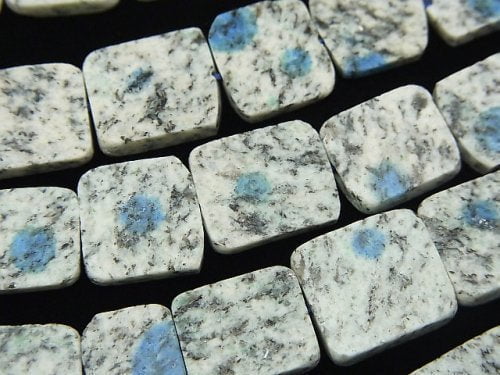
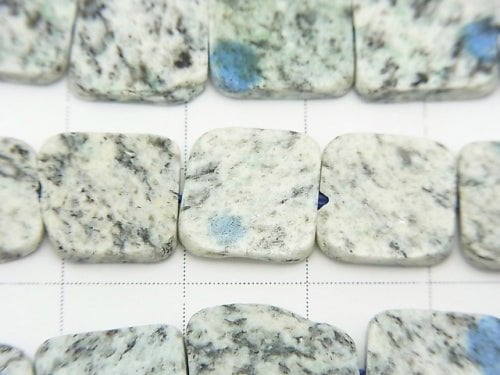
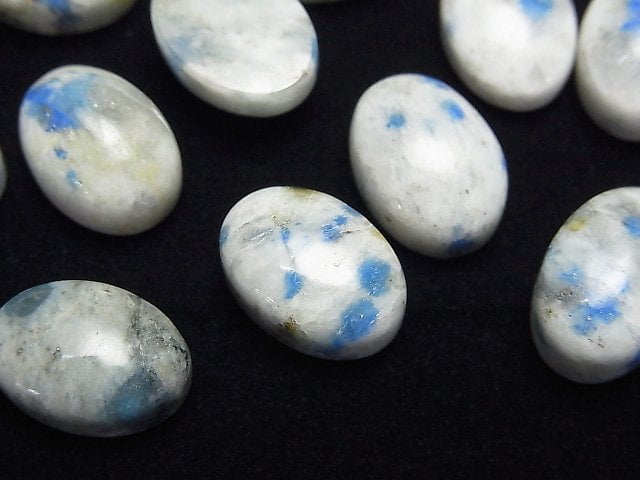
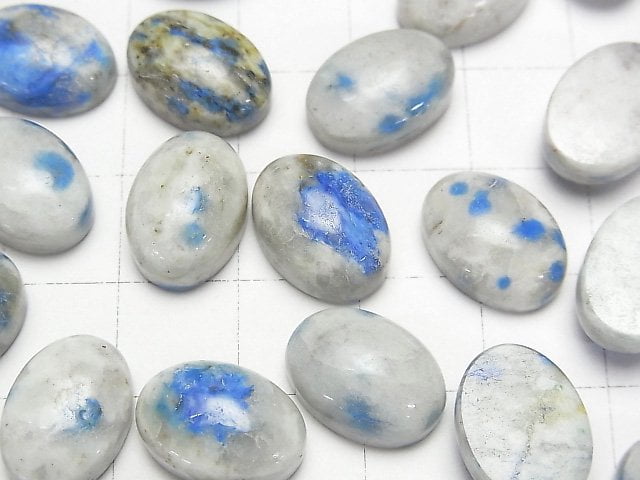
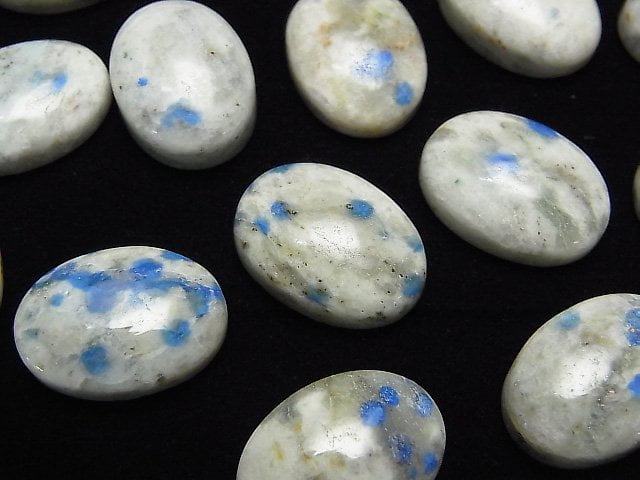
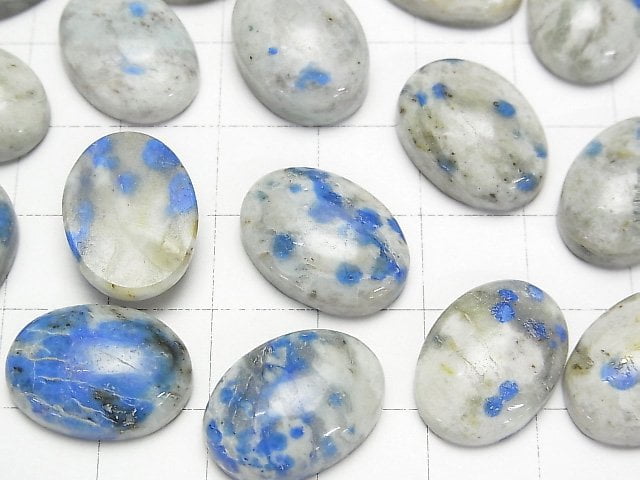
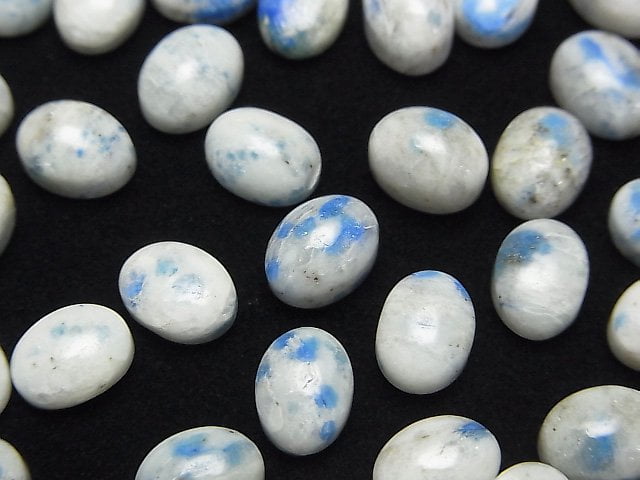
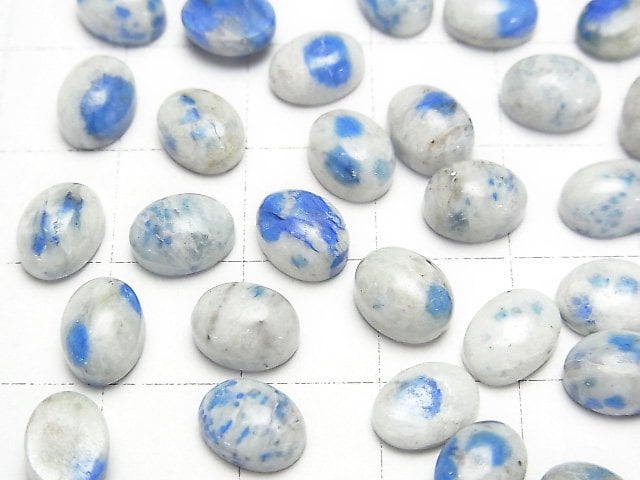
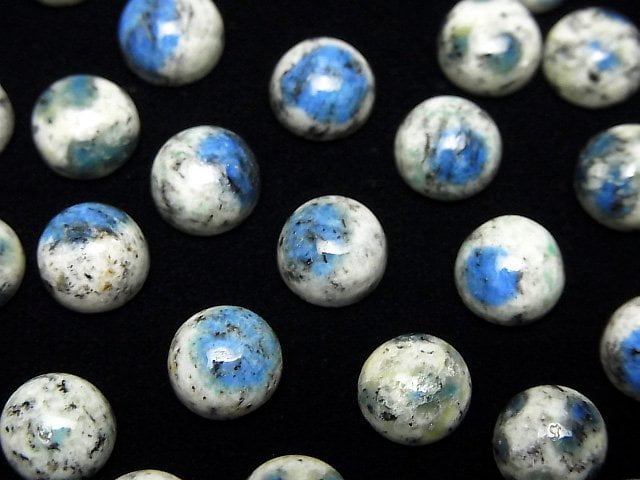
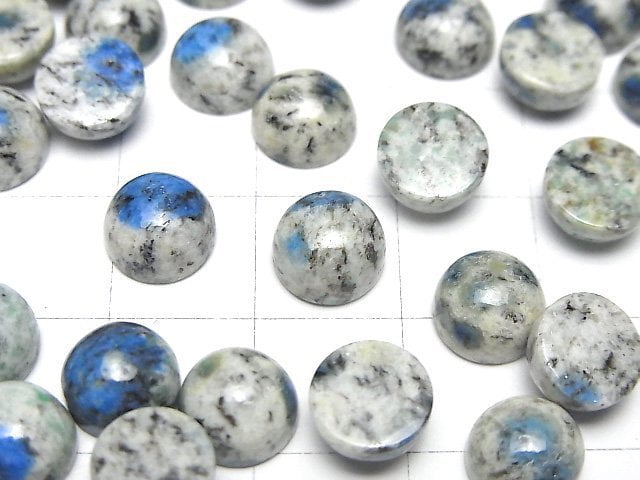
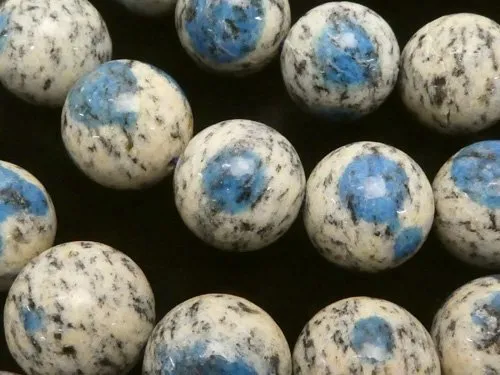
K2 stone is a natural combination of two minerals: pale granite as the host rock, with small round spots of blue azurite scattered across it like raindrops. That distinctive look — blue orbs on white-gray stone — is why it's most accurately called K2 Azurite or Raindrop Azurite. It forms high in the Karakoram Range near K2, the world's second-highest mountain, on the Pakistan–China border, which is where the name comes from.
A quick note on names: this stone is often sold as “K2 Jasper,” but that label is misleading — the blue spots are azurite in granite, not jasper (a form of quartz). We'll cover the difference below so you know exactly what you're buying. Because K2 is mined at extreme altitude in a small area, supply is limited, which adds to its appeal for collectors.

K2 Stone Quick Facts
| Property | Detail |
|---|---|
| Rock Type | Granite host with azurite (sometimes malachite) orbs |
| Color | White-gray granite with blue (occasionally green) spots |
| Hardness (Mohs) | ~3.5–4 for the azurite orbs (soft); the granite host is harder, around 6 |
| Common Names | K2 Azurite, Raindrop Azurite, K2 Granite (also sold as “K2 Jasper”) |
| Not to Confuse With | True jasper (a quartz); K2’s spots are azurite, not jasper |
| Chakras | Third eye and crown |
| Zodiac Signs | Commonly linked to Libra and Sagittarius |
| Source | Karakoram Range near K2 — Skardu area, northern Pakistan (possibly the China side) |
| Keywords | Intuition, focus, calm, insight |
What K2 Stone Is Made Of (and Why It Looks Dyed)
The blue spots in K2 stone are real azurite, a copper carbonate mineral whose color comes from copper — the same mineral that colors many prized blue specimens worldwide. The white-to-gray host is granite, made of quartz, feldspar, and mica. Occasionally the orbs are green malachite (azurite's close chemical cousin) instead of blue azurite.
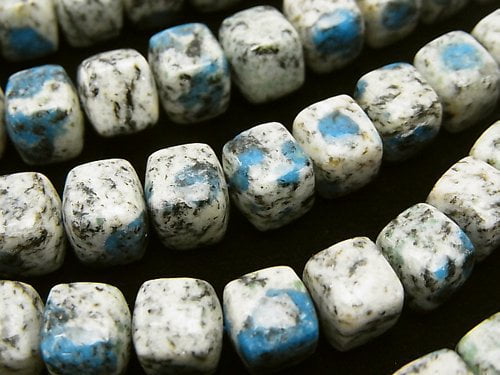
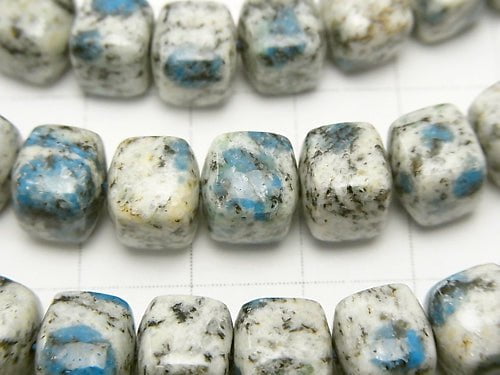
Under a hand lens, the host shows the classic granite recipe: fine-grained quartz, sodium-rich plagioclase feldspar, muscovite, and black flakes of biotite — some pieces show enough biotite alignment to be described as a granite gneiss. The azurite itself sits along mineral grain boundaries and inside tiny fractures, and even penetrates the feldspar like a natural stain. That tells geologists the azurite is a secondary mineral that arrived after the granite had fully solidified from its parent melt.
What makes K2 remarkable is that azurite and granite almost never occur together in nature. Geologists believe the azurite formed later, when copper-rich fluids seeped into the already-solid granite and precipitated into round spots. That rarity is exactly why many first-time buyers assume K2 must be dyed — but genuine K2 stone is entirely natural. (Dyed imitations do exist, though; see how to spot them below.)
K2 Azurite vs. K2 Jasper: What's the Difference?
Short answer: they're not the same stone, even though the names are used interchangeably in stores. Here's the distinction:
- K2 Azurite (this stone) — blue azurite orbs in a granite host. The color is copper-based azurite, and the rock is genuinely azurite-in-granite
- “K2 Jasper” — a marketing name often used for the very same azurite-in-granite material, which is inaccurate because true jasper is a form of quartz, not azurite or granite. Some sellers also use “K2 Jasper” loosely for other spotted stones
Why it matters: when shopping, don't rely on the word “jasper.” Look at what the stone actually is — blue azurite spots on pale granite. If a seller can confirm it's natural azurite-in-granite from the K2/Karakoram region, you're getting the real thing regardless of which trade name is on the label.
K2 Stone Meaning and Symbolism
The core K2 stone meaning is insight — the meeting of earth and sky. Its grounding granite base paired with azurite's sky-blue spots makes it a symbol of staying grounded while reaching for higher awareness. In crystal lore, K2 is seen as a stone that links a clear, calm mind to deeper intuition.
In modern crystal practice, K2 stone is traditionally associated with:
- Intuition and inner insight
- Mental clarity, focus, and calm
- Balance between the practical (granite) and the spiritual (azurite)
- Truth-seeking and critical thinking
- A steadier perspective on worries and racing thoughts
Because of these themes, K2 is a favorite of people drawn to meditation, study, and self-reflection. These are traditional beliefs, not medical claims.
K2 Stone Spiritual Meaning
Spiritually, K2 is regarded as a bridge stone: practitioners believe it connects everyday, grounded awareness with higher intuition and insight. It's associated in lore with quieting mental chatter, hearing your inner voice, and approaching spiritual growth with a calm, discerning mind rather than blind belief. Many people who read tarot or practice meditation keep K2 nearby as a focus and intuition aid.
K2 Stone in Jewelry: Working With a Soft Stone
K2 stone is soft — the azurite orbs sit around 3.5–4 on the Mohs scale — so it needs more care than quartz-based gems. It cuts and polishes beautifully but scratches easily and can chip, which is why you'll mostly see it as cabochons, beads, ovals, and slabs rather than faceted stones. For rings and bracelets, which take the most impact, choose protective bezel (closed) settings or stabilized material.
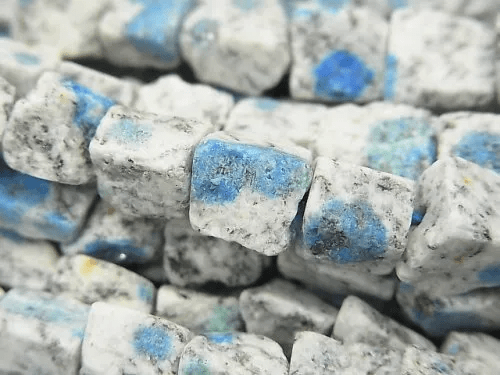
In the workshop, K2 actually cuts, tumbles, and polishes well: its high feldspar content lets it saw cleanly and shape quickly, and because the azurite is a stain rather than loose grains, the blue orbs take the same polish as the surrounding rock. The feldspar-rich body is harder — around 6 on the Mohs scale — so finished cabochons hold up a little better than the 3.5–4 figure alone suggests, though high-impact rings and bracelets are still best avoided. Well-defined cut beads are comparatively scarce, since only a fraction of cut pieces happen to reveal a strong blue spot.
K2 is at its best in low-impact pieces like pendants, earrings, brooches, and statement necklaces, where its blue-on-white pattern is the star. For jewelry makers, K2 cabochons make eye-catching focal pieces, and each one is unique — no two spot patterns are alike.
K2 Stone Value: How Much Is It Worth?
K2 stone is rare but affordable — its scarcity makes it collectible, yet it isn't a precious gem, so prices stay reasonable. Typical US ranges:
- Rough by the pound: about $30–$50 (comparable to nice agates and jaspers)
- Tumbled stones and small cabochons: a few dollars to about $20
- Larger cabochons and beads: roughly $15–$60 depending on pattern and size
- Fine display slabs and drilled beads for jewelry: more, based on quality
What drives value is the pattern: a crisp, snow-white granite background scattered with well-defined, evenly distributed blue azurite orbs of varying sizes is the most sought-after. A muddy background or sparse, faded spots lowers the value.
How to Tell Real K2 Stone from Dyed Imitations
Because K2's blue spots look almost too perfect, dyed imitations do exist — usually plain gray granite injected or surface-dyed with blue to fake azurite. Here's how to check:
- Look at the edges of the spots : real azurite orbs have soft, natural boundaries and slight depth; dyed spots often have sharp, ink-like edges or bleed into cracks
- Check color consistency : natural azurite varies subtly in tone; dyed blue is often flat and uniform, sometimes unnaturally vivid
- Inspect cracks and back : dye tends to pool in fractures and on the reverse of a slab
- Green is a good sign : occasional green (malachite) orbs among the blue are hard to fake and point to natural material
- Buy from sellers who confirm the stone is natural, untreated K2
Genuine K2 is affordable enough that there's little reason to accept dyed stone — knowing the signs protects your purchase.
K2 Stone Healing Properties and Benefits
In crystal healing tradition, K2 is known as a mind and intuition stone: practitioners reach for it to calm mental chatter, sharpen focus, and tune into inner guidance. Its energy is described in lore as clarifying and centering — grounding you while lifting your perspective.
*Important note: the K2 benefits described below reflect metaphysical traditions and personal practice, not medical science. These are traditional beliefs, not medical claims, and crystals are not a substitute for professional medical or mental-health care.*

Mental Clarity and Intuition
K2 is above all a stone for the mind. In crystal lore, it is traditionally used to:
- Quiet racing thoughts and support concentration during study or deep work
- Encourage intuition and trust in inner guidance
- Bring a steadier perspective to anxious or irrational worries
- Balance logic and intuition when making decisions
- Support meditation and calm self-reflection
A common practice is to hold K2 or rest it on the brow (third eye) during meditation, using its calm blue energy to settle the mind before focused work or journaling. These are traditional beliefs, not medical claims.
K2 Stone Metaphysical Properties
Metaphysically, K2 is considered a stone of higher awareness grounded in calm. Practitioners believe it:
- Awakens intuition and psychic perception (a favorite for tarot and meditation)
- Connects the grounded self with higher wisdom and insight
- Clears mental fog and supports the search for truth
- Helps understand and release irrational fears
- Balances strong emotions like sadness and frustration rather than suppressing them
With its blend of grounding granite and intuitive azurite, K2 is especially popular with thinkers, researchers, writers, and anyone doing focused inner work. These are traditional beliefs, not medical claims.

K2 Stone Chakra Connections
K2 works mainly with the third eye and crown chakras. At the third eye, it's used to strengthen intuition, insight, and mental clarity; at the crown, it's associated with higher awareness and spiritual connection. The azurite spots are considered the intuitive, activating element, while the granite grounds that energy so it stays practical and calm. This pairing is why K2 is valued in crystal lore as a stone that opens the mind without leaving you ungrounded.
How to Clean and Care for K2 Stone
K2 stone is soft and porous, so treat it gently. Physical care: wipe with a soft, barely damp cloth and dry right away — avoid soaking, salt water, ultrasonic and steam cleaners, and household chemicals, all of which can damage the azurite or dull the surface. Because azurite can fade, keep K2 out of prolonged direct sunlight and heat. Store it separately so harder stones don't scratch it.
For energetic cleansing, use only gentle, dry methods: smoke (sage or palo santo), sound, or a short rest on a selenite plate. Skip water and salt cleansing, which are hard on this soft, copper-bearing stone.
Frequently Asked Questions About K2 Stone
What is K2 stone good for?
In crystal lore, K2 is used for mental clarity, focus, and intuition. People meditate with it, keep it on a desk for concentration, or use it in tarot and inner work — it's known as a calm, mind-focused stone. These are traditional beliefs, not medical claims.
Is K2 stone the same as K2 Jasper?
Not exactly. K2 stone is azurite in granite, and “K2 Jasper” is a common but inaccurate trade name for it — true jasper is a quartz, which K2 is not. When you see “K2 Jasper,” check that the stone is genuine azurite-in-granite from the K2 region.
Is K2 stone natural or dyed?
Genuine K2 is entirely natural — the blue spots are real azurite. However, dyed imitations of plain granite do exist, so check that spot edges look natural (not ink-sharp) and buy from sellers who confirm the stone is untreated.
Where does K2 stone come from?
Only from the Karakoram Range near K2, the world's second-highest mountain, on the Pakistan–China border — the azurite granite is found in colluvium near the base of the mountain, in the remote Skardu area of northern Pakistan. Its high-altitude source is why supply is limited.
Is K2 stone rare?
Yes. Azurite and granite almost never occur together, and K2 is mined from a small, hard-to-reach area at extreme altitude, so supply is limited. It stays affordable, though, because it isn't a precious gem — which makes it a popular collector's stone.
Can I wear K2 stone in a ring?
It's better suited to low-impact jewelry like pendants and earrings. The azurite orbs are soft (Mohs ~3.5–4) and the stone can scratch or chip, so if you do set it in a ring or bracelet, choose a protective bezel setting and remove it before rough tasks.
Can K2 stone go in water?
It's best to keep K2 dry. It's soft and contains azurite, which doesn't like water — clean it with a dry or barely damp cloth and cleanse it with smoke or sound instead.
What chakra is K2 stone associated with?
Mainly the third eye (intuition) and crown (higher awareness) chakras, with the granite base adding a grounding influence.
Shop K2 Stone (K2 Azurite) Cabochons, Beads, and Loose Stones at KenKenGems
Ready to add K2's blue-on-white magic to your collection or designs? KenKenGems is a Japan-based gemstone supplier trusted by jewelry makers worldwide, and every K2 piece we offer is genuine, untreated azurite-in-granite hand-selected for crisp spot patterns. You'll find:
- K2 cabochons — expertly cut to show off each unique raindrop pattern
- K2 beads and strands, drilled and undrilled, for custom jewelry
- Matched sets and silver-set pieces
Prices are listed in USD, and we ship to the United States and Canada.