TOC
- 1. What Is Unakite?
- 1-1. Unakite Composition and Physical Properties
- 1-2. Is Unakite a Jasper?
- 2. The History and Meaning of Unakite
- 3. Where Is Unakite Found?
- 4. Unakite Healing Properties and Benefits
- 4-1. Emotional Healing and Balance
- 4-2. Unakite Chakra Associations
- 4-3. Unakite Zodiac Signs and Birthstone
- 5. How to Use Unakite
- 6. How to Cleanse and Care for Unakite
- 6-1. Energetic Cleansing Methods
- 6-2. Unakite Jewelry Care Tips
- 7. Unakite for Jewelry Making: Tips from Kenkengems
- 8. Frequently Asked Questions About Unakite
- 8-1. What is unakite good for?
- 8-2. Is unakite rare or valuable?
- 8-3. Can unakite go in water?
- 8-4. What is the difference between unakite and epidote?
- 9. Shop Unakite Beads and Cabochons at Kenkengems

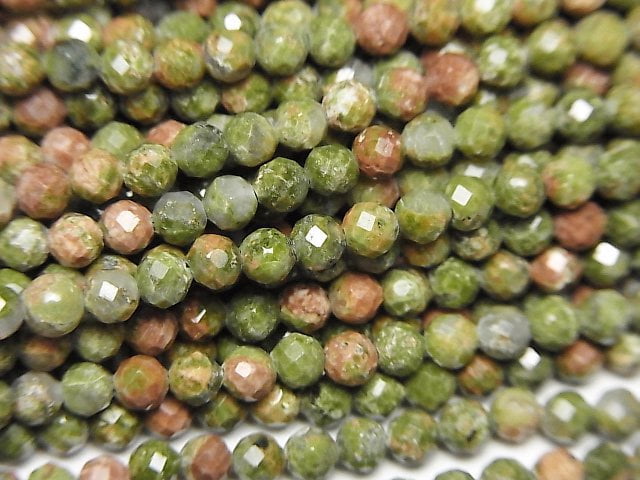
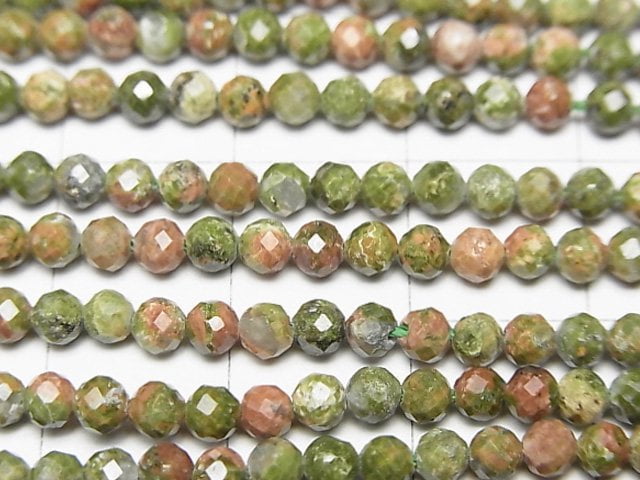
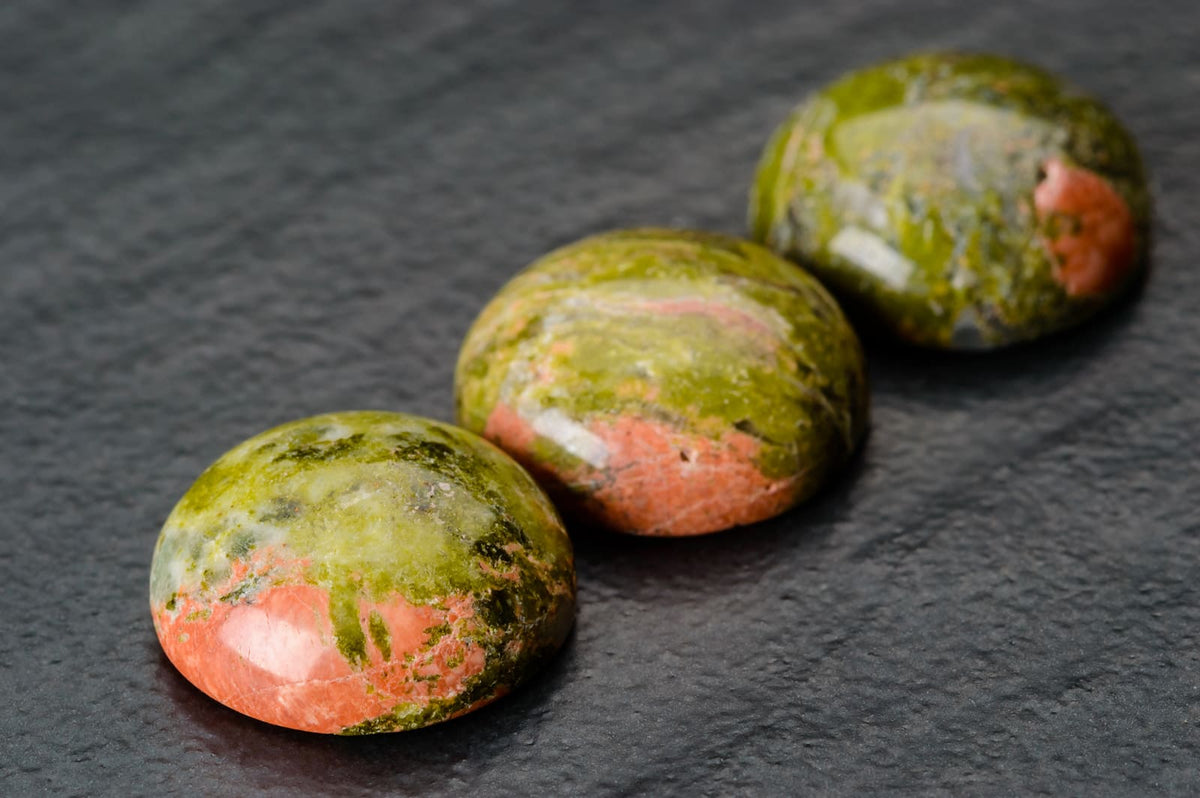
Unakite is an altered granite made up of green epidote, pink orthoclase feldspar, and colorless quartz, giving the stone its signature mottled pink-and-green look. First found in the Unaka Mountains of North Carolina and Tennessee, it is prized in crystal healing as a stone of emotional balance—and loved by jewelry makers as a durable, affordable gem.
In this guide, you'll learn what unakite is, its meaning and history, its healing and metaphysical properties, and how to use, cleanse, and care for it, plus practical tips for choosing unakite beads and cabochons for your next project.

What Is Unakite?
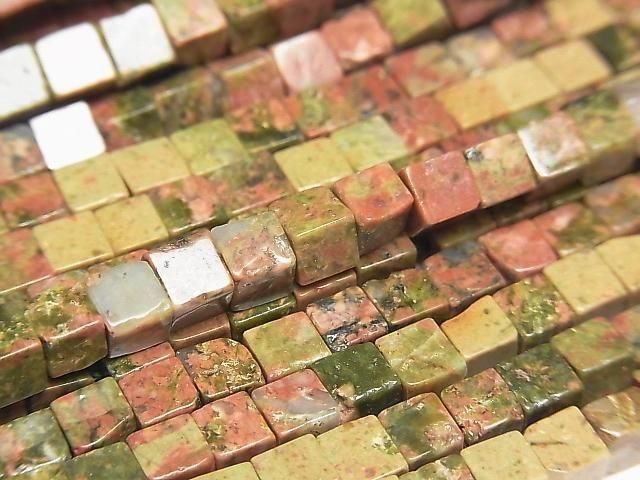
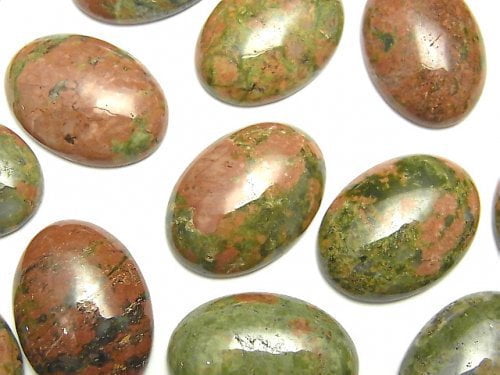
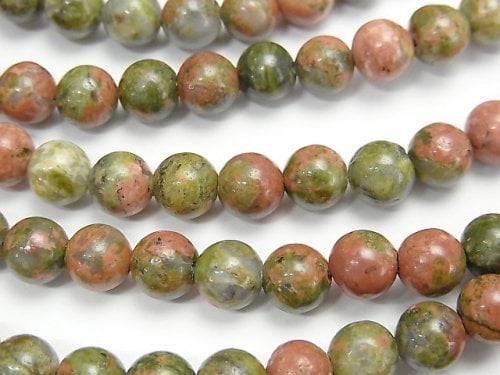
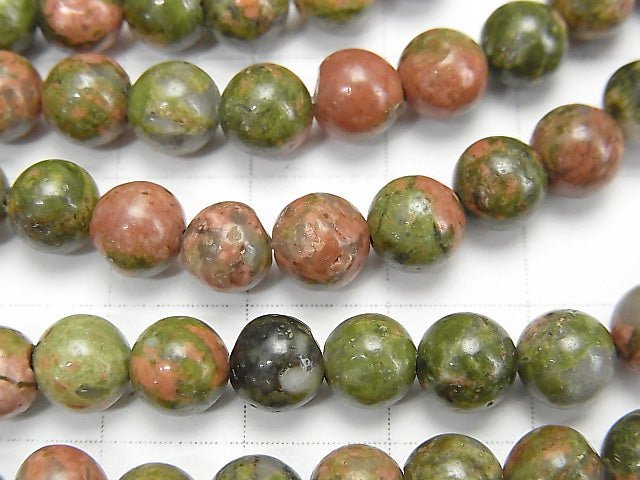
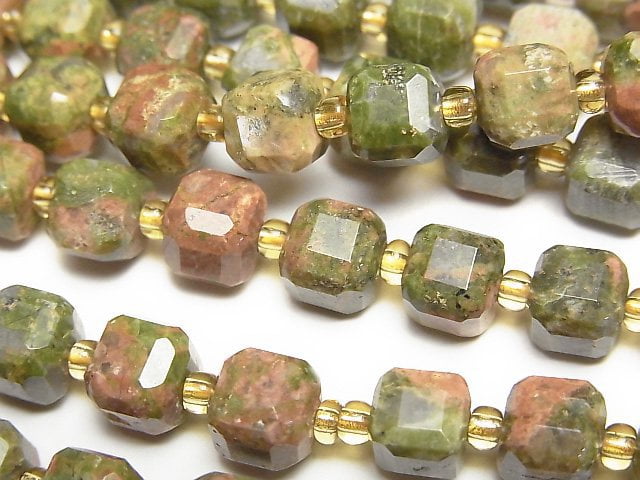
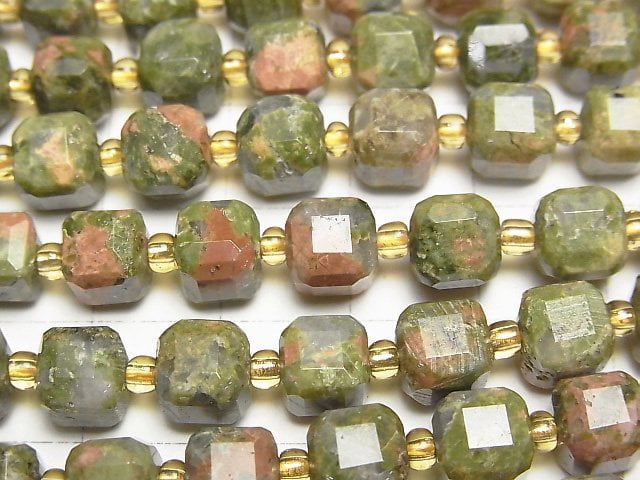
Unakite is a rock, not a single mineral: it forms when granite is altered by hydrothermal fluids, a process (called epidotization) that replaces some of the original minerals with green epidote. The result—often called epidotized granite—is an opaque stone blending moss-green epidote, salmon-pink orthoclase feldspar, and clear to milky quartz in bold, mottled patterns. No two pieces look exactly alike, which is a large part of its appeal.
Because all three component minerals are abundant in the Earth's crust, unakite is widely available and budget-friendly, making it one of the most accessible pink-and-green gemstones on the market.
Unakite Composition and Physical Properties
| Rock type | Altered (epidotized) granite |
| Composition | Green epidote, pink orthoclase feldspar, quartz (trace magnetite or zircon possible) |
| Color | Green with pink to salmon patches |
| Mohs hardness | 6–7 (varies with mineral mix) |
| Luster | Silky to matte when polished |
| Transparency | Opaque |
| Main sources | United States (NC, TN, VA, Lake Superior area), South Africa, Sierra Leone, Zimbabwe, Brazil, China |
With a Mohs hardness of about 6 to 7, unakite is hard enough for everyday jewelry such as necklaces, earrings, and pendants. Like granite, however, it can chip or cleave under a sharp impact, so protective settings are recommended for rings and bracelets that take frequent knocks.
Is Unakite a Jasper?
No—despite the popular trade name "unakite jasper," unakite is not a true jasper. Jasper is an opaque variety of microcrystalline quartz (chalcedony), while unakite is an altered granite composed of three distinct minerals. The nickname stuck because both stones are opaque and take a beautiful polish, so you will still see "unakite jasper" used by many bead and gem sellers. Whichever name it is sold under, the material is the same stone.
The History and Meaning of Unakite
Unakite takes its name from the Unaka Range, part of the Blue Ridge Mountains along the North Carolina–Tennessee border, where it was first described in the 1870s. The stone soon found use as a decorative building material: polished unakite trims the front steps of the Smithsonian's National Museum of Natural History in Washington, D.C., and appears as floor tile at its south entrance—an easy place for U.S. readers to see it in person.
In crystal lore, unakite's meaning centers on balance and gentle renewal. Its two dominant colors are read as complementary energies—green epidote for growth and grounding, pink feldspar for love and compassion—so the stone has come to symbolize the union of heart and mind. Many people turn to unakite when they want to release old emotional patterns and move forward at a steady, sustainable pace.

Where Is Unakite Found?
The best-known unakite deposits are in the southeastern United States—North Carolina, Tennessee, and Virginia—where the stone occurs in the Blue Ridge Mountains. Glacial activity also carried unakite far from its source: rounded unakite pebbles are a popular find on Lake Superior beaches in Michigan, where rockhounds collect them alongside agates.
Outside the U.S., commercial quantities of unakite come from South Africa, Sierra Leone, and Zimbabwe, with additional occurrences reported in Brazil and China. Most unakite beads and cabochons on the market today are cut from African material, which shows the classic high-contrast green-and-pink pattern.
Unakite Healing Properties and Benefits
In crystal healing traditions, unakite is regarded above all as a stone of emotional balance. Practitioners describe its energy as gentle rather than intense: a stone believed to help surface and release buried emotions slowly, support recovery from grief or disappointment, and encourage patience with long-term change.
Note: Metaphysical and healing properties are part of traditional and spiritual belief systems. They are not supported by scientific evidence and are not a substitute for professional medical care.

Emotional Healing and Balance
Unakite is believed to help integrate emotion with reason—the pink and green within a single stone are seen as a reminder that the heart and mind work best together. It is often recommended for people working through past hurts, letting go of unhelpful habits, or navigating slow transitions such as a career change or recovery, where steady persistence matters more than quick fixes.
Unakite Chakra Associations
Unakite is most strongly associated with the heart chakra, the energy center linked to love, compassion, and emotional well-being—its pink and green colors are the classic heart chakra palette. Some practitioners also connect unakite to the third eye chakra, using it in meditation, visualization, and scrying to encourage insight and inner vision.

Unakite Zodiac Signs and Birthstone
Unakite is not an official modern birthstone, though some older lists associate it with March. Astrologically, it is most often linked to Scorpio and Capricorn—signs said to benefit from its patient, balancing energy. That said, you don't need to be born under either sign to work with unakite; in crystal traditions it is considered a universally gentle stone.
How to Use Unakite
- Wear it as jewelry: A pendant or necklace keeps unakite near the heart chakra—the placement most practitioners recommend.
- Meditate with it: Hold a tumbled stone or place it over your heart or brow during quiet reflection.
- Keep it in your space: A sphere or raw chunk on a desk or nightstand adds calming color; some people place a stone under the pillow to encourage restful sleep.
- Carry a pocket stone: Tumbled unakite is inexpensive and durable, making it an easy everyday companion.
- Pair it with other stones: Unakite combines naturally with rose quartz for heart-centered intentions, or with epidote and peach moonstone, which share its geological family.
How to Cleanse and Care for Unakite
Unakite is easy to maintain, but as a composite stone it needs slightly gentler treatment than a single-mineral gem like quartz.
Energetic Cleansing Methods
Popular ways to cleanse unakite's energy include a brief rinse under lukewarm running water, an overnight rest in moonlight, smoke cleansing with incense or herbs, or burying the stone in soil for a day to "reground" it. Avoid prolonged soaking and extended direct sunlight, which can dull the polish over time.
Unakite Jewelry Care Tips
Clean unakite jewelry with mild soap, lukewarm water, and a soft cloth. Skip ultrasonic and steam cleaners—vibration and heat can stress the boundaries between its component minerals—and keep the stone away from harsh household chemicals. Store pieces separately from harder gems such as topaz or sapphire, which can scratch unakite's surface.
Unakite for Jewelry Making: Tips from Kenkengems
As a gemstone bead wholesaler, we handle a large volume of unakite strands and cabochons every year. Here is what we've learned:

- Pattern matching is nearly impossible—and that's the point. Epidote is distributed unevenly, so every bead is unique. Lean into the variation with asymmetrical designs instead of hunting for identical pairs.
- Color pairings: Unakite's green pops next to green aventurine, while its salmon-pink patches come forward when strung with red jasper or carnelian. Black onyx and antique brass findings give it an earthy, unisex look.
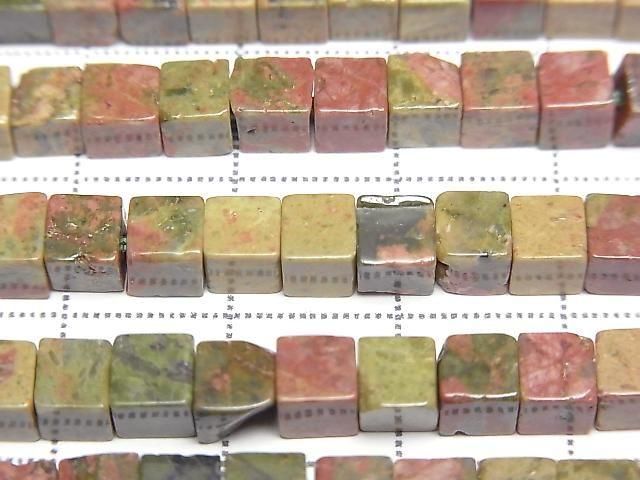
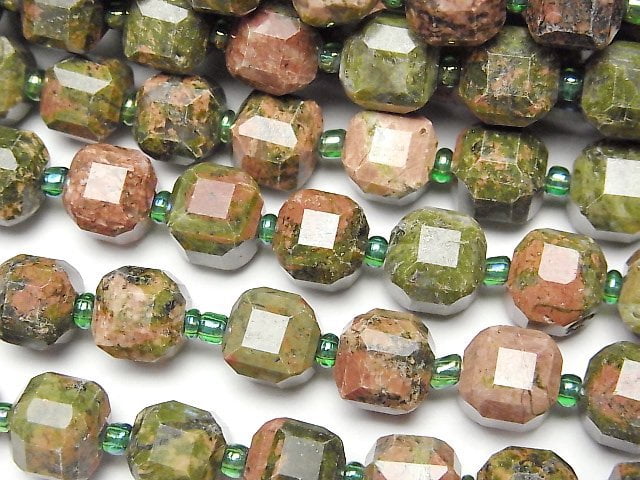
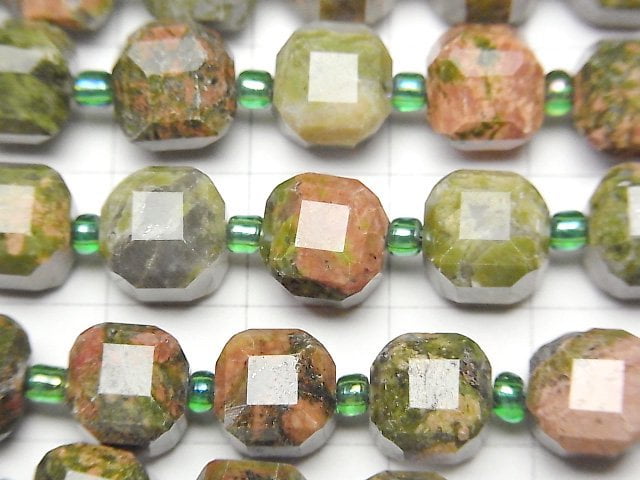
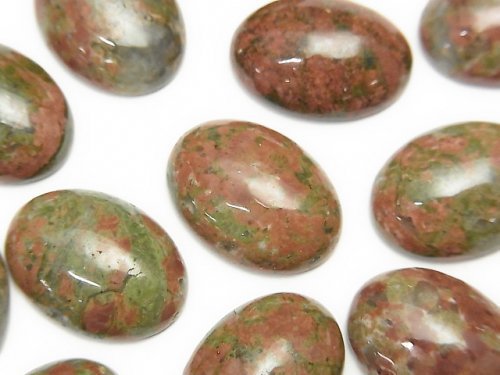
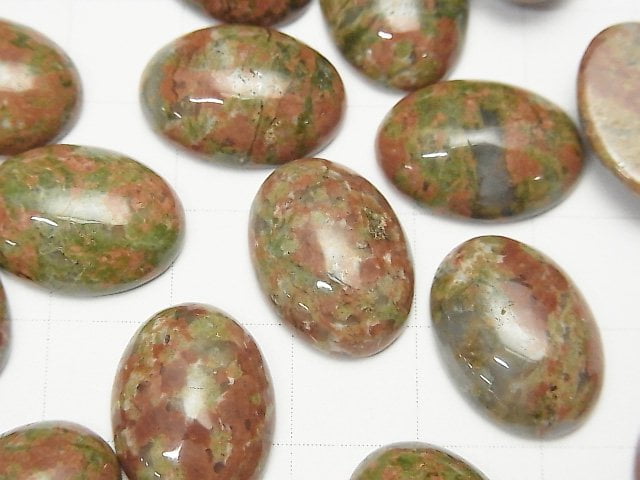
- Formats that show the pattern best: Rounds from about 6 mm to 14 mm (approx. 1/4 in to 9/16 in), coins, and oval cabochons such as 10 x 8 mm up to 30 x 22 mm. Smaller beads read as mostly green; larger sizes reveal the full mottling.
- Budget-friendly: Unakite typically costs only a few U.S. dollars per 15-inch (approx. 38 cm) strand or cabochon, making it ideal for production lines, beginner projects, and men's jewelry.
- Design caution: Because it can chip on hard impact, unakite works best in necklaces, earrings, and pendants; use bezels or protective settings for rings.
Frequently Asked Questions About Unakite
Quick answers to the questions readers ask most about unakite.
What is unakite good for?
In crystal traditions, unakite is used for emotional balance, releasing old patterns, heart chakra work, and staying patient through slow change. On the practical side, it is a durable, affordable stone that is excellent for everyday jewelry and beginner lapidary projects such as tumbling.
Is unakite rare or valuable?
No. Unakite is abundant and inexpensive—tumbled stones and bead strands usually cost just a few U.S. dollars. Its value lies in its distinctive pink-and-green look rather than rarity, so choose pieces by pattern and polish quality rather than price.
Can unakite go in water?
Brief contact with water is fine—rinsing unakite jewelry or tumbled stones is safe. Avoid long soaks, hot water, and ultrasonic or steam cleaning, which can stress the boundaries between its component minerals over time.
What is the difference between unakite and epidote?
Epidote is a single green mineral; unakite is a rock that contains epidote along with pink orthoclase feldspar and quartz. If a stone shows both green and pink, it's unakite; a purely green to pistachio-colored crystal is more likely epidote.
Shop Unakite Beads and Cabochons at Kenkengems
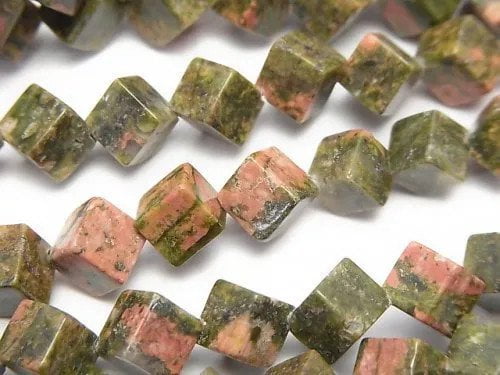
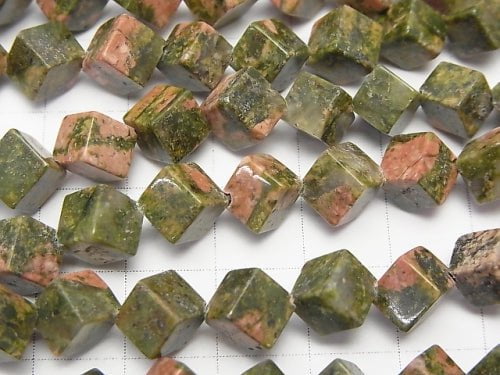
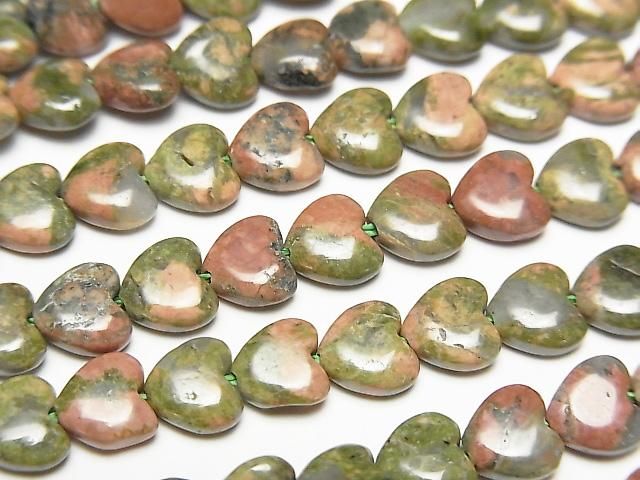
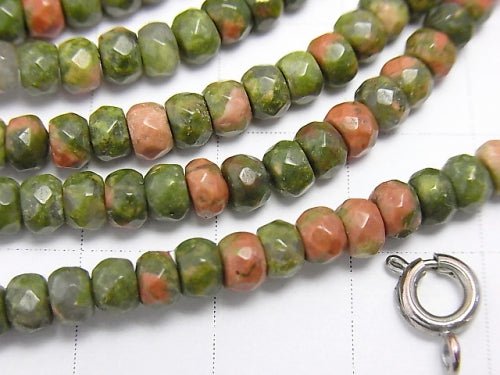
Ready to design with unakite? Kenkengems stocks polished unakite in rounds, coins, cubes, chips, spheres, and oval cabochons, sold as full strands, half strands, and loose stones. Every lot is hand-inspected under our quality rating system and offered at wholesale prices in USD, with free worldwide shipping on orders over $300. Browse the full unakite collection to find one-of-a-kind patterns for your next project.




![Unakite 2 holes Flat Coin [15mm] [20mm] half or 1strand beads (aprx. 15inch / 36cm)](http://store.kenkengems.com/cdn/shop/files/142209868_o1.jpg?v=1724222096&width=500)