TOC
- 1. What Is Fluorite? Definition and Meaning at a Glance
- 1-1. Fluorite Quick Facts
- 2. Fluorite Meaning and Symbolism: The Genius Stone
- 2-1. Fluorite Spiritual Meaning
- 3. Fluorite Healing Properties and Benefits
- 3-1. Focus, Study, and Mental Clarity
- 3-2. Emotional and Spiritual Benefits
- 3-3. Physical Benefits People Ask About (and What to Know)
- 4. Fluorite Metaphysical Properties
- 4-1. Fluorite Chakra Connections: Which Chakra Is Fluorite For?
- 4-2. Zodiac Signs and Birthstone Connections
- 4-3. Fluorite Crystal Combinations: What to Pair It With
- 5. Fluorite Colors and Their Meanings: Which One Is Right for You?
- 5-1. Green Fluorite Meaning
- 5-2. Purple Fluorite Meaning
- 5-3. Blue Fluorite Meaning
- 5-4. Yellow (Golden) Fluorite Meaning
- 5-5. Pink, White, and Clear Fluorite
- 5-6. Rainbow Fluorite Meaning: The Most Popular Variety
- 5-7. Yttrium Fluorite (Lavender Fluorite)
- 5-8. Blue John: England's Rare Banded Fluorite
- 5-9. Angel Feather Fluorite and Tiffany Stone
- 5-10. How to Choose a Fluorite Color by Purpose
- 6. Fluorite Physical and Geological Properties
- 6-1. Fluorite Hardness, Cleavage, and Durability for Jewelry
- 6-2. Why Does Fluorite Glow? Fluorescence Explained
- 6-3. What Is Fluorite Used For? Industrial and Everyday Uses
- 6-4. Is Fluorite Safe to Wear and Touch?
- 7. The History of Fluorite: From "Satan's Mineral" to the Genius Stone
- 8. Where Is Fluorite Found? Major Sources and Famous Localities
- 9. How to Use Fluorite at Home, at Work, and in Jewelry
- 10. How to Clean, Cleanse, and Care for Fluorite
- 11. How to Tell Real Fluorite from Fake (and from Amethyst)
- 12. Fluorite Value: How Much Is It Worth?
- 13. Fluorite Bead Buying Guide for Jewelry Makers
- 13-1. Fluorite Bead Grades: What AA, AA+, and AAA Mean
- 13-2. Fluorite Bead Sizes, Shapes, and How Many Beads Per Strand
- 13-3. Stringing and Design Tips for a Soft Stone
- 13-4. What Fluorite Beads Cost (USD) and How We Ship to the US and Canada
- 14. Frequently Asked Questions About Fluorite
- 14-1. What is fluorite good for?
- 14-2. What chakra is fluorite associated with?
- 14-3. Is fluorite safe to wear or touch?
- 14-4. Can fluorite go in water?
- 14-5. Does fluorite fade in the sun?
- 14-6. Why is it called fluorite, and what is fluorescence?
- 14-7. What do the different fluorite colors mean?
- 14-8. What is the rarest fluorite color?
- 14-9. How can I tell if my fluorite is real?
- 14-10. Is fluorite the same as fluoride?
- 14-11. Is fluorite a good stone for jewelry?
- 15. Shop Fluorite Beads, Cabochons, and Loose Stones at KenKenGems
- 15-1. Fluorite Beads and Cabochons for Jewelry Making

Fluorite Meaning, Healing Properties, and Colors: The Complete Guide to the Genius Stone
Fluorite meaning, in one line: fluorite is the "genius stone" — a crystal of focus, mental clarity, and order, believed in crystal traditions to clear mental clutter and help you learn, decide, and concentrate. Geologically it is calcium fluoride (CaF2), a soft (Mohs 4), glassy mineral that comes in more colors than almost any other stone, with green, purple, blue, and rainbow banding the most popular for beads and jewelry.
This guide covers everything people search for about fluorite: what it means spiritually and by color, its healing and metaphysical properties, hardness and care, how to tell real fluorite from glass, what it is worth in USD, and — because KenKenGems supplies fluorite beads to jewelry makers across the US and Canada — a practical bead buying guide.
Note: The meanings and benefits described here reflect crystal-healing traditions and folklore, not medical science. Crystals are not a substitute for professional care.

What Is Fluorite? Definition and Meaning at a Glance
By definition, fluorite is the mineral form of calcium fluoride (CaF2) — a glassy, often transparent crystal that comes in nearly every color, frequently with bands of green and purple in a single stone. If you've ever searched for "a green and purple crystal," fluorite is almost certainly what you saw. Older names you may still see are fluorspar and fluor spar; all three refer to the same mineral.
In crystal traditions, fluorite is the genius stone: a crystal of focus, clear thinking, and order, believed to sweep away mental clutter the way a fresh breeze clears a room. Its dramatic past — early chemists nicknamed it "Satan's mineral" because of the toxic gas it releases when attacked by acid — only adds to its mystique, and we explain the real chemistry behind those legends in the history section below.
Fluorite Quick Facts
| Mineral | Calcium fluoride (CaF2), halide group |
| Color | Green, purple, blue, yellow, pink, colorless — often multicolor/banded |
| Crystal System / Habit | Cubic (isometric); cubes and octahedrons; glassy (vitreous) luster |
| Hardness (Mohs) | 4 (the reference mineral for hardness 4 — soft, handle with care) |
| Cleavage | Perfect in four directions (octahedral) — chips easily |
| Specific Gravity | about 3.18 (noticeably heavy for its size) |
| Refractive Index | about 1.434 (low, so it rarely sparkles like quartz) |
| Signature Trait | Fluorescence is named after fluorite |
| Chakras | Heart (green), third eye (purple), throat (blue), solar plexus (yellow), crown (clear) — varies by color |
| Zodiac Signs | Commonly linked to Pisces and Capricorn (not an official birthstone) |
| Main Sources | China, Mexico, Mongolia, South Africa, England, USA (Illinois, Tennessee), Canada (Newfoundland) |
| Meaning Keywords | Focus, clarity, order, learning, balance |
Fluorite Meaning and Symbolism: The Genius Stone
The core fluorite meaning is mental clarity. Nicknamed the genius stone, fluorite symbolizes an organized mind: focus, learning, sound decisions, and freedom from mental clutter. Its rainbow of colors — often layered in one crystal — also makes it a symbol of balance between different aspects of the self.
In modern crystal practice, fluorite represents:
- Focus, concentration, and clear thinking
- Learning and memory — a favorite study companion
- Order out of chaos, in thoughts and in spaces
- Balanced decision-making and neutralized negativity
- Harmony between heart and mind (green and purple in one stone)
Because of these associations, fluorite is especially popular with students, writers, programmers, and anyone doing detail-heavy work.
Where does the "genius stone" idea come from? Crystal writers point to two things: the mineral's habit of growing in perfectly ordered cubes and octahedrons, which practitioners read as a symbol of structured thinking, and old European lore that fluorite could sharpen the mind and protect against confusion. The name itself comes from the Latin fluere, "to flow," which modern practitioners reinterpret as mental flow — ideas moving freely without getting stuck.
Fluorite Spiritual Meaning
Spiritually, fluorite is regarded as a psychic vacuum cleaner: practitioners believe it absorbs scattered, chaotic energy and returns it as calm, structured clarity. It is considered a stone of discernment — helping its owner see situations truthfully, resist outside manipulation, and keep their own mental space tidy. Purple fluorite in particular is linked to intuition and spiritual insight, while green fluorite grounds that insight in the heart. In feng shui-influenced practice, a fluorite sphere or tower is placed in a study or home office — the "knowledge" area — to support learning and calm, orderly energy.
Fluorite Healing Properties and Benefits
In crystal healing tradition, fluorite is the stone you reach for when your head is full: practitioners describe its energy as cool, clean, and organizing — less a warm hug than a tidy desk for the mind. The three benefits most often attributed to fluorite are sharper focus, calmer emotions, and a cleaner, more orderly energy in a room — each explained below.
Important note: the fluorite benefits described below reflect metaphysical traditions and personal practice, not medical science. Crystals are not a substitute for professional medical or mental-health care.
Focus, Study, and Mental Clarity
Fluorite's signature use is mental work. Practitioners keep it close to:
- Sharpen concentration during study sessions, exams, and deep work
- Absorb distraction and mental "noise" in busy offices
- Support memory and the structured learning of new skills
- Bring order to overwhelming projects and decisions
A popular routine: keep a fluorite point or palm stone on the desk, and hold it for a moment when attention drifts — a physical reset button for the mind. This is why fluorite is a classic gift for students and new graduates in the US and Canada.
Emotional and Spiritual Benefits
Emotionally, fluorite is used to calm racing thoughts, ease decision anxiety, and restore a sense of control during chaotic seasons. Practitioners also work with it to set healthy boundaries — its orderly energy is said to help you notice when outside opinions and drama are cluttering your inner space. Kept in the bedroom, fluorite is a traditional companion for quieting the mind before sleep.
Physical Benefits People Ask About (and What to Know)
Crystal-healing books traditionally link fluorite to bones, teeth, and the immune system — an association that comes from its calcium and fluorine content rather than from any clinical evidence. These claims are part of folk tradition and should be read that way: fluorite jewelry is not a treatment for any condition, and the fluoride in the crystal is locked in the mineral, so wearing it does not deliver fluoride to your body. If you enjoy fluorite for its calming presence during recovery or stressful periods, that is a valid, personal use; for health concerns, see a medical professional.
Fluorite Metaphysical Properties
Metaphysically, fluorite is considered a stabilizer and purifier. Practitioners believe it:
- Cleanses the aura and absorbs chaotic, negative energy
- Shields against outside influence and psychic manipulation
- Grounds spiritual insight into practical, everyday thinking
- Harmonizes group energy — a favorite for shared workspaces
- Buffers the "electronic noise" of screens and devices — a traditional (not scientific) reason many people keep a piece beside their computer
Because fluorite is said to absorb what it clears, practitioners recommend cleansing the stone regularly (see the care section for gentle methods).
Fluorite Chakra Connections: Which Chakra Is Fluorite For?
Fluorite's chakra alignment follows its color. Green fluorite opens and cleanses the heart chakra; purple fluorite activates the third eye chakra, the center of intuition and insight; blue fluorite supports the throat chakra and clear communication. Yellow fluorite is linked to the solar plexus (confidence and willpower) and clear fluorite to the crown chakra. Rainbow fluorite, with several colors in one stone, is used to align multiple chakras at once — one reason multi-color pieces are so popular for meditation.
Zodiac Signs and Birthstone Connections
Fluorite is not a traditional birthstone, but it is most often linked to Pisces and Capricorn — Pisces for the stone's calming, clarifying influence on a dreamy mind, and Capricorn for its love of structure and disciplined focus. As with most crystals, traditions consider fluorite beneficial for any sign, especially during study, career pushes, and decision-heavy seasons.
Fluorite Crystal Combinations: What to Pair It With
Fluorite is easy to combine, and jewelry makers often build whole bracelets around these pairings:
- Fluorite + clear quartz — quartz is used to amplify fluorite's clarity; visually, clear beads make rainbow banding pop
- Fluorite + amethyst — both are "calm mind" stones; purple fluorite and amethyst look nearly identical strung together at a lower cost
- Fluorite + black tourmaline or hematite — grounding stones that balance fluorite's airy, mental energy in a protection bracelet
- Fluorite + green aventurine — a heart-chakra pairing in two shades of green
- Fluorite + howlite or moonstone — soft, pale beads that keep a meditation bracelet calm rather than busy
Fluorite Colors and Their Meanings: Which One Is Right for You?
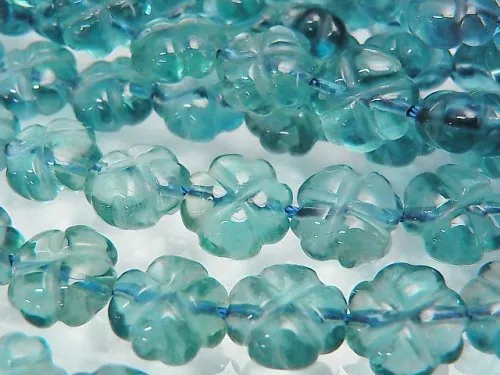
Fluorite's varieties are best understood by color, because in crystal practice each color carries its own meaning. Pure fluorite is actually colorless; trace elements (such as yttrium and other rare-earth elements) and natural radiation give it its palette, which is why colors so often shift within a single crystal. Here is what each color is associated with, followed by the named varieties you will see when shopping.
| Color | Meaning in crystal practice | Chakra | Rarity |
| Green | Renewal, growth, emotional cleansing | Heart | Common |
| Purple | Intuition, spiritual focus, peace of mind | Third eye / crown | Common |
| Blue | Calm, orderly communication | Throat | Less common |
| Yellow / golden | Creativity, confidence, optimism | Solar plexus | Uncommon |
| Clear / white | Mental clarity, amplification | Crown | Uncommon |
| Pink | Gentle emotional healing | Heart | Rare |
| Rainbow (banded) | All of the above in balance | Multiple | Common in beads |
Most beads and cabochons on the market blend two or more of these colors — which brings us to the most popular variety of all.
Green Fluorite Meaning
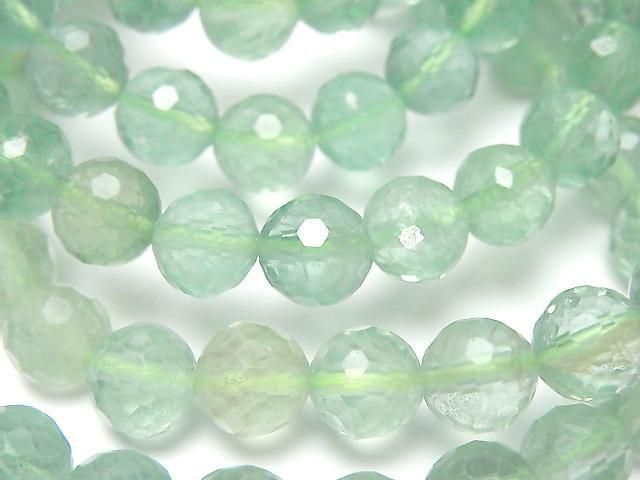
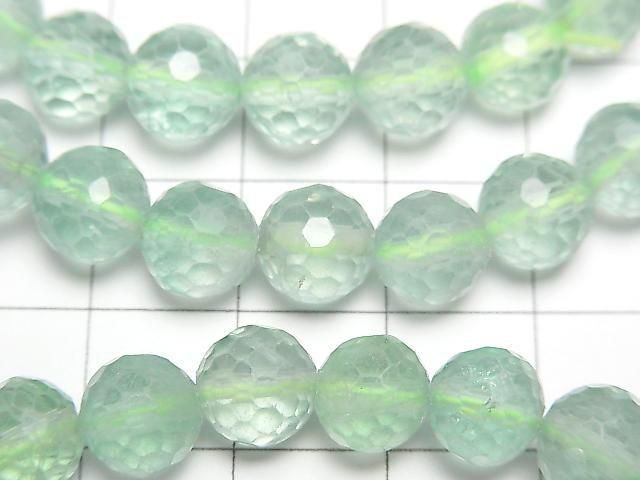
Green fluorite is the heart-centered classic: it is associated with renewal, growth, and clearing emotional clutter, and it is the color most people picture when they think of fluorite. Shades run from pale mint to deep bottle green; the richest, most transparent green material is often sold as "AAA" bead grade. In jewelry, green fluorite pairs especially well with gold-filled findings, which warm up its cool tone.
Purple Fluorite Meaning
Purple fluorite is the stone of intuition and inner quiet — linked to the third eye chakra and to meditation, dreamwork, and spiritual focus. Deep violet crystals from China and Mexico can look remarkably like amethyst, which is why purple fluorite has historically been used as an amethyst substitute (and why you should check the hardness if a bargain "amethyst" strand feels suspiciously soft).
Blue Fluorite Meaning
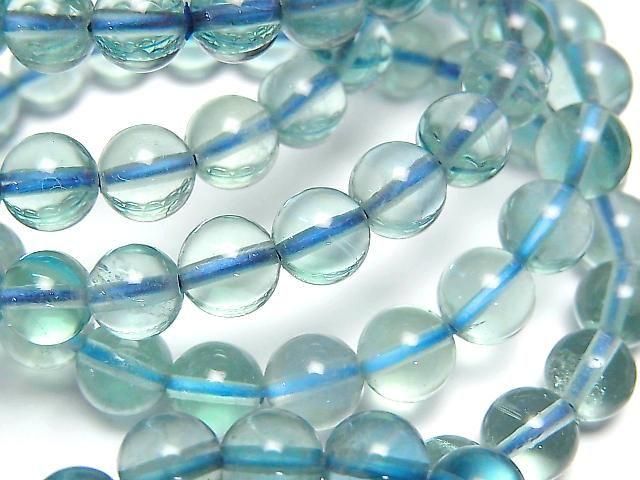
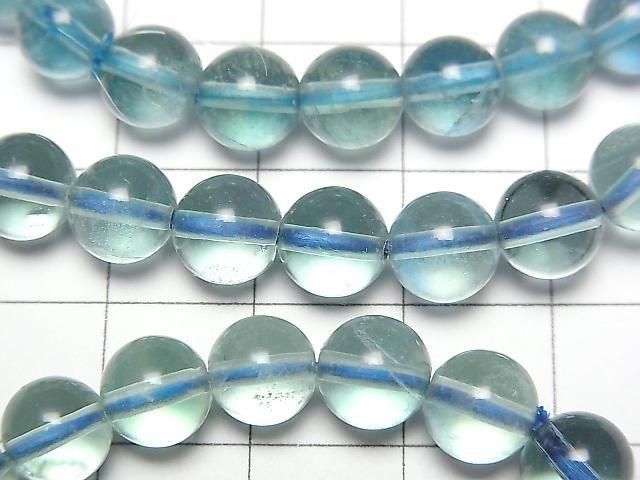
Blue fluorite is associated with calm, clear communication and the throat chakra; practitioners reach for it before a difficult conversation, a presentation, or a writing session. Natural blue fluorite is less common than green or purple, and much of the "blue-green" material sold as beads is a teal blend of the two.
Yellow (Golden) Fluorite Meaning
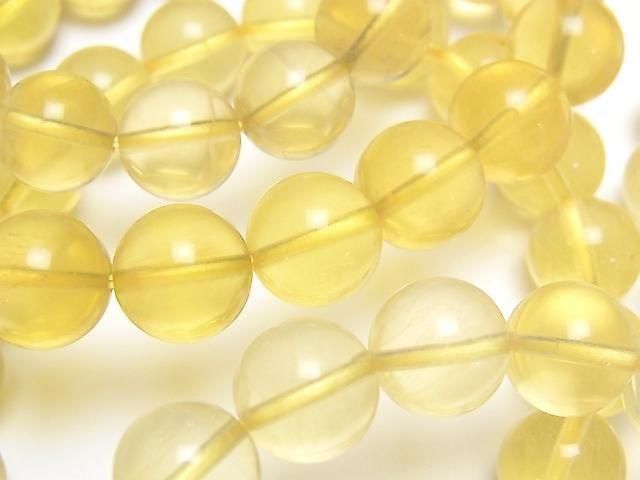
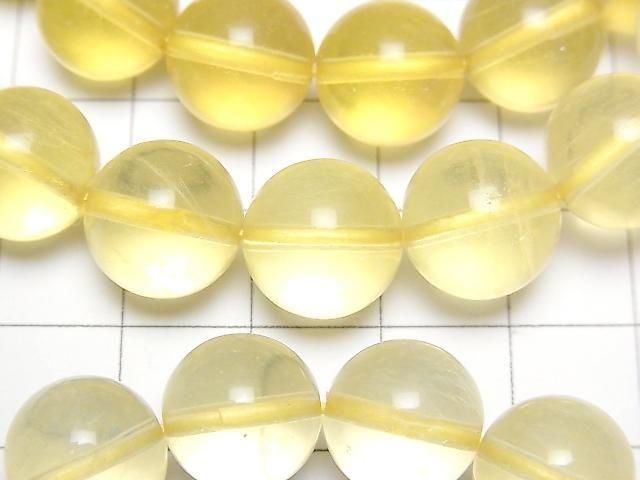
Yellow or golden fluorite is the optimist of the family — tied to creativity, confidence, and the solar plexus chakra. It is noticeably rarer than green and purple; clean, saturated golden fluorite beads are a collector favorite and usually cost more per strand.
Pink, White, and Clear Fluorite
Pink fluorite — famous from Alpine finds in Switzerland and from Peru — and colorless (clear) fluorite are the rarest hues and are mostly sold as mineral specimens rather than beads. White or clear fluorite is associated with mental clarity and the crown chakra; pink with gentle emotional healing. If you see very cheap "pink fluorite" beads, look closely: some are dyed or are a different stone entirely.
Rainbow Fluorite Meaning: The Most Popular Variety
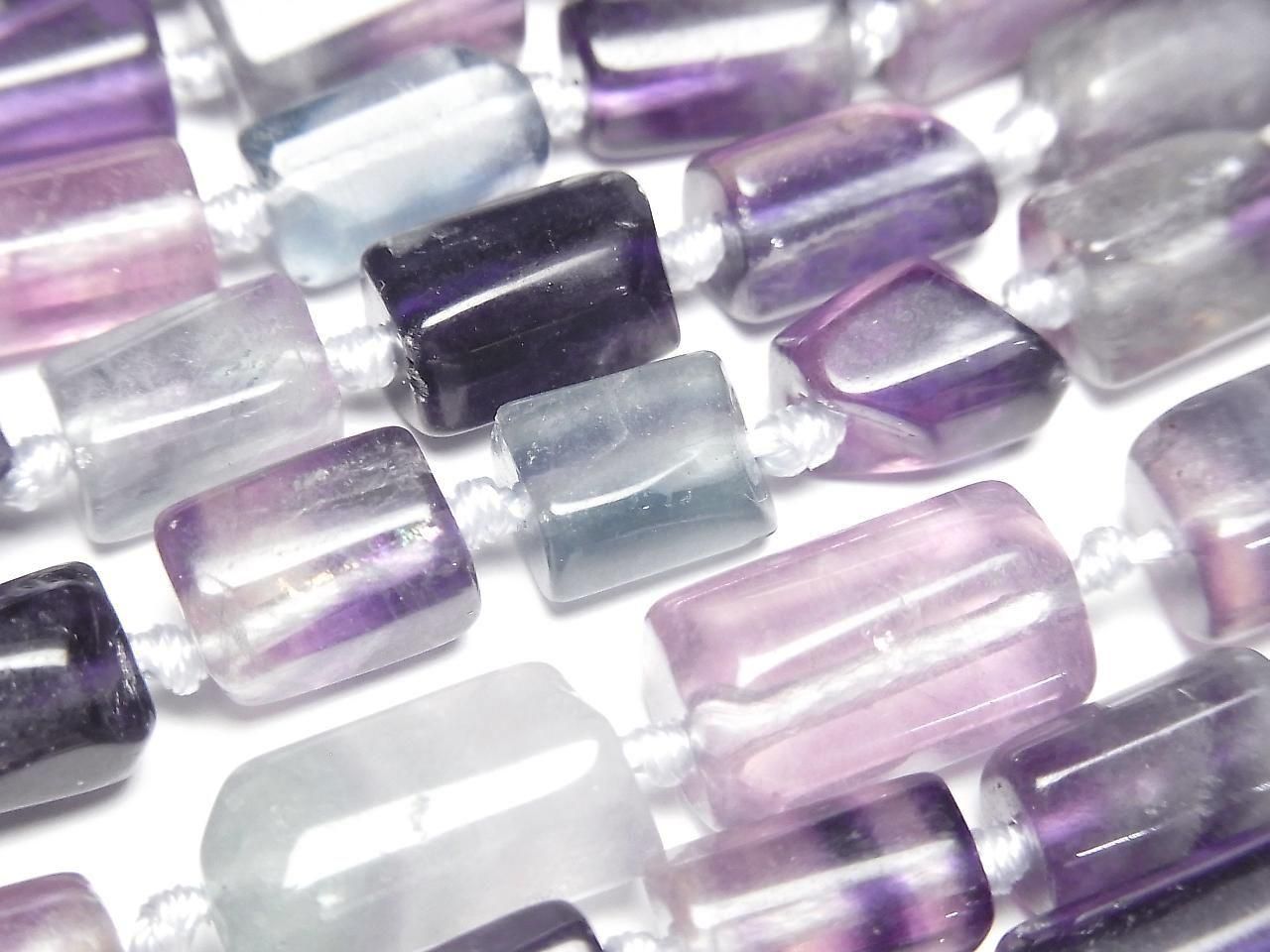
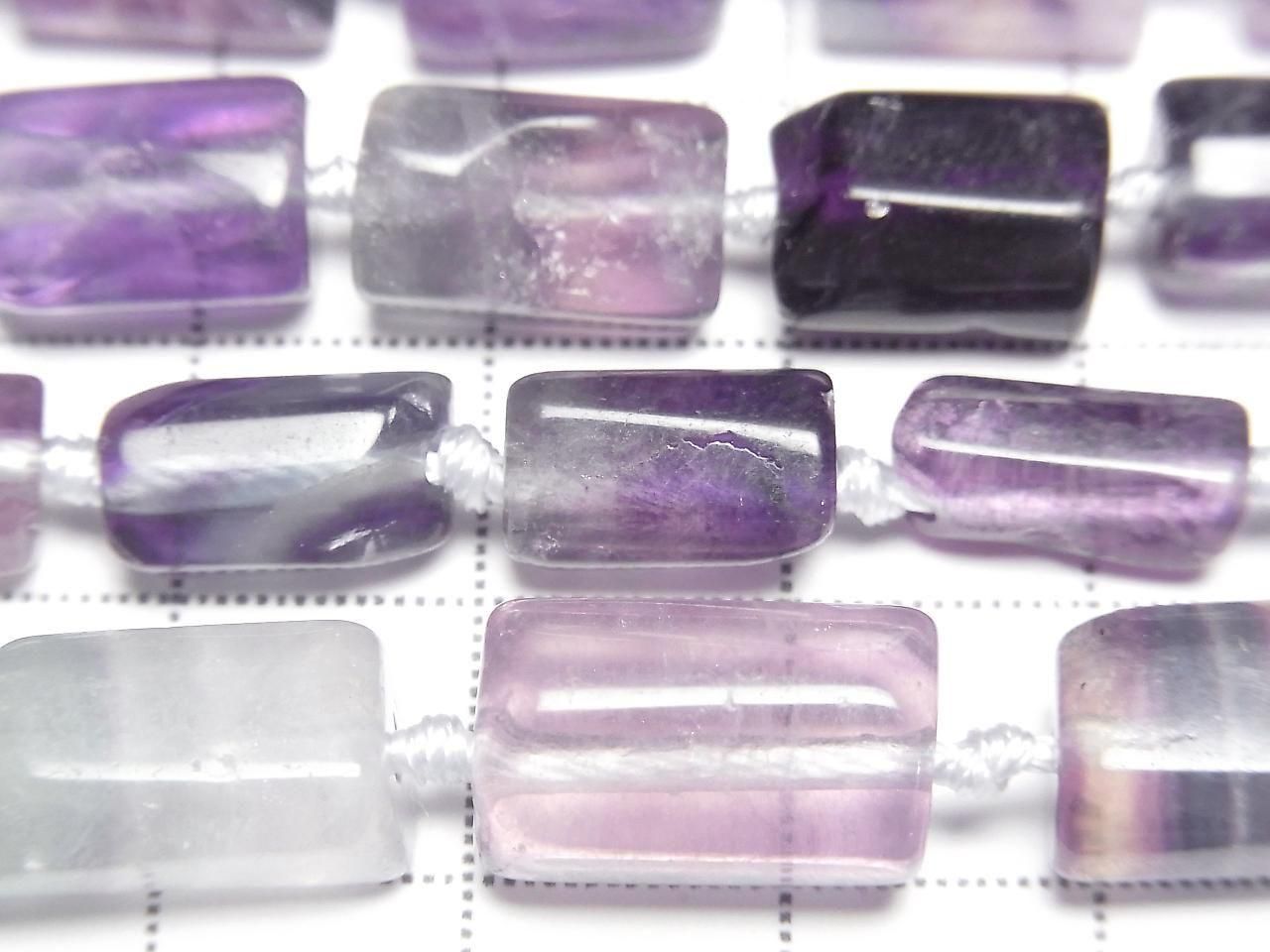
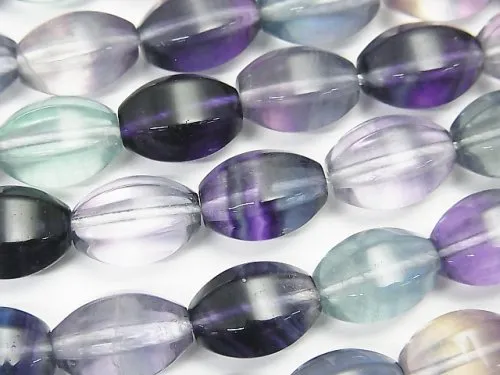
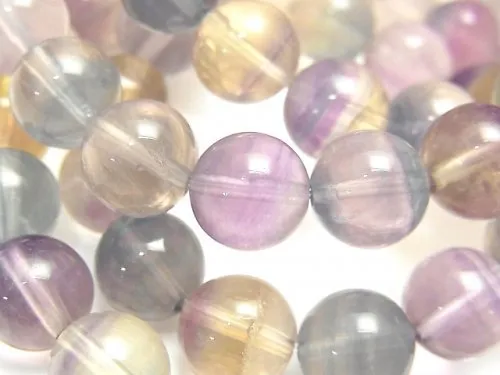
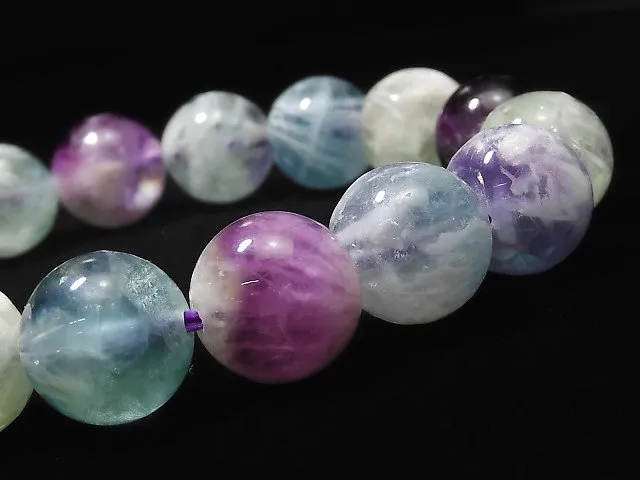
Rainbow fluorite is the trade name for banded, multicolor fluorite — typically stacked layers of green, purple, blue, and sometimes clear zones in a single stone. Each bead cut from it is unique, which makes rainbow fluorite strands a bestseller for bracelets and statement necklaces. In crystal practice, its meaning combines the properties of its colors: heart (green) and mind (purple) working in harmony, making it the go-to choice for people who want "all of fluorite" in one stone. Most rainbow fluorite is mined in China and Mexico. At KenKenGems this material is listed as "Multicolor Fluorite" — the same stone, described by its appearance rather than the trade name.
Yttrium Fluorite (Lavender Fluorite)
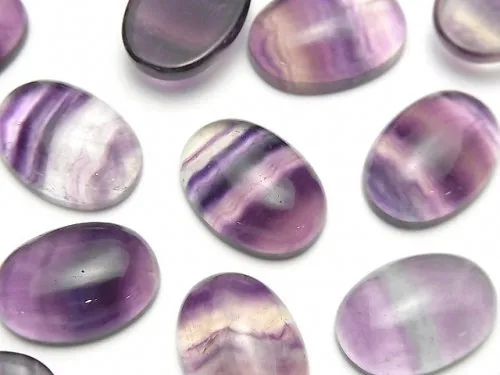
Yttrium fluorite — often sold as lavender fluorite — is a variety in which some calcium is replaced by the rare-earth element yttrium. It typically shows a soft, milky lavender-to-purple color and, unusually for fluorite, tends to form in massive chunks rather than defined crystals. Practitioners associate it with serene, elevated calm — a gentler, dreamier energy than standard purple fluorite. Its subtle color and relative scarcity make it a favorite for cabochons and palm stones.
Blue John: England's Rare Banded Fluorite
Blue John is a famous banded fluorite in purple-blue and yellow-white stripes, mined for centuries only in the caverns of Castleton, Derbyshire, England. Its ornamental vases graced Georgian and Victorian homes, and because the historic veins are nearly worked out, only small amounts are extracted each year — making genuine Blue John pieces true collector items with prices to match. Deposits with a similar look have more recently been reported in China, but classic Blue John remains an English signature.
Angel Feather Fluorite and Tiffany Stone
Two specialty varieties round out the family. Angel feather fluorite displays wispy white, feather-like patterns floating in pastel purple and green — a romantic look that shines in larger beads and palm stones. Tiffany stone (also called opal fluorite or bertrandite) is a rare purple-blue-and-white blend of fluorite with opal, chalcedony, and other minerals, found almost exclusively at the Brush Wellman beryllium mine near Spor Mountain in western Utah — a genuinely American gemstone whose limited supply keeps prices high.
How to Choose a Fluorite Color by Purpose
If you are buying fluorite for a specific intention or design, this is the short answer:
- Studying, focus, or a home office → purple, clear, or rainbow fluorite
- Emotional reset, heart-centered work → green fluorite
- Communication, public speaking, writing → blue fluorite
- Confidence and creative projects → yellow fluorite
- A bracelet or necklace with maximum color variation → rainbow (multicolor) fluorite, ideally 6 mm or larger so the banding shows
- A soft, romantic palette for wedding or gift jewelry → lavender (yttrium) or angel feather fluorite
Trust your eye first; in crystal practice the stone you are drawn to is considered the right one.

Fluorite Physical and Geological Properties
Fluorite is calcium fluoride (CaF2), a halide mineral that grows in glassy cubes and octahedrons and defines hardness 4 on the Mohs scale — every geology student literally measures "hardness 4" against fluorite. That softness, plus perfect cleavage in four directions, makes it easy to carve and easy to chip: fluorite jewelry rewards gentle treatment.
Its color range is among the widest of any mineral — green and purple are most common, followed by blue and yellow, with pink and colorless crystals the rarest. Colors often shift within a single crystal, from dark edges to a lighter center, or in crisp bands. Fluorite forms mainly in hydrothermal veins — hot, mineral-rich water moving through cracks in limestone and granite — which is why it is so often found alongside calcite, quartz, barite, galena, and sphalerite.
Fluorite Hardness, Cleavage, and Durability for Jewelry
Fluorite hardness is 4 on the Mohs scale — softer than a steel knife (about 5.5), a window glass (about 5.5), and far softer than quartz (7). In practice this means:
- It will scratch if stored loose with quartz, agate, or metal chains
- Its four perfect cleavage directions mean a sharp knock can split a bead cleanly rather than just chipping it
- Rings and everyday bracelets are the riskiest settings; pendants, earrings, and occasional-wear bracelets are the safest
- Bead holes should be drilled clean and strung with a little slack — tight stringing is the most common cause of cracked fluorite beads
For comparison, fluorite's specific gravity of about 3.18 makes it heavier than quartz (2.65) for the same size, which is one reason a strand of fluorite feels satisfyingly substantial on the wrist.
Why Does Fluorite Glow? Fluorescence Explained
Fluorite doesn't just fluoresce — it's the mineral the word was coined for. Under ultraviolet (black) light, many fluorite specimens glow a vivid blue-violet, caused by trace impurities such as europium in the crystal. Not every piece glows, and the effect varies by locality, which is part of the fun: collectors carry pocket UV flashlights to test specimens. If you own fluorite, try it — a $10 UV light can reveal a hidden side of your stone. A few localities are famous for fluorescing even in daylight: green fluorite from the Rogerley Mine in England looks blue-tinged outdoors because of the UV in sunlight.
What Is Fluorite Used For? Industrial and Everyday Uses
Beyond crystals and jewelry, fluorite is an industrial workhorse. Most mined fluorite (sold as fluorspar) goes into three things:
- Steel and aluminum production — as a flux that lowers the melting point of ores, the use that gave the mineral its name
- Hydrofluoric acid and fluorine chemicals — the starting point for refrigerants, fluoropolymers such as Teflon, and the fluoride used in toothpaste and water treatment
- Optics — clear, colorless fluorite is ground into lenses for premium camera and telescope objectives because it corrects color fringing better than ordinary glass
Because of these uses, fluorspar is classified as a critical mineral in the United States. For readers, the practical takeaway is simple: the gem-quality fluorite in beads and carvings is a small, decorative slice of a much larger industrial mineral.
Is Fluorite Safe to Wear and Touch?
Yes — polished fluorite is safe to wear and handle. The fluoride is chemically locked in the crystal, and normal skin contact poses no known risk. The sensible precautions:
- Don't inhale dust from cutting, grinding, or drilling — lapidaries work fluorite wet with protective gear
- Never make "gem water" or elixirs by soaking fluorite in drinking water; use the indirect method (stone outside the glass) if you practice water rituals
- Keep it away from strong acids, and keep small stones away from children and pets
The frightening stories from fluorite's history involve concentrated acid and heated laboratory experiments — not jewelry.
The History of Fluorite: From "Satan's Mineral" to the Genius Stone
Fluorite's history really is as dramatic as the legends say. Ancient Romans carved prized drinking vessels from banded fluorite (Pliny the Elder's "murrhine" cups, two of which survive in the British Museum), and its name comes from the Latin fluere, "to flow" — miners used it for centuries as a flux to make metal ores melt more easily. But the stone's dark reputation came from chemistry: when treated with acid, fluorite releases hydrogen fluoride, a genuinely dangerous gas. Early chemists who experimented with it were injured without understanding why, and the mineral earned nicknames like "Satan's mineral."
Science caught up in stages. The Swedish chemist Carl Wilhelm Scheele identified the acid from fluorite in 1771, and so many chemists were injured trying to isolate the element fluorine that they became known as the "fluorine martyrs" — until Henri Moissan finally succeeded in 1886, earning a Nobel Prize. Fluorite left one more mark on science: in 1852, physicist George Stokes named the glow he observed in the stone fluorescence, after fluorite itself. In North America, the Illinois–Kentucky district supplied most US fluorspar for over a century, and Illinois named fluorite its state mineral in 1965.
Where Is Fluorite Found? Major Sources and Famous Localities
China is by far the world's largest fluorite producer, followed by Mexico and Mongolia; South Africa and Spain are also significant sources. Gem and specimen collectors prize localities like Yaogangxian (China), the Rogerley Mine (England) for its daylight-fluorescent green crystals, and Elmwood (Tennessee, USA) for glassy purple cubes.
Fluorite also holds a special place in American mineral history: the Illinois–Kentucky Fluorspar District was once the largest producer in the United States, and fluorite has been the official state mineral of Illinois since 1965. Canada's best-known source is St. Lawrence, Newfoundland, where fluorspar has been mined on and off since the 1930s. For bead buyers, origin matters less than color and clarity: most rainbow and green fluorite beads on the market are cut from Chinese or Mexican material.
How to Use Fluorite at Home, at Work, and in Jewelry
What is fluorite good for in daily life? Three easy ways to put the genius stone to work:
- Wear it — pendants and earrings keep fluorite's focus close while protecting the soft stone from knocks; save bead bracelets for lighter days and remove them for workouts and chores
- Station it where you think — a fluorite point or sphere on a desk, study table, or reading nook is the classic placement; students often keep a small tumbled stone in a pencil case for exams
- Meditate with it — hold green fluorite at the chest or rest purple fluorite on the brow for a few minutes of mental decluttering; many practitioners pair it with focused breathing before deep work
For jewelry makers, fluorite beads cut beautifully but chip if strung tight — see the bead buying guide below for sizes, grades, and stringing tips.
How to Clean, Cleanse, and Care for Fluorite
Fluorite is soft (Mohs 4) with perfect cleavage, so treat it gently. The short version: no water soaks, no sun, no ultrasonic cleaners, and store it on its own.
Physical care: wipe with a soft, slightly damp cloth and dry promptly; avoid ultrasonic and steam cleaners, long soaks, salt water, and knocks against harder stones. Store fluorite separately — even quartz will scratch it. Keep richly colored pieces out of prolonged direct sunlight, as some fluorite can fade, and away from heat sources (a hot car dashboard or a sunny windowsill is enough to dull deep purple over months).
For energetic cleansing, use gentle methods: a selenite plate, incense or sage smoke, sound from a singing bowl, or moonlight overnight — the fitting choice for a stone this responsive to light.
How to Tell Real Fluorite from Fake (and from Amethyst)
Fluorite has a funny place in the fake-gem world: historically it was the imposter, passed off as emeralds and amethyst. Today the question runs the other way — is your "fluorite" real? Quick checks:
- Look for color zoning: natural fluorite shows bands, patches, and uneven color; dyed glass looks uniform
- Check the temperature and weight: fluorite is dense and cool to the touch; glass and resin feel lighter and warm quickly
- Inspect for bubbles: round air bubbles inside mean glass
- Try UV light: many (not all) fluorites glow blue-violet under a black light — glass imitations rarely respond the same way
- Mind the hardness: real fluorite scratches easily (it's soft); if a "fluorite" bead shrugs off a steel pin, it may be quartz or glass
- Buy from suppliers who state the material and source
| Fluorite | Amethyst (quartz) | Glass imitation | |
| Mohs hardness | 4 | 7 | about 5.5 |
| Weight for size | Heavy (SG about 3.18) | Lighter (SG 2.65) | Light (SG about 2.5) |
| Color | Zoned, banded, often two colors | Even purple, sometimes zoned | Perfectly uniform |
| Inside the stone | Cleavage planes, natural inclusions | Natural inclusions, no bubbles | Round gas bubbles, swirl marks |
| Under UV | Often blue-violet glow | Usually none | Usually none |
| Typical bead price | Low | Low to moderate | Very low |
Note: fluorite is never "lab-grown" for the bead market — it is too abundant and inexpensive to be worth synthesizing — so a fake fluorite bead is almost always glass, resin, or a dyed lookalike stone.
Fluorite Value: How Much Is It Worth?
Fluorite is abundant worldwide, so most of it is refreshingly affordable. Typical US retail ranges (USD, as a general guide; Canadian shoppers will see figures roughly 35–40% higher in CAD at recent exchange rates):
- Tumbled stones and small points: about $2–$15
- Bead strands (15–16 in): roughly $8–$40 for rainbow and green-purple material, more for saturated color and clean clarity
- Cabochons and palm stones: a few dollars to about $50
- Carved spheres, towers, and specimen pieces: from tens of dollars into the hundreds for large, glassy, richly banded material
- Collector categories: genuine Blue John, Tiffany stone, and fine crystallized specimens from famous mines command premium, sometimes three- to four-figure prices
Value is driven by color saturation and variety, transparency, the crispness of banding, and — for specimens — locality and crystal form. Yellow, pink, and truly blue material costs more than green or purple simply because less of it exists.
Fluorite Bead Buying Guide for Jewelry Makers
Buying fluorite beads is mostly about three decisions: grade, size, and shape. Here is how KenKenGems grades and lists fluorite, and what each choice means for your designs.
Fluorite Bead Grades: What AA, AA+, and AAA Mean
Our fluorite is graded by color saturation, transparency, and how cleanly the beads are cut and drilled:
- AAA — the most transparent, evenly colored material with crisp banding and minimal surface pits; ideal for statement necklaces and fine bracelets
- AA+ / AA++ — good color and clarity with minor natural inclusions or slight color variation between beads; the best value for most bracelet and mala designs
- AA — attractive, more opaque or mottled material, often used for large nuggets, carved shapes, and budget-friendly strands
A "−" after a grade (for example AAA−) means the strand sits just below that grade. Grading is done by our staff in Japan on the actual strand, not from supplier photos; see our quality rating guide for how the same scale applies across all stones.
Fluorite Bead Sizes, Shapes, and How Many Beads Per Strand
Most fluorite strands are about 15 inches (38 cm) long. As a rule of thumb, that gives you:
| Bead size | Beads per 15-in strand (approx.) | Best for |
| 2–3 mm faceted rounds | 125–190 | Delicate layering necklaces, wire wrapping |
| 4 mm rounds | about 95 | Dainty bracelets, spacers between larger stones |
| 6 mm rounds | about 63 | The everyday bracelet size; banding starts to show |
| 8 mm rounds | about 47 | Classic crystal bracelets; best size to show rainbow banding |
| 10 mm rounds | about 38 | Bold bracelets and short necklaces |
| Nuggets, tubes, cubes, cabochons | varies | One-of-a-kind pendants and focal pieces |
Because fluorite is a banded stone, larger beads (8 mm and up) show far more color variation than small ones — a 4 mm rainbow fluorite strand can read as a single dull green-gray from a distance. If color is the point, go bigger; if you want a subtle pastel, go smaller or choose lavender fluorite.
Stringing and Design Tips for a Soft Stone
- String on nylon-coated beading wire or silk with a little slack; knot between beads on necklaces so a break does not scatter the strand
- Use metal or seed-bead spacers so fluorite beads do not grind against each other
- Choose stretch cord only for occasional-wear bracelets; daily stretch bracelets take the most knocks
- Pair with 14k gold-filled or sterling silver findings — both hold up to the frequent gentle cleaning fluorite needs
- Avoid tumbling finished pieces or using a jewelry-polishing cloth with abrasive compound on the beads
What Fluorite Beads Cost (USD) and How We Ship to the US and Canada
At the time of writing, most KenKenGems fluorite strands fall between roughly USD $10 and $60 per strand, with 2–3 mm faceted rounds and AAA rainbow rounds at the upper end and 4–6 mm AA rounds at the lower end. Undrilled nuggets are sold by the 100 g bag for carving and wire-wrapping. Prices are shown in USD at checkout for US and Canadian customers, and orders over USD $300 ship free worldwide. Canadian customers should allow for import duties and GST/HST on delivery.

Frequently Asked Questions About Fluorite
The questions we hear most often from customers and readers, answered briefly. Each question is also marked up as FAQPage structured data (see implementation notes).
What is fluorite good for?
Fluorite is used for focus, mental clarity, and calm, organized thinking — the reason it's called the genius stone. People keep it on desks for study and deep work, wear it for level-headed decisions, and meditate with it to quiet mental noise.
What chakra is fluorite associated with?
It depends on the color: green fluorite is linked to the heart chakra, purple to the third eye, blue to the throat, yellow to the solar plexus, and clear to the crown. Rainbow fluorite is used for all of them at once.
Is fluorite safe to wear or touch?
Yes — polished fluorite is safe to wear and handle. The precautions concern dust (never inhale particles from cutting or drilling), soaking it in drinking water, and strong acids. The scary historical stories involve laboratory chemistry, not jewelry.
Can fluorite go in water?
Only briefly. A quick rinse won't hurt it, but avoid soaking, salt water, and hot water — fluorite is soft, can develop dull surfaces, and should never be used to make drinking "gem water."
Does fluorite fade in the sun?
Yes, slowly. Deep purple and green fluorite can lighten after weeks or months of direct sunlight or heat. Store beads and finished jewelry away from windowsills and never leave them in a hot car.
Why is it called fluorite, and what is fluorescence?
The name comes from Latin fluere ("to flow"), from its ancient use as a smelting flux — and in 1852 the glow scientists observed in fluorite under invisible light was named fluorescence after the stone itself.
What do the different fluorite colors mean?
Green is linked to the heart and renewal, purple to intuition and focus, blue to calm communication, and yellow to creativity. Rainbow fluorite combines several colors — and meanings — in one stone.
What is the rarest fluorite color?
Pink is the rarest natural fluorite color, followed by true blue and colorless material; among named varieties, genuine Blue John from Derbyshire and Tiffany stone from Utah are the scarcest. Green, purple, and rainbow fluorite are common and affordable.
How can I tell if my fluorite is real?
Look for natural color zoning and banding, a cool, dense feel, and no air bubbles. Many pieces glow blue-violet under a UV flashlight. Uniform color, lightness, and bubbles point to dyed glass.
Is fluorite the same as fluoride?
No. Fluorite is the mineral (calcium fluoride, CaF2); fluoride is the fluorine ion found in toothpaste and treated water. Fluorite is one of the industrial sources of fluoride, but wearing or holding fluorite does not expose you to fluoride.
Is fluorite a good stone for jewelry?
Yes, with the right settings. At Mohs 4 it is best in pendants, earrings, and occasional-wear bracelets rather than rings, and it should be strung with a little slack and stored away from harder stones. Its low price and huge color range make it one of the most popular beads for handmade jewelry.
Shop Fluorite Beads, Cabochons, and Loose Stones at KenKenGems
Ready to put the genius stone to work in your designs? KenKenGems is a Japan-based gemstone bead supplier trusted by jewelry makers worldwide, and every fluorite strand we list is hand-selected for color clarity and clean cutting. You'll find:
- Rainbow and green-purple fluorite bead strands — rounds, faceted cuts, and fancy shapes
- Lavender (yttrium) fluorite and angel feather fluorite
- Cabochons, pendants, and loose stones for one-of-a-kind pieces
- Undrilled fluorite nuggets by the 100 g bag for wire-wrapping and carving
Prices are listed in USD, and we ship to the United States and Canada — free on orders over USD $300. Browse the full fluorite collection, or start with the multicolor 8 mm rounds that most bracelet makers choose first.

![[One of a kind] High Quality Blue-Green Fluorite Loose Stone Faceted 1pc No.106](http://store.kenkengems.com/cdn/shop/files/190832684.jpg?v=1776772598&width=640)
![[One of a kind] High Quality Blue-Green Fluorite Loose Stone Faceted 1pc No.106](http://store.kenkengems.com/cdn/shop/files/190832684_o1.jpg?v=1776772584&width=640)
![[One of a kind] High Quality Blue-Green Fluorite Loose Stone Faceted 1pc No.102](http://store.kenkengems.com/cdn/shop/files/190832680.jpg?v=1776772720&width=640)
![[One of a kind] High Quality Blue-Green Fluorite Loose Stone Faceted 1pc No.102](http://store.kenkengems.com/cdn/shop/files/190832680_o1.jpg?v=1776772706&width=640)
![[One of a kind] High Quality Blue-Green Fluorite Loose Stone Faceted 1pc No.116](http://store.kenkengems.com/cdn/shop/files/190832696.jpg?v=1776772359&width=640)
![[One of a kind] High Quality Blue-Green Fluorite Loose Stone Faceted 1pc No.116](http://store.kenkengems.com/cdn/shop/files/190832696_o1.jpg?v=1776772346&width=640)
![[One of a kind] High Quality Blue-Green Fluorite Loose Stone Faceted 1pc No.104](http://store.kenkengems.com/cdn/shop/files/190832682.jpg?v=1776772659&width=640)
![[One of a kind] High Quality Blue-Green Fluorite Loose Stone Faceted 1pc No.104](http://store.kenkengems.com/cdn/shop/files/190832682_o1.jpg?v=1776772644&width=640)
![Multicolor Fluorite Cat Motif 10x12mm [Horizontal Hole] 3pcs](http://store.kenkengems.com/cdn/shop/files/191743508.jpg?v=1779791381&width=640)
![Multicolor Fluorite Cat Motif 10x12mm [Horizontal Hole] 3pcs](http://store.kenkengems.com/cdn/shop/files/191743508_o1.jpg?v=1779791366&width=640)
![[One of a kind] High Quality Blue-Green Fluorite Loose Stone Faceted 1pc No.113](http://store.kenkengems.com/cdn/shop/files/190832693.jpg?v=1776772391&width=640)
![[One of a kind] High Quality Blue-Green Fluorite Loose Stone Faceted 1pc No.113](http://store.kenkengems.com/cdn/shop/files/190832693_o1.jpg?v=1776772373&width=640)
![[One of a kind] High Quality Blue-Green Fluorite Loose Stone Faceted 1pc No.109](http://store.kenkengems.com/cdn/shop/files/190832687.jpg?v=1776772512&width=640)
![[One of a kind] High Quality Blue-Green Fluorite Loose Stone Faceted 1pc No.109](http://store.kenkengems.com/cdn/shop/files/190832687_o1.jpg?v=1776772494&width=640)