TOC
- 1. What Is Diopside?
- 2. Diopside Meaning and History
- 3. Diopside Properties: Color, Hardness, and Optics
- 3-1. Color and Chemical Composition
- 3-2. Diopside Quick Facts
- 3-3. Hardness, Cleavage, and Jewelry Durability
- 3-4. Asterism, Chatoyancy, and Pleochroism
- 4. Types of Diopside
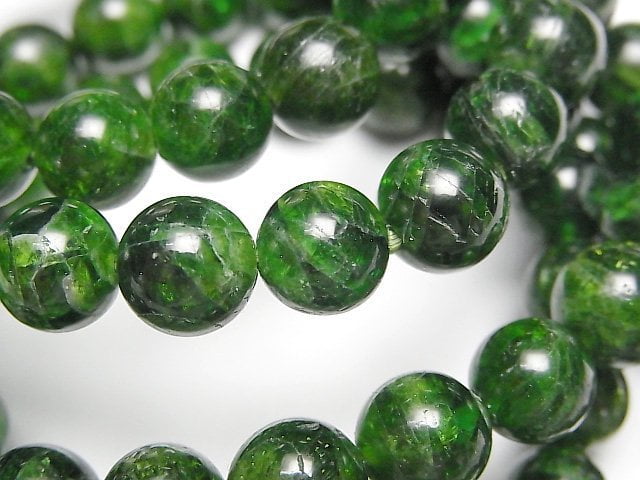
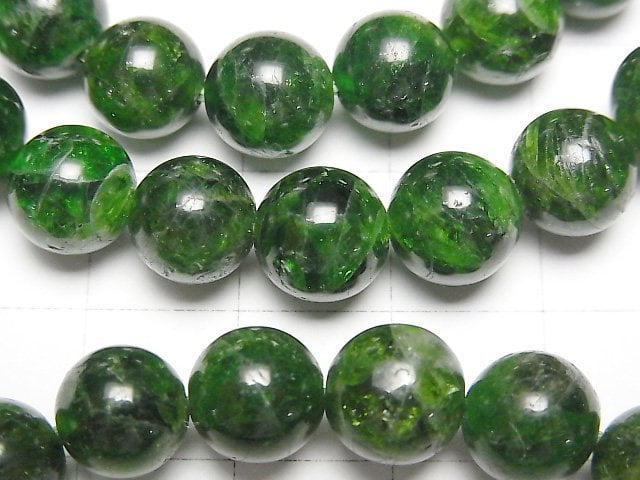
- 4-1. Chrome Diopside
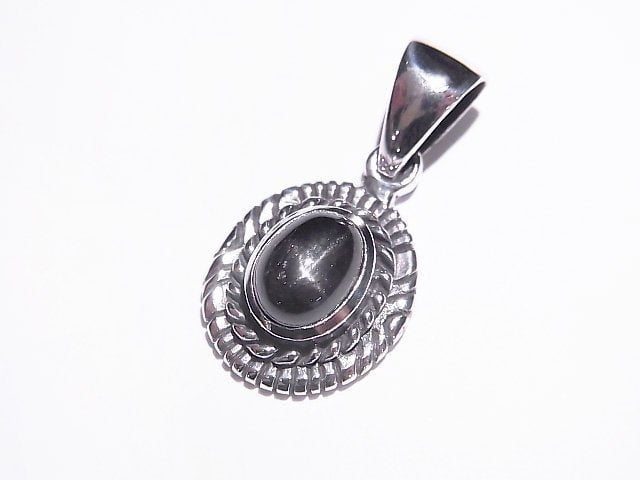
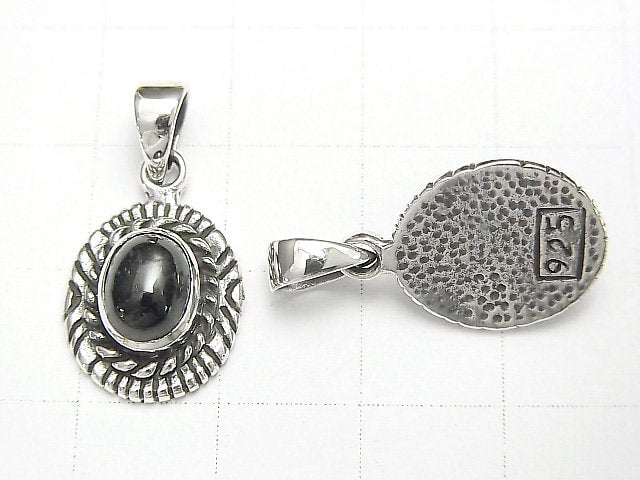
- 4-2. Black Star Diopside
- 4-3. Violane, Baikalite, and Other Varieties
- 5. Where Diopside Forms and Is Found
- 6. What Is Diopside Used For?
- 6-1. Jewelry, Beads, Cabochons, and Collecting
- 6-2. Best Jewelry Styles for Diopside
- 7. Diopside Value: What Makes a Stone Desirable?
- 7-1. Quality Factors for Faceted and Star Diopside
- 7-2. Diopside Buying Checklist
- 8. Diopside vs. Emerald vs. Peridot
- 8-1. Comparison Table
- 9. Diopside Meaning and Metaphysical Properties
- 9-1. Green Diopside Meaning and Benefits
- 9-2. Black Star Diopside Metaphysical Properties
- 9-3. How to Use Diopside in a Crystal Practice
- 10. How to Clean and Care for Diopside
- 11. Shop Diopside Beads and Stones at KenKenGems
- 12. FAQ About Diopside
- 12-1. General Diopside Questions
- 12-2. Wear, Care, and Healing Questions

What Is Diopside?
Diopside is a mineral first and a crystal or gemstone depending on how it is presented. Mineralogically, it is calcium magnesium silicate with the formula CaMgSi2O6 and belongs to the clinopyroxene subgroup of the pyroxene family. A well-formed natural specimen may be called a diopside crystal, while transparent, translucent, or patterned material that is cut and polished is sold as a diopside stone or gemstone.
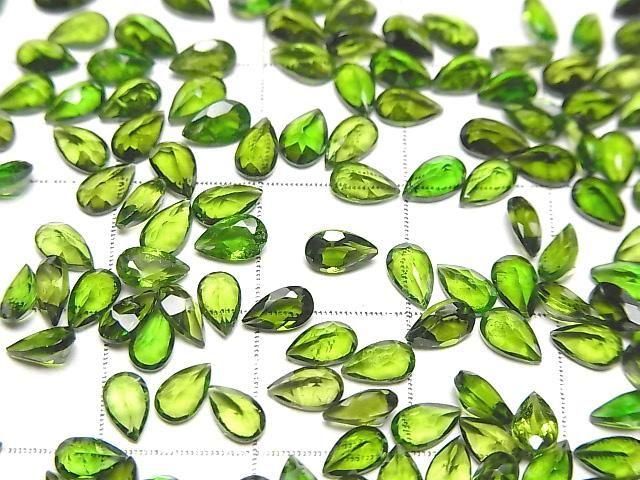
Pure diopside is colorless. Trace elements and inclusions create the green, yellow, brown, black, and violet-blue material seen in collections and jewelry. Chromium produces the saturated green of chrome diopside, while aligned inclusions can create a moving star or cat’s-eye effect in cabochons.

Diopside Meaning and History
The name diopside was introduced by French mineralogist Rene Just Hauy in 1806. It comes from Greek words meaning “twice” and “appearance,” referring to two possible orientations of the prism zone - not to the mineral having two faces or two colors.
Rich green chrome diopside is sometimes marketed as “Siberian emerald.” This is a trade nickname, not a mineral identity: diopside is a pyroxene, while emerald is a variety of beryl. The nickname reflects the vivid green color of material associated with Siberia, but diopside occurs in many parts of the world. Accurate product descriptions should use the mineral or variety name and treat geographic nicknames as secondary information.

Diopside Properties: Color, Hardness, and Optics
Diopside is identified by a combination of mineral and optical properties rather than color alone. Important features include its calcium-magnesium silicate composition, monoclinic crystal structure, vitreous luster, moderate scratch resistance, distinct cleavage, and relatively strong birefringence. Because diopside ranges from colorless and transparent to black and opaque, these properties are more reliable than appearance when separating it from look-alike green gems.

Color and Chemical Composition
Diopside has the ideal formula CaMgSi2O6. Pure material is colorless, but natural stones commonly contain trace elements that change their appearance. Chromium can create vivid medium to deep green chrome diopside; iron contributes yellowish green, brown, or darker tones; and manganese is associated with violet-to-blue violane. Color may also shift with viewing direction in transparent stones because diopside can show pleochroism.
For buyers, the most attractive green is not automatically the darkest. A very dark stone may look nearly black away from strong light, so evaluate color in normal indoor daylight as well as under a bright lamp.
Diopside Quick Facts
| Property | Details |
|---|---|
| Chemical formula | CaMgSi2O6 |
| Mineral group | Pyroxene; clinopyroxene subgroup |
| Crystal system | Monoclinic |
| Typical colors | Colorless, green, yellow, brown, black, violet-blue |
| Mohs hardness | About 5.5-6.5 |
| Luster | Vitreous to dull |
| Specific gravity | About 3.22-3.38 |
| Refractive index | About 1.664-1.730 |
| Cleavage | Distinct to good in two directions |
| Common forms | Faceted gems, cabochons, beads, carvings, mineral specimens |
Hardness, Cleavage, and Jewelry Durability
Diopside is wearable, but it is not a hard-wear gemstone. Its Mohs hardness of roughly 5.5-6.5 means it can be scratched by harder jewelry materials, and its distinct cleavage means a sharp blow may split or chip the stone even when the surface is not scratched. Mohs hardness measures scratch resistance, not overall toughness.
Pendants, earrings, brooches, and protected beads are generally lower-risk choices. Bracelets and rings can work for careful or occasional wear, especially with protective settings, but should be removed before exercise, gardening, household cleaning, or any activity that can cause impact.
Asterism, Chatoyancy, and Pleochroism
Diopside can display several optical effects. Transparent green stones may show pleochroism, meaning the color appears different when viewed from different directions. Fibrous or included material may show chatoyancy, a narrow cat’s-eye band. Black star diopside is cut with a domed cabochon surface to reveal a four-rayed star caused by aligned reflective inclusions, commonly reported as magnetite.
Evaluate a star stone under a single point light. A desirable star is sharp, complete, centered on the dome, and moves smoothly as the cabochon turns. Diffused lighting may hide the star, so product videos are useful.
Types of Diopside
The two most important jewelry varieties are chrome diopside and black star diopside. Other names describe color, chemistry, locality, or historical usage, but they are not separate mineral species. Variety names can be helpful when they are used precisely; they should not replace clear disclosure of color, transparency, cut, dimensions, treatments, and origin claims.

Chrome Diopside
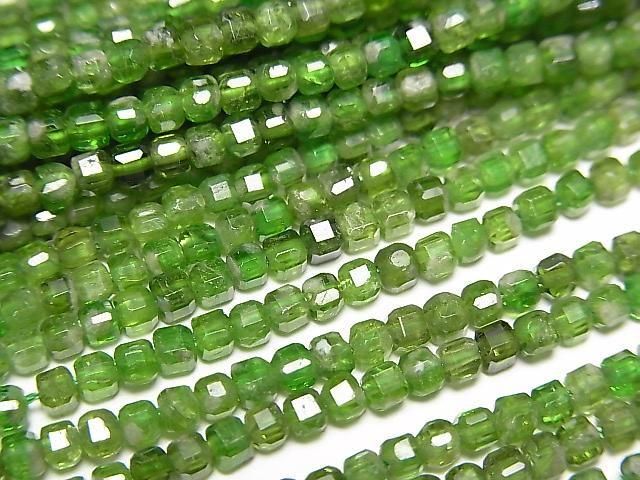
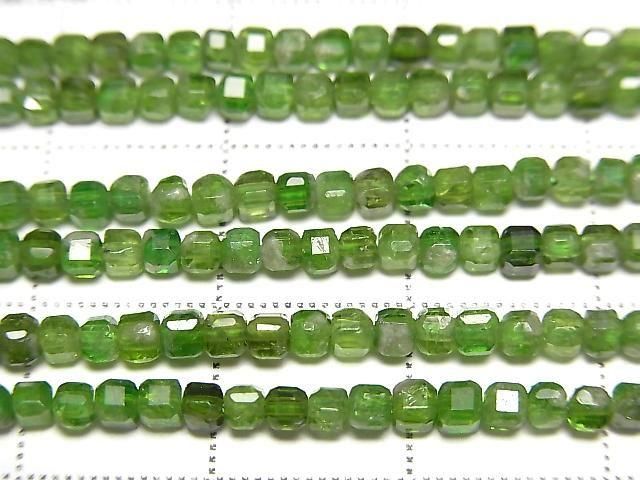
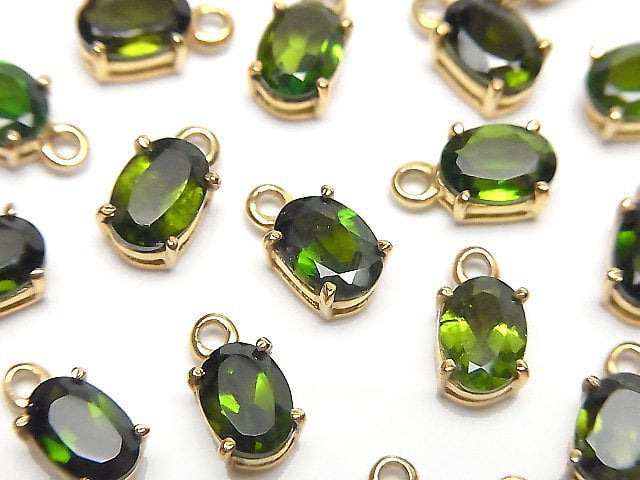
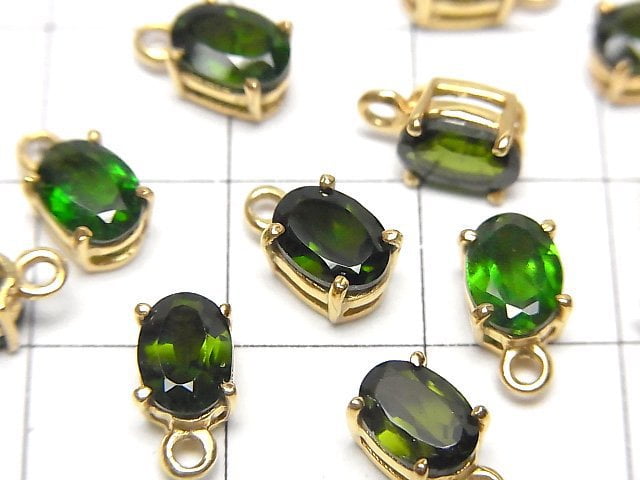
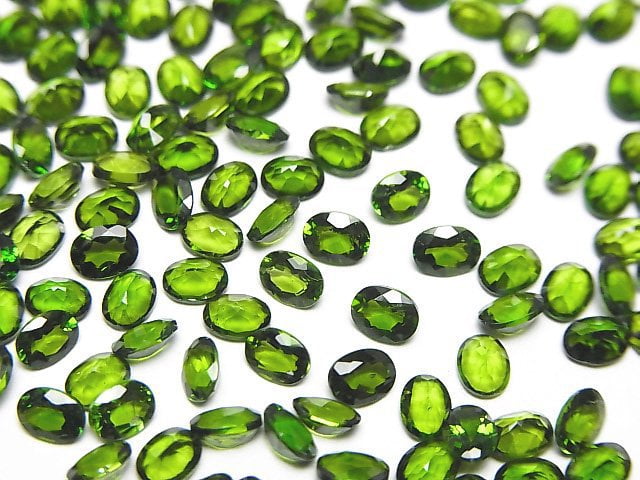
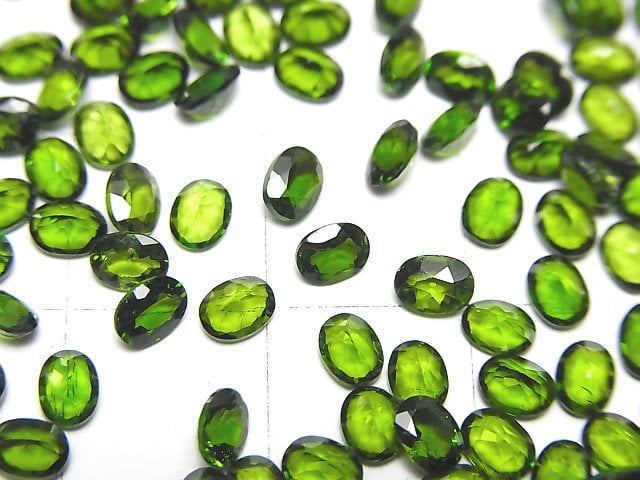
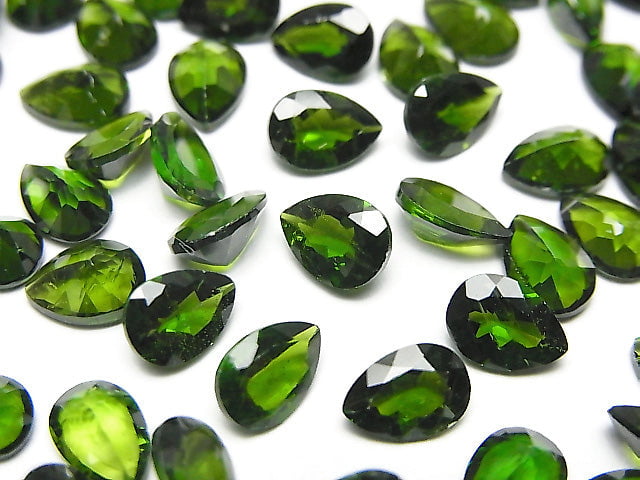
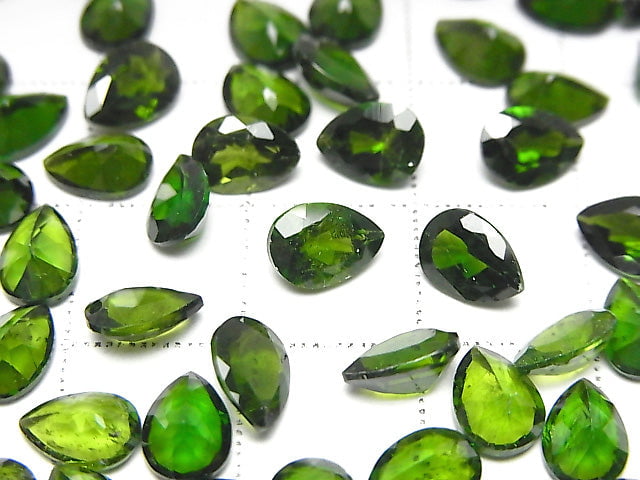
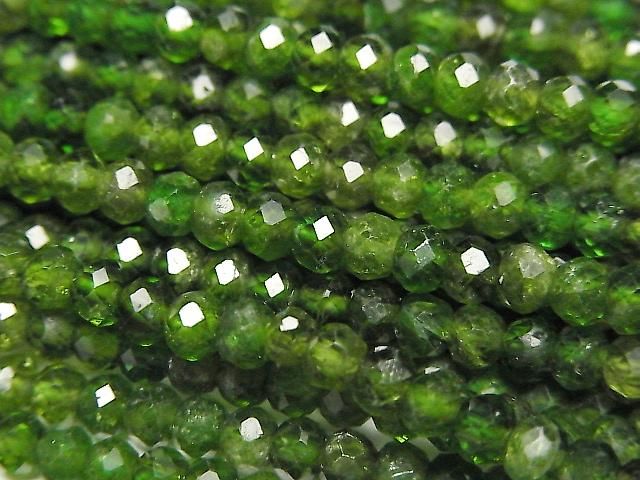
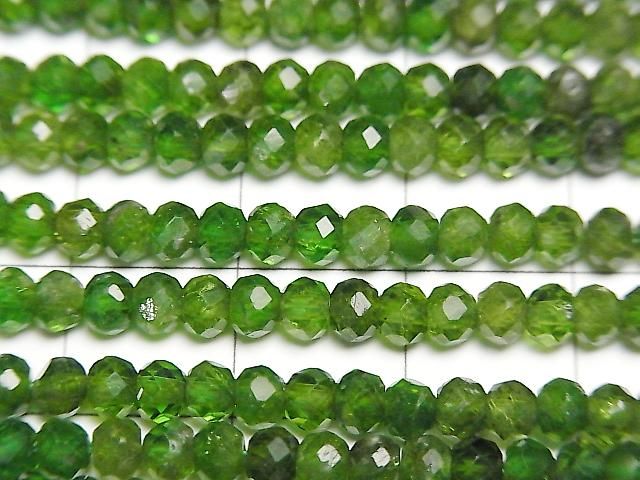
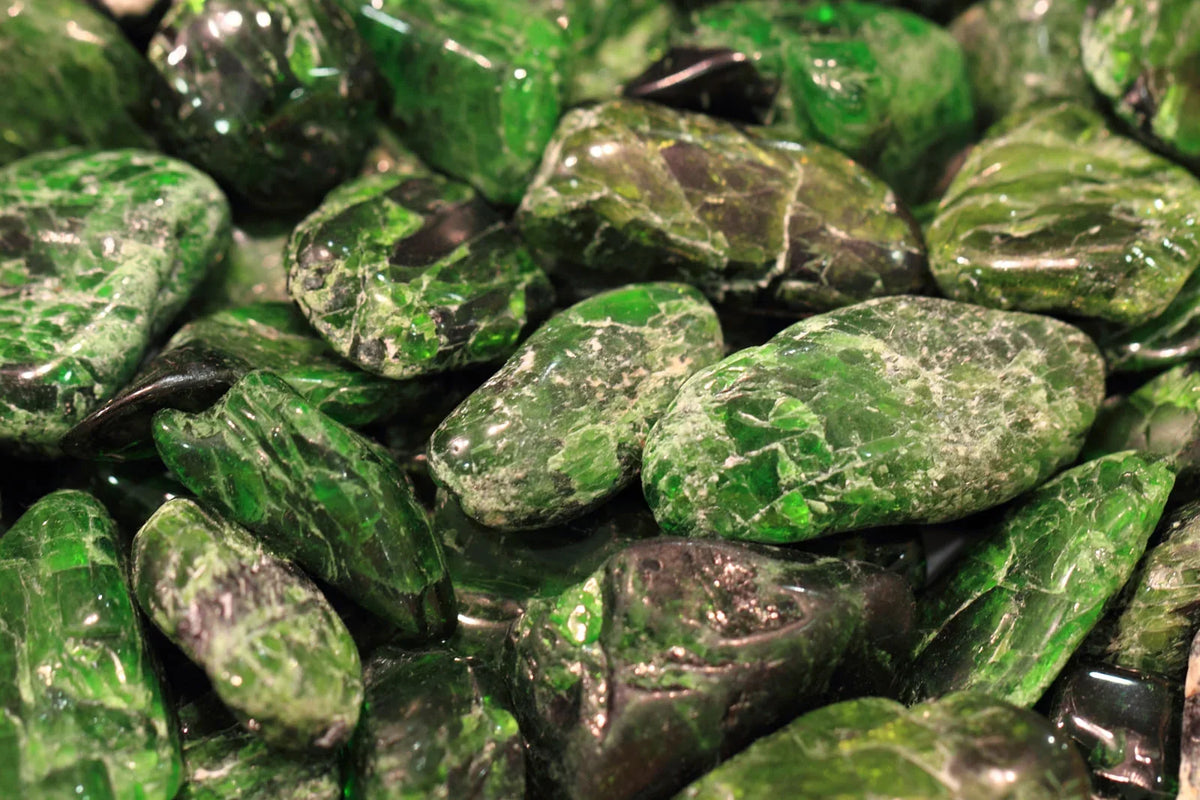
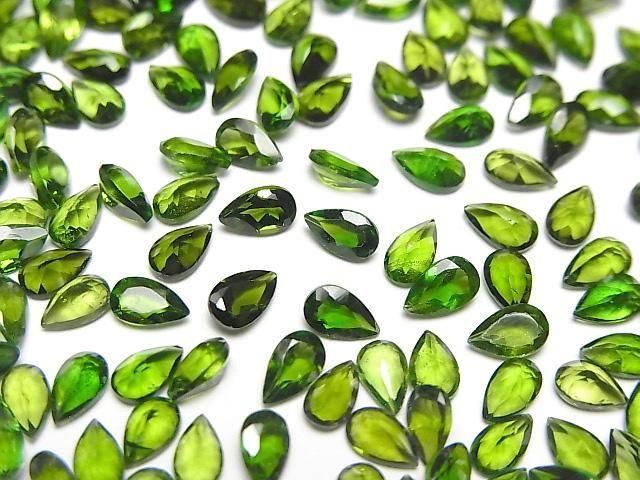
Chrome diopside is the vivid green, chromium-bearing variety most often faceted for jewelry or cut into small beads. Its color can range from bright grass green to deep forest green. The best-looking stone is usually lively in ordinary lighting, with enough saturation to look rich but not so much depth of color that the center goes dark.
Clarity matters more in a faceted stone than in a bead or cabochon. Eye-visible fractures can affect beauty and durability, while minor inclusions may be acceptable if the stone has strong color and an attractive cut. “Siberian emerald” may appear in marketing, but the correct variety name is chrome diopside.
Black Star Diopside
Black star diopside is an opaque dark diopside cut as a cabochon to display a four-rayed star. The phenomenon is the feature that drives desirability, so judge the star before judging the body color. Look for a bright, well-centered star with four visible rays, smooth movement across the dome, even polish, and minimal surface pitting.
Some black star diopside contains enough magnetite to respond to a magnet, but magnetism alone does not grade quality or prove identity. A gemological test is more reliable than a home test when identification matters.
Violane, Baikalite, and Other Varieties
Violane is a manganese-rich diopside variety with violet, violet-blue, or gray-blue color and is commonly translucent to opaque. Baikalite is an iron-bearing morphological variety associated with the Lake Baikal region and approaches salite in composition; it is often dark green to brownish green and should not be defined simply as “blue diopside.” Other historical or locality names include lavrovite and malacolite.
Because less familiar variety names are not used consistently in retail, buyers should prioritize a precise description and photographs over the name alone.
Where Diopside Forms and Is Found
Diopside forms in both igneous and metamorphic environments. It occurs in ultramafic rocks such as peridotite and kimberlite, in some mafic volcanic rocks, and in contact-metamorphosed carbonate rocks and skarns. Chromium-bearing diopside can also be useful to geologists as an indicator mineral associated with certain mantle rocks and diamond exploration.
Diopside occurs worldwide. Gem and collector material has been reported from Russia, India, Italy, Pakistan, Afghanistan, Tanzania, Madagascar, Canada, and the United States, among other locations. Origin can add interest, but it does not replace evaluation of color, clarity, cut, condition, or a visible star.
What Is Diopside Used For?
Diopside is used for jewelry, beads, cabochons, carvings, mineral collections, and geological research. Transparent chrome diopside is commonly faceted to emphasize color and brilliance. Opaque black star material is cut as a cabochon so its asterism can be seen. Translucent and opaque material can also be shaped into beads, pendants, carvings, and decorative objects.
Outside the jewelry market, diopside is studied as a rock-forming mineral and indicator of geological conditions. For most shoppers, however, the practical question is whether the cut and setting suit the stone’s moderate hardness and cleavage.

Jewelry, Beads, Cabochons, and Collecting
Faceted chrome diopside works well in earrings, pendants, and accent-stone designs where its green color can stand out without constant impact. Black star diopside is best in a cabochon setting that leaves the dome visible under a point light. Beads are available in rounds, faceted shapes, drops, and other cuts for necklaces and bracelets.
Jewelry makers should compare bead diameter in millimeters, drill-hole size, strand length, color matching, surface condition, and the number of pieces. North American shoppers may see strand lengths in inches alongside centimeters; use the product dimensions rather than relying on a photo for scale.
Best Jewelry Styles for Diopside
The safest everyday designs reduce impact and abrasion. Pendants and earrings are strong choices because they usually contact fewer hard surfaces. Beaded necklaces are also suitable when stored separately and restrung when the cord shows wear. Bracelets can be worn with care, but the wrist frequently hits desks, counters, and doorframes. Rings should use a bezel, halo, or other protective setting and are better for occasional wear.
A diopside bracelet may serve as a personal style piece or a reminder of a spiritual intention, but wearing one does not create scientifically proven health benefits.
Diopside Value: What Makes a Stone Desirable?
Diopside value depends on the variety and the individual stone, not on one universal price per carat. In transparent chrome diopside, buyers usually reward attractive green color, good brightness, useful clarity, balanced cutting, and a size that does not appear overly dark. In black star diopside, the sharpness, completeness, centering, and movement of the star can matter more than transparency.
Prices change with supply, seller, size, cut, matching, and market conditions. Use current listings in USD or CAD for a realistic comparison, and compare stones with similar dimensions and quality rather than relying on an old generic price range.
Quality Factors for Faceted and Star Diopside
Use these factors to compare diopside stones:
- Color: Look for an appealing hue and saturation that remain visible in normal lighting.
- Clarity: Eye-clean transparency is desirable in faceted gems; inclusions are expected in phenomenal stones.
- Cut: Facets should be symmetrical and lively, without a large window or an excessively dark center.
- Optical effect: A star should be sharp, centered, complete, and mobile under a point light.
- Size: Larger fine transparent stones may be harder to find because deep color can make them look dark.
- Matching: Bead strands should be consistent in color, diameter, drill placement, and finish.
- Condition: Check for chips, open fractures, pits, abrasion, and damage around drill holes.
Diopside Buying Checklist
Before buying, confirm the exact variety, dimensions in millimeters, quantity, transparency, cut, and condition. Review more than one image and use video when available, especially for color, sparkle, and asterism. Ask whether the material is natural, whether any treatment has been disclosed, and whether a claimed origin is documented. Do not assume that a trade nickname proves identity or locality.
For beads, verify strand length, approximate bead count, drill-hole size, and matching. For a higher-value loose gem, consider an independent gemological report when identity, treatment, or origin materially affects the purchase. Also review the seller’s quality grading, shipping information, and return policy before checkout.
Diopside vs. Emerald vs. Peridot
Chrome diopside, emerald, and peridot can all be green, but they are different minerals with different color ranges and durability. Chrome diopside often offers a cool, saturated forest-green look; emerald ranges from bluish green to green and commonly contains fractures or clarity enhancement; peridot is usually more yellowish or olive green. Diopside is the softest of the three in scratch resistance, so the choice should consider both appearance and intended wear.
Comparison Table
| Feature | Chrome diopside | Emerald | Peridot |
|---|---|---|---|
| Mineral family | Pyroxene | Beryl | Olivine |
| Typical color | Vivid medium to deep green | Bluish green to green | Yellow-green to olive green |
| Mohs hardness | About 5.5-6.5 | 7.5-8 | 6.5-7 |
| Common clarity | Transparent to included | Commonly included; often fracture-filled | Often transparent and relatively clean |
| Best wear | Earrings, pendants, protected or occasional-wear pieces | Many jewelry types with care | Earrings, pendants, careful ring wear |
| Main buying check | Avoid overly dark stones; inspect cut | Ask about oil or filling | Watch for brownish tone and damage |
Related guides: Emerald and Peridot.
Diopside Meaning and Metaphysical Properties
In modern crystal traditions, diopside meaning is commonly associated with renewal, compassion, grounding, and a closer connection with nature. These ideas are spiritual or cultural beliefs, not effects established by scientific evidence. A crystal may be used as a focus for reflection or personal ritual, but it should not be presented as a treatment for physical or mental illness and should never replace qualified medical care.

Green Diopside Meaning and Benefits
Green diopside is often linked in crystal practice with compassion, emotional renewal, patience, and awareness of the natural world. Some people use it as a visual reminder to slow down, respond with empathy, or return to a long-term goal after a setback. These diopside benefits are subjective and cannot be guaranteed.
A green diopside pendant or bracelet can keep that personal intention nearby. The practical benefit of jewelry is that it is wearable and easy to incorporate into a routine; any emotional or spiritual response depends on the individual rather than a medically active property of the stone.
Black Star Diopside Metaphysical Properties
Black star diopside is traditionally associated with grounding, protection, self-reflection, and resilience. The moving four-rayed star may be used symbolically as a reminder to find direction during uncertainty or to balance practical action with intuition. These are interpretive traditions rather than scientifically proven properties.
Avoid claims that the stone can control another person’s mind, guarantee wealth, expose deception, or cure disease. A responsible description can discuss symbolism and personal practice without promising outcomes.
How to Use Diopside in a Crystal Practice
Use diopside as a mindful cue rather than as a medical tool. You might hold the stone during a short breathing exercise, wear it while focusing on a personal intention, keep it near a journal, or place it on a desk as a reminder to pause before making a decision. If you use a bracelet, check the stringing regularly and avoid impact or prolonged contact with water.
Spiritual cleansing or charging methods are optional beliefs. For the stone’s physical safety, avoid salt, harsh chemicals, extreme heat, and long soaking sessions. Gentle handling is more important than any ritual method.
How to Clean and Care for Diopside
The safest routine is gentle cleaning with lukewarm water, a small amount of mild soap, and a soft cloth or soft-bristled brush. Rinse briefly and dry thoroughly. For beads, make sure moisture does not remain in drill holes or on the stringing material.
Avoid harsh chemicals, abrasive cleaners, sudden temperature changes, steam, and ultrasonic cleaning unless a qualified jeweler has examined the specific stone. Store diopside separately from harder gems to reduce scratches, and remove it before swimming, showering, exercise, gardening, or household chores. Inspect prongs, bezels, cords, and drill holes periodically.
Shop Diopside Beads and Stones at KenKenGems
Browse the current KenKenGems diopside collection to compare chrome diopside beads, black star cabochons, loose stones, pendants, bracelets, and other jewelry-making materials. Selection changes, so use the live product page for current sizes, quantities, stock, and pricing.
For U.S. and Canadian shoppers, select the appropriate country or region to view available USD or CAD pricing. Compare millimeter dimensions, strand length, quality grade, photos, and video before ordering, then review shipping and return information for your destination.
Shop diopside beads and stones.

FAQ About Diopside
These concise answers address common questions about diopside stone meaning, identification, rarity, uses, wearability, care, and metaphysical claims.
General Diopside Questions
Is diopside a crystal or a gemstone?
It can be both. Diopside is a mineral; a naturally formed specimen may be called a crystal, and attractive material that is cut or polished is used as a gemstone.
Is diopside rare?
Diopside is not a rare mineral overall, but transparent gem-quality chrome diopside, fine large stones, and cabochons with a sharp star are less common than ordinary mineral material.
What is diopside used for?
It is used in faceted jewelry, beads, cabochons, carvings, mineral collections, and geological research. Black star diopside is usually cut as a cabochon, while transparent green material is often faceted.
Is diopside the same as emerald?
No. Diopside is a pyroxene mineral, while emerald is green beryl. “Siberian emerald” is a trade nickname for some chrome diopside and should not be interpreted as true emerald.
Wear, Care, and Healing Questions
Can diopside be worn every day?
It can be worn with care, but its moderate hardness and distinct cleavage make pendants and earrings safer than an exposed everyday ring. Use protective settings and remove the stone for impact-prone activities.
What color is diopside?
Diopside can be colorless, green, yellow, brown, black, or violet-blue. Chrome diopside is vivid green, black star diopside is dark and opaque, and violane is violet to blue.
What is baikalite?
Baikalite is an iron-bearing variety of diopside associated with the Lake Baikal region. It is commonly dark green to brownish green and is not a standardized name for every blue diopside.
Does diopside have healing properties?
No medical healing effect has been scientifically established. Metaphysical traditions may associate diopside with compassion, grounding, or renewal, but it should not replace medical or mental health care.
How do you clean diopside?
Use lukewarm water, mild soap, and a soft cloth or brush, then dry it thoroughly. Avoid harsh chemicals, steam, ultrasonic cleaning, and hard knocks.
Mineralogical references: Mindat and Gemdat.
Shop Diopside at KenKenGems
Ready to choose a stone? Browse chrome diopside beads, black star cabochons, loose gems, and finished jewelry, with millimeter dimensions, quality grades, photos, and video for every listing.



![Chrome Diopside AA++ Bezel Setting Freeform Rose Cut [One Side] Silver925 3pcs](http://store.kenkengems.com/cdn/shop/files/189572883.jpg?v=1766487063&width=640)
![Chrome Diopside AA++ Bezel Setting Freeform Rose Cut [One Side] Silver925 3pcs](http://store.kenkengems.com/cdn/shop/files/189572883_o1.jpg?v=1766487060&width=640)