
TOC
- 1. What Is Moldavite? Origin of the Meteorite Crystal
- 2. Moldavite Properties: Physical Characteristics
- 3. The Value of Moldavite: Price & Investment
- 4. Moldavite Metaphysical & Spiritual Properties
- 4-1. Moldavite Crystal Benefits
- 5. Moldavite Healing Properties
- 6. Moldavite and Zodiac Signs
- 7. How to Identify Real Moldavite
- 8. Frequently Asked Questions About Moldavite
- 9. Shop Genuine Moldavite at KenKenGems

What Is Moldavite? Origin of the Meteorite Crystal
Moldavite (Czech: vltavín) is a tektite — a natural glass formed about 15 million years ago, when a meteorite impact melted and fused silica-rich surface rock at the Nördlinger Ries crater in what is now southern Germany. Named after the Moldau (Vltava) River in Bohemia, this green, glassy stone is prized for its distinctive forest-to-olive color and is the only tektite widely used as a gemstone — which is why collectors, jewelers, and crystal enthusiasts hold it in such high regard.
The impact flung molten droplets high into the air; as they travelled and cooled, they solidified into the green glass we call moldavite. Most fragments came to rest in the Czech Republic (the regions of Bohemia and Moravia), with smaller amounts in Germany and Austria — hundreds of kilometers from the crater itself. Moldavite belongs to the wider tektite family of natural impact glasses, alongside stones such as Libyan Desert Glass, Colombianite, and the Australites of Australia.


Moldavite Properties: Physical Characteristics
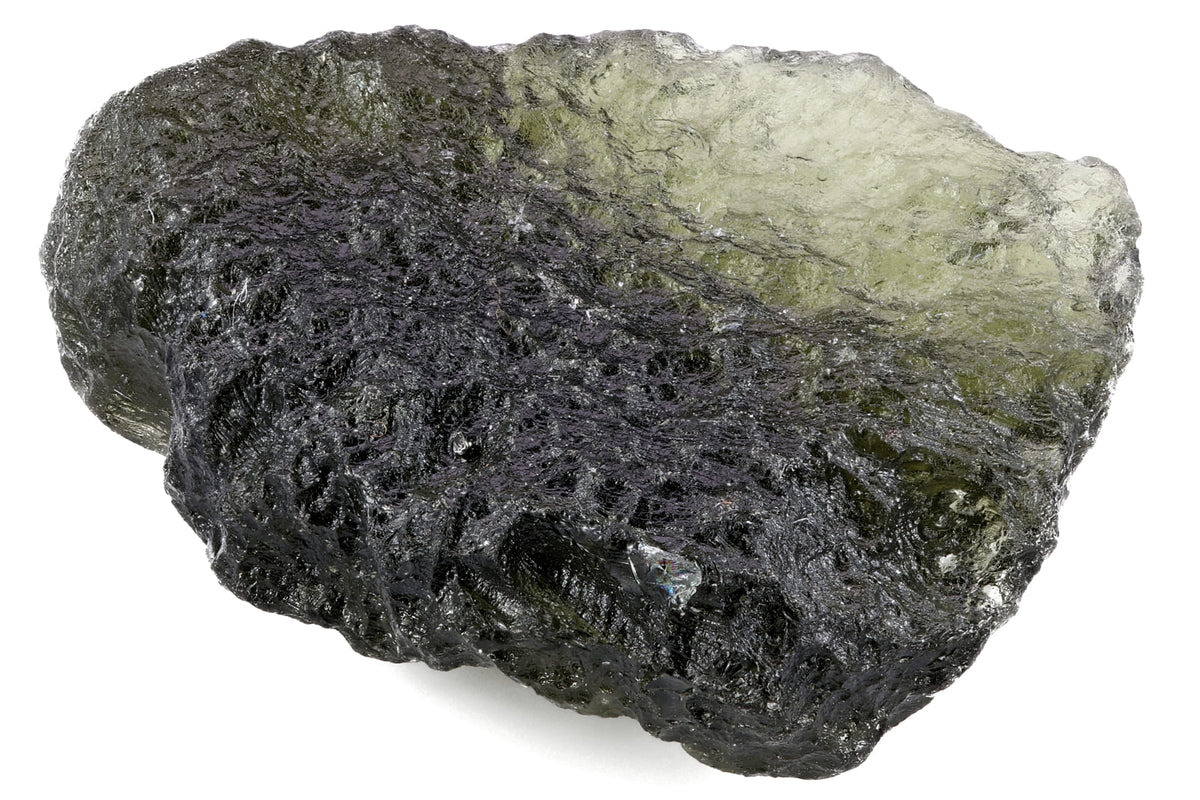
Moldavite properties reflect its origin as a natural glass rather than a crystalline mineral. It shows divine green hues — from bottle green through forest green to olive, with rarer brownish to near-black stones from Moravia. Its luster is vitreous (glassy), and raw pieces typically display a wrinkled, etched surface. On the Mohs scale it measures roughly 5.5 to 7. Because it is amorphous silica glass, genuine moldavite commonly contains gas bubbles, swirling flow lines (schlieren), and worm-like strands of lechatelierite — inclusions that are difficult to fake and help distinguish it from ordinary bottle glass.
| Type | Tektite (natural impact glass) |
| Composition | Silica-rich glass (SiO2 ~75–80%) |
| Hardness (Mohs) | 5.5 – 7 |
| Color | Bottle to forest green, olive, rare brown/black |
| Luster | Vitreous (glassy) |
| Transparency | Transparent to translucent |
| Origin | Czech Republic (Bohemia & Moravia) |
The Value of Moldavite: Price & Investment
How much is moldavite worth? Because it formed from a single ancient impact and is no longer being created, the supply is finite — and as the Czech deposits are worked out, fine material becomes harder to find. Moldavite is mined mainly in the Czech Republic, with only minor deposits in Germany and Austria. With rarity and demand both rising, prices have generally increased in recent years.
Quality is judged mainly by transparency, color, size, and surface texture, with transparent, richly colored, or dramatically etched pieces commanding the highest prices. Genuine faceted or raw Czech stones command a premium precisely because imitations are so common on the market. As with any collectible, however, future value depends on the market and cannot be guaranteed, so it is reasonable to weigh a stone's appearance and documented origin rather than treating any purchase purely as a financial investment.

Moldavite Metaphysical & Spiritual Properties
In crystal lore, moldavite is famed as a stone of rapid transformation — traditionally described as an intense, "high-vibration" crystal believed to accelerate spiritual growth and change. These are cultural and spiritual beliefs rather than scientifically established effects, but they are a large part of why the stone is so popular.
Followers of these traditions associate moldavite with patience and perspective, a sense of connection to higher knowledge, and feelings of protection and good luck. Because the stone came from space and fused with the Earth, many people also regard it as a symbol of meeting between the cosmic and the earthly. These are traditional beliefs, not medical claims.

Moldavite Crystal Benefits
Within crystal lore, practitioners traditionally value the moldavite crystal for what they believe it supports:
- Encouraging spiritual reflection and a sense of personal transformation
- Symbolizing the release of old patterns and fresh starts
- Deepening meditation and intuition
- Inviting a feeling of synchronicity, luck, and new opportunities
Some people report a warm, tingling sensation — sometimes called the "moldavite flush" — when they first hold the stone, and many suggest starting with short sessions. Experiences like this are personal and subjective. These are traditional beliefs, not medical claims.
Moldavite Healing Properties
Moldavite healing properties are a matter of crystal-healing tradition rather than medical fact. Within those traditions, moldavite is described as a calming, grounding companion during stressful or transitional periods — something people keep nearby as a mindful reminder to pause, breathe, and refocus.
Important: moldavite and other crystals are not medicine. They cannot diagnose, treat, cure, or prevent any illness or symptom, and they are not a substitute for professional medical or mental-health care. These are traditional beliefs, not medical claims.
Any sense of calm or relaxation that comes from a soothing routine is a personal experience rather than a proven property of the stone itself. As with any object used often, folklore also cautions against "overuse" — meaning simply that sensitive individuals may prefer to wear or hold it for shorter periods at first.
Moldavite and Zodiac Signs
In astrological tradition, moldavite is often said to be compatible with practically every zodiac sign. Because it is linked in folklore to air, fire, and earth associations, many practitioners consider it broadly suitable, while suggesting that water signs and more sensitive individuals simply start with short periods of wear. As with all such lore, this is a matter of belief and personal preference rather than established fact.

How to Identify Real Moldavite
Moldavite is one of the most imitated stones on the market: many pieces sold as "moldavite" are in fact manufactured green glass or resin imitations. Because genuine material has become rarer and more expensive, verification matters — these factual checks can help:
- Texture: genuine raw moldavite has a wrinkled, etched, "mossy" surface with natural pits; glass fakes often look too smooth or uniform, or carry mold seams.
- Color: authentic stones are a natural forest-to-olive green — not a neon, bright, or perfectly even artificial green.
- Inclusions: real pieces often contain irregular, elongated gas bubbles and worm-like lechatelierite; imitation glass tends to show perfectly round bubbles or none at all.
- Weight: moldavite is a relatively light glass (specific gravity about 2.3), so it should not feel unusually heavy for its size.
- Price & source: genuine Czech material is rarely very cheap by the gram and is usually sold with locality information; buy from reputable dealers who can provide origin details.
When in doubt, ask for origin documentation and buy from sellers who clearly describe the material and its provenance.
Frequently Asked Questions About Moldavite
What is moldavite?
Moldavite is a rare green tektite — a natural glass formed by a meteorite impact about 15 million years ago at the Nördlinger Ries crater, found mainly in the Czech Republic.
What is moldavite good for?
In crystal lore it is used as a stone of transformation, traditionally believed to support spiritual growth, help release old patterns, and deepen meditation. These are traditional beliefs, not medical claims.
Why is moldavite so expensive?
Genuine moldavite comes from a small, depleting Czech source and cannot be reproduced naturally, so authentic stones are rare and have generally risen in value.
Is my moldavite real or fake?
Real moldavite has a wrinkled, etched surface, a natural forest-to-olive green color, and often irregular gas-bubble inclusions. Smooth, neon, uniform, or very cheap "moldavite" is usually manufactured glass.
Can moldavite get wet?
Brief contact with water is fine, but avoid prolonged soaking; cleanse it gently and dry it promptly.
Shop Genuine Moldavite at KenKenGems
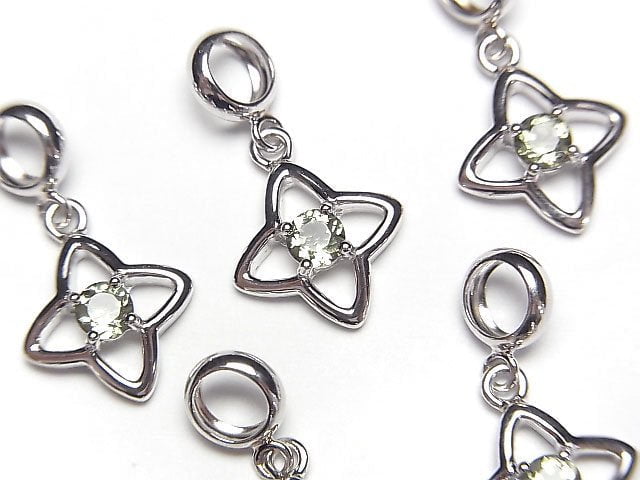
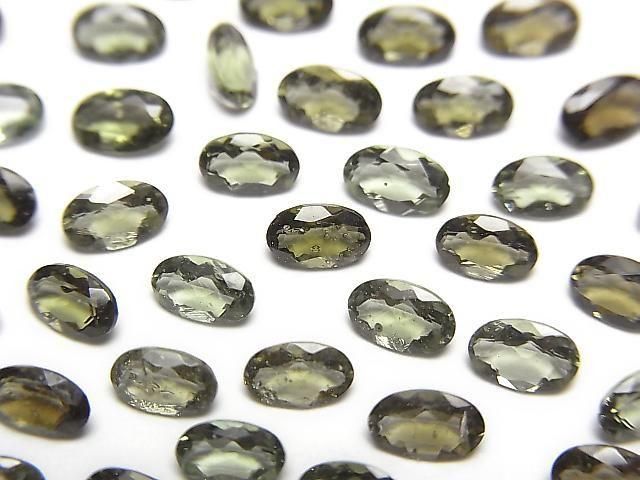
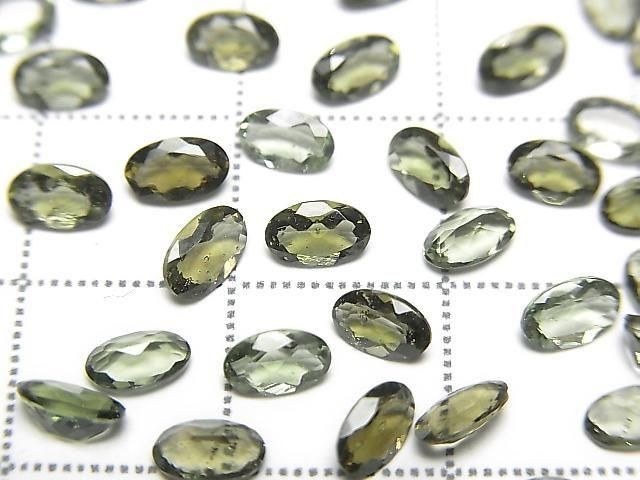
Own a genuine piece of the sky. At KenKenGems, we supply authenticated Czech moldavite in a range of forms — raw undrilled nuggets that showcase the stone's natural etched texture, nugget pendants, beads, cabochons, and faceted stones. Because authenticity is the top concern with moldavite, we describe our material honestly and clearly, with origin details, so you can buy a real piece of this remarkable impact glass with confidence. Explore the collection, with worldwide shipping.


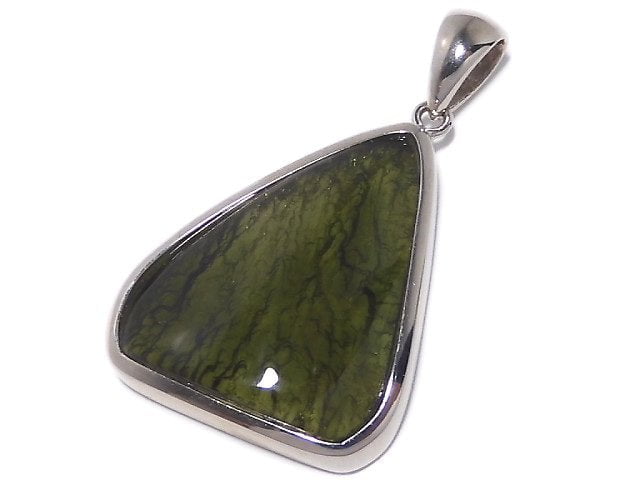
![[One of a kind] Moldavite AAA Pendant (one side non-polished) Silver925 No.101](http://store.kenkengems.com/cdn/shop/files/179433127_o1.jpg?v=1716429650&width=640)
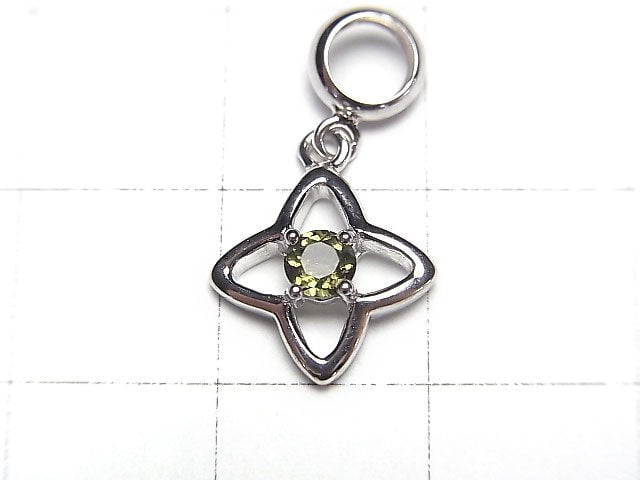

![[One of a kind] Moldavite AAA Pendant (one side non-polished) Silver925 No.106](http://store.kenkengems.com/cdn/shop/files/179433134_o1.jpg?v=1716429891&width=640)
![[One of a kind] Moldavite AAA Pendant Silver925 No.2](http://store.kenkengems.com/cdn/shop/files/187615349.jpg?v=1753360475&width=640)
![[One of a kind] Moldavite AAA Pendant Silver925 No.2](http://store.kenkengems.com/cdn/shop/files/187615349_o1.jpg?v=1753360481&width=640)
![[One of a kind] Moldavite AAA Pendant Silver925 No.1](http://store.kenkengems.com/cdn/shop/files/187615346.jpg?v=1753360463&width=640)
![[One of a kind] Moldavite AAA Pendant Silver925 No.1](http://store.kenkengems.com/cdn/shop/files/187615346_o1.jpg?v=1753360469&width=640)
![[One of a kind] High Quality Moldavite AAA Faceted Loose stone 1pc No.109](http://store.kenkengems.com/cdn/shop/files/183628019.jpg?v=1734672438&width=640)
![[One of a kind] High Quality Moldavite AAA Faceted Loose stone 1pc No.109](http://store.kenkengems.com/cdn/shop/files/183628019_o1.jpg?v=1734672432&width=640)
![[One of a kind] Moldavite AAA Pendant Silver925 No.4](http://store.kenkengems.com/cdn/shop/files/187615354.jpg?v=1753360498&width=640)
![[One of a kind] Moldavite AAA Pendant Silver925 No.4](http://store.kenkengems.com/cdn/shop/files/187615354_o1.jpg?v=1753360505&width=640)
![[One of a kind] High Quality Moldavite AAA Faceted Loose Stone 6pcs Set No.18](http://store.kenkengems.com/cdn/shop/files/191507032.jpg?v=1779170632&width=640)
![[One of a kind] High Quality Moldavite AAA Faceted Loose Stone 6pcs Set No.18](http://store.kenkengems.com/cdn/shop/files/191507032_o1.jpg?v=1779170651&width=640)
![[One of a kind] High Quality Moldavite AAA Faceted Loose stone 1pc No.138](http://store.kenkengems.com/cdn/shop/files/184946741.jpg?v=1742281380&width=640)
![[One of a kind] High Quality Moldavite AAA Faceted Loose stone 1pc No.138](http://store.kenkengems.com/cdn/shop/files/184946741_o1.jpg?v=1742281386&width=640)
![[One of a kind] High Quality Moldavite AAA Faceted Loose stone 1pc No.113](http://store.kenkengems.com/cdn/shop/files/183628026.jpg?v=1734672308&width=640)
![[One of a kind] High Quality Moldavite AAA Faceted Loose stone 1pc No.113](http://store.kenkengems.com/cdn/shop/files/183628026_o1.jpg?v=1734672302&width=640)


