TOC
- 1. What Is Prehnite?
- 2. Prehnite Meaning & History
- 3. Prehnite Properties
- 4. Prehnite with Epidote
- 5. Colors, Sources & Value
- 6. Care & How to Identify
- 7. Prehnite Meaning & Symbolism
- 8. Prehnite FAQ
- 8-1. Is prehnite a crystal or a gemstone?
- 8-2. What is prehnite with epidote?
- 8-3. Is prehnite the same as jade?
- 8-4. What is the difference between prehnite and peridot?
- 8-5. Is prehnite suitable for everyday jewelry?
- 8-6. What chakra is prehnite associated with?
- 9. Shop Prehnite at KenKenGems

What Is Prehnite?
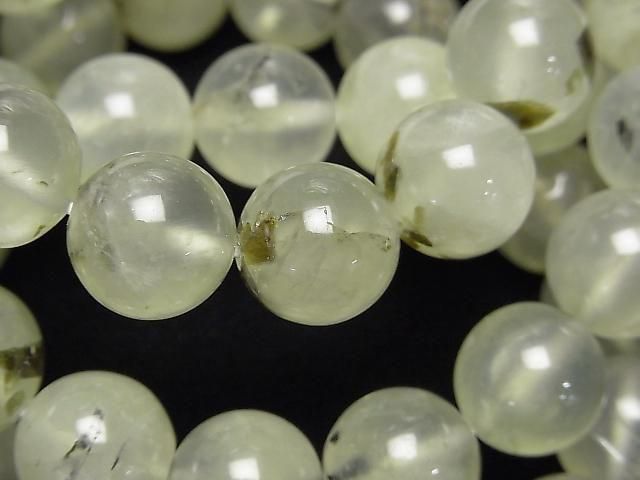
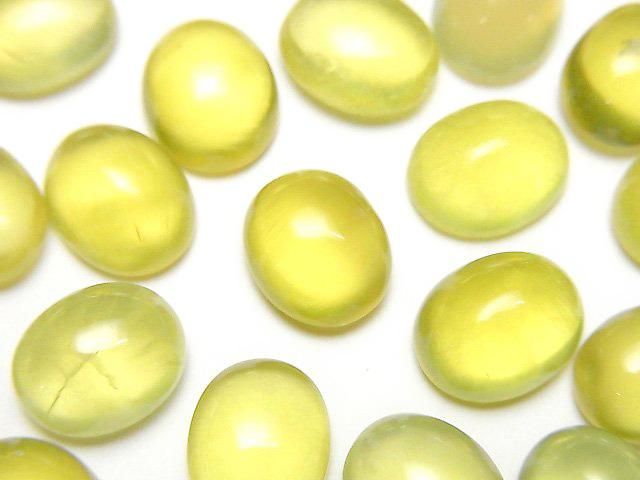
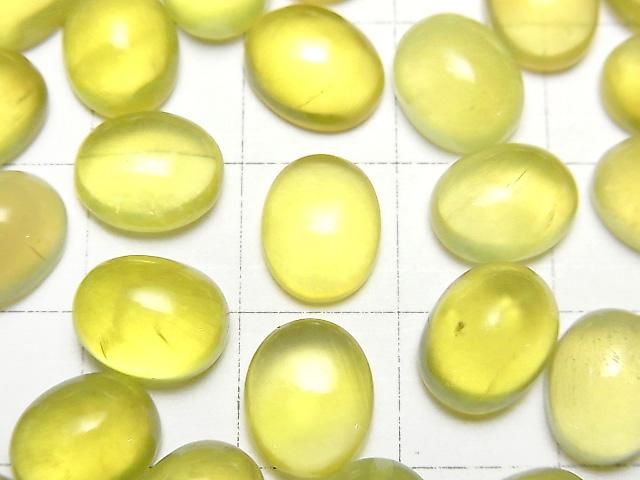
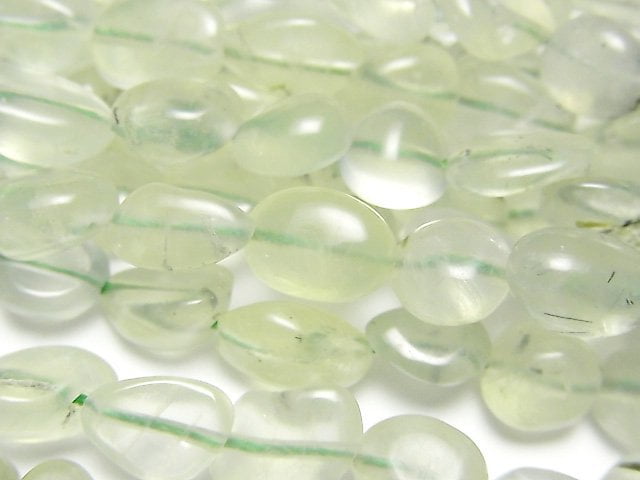
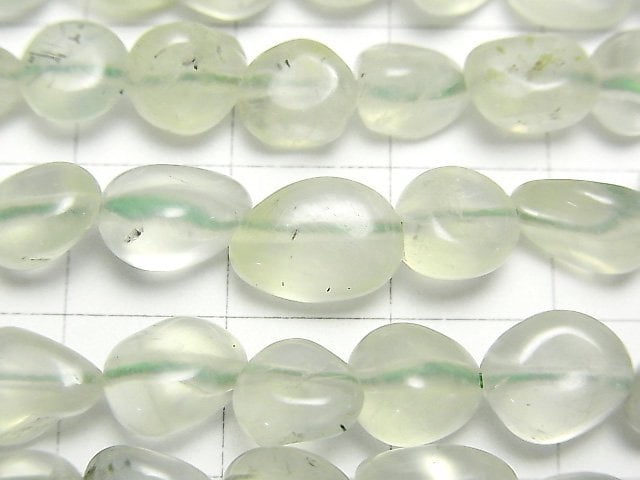
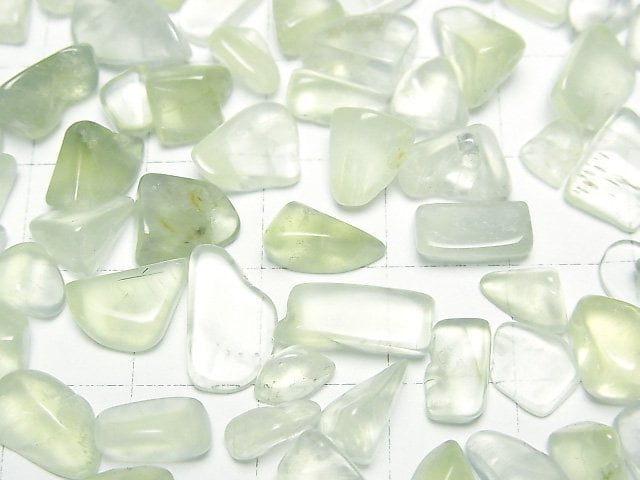
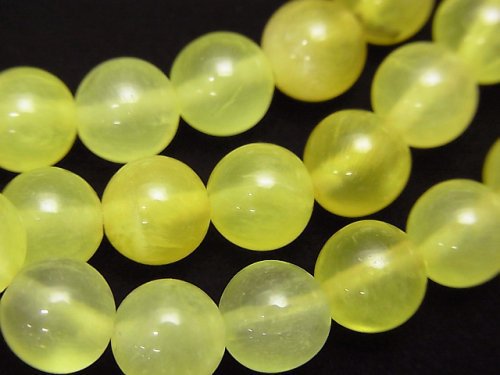
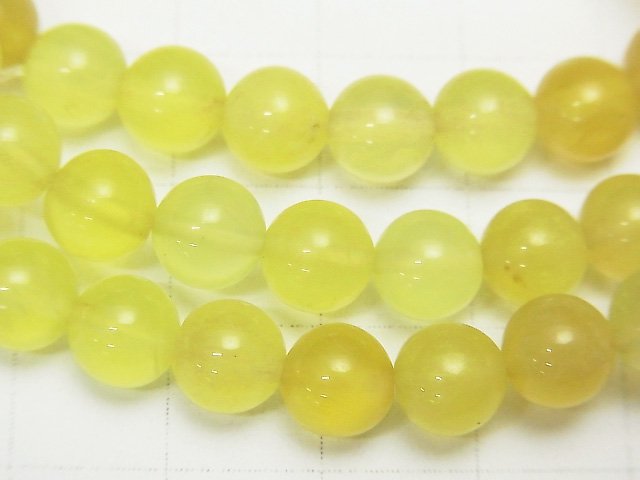
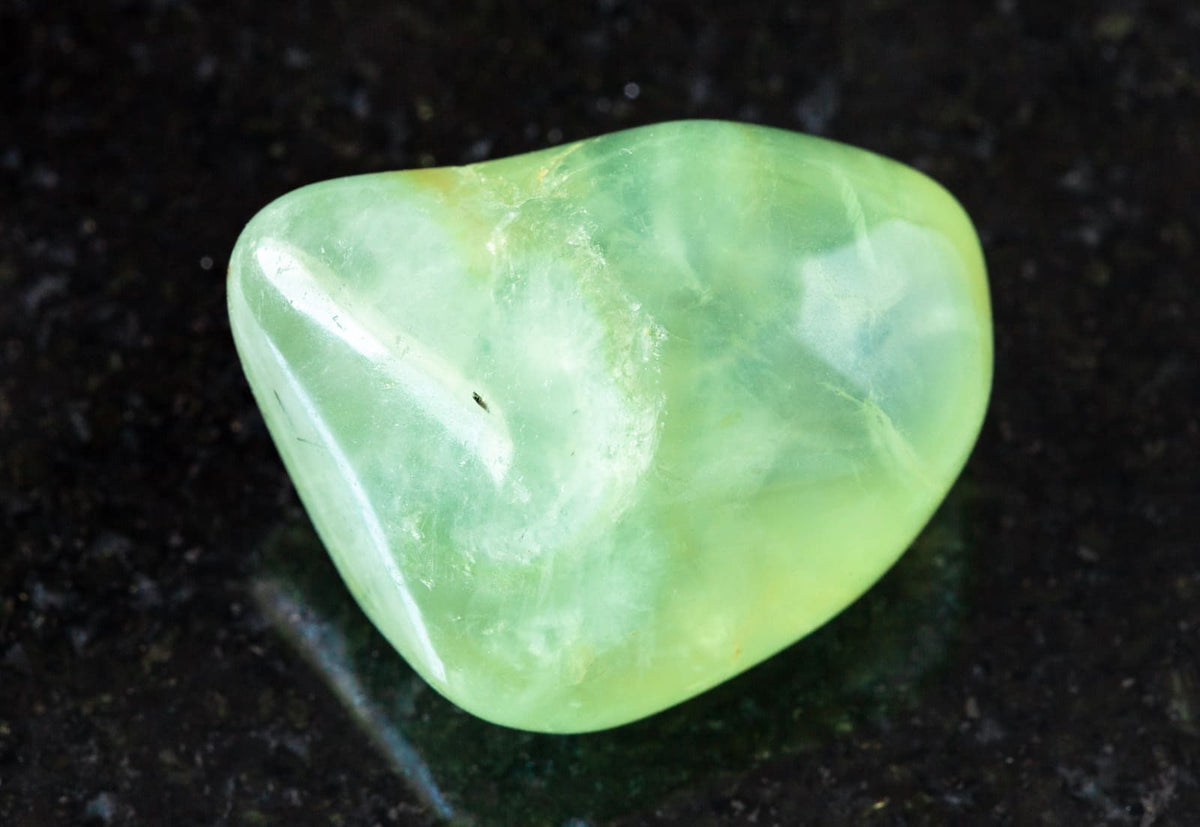
Prehnite is a translucent to semi-translucent mineral with the chemical formula Ca2Al2Si3O10(OH)2. It is a calcium aluminum silicate, usually yellow-green to green in color, though it also occurs in white, gray-green, and golden tones. Its soft inner glow makes prehnite crystal beads and cabochons popular for handmade jewelry.
Prehnite is sometimes called grape jade, Cape chrysolite, or sun jade, but it is not a type of jade. Shoppers occasionally misspell it as "prehinite" or "prehniye," yet these usually refer to prehnite.

Prehnite Meaning & History
Prehnite was named after Colonel Hendrik von Prehn (1733-1785), a Dutch military officer credited with bringing the mineral from the Cape of Good Hope to Europe in the 18th century. Prehnite is widely cited as the first mineral to be named after a person.
Older trade names include Cape emerald, Cape chrysolite, adelite, chiltonite, and grape jade. In crystal lore, prehnite has traditionally been associated with calm, renewal, and heart-centered intention. These are traditional beliefs, not medical claims.

Prehnite Properties
The table below summarizes prehnite properties, based on standard gemological references and FTC Jewelry Guides naming.
| Property | Detail |
|---|---|
| Composition | Calcium aluminum silicate, Ca2Al2Si3O10(OH)2 |
| Mineral class | Phyllosilicate / inosilicate (sheet-and-chain silicate) |
| Color | Usually yellow-green to green; also white, gray-green, and golden tones |
| Luster | Vitreous to pearly |
| Transparency | Translucent to transparent |
| Mohs hardness | 6 to 6.5 |
| Crystal system | Orthorhombic |
| Common inclusions | Epidote (dark green to black needles or patches) |
| Typical treatment | Usually untreated / natural |

Prehnite with Epidote
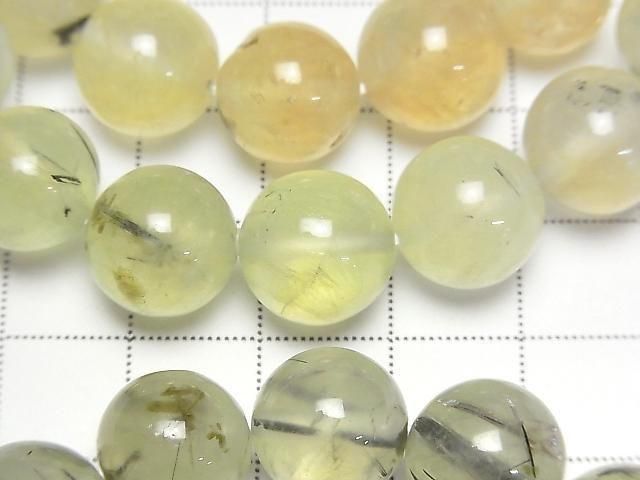
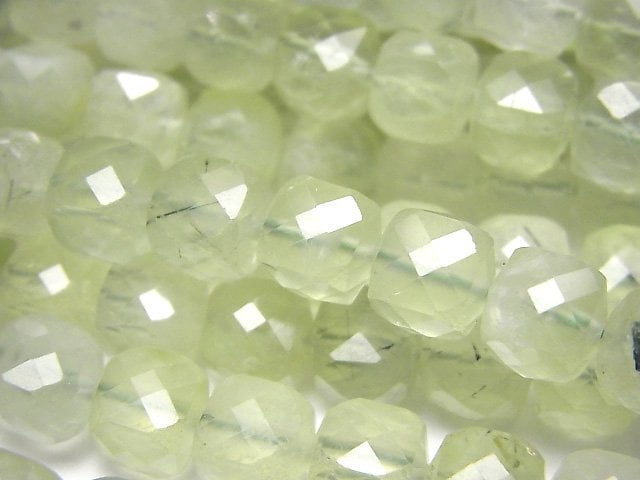
One of the most recognizable forms of the stone is prehnite with epidote. Epidote is a separate mineral that can grow within or across prehnite as dark green to black needle-like crystals, giving the combination a distinctive mossy, contrasting look. Searches for "epidote and prehnite" and "prehnite and epidote" usually describe this natural pairing.
Prehnite and epidote form together in the same geological environments, so the epidote appears as genuine inclusions rather than an added treatment. Jewelry makers often choose epidote-included prehnite for organic, earthy designs where the dark needles are part of the intended look. When you buy prehnite with epidote, check whether the inclusions are evenly distributed and how they read against the pale green body color.


Colors, Sources & Value
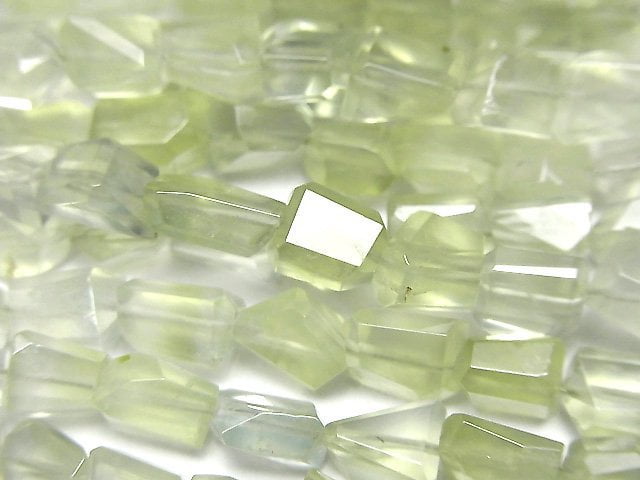
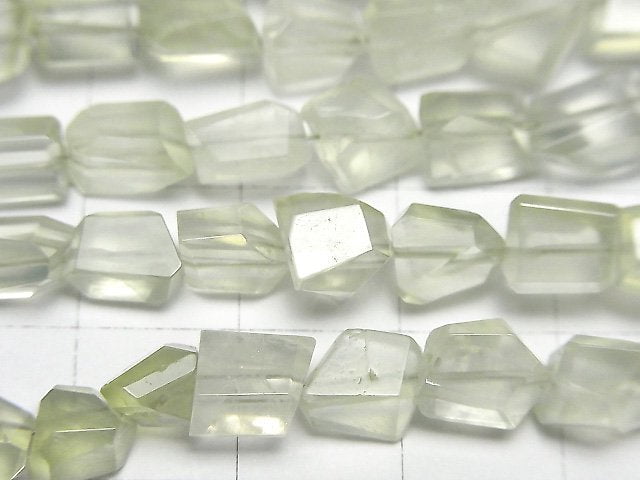
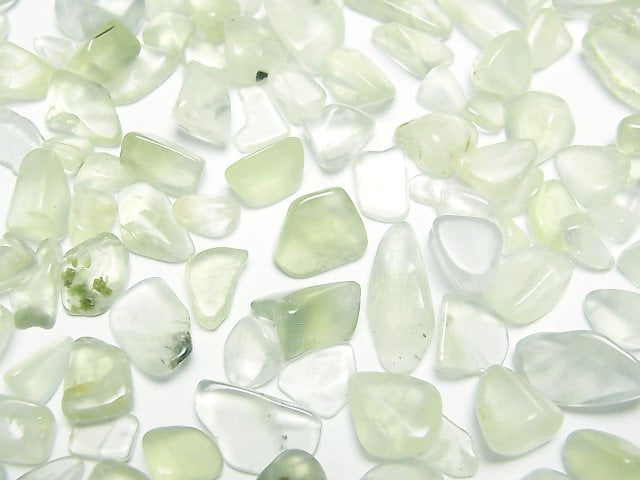
Most prehnite is yellow-green to green, and the softest, most even material can appear to glow from within. Some stones are cloudy and milky, while higher-transparency prehnite can look almost glassy. Prehnite with epidote shows mossy contrast, and cat's-eye prehnite may show a band of reflected light when cut en cabochon.
Prehnite was first described from the Cape of Good Hope in South Africa. Today notable sources include South Africa, Australia, China, Scotland, Germany, France, and the United States. Australian prehnite is known in the trade for attractive translucent green material.
Color, clarity, cut, and size all affect price, so prehnite value is best evaluated stone by stone rather than by origin alone. When comparing prehnite, buyers should also distinguish natural, treated, and imitation material, since accurate description matters under the FTC Jewelry Guides.


Care & How to Identify
Prehnite has a Mohs hardness of 6 to 6.5, so store it separately from harder stones such as sapphire, topaz, and quartz to reduce scratches. Clean it with a soft cloth and lukewarm water, and avoid harsh chemicals, ultrasonic cleaning, acids, high heat, and open flame. Remove prehnite jewelry before sports, heavy work, swimming, or applying lotions and perfumes.
To identify prehnite, look for its characteristic yellow-green to green color, translucent glow, and vitreous-to-pearly luster. Prehnite is usually untreated, but you should still confirm whether a stone is natural, treated, or an imitation. It can resemble peridot or jade: peridot is a brighter, more saturated olive-green olivine, while jade (jadeite or nephrite) is tougher and more compact. Prehnite's softer, misty translucency helps set it apart.


Prehnite Meaning & Symbolism
In crystal lore, prehnite is traditionally associated with calm, renewal, and heart-centered intention. Many people enjoy wearing prehnite jewelry as a personal reminder to pause, breathe, and make thoughtful choices. For those interested in prehnite metaphysical properties, green prehnite is traditionally connected with the heart chakra in crystal symbolism.
These associations are cultural and spiritual traditions, described with cautious phrasing such as "is traditionally connected with" or "many crystal enthusiasts view it as." They are offered as folklore and personal interpretation only.
These are traditional beliefs, not medical claims. Prehnite is not medicine and cannot diagnose, treat, cure, or prevent any illness.


Prehnite FAQ
Is prehnite a crystal or a gemstone?
Both. Prehnite is a mineral that can occur as crystals or massive material, and attractive pieces are cut into gemstones for beads, cabochons, pendants, and jewelry.
What is prehnite with epidote?
Prehnite with epidote is prehnite that contains natural epidote inclusions, which appear as dark green to black needles or patches. The two minerals form together, so the epidote is genuine, not an added treatment.
Is prehnite the same as jade?
No. The nickname "grape jade" describes its look, but prehnite is not jadeite or nephrite. Use the name "prehnite" when describing products so buyers are not misled.
What is the difference between prehnite and peridot?
Peridot is a brighter, more saturated olive-green olivine. Prehnite is a calcium aluminum silicate that is usually a softer yellow-green with a cloudy, translucent glow.
Is prehnite suitable for everyday jewelry?
Prehnite can be worn regularly when it is set and cared for properly, but at Mohs 6 to 6.5 it is softer than sapphire or quartz. Wear bracelets and rings with care to reduce scratching or impact.
What chakra is prehnite associated with?
In crystal symbolism, green prehnite is traditionally associated with the heart chakra. This is a spiritual tradition, not a medical effect.
Shop Prehnite at KenKenGems
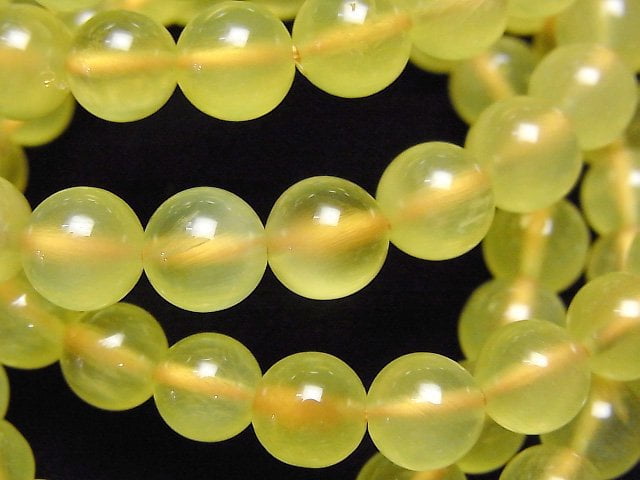
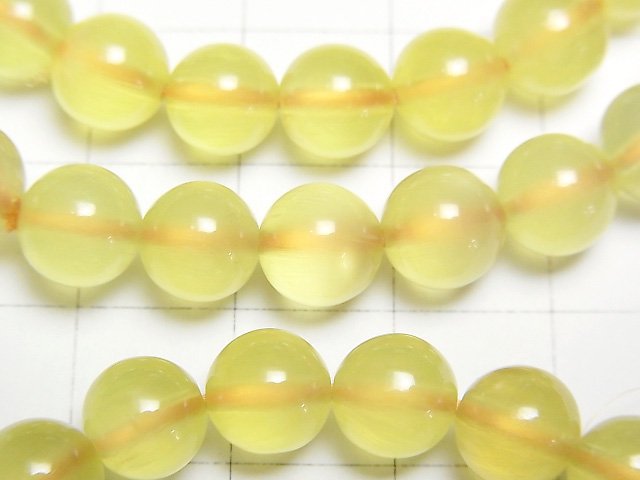
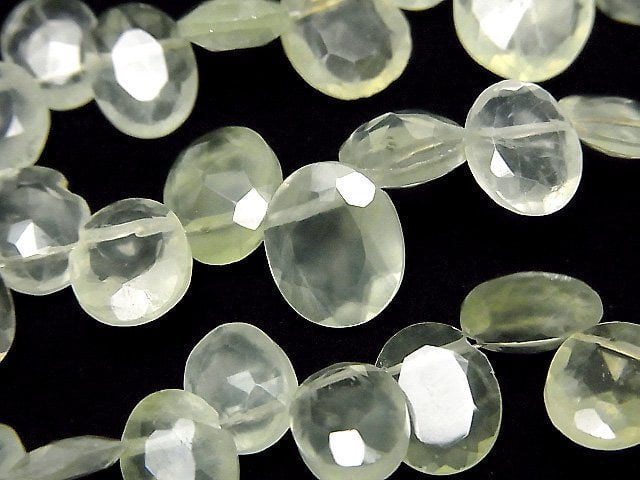
At KenKenGems, you can explore prehnite beads, strands, pendants, and loose stones for one-of-a-kind designs, in shapes such as rounds, ovals, coins, buttons, and nuggets. You can also browse prehnite with epidote and other green gemstones for jewelry making.
Visit the Prehnite collection to compare colors, sizes, shapes, and current stock before planning your next handmade jewelry piece.