
TOC
- 1. What Is a Meteorite?
- 2. Types of Meteorites
- 2-1. Stony Meteorites (Chondrites & Achondrites)
- 2-2. Iron Meteorites (Iron-Nickel)
- 2-3. Stony-Iron Meteorites (Pallasites & Mesosiderites)
- 3. Gem Materials Linked to Meteorites & Impacts
- 4. Meteorite Value & What Affects It
- 5. Care, Authenticity & How to Identify a Meteorite
- 6. Meteorite Meaning & Symbolism (Traditional Beliefs)
- 7. Meteorite FAQ
- 7-1. What is the difference between a meteor and a meteorite?
- 7-2. Is moldavite or tektite a meteorite?
- 7-3. Do iron meteorites rust?
- 7-4. How can I tell if a meteorite is real?
- 7-5. How much is a meteorite worth?
- 8. Shop Meteorites at KenKenGems

What Is a Meteorite?
A meteorite is a solid fragment of rock or metal from space, most often a piece of an asteroid, that survives its fall through the atmosphere and lands on Earth's surface. (A meteoroid is the object in space, a meteor is the streak of light it makes while falling, and a meteorite is what is actually recovered on the ground.)
Because meteorites come from asteroids and, more rarely, from the Moon or Mars, they are among the oldest solid materials people can hold, with many dating to the earliest history of the solar system. Their fusion crust and interior structures make them popular with collectors, and cut-and-polished pieces of iron and pallasite meteorites are also used in jewelry and beading. In this guide we cover what meteorites are, their main types, gem materials linked to impacts, value, authenticity and care, and the traditional meanings associated with them. Browse the full meteorite collection to see what is available.

Types of Meteorites
Meteorites are classified by composition into three broad groups: stony meteorites (mostly rock-forming silicate minerals), iron meteorites (mostly an iron-nickel metal alloy), and stony-iron meteorites (a mixture of both). Each group has its own look and its own appeal for collectors and jewelry makers.
Stony Meteorites (Chondrites & Achondrites)
Stony meteorites are the most common type and are made largely of silicate minerals. Many are extremely old, dating to roughly 4.5 billion years ago, near the formation of the solar system. Stony meteorites fall into two groups: chondrites and achondrites.
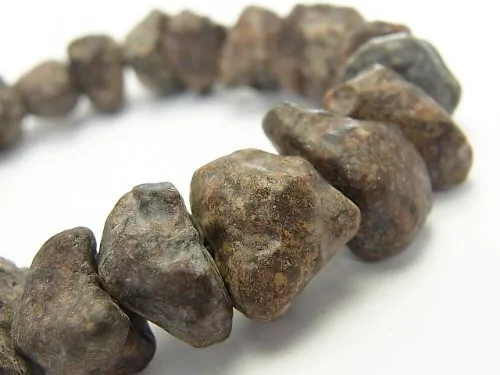
- Chondrites are primitive, largely unchanged rocks that never fully melted, so they preserve tiny round grains called chondrules along with silicate minerals and metal or sulfide flecks. Fragments from the Sahara, such as the well-known Northwest Africa (NWA 869) chondrites, often show a chocolate-brown matrix with gray tones and metallic specks.
- Achondrites did melt and re-crystallize at some point, so they lack chondrules and instead show an igneous, often layered internal texture. Some achondrites originate from the Moon or Mars.

Iron Meteorites (Iron-Nickel)
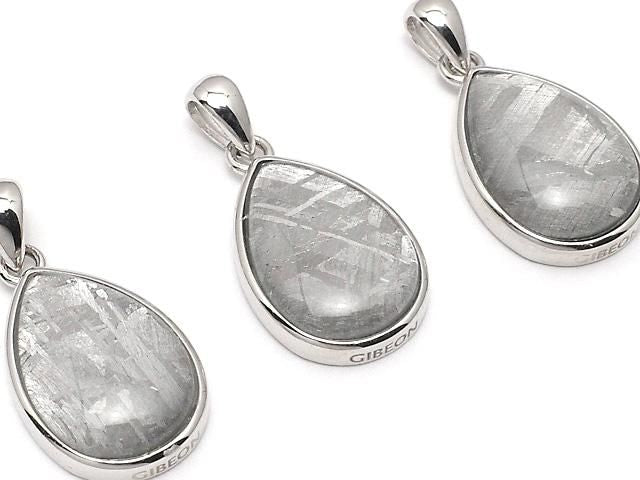
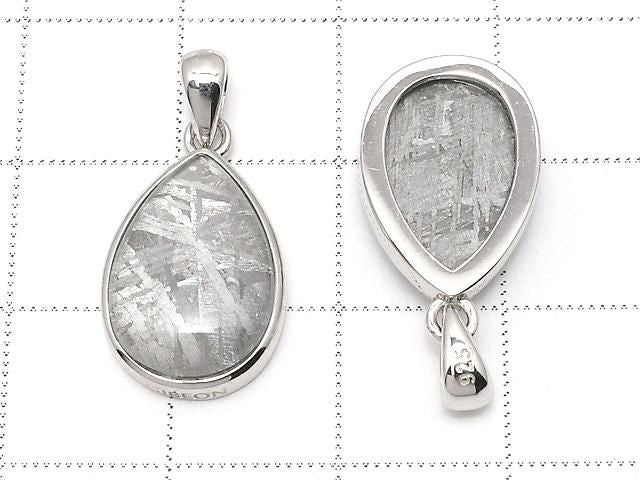
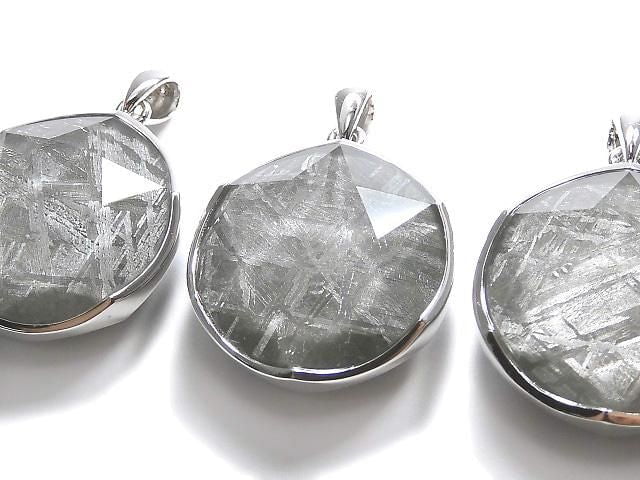
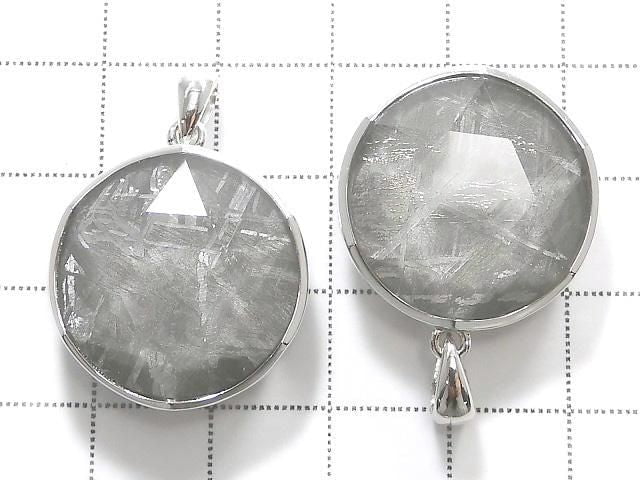
Despite the name, iron meteorites are not pure iron. They are mainly an alloy of iron and nickel (Fe-Ni), with smaller amounts of sulfide and carbide minerals and trace metals, and are thought to come from the metallic cores of shattered asteroids. When a slice is polished and etched with acid, many iron meteorites reveal the Widmanstätten pattern, a distinctive interlocking crystalline texture that forms only through extremely slow cooling in space and cannot be reproduced on Earth.
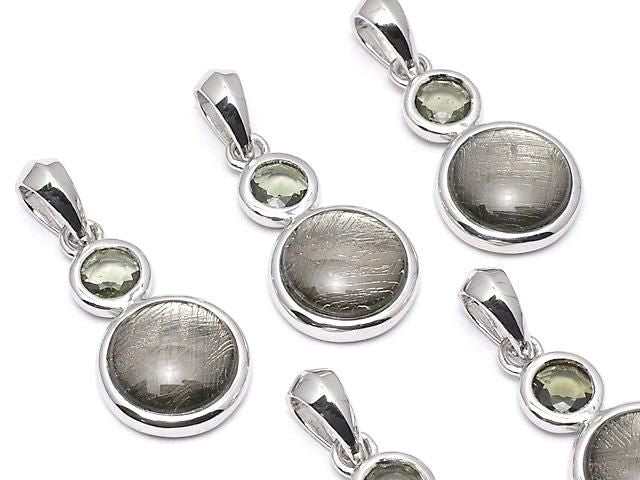
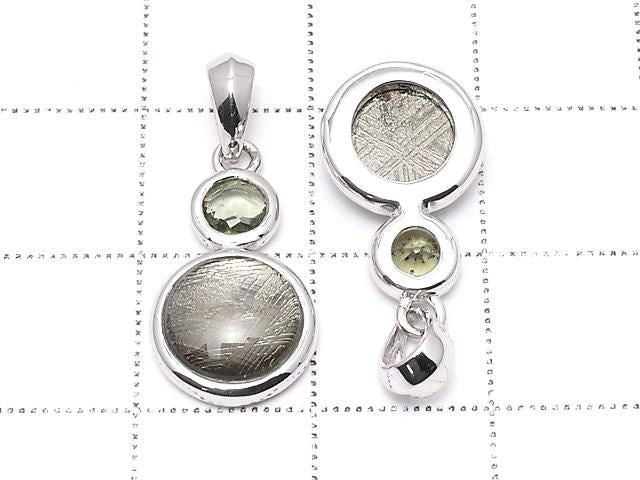
- Gibeon (Namibia) is prized for its fine, clearly defined Widmanstätten pattern and is widely used in jewelry.
- Muonionalusta (Sweden), found near the Muonio River in 1906, is one of the oldest iron meteorites known and takes a bright polish. Note that Muonionalusta is prone to rust and needs proper care (see the care section below).
- Campo del Cielo (Argentina) comes from a field of impact craters and is valued for its history and rugged, dark metallic shapes.
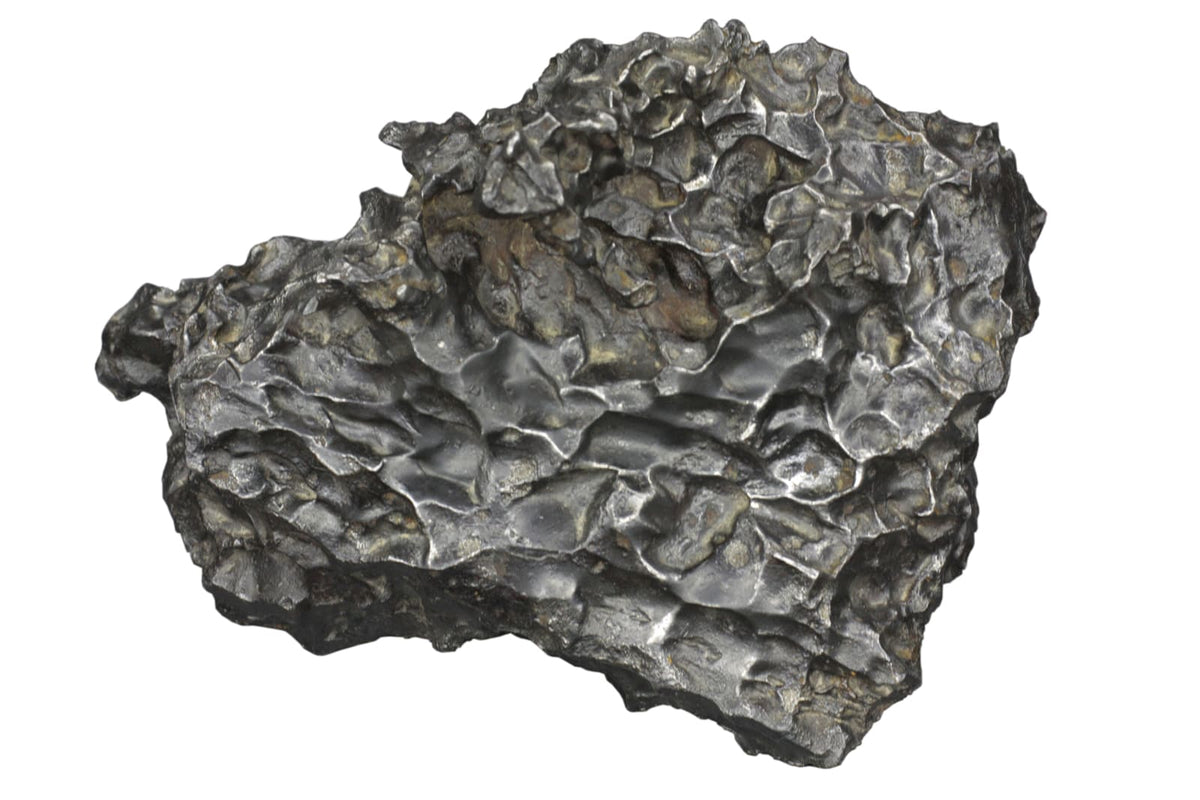
- Sikhote-Alin (Russia, fell 1947) yields sculptural iron-nickel specimens with striking surface features, popular as undrilled display and jewelry pieces.

Stony-Iron Meteorites (Pallasites & Mesosiderites)
Stony-iron meteorites contain iron-nickel metal and silicate minerals in roughly equal parts. They are split into two types:
- Pallasites set translucent olivine crystals within a metal matrix. Gem-quality olivine is the mineral known in jewelry as peridot, which is why polished pallasite slices show glowing green-to-amber crystals against bright metal. Pallasites are rare, making up only about 1% of known meteorites; the Sericho pallasite from Kenya (found in 2016) is a well-known source of caramel-to-green olivine in an iron-nickel matrix.
- Mesosiderites form when asteroid material is broken up and mixed, so a cut face shows angular silicate fragments set in solidified metal alloy.

Gem Materials Linked to Meteorites & Impacts
A few popular gem materials are connected to meteorite impacts, but it is important to be accurate about what they are. Tektites and Libyan Desert Glass are natural glass created when an impact melted terrestrial rock or sand; they are not pieces of the meteorite itself. Only pallasite olivine (peridot) is an actual gem material found inside a meteorite.
- Tektites are glassy objects, usually green, brown, or black, formed from earth material melted and scattered by a large impact. They are named for where they are found (for example, Indochinites, Australites). Because they are natural glass rather than crystalline gemstones, they are typically cut as cabochons. Learn more in our tektite guide.
- Moldavite is a well-known green tektite associated with an impact in central Europe and found mainly in the Vltava (Moldau) river region of the Czech Republic. It is impact glass, not a meteorite. See our moldavite article.
- Libyan Desert Glass is a pale yellow-green natural silica glass from the Sahara, also formed by intense impact heat.
- Pallasite olivine (peridot) is the one true gemstone that occurs inside meteorites, set within the iron-nickel matrix of pallasites.
Meteorite Value & What Affects It
Meteorite prices vary enormously and are usually quoted per gram. Value depends on the class of meteorite, its rarity, its condition, and, importantly, documented provenance (a classified name and reliable find data). As a rough guide only:
| Type | Approximate value (per gram) | Notes |
|---|---|---|
| Common chondrites | Often under about $1 | Widely available; the most affordable material |
| Iron meteorites (e.g., Sikhote-Alin, Campo del Cielo) | A few dollars and up | Etched slices with clear patterns cost more |
| Pallasites (stony-iron) | Often about $20-$40+ | Prized for gem-quality olivine; among the most valued |
| Lunar / Martian achondrites | Very high; specialist market | Rare, sold by weight with certification |
These figures are general ranges, not guarantees, and actual prices vary widely with quality and market conditions. Buy from sellers who provide clear classification and provenance rather than treating a specimen as a financial investment.
Care, Authenticity & How to Identify a Meteorite
Because meteorites are collectible, imitations and mislabeled material exist. Under the FTC Jewelry Guides, product type and treatment should be disclosed, and it helps to know what you are buying:
- Genuine meteorite - a classified, provenanced specimen with a recognized name and find location. Buy from sellers who can document classification and origin.
- Man-made or slag imitations - industrial slag, cast metal, or other earthly material sometimes sold as "meteorite." It must be identified as an imitation, not a meteorite.
- Replicas - deliberate copies made for display or education; fine when clearly labeled as replicas.
Simple checks can help: many iron and stony-iron meteorites are strongly magnetic, most meteorites are denser than ordinary rock, and freshly cut iron meteorites show the Widmanstätten pattern after etching (glass and pure slag do not). A gemological or meteoritics lab is the reliable way to confirm identity.
Care is essential, especially for iron and stony-iron meteorites, which contain metal and will rust if exposed to moisture. Keep them dry, handle them with clean hands (skin oils and salts speed corrosion), and avoid humidity, water, and ultrasonic or steam cleaning. Many collectors store iron and pallasite pieces in a sealed container with desiccant, or use a light protective coating or anhydrous mineral-oil storage, and have actively rusting specimens professionally stabilized. Wipe pieces dry and store them separately from harder gems.
Meteorite Meaning & Symbolism (Traditional Beliefs)
These are traditional beliefs, not medical claims. Meteorite is not medicine and cannot diagnose, treat, cure, or prevent any illness.
Across cultures, stones that fell from the sky have long been treated as special. In folklore and crystal lore, meteorites are traditionally associated with the cosmos, transformation, and a sense of connection to something larger than everyday life; some people keep them as a symbolic talisman or focus for meditation. These ideas come from tradition and personal practice, not from science, and are shared here for cultural interest only, not as claims about health or protection.
Meteorite FAQ
What is the difference between a meteor and a meteorite?
A meteoroid is a rocky or metallic object in space, a meteor is the bright streak it makes as it burns through the atmosphere, and a meteorite is the piece that actually reaches the ground and can be collected.
Is moldavite or tektite a meteorite?
No. Moldavite and other tektites are natural glass formed when a meteorite impact melted terrestrial rock or sand. They are impact glass, not pieces of the meteorite itself. The only true gem found inside meteorites is the olivine (peridot) in pallasites.
Do iron meteorites rust?
Yes. Iron and stony-iron meteorites contain metal and will corrode if exposed to moisture. Keep them dry, handle with clean hands, store them with desiccant or a light protective coating, and have actively rusting pieces professionally stabilized.
How can I tell if a meteorite is real?
Genuine meteorites are usually magnetic and denser than ordinary rock, and etched iron meteorites show the Widmanstätten pattern. Slag and glass imitations do not. Buy classified, provenanced specimens, and use a lab to confirm identity when in doubt.
How much is a meteorite worth?
It varies widely, from under about $1 per gram for common chondrites to $20-$40 or more per gram for pallasites, with lunar and Martian material far higher. Value depends on class, rarity, condition, and documented provenance.
Shop Meteorites at KenKenGems
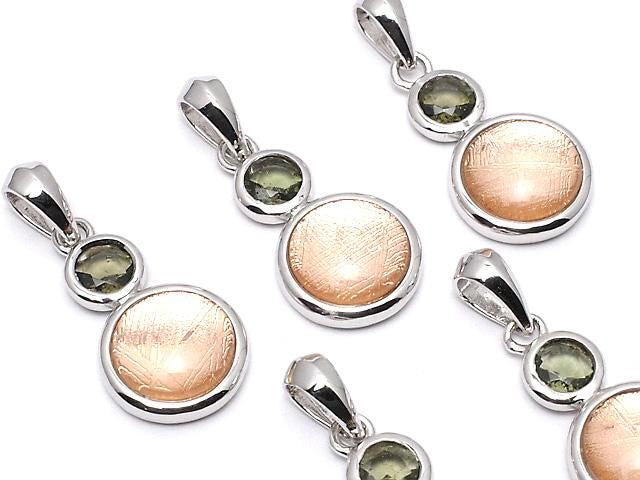
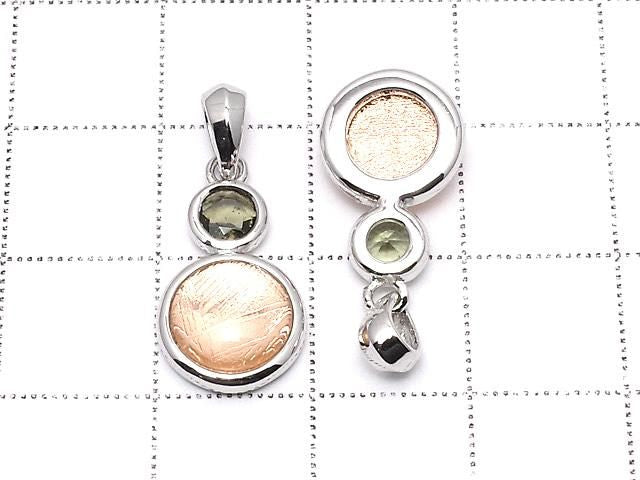
Meteorites offer both scientific interest and striking looks for jewelry and collecting. At KenKenGems you will find iron meteorites such as Muonionalusta and Campo del Cielo as beads and inlays for earrings and pendants, Sericho pallasite with its green olivine, and undrilled Sikhote-Alin specimens for one-of-a-kind pieces.
We supply meteorite material sourced from around the world, with classification and origin information so you know what you are buying. Browse the full meteorite collection and our Sahara NWA chondrites to see what is currently available.


![[One of a kind] Meteorite (Altai meteorite) Round 9.8mm Bracelet No.10](http://store.kenkengems.com/cdn/shop/files/191341204.jpg?v=1776762492&width=640)
![[One of a kind] Meteorite (Altai meteorite) Round 9.8mm Bracelet No.10](http://store.kenkengems.com/cdn/shop/files/191341204_o1.jpg?v=1776762472&width=640)
![[One of a kind] Kenyan Sericho Pallasite Meteorite Round 12mm Bracelet No.6](http://store.kenkengems.com/cdn/shop/files/191343586.jpg?v=1776762192&width=640)
![[One of a kind] Kenyan Sericho Pallasite Meteorite Round 12mm Bracelet No.6](http://store.kenkengems.com/cdn/shop/files/191343586_o1.jpg?v=1776762174&width=640)
![[One of a kind] Meteorite (Sikhote-Alin Meteorite) 1pc No.14](http://store.kenkengems.com/cdn/shop/files/190219634.jpg?v=1772538012&width=640)
![[One of a kind] Meteorite (Sikhote-Alin Meteorite) 1pc No.14](http://store.kenkengems.com/cdn/shop/files/190219634_o1.jpg?v=1772537991&width=640)
![[One of a kind] Meteorite (Altai meteorite) 1pc No.15](http://store.kenkengems.com/cdn/shop/files/191201053.jpg?v=1776764651&width=640)
![[One of a kind] Meteorite (Altai meteorite) 1pc No.15](http://store.kenkengems.com/cdn/shop/files/191201053_o1.jpg?v=1776764634&width=640)
![[One of a kind] Meteorite (Sikhote-Alin Meteorite) 1pc No.11](http://store.kenkengems.com/cdn/shop/files/190219631.jpg?v=1772530930&width=640)
![[One of a kind] Meteorite (Sikhote-Alin Meteorite) 1pc No.11](http://store.kenkengems.com/cdn/shop/files/190219631_o1.jpg?v=1772530912&width=640)
![[One of a kind] Meteorite (Muonionalusta) Round 11.5mm Yellow Gold Bracelet No.1](http://store.kenkengems.com/cdn/shop/files/190347614.jpg?v=1772530570&width=640)
![[One of a kind] Meteorite (Muonionalusta) Round 11.5mm Yellow Gold Bracelet No.1](http://store.kenkengems.com/cdn/shop/files/190347614_o1.jpg?v=1772530553&width=640)
![[One of a kind] Kenyan Sericho Pallasite Meteorite Round 12mm Bracelet No.3](http://store.kenkengems.com/cdn/shop/files/191343555.jpg?v=1776762370&width=640)
![[One of a kind] Kenyan Sericho Pallasite Meteorite Round 12mm Bracelet No.3](http://store.kenkengems.com/cdn/shop/files/191343555_o1.jpg?v=1776762354&width=640)


