TOC
- 1. What Is Pyrite?
- 2. Pyrite Meaning and History
- 2-1. Pyrite Spiritual Meaning
- 3. Physical and Chemical Properties of Pyrite
- 4. Pyrite Deposits
- 5. Pyrite Healing Properties and Benefits
- 5-1. Physical & Emotional Benefits of Pyrite
- 5-2. How to Use Pyrite
- 6. Pyrite Metaphysical Properties
- 6-1. Pyrite and the Solar Plexus Chakra
- 7. How to Identify Real Pyrite
- 8. How to Care for Pyrite
- 9. Frequently Asked Questions About Pyrite
- 10. Pyrite for Sale from KenKenGems
What Is Pyrite?
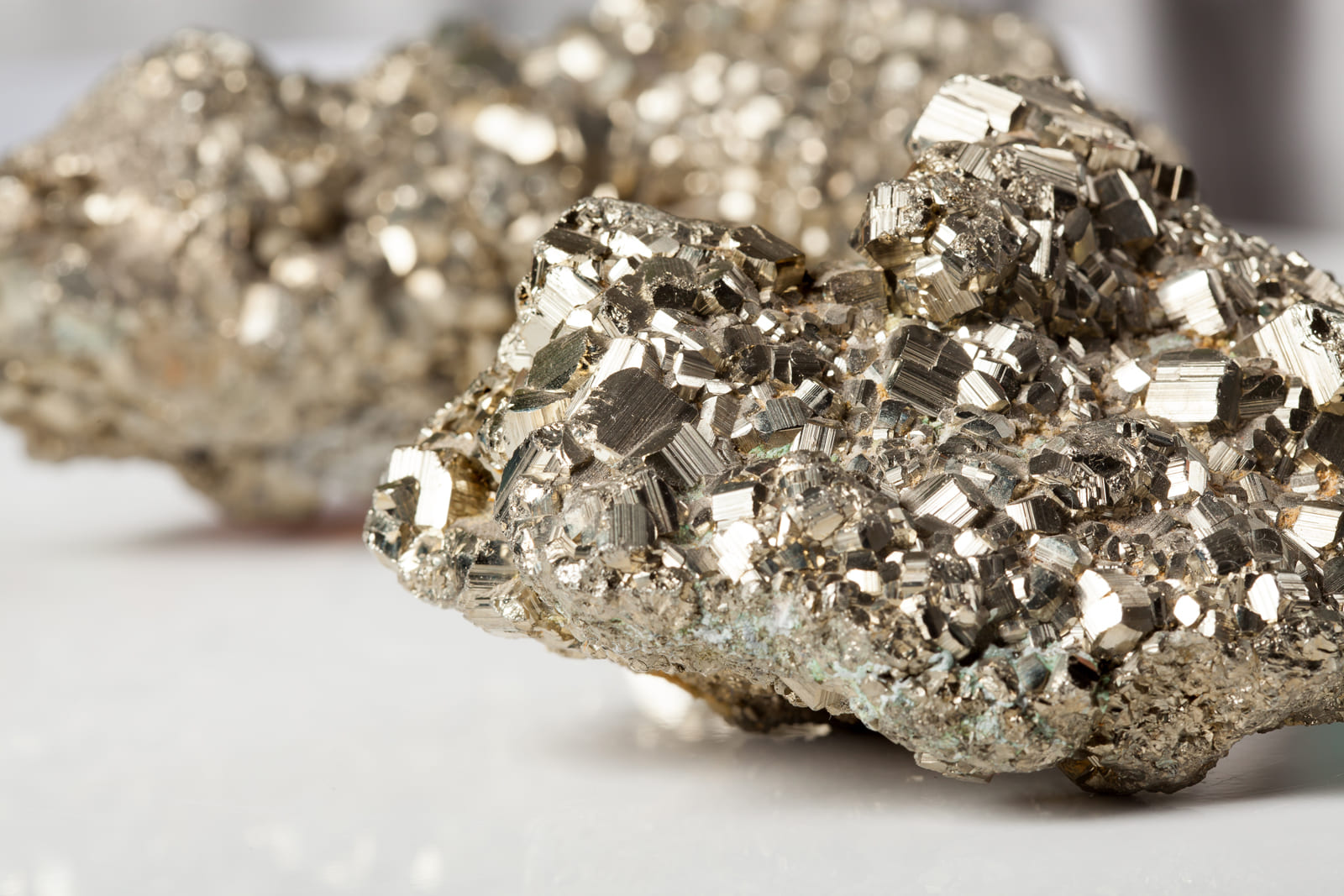
Pyrite is an iron sulfide mineral (FeS2) best known for its bright metallic, brass-yellow color — the very look that earned it the nickname "fool’s gold." The pyrite crystal forms striking natural cubes and clusters, making it a favorite specimen for collectors and a popular stone for protection and abundance work.
People have always had an ambiguous opinion about gemstones. Some stones were revered as sacred, others were considered cursed. There are also minerals people couldn’t live without. Pyrite belongs to the latter category. Today, it is past its prime but back in the day, it was ubiquitous in the fireplaces of medieval castles and smoking pipes. From afar, pyrite can be mistaken for a precious gold nugget. It was this fatal resemblance that once earned it a bad reputation — yet it is precisely this golden glow that makes the pyrite stone so prized today, both as a decorative crystal and as a talisman of confidence and prosperity.

Pyrite Meaning and History
The meaning of pyrite has always centered on protection, vitality, and prosperity — a reputation born from both its fiery spark and its gold-like glow. The mineral capable of striking a spark was named pyrite: the Greek word ‘pyros’ means fire. Over time, the firestone acquired a few more unofficial nicknames: the Inca stone, fool’s gold, alpine diamond, and some others.
The straw-yellow stone received these monikers for a reason. During the colonization of America, Spanish conquistadors confused pyrite with real gold. They killed the Indians to take their ‘gold’ and export it to Europe. For a long time, it was believed that the pavements of London were lined with the precious metal, which the infamous pirate Martin Frobisher brought from the New World. When it turned out that the roads were made of gold-like but non-precious pyrite, the pirate ended up in jail. The confusion continued during the Klondike gold rush. Mine owners tried to convince gullible investors of the profitability of mining, and many were ruined when they realized the true value of the mineral.
Pyrite was well-known to ancient civilizations. Native Americans used the ideally polished facets of pyrite to make mirrors. They believed that these magic mirrors were capable of showing the future and fulfilling wishes. In France, pyrite became a symbol of courage and patriotism. During the Napoleonic wars, women donated their gold jewelry to the army and received a piece of pyrite in return, which they wore as a talisman. Roman legionnaires and Greek warriors endowed pyrite with tremendous protective powers and never started a battle without their pyrite amulets.

Pyrite Spiritual Meaning
Spiritually, pyrite is a stone of confidence, action, and manifestation. It is traditionally used to shield the aura from negativity while encouraging the wearer to take bold, decisive steps toward their goals. Because its color mirrors gold, pyrite is strongly associated with prosperity and is often kept in a home, wallet, or cash register as an abundance talisman. Its grounding, masculine (yang) energy makes it a go-to crystal for motivation, willpower, and overcoming procrastination.
Physical and Chemical Properties of Pyrite
Pyrite properties make it easy to recognize among other stones. The mineral is the so-called sulfuric or ferruginous pyrite, the most common compound of the sulfide group. Pyrite crystals occur as a result of a variety of geo-processes: magmatic, sedimentary, hydrothermal, etc. Typically, pyrites are found in rocks in the form of beautiful intergrowths and individual crystals. The most common shape of natural specimens is cubic — so perfectly formed that it’s hard to believe they have a natural origin.
Some specimens may contain microscopic inclusions of gold, silver, and other metals. In sedimentary rocks, pyrite was able to replace the remnants of dead animals and plants, thus creating unique fossilized shells and silhouettes. In addition to pyrite itself, mineralogy recognizes other types of iron sulfide — marcasite and bravoite. Their chemical compositions are almost identical to pyrite (FeS2). Marcasite, otherwise known as white iron pyrite, has an orthorhombic crystal structure, while bravoite contains a substantial proportion of nickel (up to 20%).
Natural pyrite is characterized by light brass-yellow, straw, or golden hues. A characteristic feature of the gemstone is its metallic luster, which is why it is often confused with gold. However, gold has a lighter color while pyrite features a touch of dark green or brown, and pyrite offers greater hardness (6.0–6.5 on the Mohs scale). Pyrite is also an unstable mineral: with even a minuscule amount of water in its composition, it may decompose into iron oxide and sulfuric acid under the influence of oxygen.
| Property | Value |
| Mineral class | Sulfide (iron sulfide) |
| Chemical formula | FeS2 |
| Hardness (Mohs) | 6.0 – 6.5 |
| Crystal system | Cubic (isometric) |
| Color | Brass-yellow to pale gold |
| Luster | Metallic |
| Streak | Greenish-black to brownish-black |
| Common forms | Cubes, pyritohedrons, clusters, massive |

Pyrite Deposits
Pyrite is one of the most widespread sulfide minerals on Earth, found in rocks on nearly every continent. However, it is rarely mined purposely. More often than not, it accompanies more valuable minerals and metals such as gold, lead, uranium, or copper. Large pyrite deposits are found in Peru, Russia, the USA, Spain, Italy, Japan, Kazakhstan, Canada, China, Cyprus, etc.
Pyrite Healing Properties and Benefits
Pyrite healing properties have been valued for centuries. Although pyrite isn’t real gold, it is said to have a beneficial effect on the nervous system similar to that of the precious metal. Lithotherapy recommends pyrite jewelry to improve mood, enhance productivity, and stimulate general vitality. Folk healers have used the stone to stop internal and external bleeding, dull joint pain, and treat inflammations, while alternative medicine claims it helps relieve depression and obsessive disorders. Worn regularly, pyrite is believed to help saturate the blood with oxygen and speed its delivery to tissues and organs.
Physical & Emotional Benefits of Pyrite
Crystal practitioners traditionally associate pyrite with:
- Boosting energy, stamina, and general vitality
- Enhancing focus, productivity, and willpower
- Encouraging blood oxygenation and circulation
- Relieving anxiety, low mood, and mental fatigue
Note: These are traditional spiritual associations, not medical claims. Consult a healthcare professional for any physical or mental health condition.
How to Use Pyrite
- Place pyrite on your desk or workspace to boost focus and drive
- Keep a piece in your wallet, safe, or cash box as an abundance charm
- Hold it during meditation to strengthen confidence and resolve
- Set a cluster near your front door to shield the home from negative energy
Cleanse pyrite with sound or dry smoke — never water or salt water, which corrode it.
Pyrite Metaphysical Properties
In metaphysical practice, pyrite is a shield-and-sword stone — it deflects negative energy while amplifying confidence, ambition, and prosperity. Since time immemorial, pyrite has been considered a male mineral, responsible for such traits as perseverance, courage, and determination. It relieves fears and helps a person move forward despite difficulties and danger.
Pyrite helps a person control their emotions and remain calm in challenging situations, making it ideal for those who seek to cultivate leadership qualities and realize their full potential. It is especially suited to people whose work is associated with leadership — directors, managers, teachers, coaches — as well as those who work with fire, such as firefighters, welders, blacksmiths, and cooks. Placed in the home, it doubles as a talisman against hostility and the evil eye, warding off danger and misfortune, and it is even said to improve one’s love life by making a person more attractive to a potential partner.
Pyrite and the Solar Plexus Chakra
Pyrite resonates strongly with the solar plexus chakra (Manipura), the energy center of personal power, confidence, and willpower. Its golden color and grounding vibration are said to clear blockages that cause self-doubt or passivity, helping you assert boundaries and act with courage. Place pyrite over the upper abdomen during meditation to energize this chakra.

How to Identify Real Pyrite
Because pyrite looks like gold, imitations and mislabeled stones appear online. Use these quick checks:
- Shape: real pyrite often forms sharp natural cubes or pyritohedrons
- Streak: genuine pyrite leaves a greenish-black to brownish-black streak (gold leaves a yellow streak)
- Hardness: pyrite scratches glass (Mohs 6+); real gold is soft and does not
- Color: pyrite is paler with a hint of green/brown; gold is a warmer yellow
- Smell: freshly broken pyrite can smell faintly of sulfur
Buy from established gemstone sellers who document origin.
How to Care for Pyrite
- Keep pyrite dry — moisture causes it to oxidize, rust, and crumble over time
- Clean with a soft dry cloth only; avoid water, salt water, and ultrasonic cleaners
- Store away from humidity (add a silica gel packet to the storage box)
- Keep separate from softer stones to prevent scratching
- Cleanse energetically with sound, moonlight, or dry smoke — not water
Frequently Asked Questions About Pyrite
What is pyrite good for?
Pyrite is used as a stone of protection, confidence, and abundance. Collectors prize its natural gold-like cubes, and energy workers use it to shield against negativity and boost motivation.
What does pyrite mean spiritually?
Spiritually, pyrite symbolizes willpower, prosperity, and protection. Its golden color links it to wealth, while its grounding energy supports courage and decisive action.
Is pyrite the same as fool’s gold?
Yes. "Fool’s gold" is the common nickname for pyrite because its brassy shine was historically mistaken for real gold.
Can pyrite get wet?
No. Pyrite contains iron and reacts with water and moisture, which cause it to rust and eventually break down. Keep it dry and cleanse it without water.
Which chakra is pyrite?
Pyrite is associated with the solar plexus chakra, the center of personal power, confidence, and willpower.
Pyrite for Sale from KenKenGems
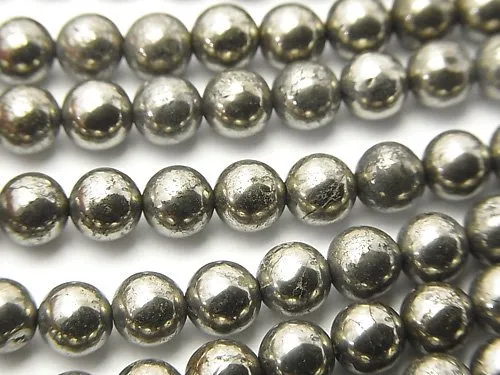
Looking for genuine pyrite? KenKenGems is the place to go if you’re on the hunt for beautiful and inexpensive pyrite. We supply large one-of-a-kind specimens able to become your talisman or lucky charm, available as cabochons if you like smooth and polished jewels or as nuggets if you appreciate natural shapes. Jewelry enthusiasts can also check out our loose stones, as well as pyrite in strands, half-strands, sets, and silver frames. No matter which product you buy from us, we ensure an affordable price, authenticity, and fast delivery to your door.