
TOC
- 1. September Birthstone: Sapphire
- 2. What Is Sapphire?
- 3. Types & Colors of Sapphire
- 4. Sapphire Meaning & Symbolism
- 5. Treatment, Synthetic & How to Identify Sapphire
- 6. Sapphire Value & Care
- 7. September Birthstone FAQ
- 7-1. What is the September birthstone?
- 7-2. Is the September birthstone always blue?
- 7-3. What is the difference between sapphire and ruby?
- 7-4. Is most sapphire treated?
- 7-5. What does sapphire symbolize?
- 8. Shop September Birthstone Sapphire at KenKenGems
products available in this collection.
Shop NowSeptember Birthstone: Sapphire
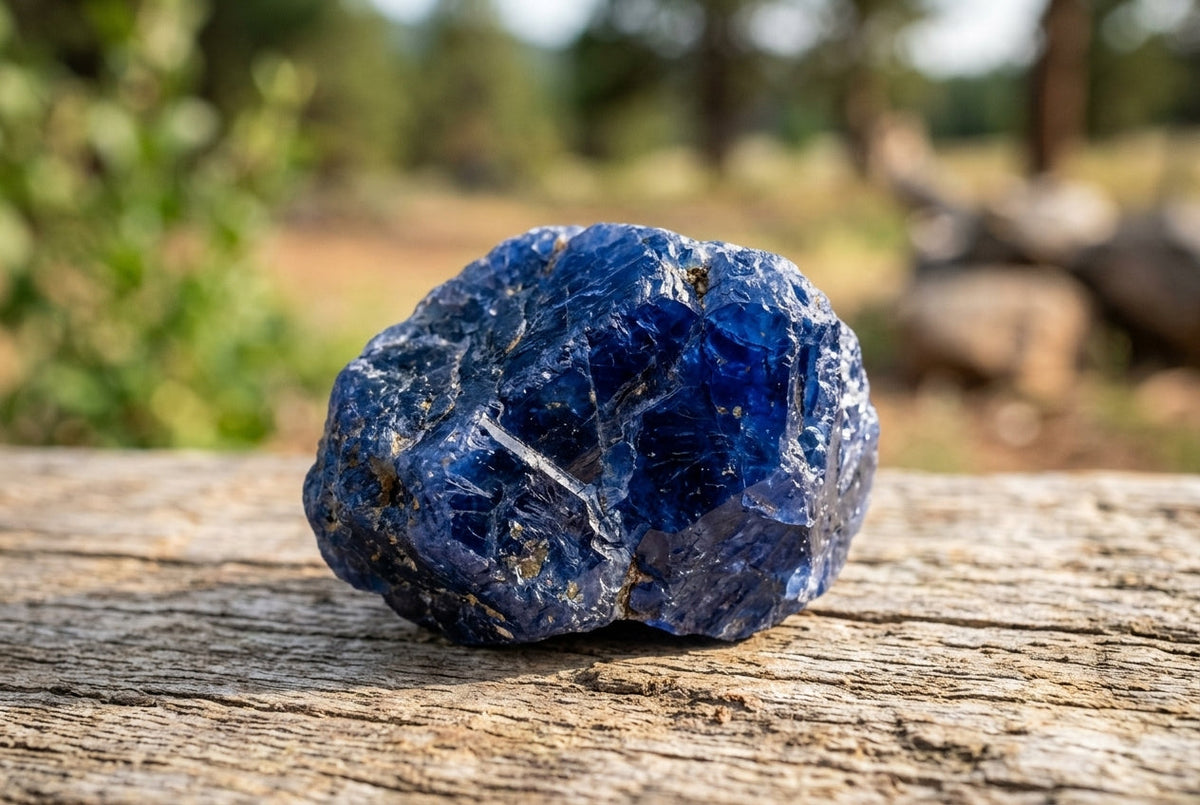
The September birthstone is sapphire, one of the most recognizable blue gemstones in the world. If your birthday falls in September, sapphire is your traditional birthstone, and it is also widely associated with the zodiac signs Virgo and Libra, whose seasons fall within the month.
Sapphire is prized for its rich color, durability, and long history in jewelry. This guide covers what sapphire is, its colors and varieties, its symbolism in tradition and folklore, how it is commonly treated, and how to judge quality and care for it. Explore our sapphire collection as you read.

What Is Sapphire?
Sapphire is a gem variety of the mineral corundum, a crystalline form of aluminum oxide with the chemical formula Al2O3. Both sapphire and ruby are corundum: red corundum is called ruby, while corundum of every other color is called sapphire. Alongside emeralds and diamonds, sapphire is one of the classic colored gemstones.
Pure corundum is colorless. Color comes from trace elements in the crystal structure. In classic blue sapphire, the blue color is caused by small amounts of titanium and iron. Other trace elements produce yellow, pink, green, and other hues, which is why sapphire is not always blue.
The name has a long history. One tradition traces it to the ancient Greek *sappheiros*, meaning a blue stone; another links it to a Sanskrit word associated with the planet Saturn. In the past, many blue stones were loosely called sapphire, but today the term refers specifically to gem corundum.
Sapphire is very hard, scoring 9 on the Mohs scale of mineral hardness, second only to diamond among common gemstones. This durability is one reason it is popular for everyday jewelry and engagement rings.
Types & Colors of Sapphire
Sapphire occurs in a wide range of colors. Blue is the most familiar, but yellow, pink, green, black, and multicolored *parti* sapphires are all found. Sapphire in any hue other than red is still sapphire; red corundum is ruby.
| Color / Variety | Description |
|---|---|
| Blue sapphire | The classic September color, from light to deep blue; the traditional choice for rings and pendants. |
| Yellow sapphire | Warm, sunny tones ranging from pale lemon to rich golden yellow. |
| Pink sapphire | Delicate pink to vivid magenta; padparadscha is a rare pink-orange variety. |
| Green sapphire | Soft to forest green, often with subtle blue or yellow zoning. |
| Black sapphire | Opaque to translucent dark stones, frequently cut as cabochons. |
| Parti sapphire | A single stone showing two or more colors, such as blue and yellow zones. |
| Star sapphire | Cabochon-cut stones that show asterism, a six-rayed star caused by fine needle-like inclusions reflecting light. |

Sapphire clarity ranges from clear and transparent to translucent and opaque. In some opaque stones, fine needle-like inclusions reflect light to create a six-rayed star when the gem is cut *en cabochon*. This effect, called asterism, produces the sought-after star sapphire.
Origin can influence a sapphire's appearance, and certain sources are historically well known:
| Origin | Note |
|---|---|
| Kashmir | A historic source in the Kashmir region of India and Pakistan, known for a soft, velvety cornflower-blue. Most Kashmir sapphires were mined more than a century ago, and little large-scale mining continues there today. |
| Myanmar (Burma) | Long associated with deep, saturated blue sapphires. |
| Sri Lanka (Ceylon) | A major historic and modern source, known for a broad range of blue and fancy-colored sapphires. |
| Other sources | Sapphire is also mined in Madagascar, Australia, Thailand, Montana (USA), and several countries in Africa and Asia. |
Note: a stone's origin is one of many factors and does not by itself determine quality. Individual color, clarity, and cut vary widely within every source.
Sapphire Meaning & Symbolism
Across history, sapphire has carried strong symbolic meaning. It has traditionally been seen as a stone of wisdom, loyalty, and sincerity, and in some cultures it was associated with royalty and spiritual devotion. The following associations come from tradition and folklore.
- Blue sapphire has long been a symbol of fidelity, truth, and constancy, which is one reason it is a popular choice for engagement rings; the sapphire engagement ring worn by Princess Diana is a famous example.
- Yellow sapphire was traditionally regarded as a stone of protection and confidence.
- Pink sapphire is associated in lore with a positive, open outlook.
- Green sapphire is linked in tradition to calm, thoughtfulness, and compassion.
- Black sapphire was traditionally worn as a protective talisman.
Older folklore also framed sapphire as a guard against ill will, jinxes, or curses, and some legends held that a stone losing its luster had turned away misfortune. These are cultural stories, not statements of fact.
These are traditional beliefs, not medical claims. Sapphire is not medicine and cannot diagnose, treat, cure, or prevent any illness.

Treatment, Synthetic & How to Identify Sapphire
Understanding treatment and origin helps you shop with confidence. Reputable sellers disclose how a sapphire has been produced or enhanced, and this information should be provided at the point of sale.
- Natural sapphire forms in the earth. Most sapphire on the market is heat-treated, a common and widely accepted process that improves color and clarity. Heat treatment is generally permanent and should be disclosed.
- Treated / enhanced sapphire may undergo other processes such as diffusion treatment, which adds color at the surface, or fracture filling. These treatments should be clearly disclosed because they affect value and care.
- Synthetic (lab-created) sapphire has the same chemistry and structure as natural sapphire but is grown in a laboratory, often by the Verneuil (flame-fusion) method. Lab-created corundum must be described as synthetic, lab-created, or laboratory-grown, never simply as sapphire.
- Imitation sapphire looks like sapphire but is a different material, such as glass or a doublet (a stone assembled from layers). Imitations must be identified as such.
Star sapphires show a six-rayed star (asterism) and can be natural or synthetic, so the same disclosure rules apply. When in doubt about a stone's origin or treatment, ask for the seller's written disclosure or an independent gemological report.
At KenKenGems we describe our sapphires by color and type so you know what you are buying. See our quality and grading guide for how we communicate quality.
Sapphire Value & Care
Sapphire value is judged mainly by four factors, together with treatment and origin:
- Color: even, saturated color is generally most valued. In blue sapphire, a strong, pure blue that is neither too dark nor too light is typically preferred.
- Clarity: fewer visible inclusions usually means higher value, though some inclusions are normal and can help confirm a stone is natural.
- Cut: a well-proportioned cut brings out color and brilliance.
- Carat weight: larger stones are less common and priced accordingly.
Because sapphire is a 9 on the Mohs scale, it is well suited to rings and daily wear. Even so, simple care keeps it looking its best:
- Clean with warm water, mild soap, and a soft brush; rinse and dry with a soft cloth.
- Store separately so harder stones do not scratch softer jewelry, and so sapphire does not scratch other pieces.
- Avoid harsh chemicals and sudden temperature changes, especially for treated or fracture-filled stones.
- Have prong settings checked periodically by a jeweler.

September Birthstone FAQ
What is the September birthstone?
The September birthstone is sapphire, a gem variety of the mineral corundum. It is best known in blue but also occurs in yellow, pink, green, black, and multicolored forms.
Is the September birthstone always blue?
No. Blue is the classic and most familiar September sapphire, but sapphire comes in many colors. Only red corundum is excluded, because red corundum is called ruby.
What is the difference between sapphire and ruby?
Both are corundum (aluminum oxide, Al2O3). Red corundum is called ruby, and corundum of every other color is called sapphire. The blue in sapphire comes mainly from titanium and iron.
Is most sapphire treated?
Yes. Most sapphire on the market is heat-treated to improve color and clarity, which is common and accepted. Some sapphire is diffusion-treated or otherwise enhanced. Reputable sellers disclose any treatment.
What does sapphire symbolize?
In tradition and folklore, sapphire is often associated with wisdom, loyalty, and sincerity, and blue sapphire in particular with fidelity. These are cultural beliefs, not medical claims.
Shop September Birthstone Sapphire at KenKenGems
Sapphire, the September birthstone, is a beautiful and durable choice for jewelry. At KenKenGems we offer blue, yellow, pink, green, and black sapphires, including clear stones and cabochons that show asterism.
Our catalog includes loose sapphires, individual stones, pendants in silver and gold settings, and strands and half-strands in a range of smooth and faceted cuts. Browse the sapphire collection to find your September birthstone.


