
TOC
- 1. October Birthstone
- 2. Opal: October's Birthstone
- 3. Opal Types & Colors
- 4. Opal Meaning & Symbolism
- 5. Tourmaline: October's Birthstone
- 6. Tourmaline Colors & Varieties
- 7. Tourmaline Meaning & Symbolism
- 8. Treatment, Synthetics & Care
- 9. October Birthstone FAQ
- 9-1. What is the birthstone for October?
- 9-2. Why does October have two birthstones?
- 9-3. What colors do October birthstones come in?
- 9-4. Is opal a good everyday stone?
- 9-5. What is the difference between the two October birthstones?
- 10. Shop October Birthstone: Opal & Tourmaline
products available in this collection.
Shop Now
October Birthstone
October is one of the few months with two birthstones: opal and tourmaline. Together they give October babies an unusually wide range of colors to choose from, from opal's shifting play-of-color to tourmaline's rainbow of hues.

Both stones are associated with people born in October, which spans two zodiac signs: Libra (about September 23 to October 22) and Scorpio (about October 23 to November 21). Below we cover what each gem is, its colors and varieties, its meaning in folklore and crystal lore, and how to care for it.

Opal: October's Birthstone
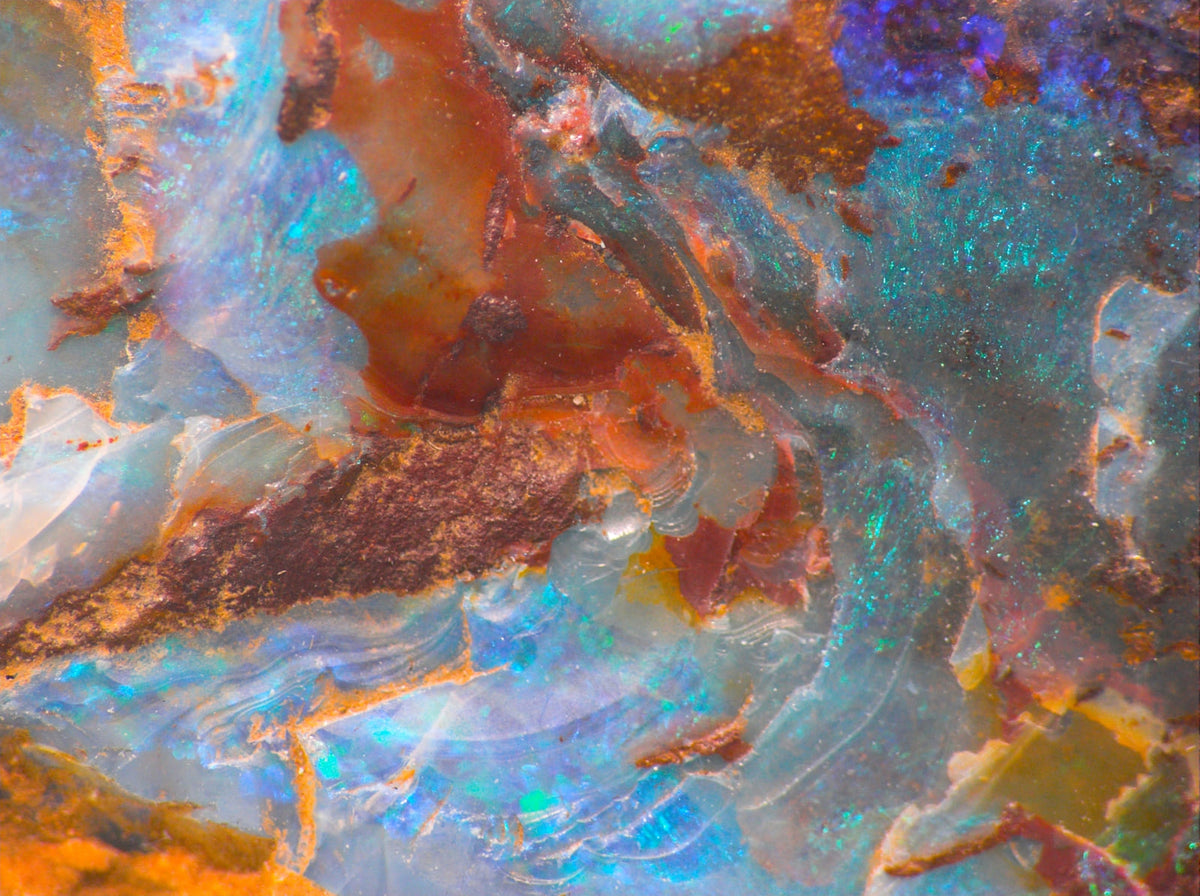
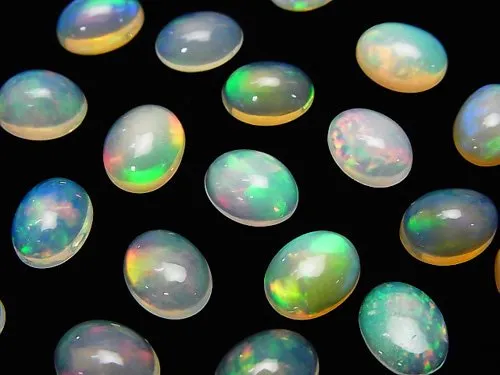
Opal is prized for its play-of-color, the flashes of rainbow hues that shift as the stone moves. This optical effect comes from opal's internal structure of tiny silica spheres that diffract light.
Unlike most gems, opal is not a true mineral because it lacks a crystal lattice. It is a mineraloid: an amorphous form of hydrated silica (SiO2·nH2O). Its water content typically ranges from about 3 to 21 percent (up to roughly 20 percent), which is one reason opal can be sensitive to heat and dryness.
The name is usually traced to the Sanskrit *upala* ("gem" or "stone"), which passed into Greek and Latin. As folklore, opal appears throughout history: the Roman emperor Constantine is said to have valued it highly, and various legends and superstitions grew up around the stone. These are historical stories, not statements of fact.
Opal Types & Colors
Opal comes in several types, usually grouped by body tone and pattern. The main varieties you will encounter are below.
| Opal type | Body color | Notes |
|---|---|---|
| White (light) opal | White to light gray | The most common precious opal; play-of-color on a pale background. |
| Black opal | Dark gray to black | Rare; the dark background makes play-of-color appear especially vivid. |
| Fire opal | Yellow, orange, red | Warm body color, often transparent; may or may not show play-of-color. |
| Boulder opal | Varies, on host rock | Opal that forms in seams within ironstone or other host rock. |
| Crystal opal | Transparent to translucent | Play-of-color visible through a clear to semi-clear body. |
| Common opal ("potch") | Various, no play-of-color | Opal without play-of-color; still used in jewelry and beads. |
Because no two opals show exactly the same pattern, each stone is effectively one of a kind. When you shop, focus on the play-of-color, body tone, and clarity that appeal to you.
Opal Meaning & Symbolism
These are traditional beliefs, not medical claims. Crystals are not medicine and cannot diagnose, treat, cure, or prevent any illness; consult a qualified professional.
In crystal lore, opal is often described as a stone of inspiration, creativity, and emotional expression. Traditionally it is associated with imagination and spontaneity, and different colors have picked up their own symbolism over time.
- White opal is traditionally linked to calm, clarity, and a sense of inner balance.
- Black opal is often described in lore as protective and grounding.
- Fire opal is associated in folklore with energy, passion, and confidence.
- Pink opal was used as a ritual and ornamental stone by Andean cultures and is traditionally tied to friendship and the heart.
Some historical superstitions cast opal as unlucky, a reputation largely popularized by 19th-century fiction rather than any earlier tradition. These are folklore and cultural stories, not facts about the stone.

Tourmaline: October's Birthstone
Tourmaline is a group of boron silicate minerals containing elements such as aluminum, iron, magnesium, sodium, and manganese. This complex chemistry is why tourmaline occurs in a wider range of colors than almost any other gem, and why a single crystal can shift from one color to another along its length.
The best-known example is watermelon tourmaline, which is pink at the center and green toward the outside, resembling a slice of watermelon. Tourmaline has a Mohs hardness of about 7 to 7.5, making it durable enough for everyday jewelry.
Tourmaline is also piezoelectric and pyroelectric: it can develop a small electrical charge when placed under pressure or when its temperature changes. In 1880 the brothers Pierre and Jacques Curie demonstrated piezoelectricity using crystals including tourmaline. This is a physical property of the mineral only and has no health or medical implication.
The name comes from the Sinhalese *turmali*, a term used in Sri Lanka (Ceylon), where Dutch traders sourced the stones that reached Europe in the early 1700s.

Tourmaline Colors & Varieties
Tourmaline is best known by its color varieties. Pink tourmaline in particular is a popular choice for October birthstone jewelry.
| Variety | Color | Notes |
|---|---|---|
| Pink tourmaline | Pale pink to deep pink | A favorite for October jewelry; light, romantic tones. |
| Rubellite | Red to deep pinkish-red | The most saturated red-to-pink tourmaline. |
| Watermelon | Pink center, green rim | Concentric color zoning in a single crystal. |
| Green (verdelite) | Yellow-green to deep green | Widely available and versatile. |
| Indicolite | Blue to blue-green | Rarer and often more valued. |
| Paraiba | Vivid neon blue-green | Copper-bearing; among the most prized tourmalines. |
| Schorl (black) | Opaque black | The most common tourmaline; popular in beads. |
Tourmaline Meaning & Symbolism
These are traditional beliefs, not medical claims. Crystals are not medicine and cannot diagnose, treat, cure, or prevent any illness; consult a qualified professional.
In crystal lore, tourmaline is often described as a grounding and protective stone, with each color carrying its own traditional symbolism.
- Black tourmaline is traditionally associated with protection and a sense of stability.
- Pink tourmaline is linked in lore to compassion, friendship, and matters of the heart.
- Green tourmaline is often described as a stone of growth and balance.
- Watermelon tourmaline combines these pink and green associations.
These meanings come from folklore, metaphysical tradition, and cultural symbolism. They describe how people have thought about the stone, not verified effects.

Treatment, Synthetics & Care
For an informed purchase, it helps to understand how opal and tourmaline are sold and disclosed.
Opal. Opal is sold in several forms: solid stones, doublets (a thin opal layer on a backing), and triplets (an opal layer with a backing and a clear cap). Some opal is treated, for example by impregnation or a "sugar-acid" smoke treatment that darkens the background. Synthetic opal (such as Gilson opal) is laboratory-grown, and imitation opal made of glass or plastic also exists. Reputable sellers disclose form, treatment, and whether a stone is natural, synthetic, or imitation.
Tourmaline. Tourmaline color is sometimes altered by heat treatment or irradiation to improve or change its hue. Natural, treated, synthetic, and imitation material should each be clearly distinguished so you know exactly what you are buying.
Care. Opal contains water and can develop fine surface cracks known as crazing if it dries out or is exposed to sudden temperature changes. Store opal away from heat and very dry conditions, clean it gently with mild soap and water, and avoid ultrasonic or steam cleaners. Tourmaline is harder and more durable, but still benefits from gentle cleaning and protection from sharp knocks.
October Birthstone FAQ
What is the birthstone for October?
October has two birthstones: opal and tourmaline. Both are widely used in October birthstone jewelry, so you can choose either one based on the colors and look you prefer.
Why does October have two birthstones?
Several months have more than one birthstone. Additional stones were added to modern birthstone lists over time to offer more color and price options, and tourmaline was added alongside the traditional opal for October.
What colors do October birthstones come in?
Opal ranges from white and black to fiery orange and shows a rainbow play-of-color, while tourmaline occurs in nearly every color, including pink, red, green, blue, and multicolor watermelon.
Is opal a good everyday stone?
Opal is softer and more sensitive than many gems, so it is best suited to jewelry that is not exposed to hard knocks or heat. Tourmaline, at Mohs 7 to 7.5, is more durable for everyday wear.
What is the difference between the two October birthstones?
Opal is a mineraloid of hydrated silica known for its play-of-color, while tourmaline is a group of silicate minerals known for its very wide color range and durability.
Shop October Birthstone: Opal & Tourmaline
Whether you are shopping for an October birthday or simply love these gems, opal and tourmaline offer plenty of choice, from single statement stones to strands of beads for jewelry making.
Browse our opal and tourmaline selections, or explore the full October birthstone collection. To learn how we grade our stones, see our quality rank guide.


