
TOC
- 1. July Birthstone: Ruby
- 2. What Is a Ruby?
- 3. Ruby Quality & Value
- 4. Natural, Treated & Synthetic Ruby
- 5. Ruby Meaning & Symbolism
- 6. Care & How to Identify a Ruby
- 7. July Birthstone FAQ
- 7-1. What is the birthstone for July?
- 7-2. Why are rubies red?
- 7-3. Are most rubies treated?
- 7-4. What does "pigeon’s blood" mean?
- 7-5. What is the difference between a ruby and a pink sapphire?
- 7-6. How can I tell a natural ruby from a synthetic or imitation?
- 8. Shop July Birthstone Rubies
products available in this collection.
Shop NowJuly Birthstone: Ruby
Ruby is the birthstone for July, and it is the traditional gift stone for those born under Cancer (June 21 to July 22) and Leo (July 23 to August 22). Its deep, glowing red has made it one of the most treasured of all colored gemstones, and its warm color has long been linked with summer, love, and courage.
In this guide we cover what ruby actually is, how its quality and value are judged, the meaning and symbolism people have attached to it over the centuries, and the practical facts every buyer should know, including how most rubies are treated and how to care for them.

What Is a Ruby?
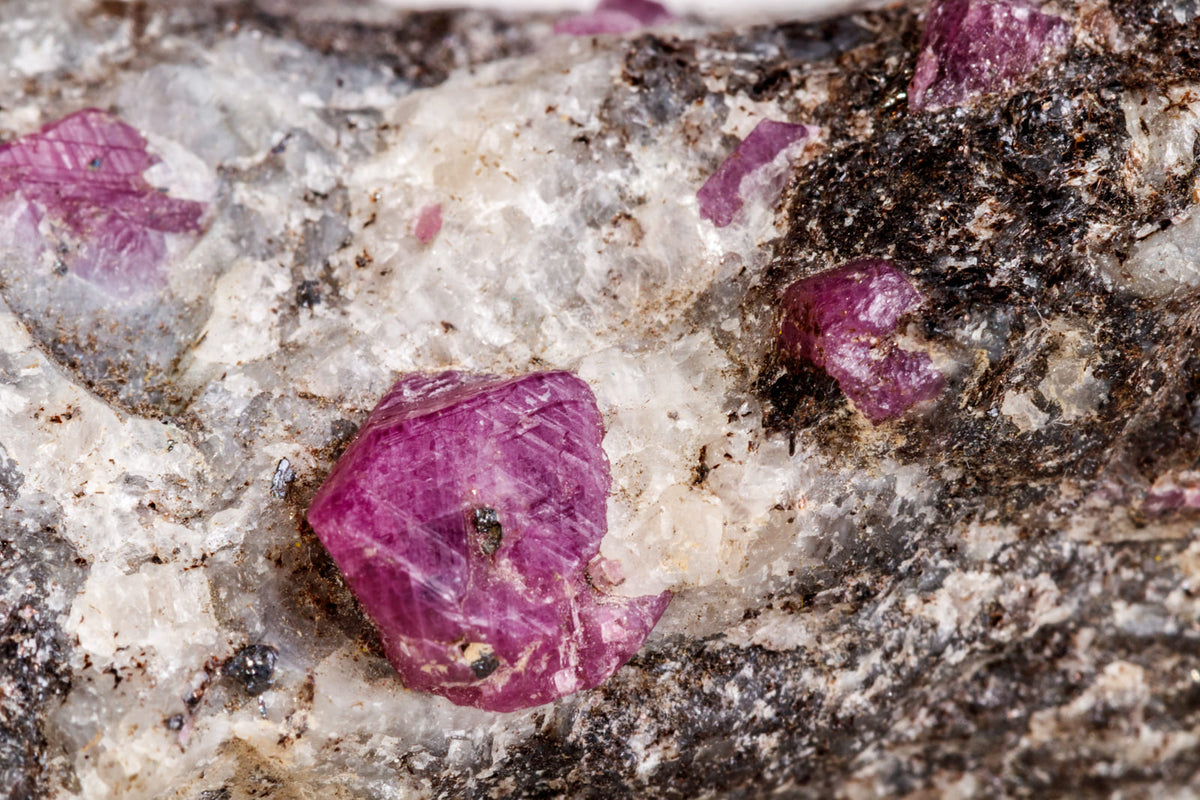
Ruby is the red variety of the mineral corundum, which is crystalline aluminum oxide (Al2O3). Pure corundum is colorless; ruby gets its red color from trace amounts of chromium. Every other color of gem-quality corundum is called sapphire, so ruby and sapphire are the same mineral separated only by color.
Because red sits next to pink on that scale, there is a well-known boundary question: when a stone's color is very light, it may be classed as a pink sapphire rather than a ruby. There is no single worldwide rule for exactly where pink ends and red begins, so reputable sellers describe color honestly rather than stretching a pink stone into the ruby category.
On the Mohs scale ruby rates 9, second only to diamond among natural gems, which makes it an excellent hard-wearing stone for everyday jewelry. It has been prized for thousands of years; it appears in early Indian texts, and across ancient Egypt, Greece, and Rome it was reserved largely for royalty and clergy. These accounts are folklore and history, not statements about the stone's powers.

Ruby Quality & Value
Like other colored gemstones, ruby is judged mainly on color, clarity, cut, and carat weight, with origin and treatment also affecting value. Color has by far the biggest influence on price.
| Factor | What to look for |
|---|---|
| Color | The most important factor. The most valued rubies show a vivid, pure to slightly purplish red in a medium to medium-dark tone. Stones that are too light may be classed as pink sapphire; overly dark or brownish stones are worth less. "Pigeon’s blood" is a trade term for a top red color, not a guarantee of quality or origin. |
| Clarity | Natural rubies almost always contain inclusions, and fine silk (tiny needle-like inclusions) is normal. Eye-clean natural rubies are scarce and command higher prices, while some inclusions can even help confirm a stone is natural rather than synthetic. |
| Cut | A good cut balances color and brightness while keeping weight. Faceted ovals and cushions are common; rubies with dense silk may be cut as cabochons, and some show a six-rayed star (asterism), known as star ruby. |
| Carat | Fine rubies above a carat are scarce, so price per carat rises sharply with size. Two stones of equal weight can differ greatly in value depending on color and clarity. |
On origin: rubies from Myanmar (formerly Burma) are historically associated with the finest red color, and "Burmese ruby" is often used as a quality reference. Mozambique, Thailand, Sri Lanka, and other sources also produce excellent stones. Origin can affect value, but a country name on its own is not a guarantee of quality.

Natural, Treated & Synthetic Ruby
Most rubies on the market have been treated in some way, and the type of treatment affects both value and care. Under the FTC Jewelry Guides (16 CFR Part 23), any treatment that is not permanent, that creates special care requirements, or that significantly affects value should be disclosed. Here is what to ask about.
- Heat treatment: The vast majority of rubies are heat-treated to improve color and clarity. Heating is stable and permanent and is widely accepted in the trade, but it should still be disclosed. An untreated ruby of fine color is rare and can command a premium.
- Lead-glass-filled (composite) ruby: Low-grade corundum is sometimes infused with lead glass to fill fractures and mimic a solid ruby. These "glass-filled" or composite rubies must be disclosed as such. They are far less valuable and need special care, because the glass can be damaged by heat, acids, ultrasonic cleaning, and even some household chemicals.
- Other treatments: Flux healing (which heals fractures during heating) and lattice diffusion (which adds color at the surface) are also used and should be disclosed, because they affect value and, in some cases, durability.
- Synthetic (lab-created) ruby: Real ruby can be grown in a laboratory, most often by flame fusion (the Verneuil process) or flux growth. Synthetic ruby has the same chemistry and color as natural ruby but is made in a lab, so it must be described as synthetic, lab-created, or lab-grown, never simply as ruby.
- Imitations: Red glass and red garnet, as well as doublets, can look like ruby but are different materials. A large, flawless, very inexpensive red stone should raise questions.
If you want certainty about whether a stone is natural, treated, or synthetic, ask for a report from an independent gemological laboratory. At KenKenGems we describe treatment and, where known, origin so you understand exactly what you are buying.

Ruby Meaning & Symbolism
These are traditional beliefs, not medical claims. Crystals and gemstones are not medicine and cannot diagnose, treat, cure, or prevent any illness; consult a qualified professional for any health concern.
Across many cultures, ruby has been associated with love, passion, courage, and vitality. Ancient warriors are said to have carried rubies for bravery, and in medieval Europe the red stone was linked with the heart and with devotion. In crystal lore, ruby is traditionally believed to symbolize energy, confidence, and enduring love, which is part of why it has long been given as a romantic gift.
As the July birthstone, ruby is often chosen as a meaningful present for those born under Cancer and Leo. These associations are folklore and tradition, offered for interest and enjoyment rather than as any promise of a physical or emotional effect.
Care & How to Identify a Ruby
Ruby is hard and durable at 9 on the Mohs scale, so an untreated or heat-treated ruby is well suited to everyday wear. Care depends heavily on treatment, so it helps to know what you own.
- For untreated and heat-treated rubies, clean with warm water, mild soap, and a soft brush, then rinse and dry. These are generally safe in an ultrasonic cleaner, though gentle hand cleaning is always a safe choice.
- For lead-glass-filled (composite) rubies, use only warm soapy water and a soft cloth. Avoid ultrasonic and steam cleaners, acids, bleach, heat, and even lemon juice or household cleaners, any of which can etch or damage the glass.
- Store ruby separately so it does not scratch softer stones, and remove ruby jewelry before heavy work or contact with harsh chemicals.
To tell natural, synthetic, and imitation apart, remember that natural rubies almost always show some inclusions, while a large, perfectly clean, very cheap red stone is often synthetic, glass, or garnet. Color alone is not proof, and a lab report is the surest way to confirm a stone's identity and treatment.
July Birthstone FAQ
What is the birthstone for July?
The birthstone for July is ruby, the red variety of the mineral corundum. It is the traditional birthstone for people born in July and is associated with the zodiac signs Cancer and Leo.
Why are rubies red?
Ruby owes its red color to trace amounts of chromium within the corundum crystal. The same mineral in any other color is called sapphire, so chromium is what separates a ruby from a sapphire.
Are most rubies treated?
Yes. The large majority of rubies are heat-treated to improve color and clarity, which is a stable and accepted practice that should still be disclosed. Some low-grade stones are lead-glass-filled (composite) rubies, which must be disclosed and need special care.
What does "pigeon’s blood" mean?
"Pigeon’s blood" is a trade term for a top-quality vivid red color in ruby, often associated with Burmese stones. It describes a desirable color, but it is not a guarantee of a stone's origin, quality, or value on its own.
What is the difference between a ruby and a pink sapphire?
Both are the mineral corundum. When the red is strong it is called ruby; when the color is a light pinkish tone it is usually called pink sapphire. There is no single global rule for the exact boundary, so honest color description matters.
How can I tell a natural ruby from a synthetic or imitation?
Natural rubies usually contain some inclusions, while a large, flawless, very inexpensive red stone may be synthetic ruby, red glass, or garnet. For certainty, ask for a report from an independent gemological laboratory.
Shop July Birthstone Rubies
KenKenGems supplies natural, heat-treated, and synthetic rubies, from clear faceted stones to opaque cabochons and star rubies. Our ruby strands turn easily into necklaces and bracelets, and we also offer loose stones and pieces set in gold and silver for ready-to-wear jewelry and DIY projects.
Whether you are shopping for yourself or for a Cancer or Leo friend, a ruby makes a meaningful July birthstone gift. Browse our full ruby collection, and see our quality rank guide to understand how we grade and describe our stones.

Source: https://www.gia.edu/ruby


