
TOC
- 1. What Is Rhodonite?
- 2. Rhodonite Meaning and Symbolism
- 3. The History of Rhodonite
- 4. Physical and Chemical Properties of Rhodonite
- 5. How Rhodonite Forms
- 6. Types of Rhodonite
- 6-1. Pink Rhodonite
- 6-2. Gem-Grade (Translucent) Rhodonite
- 6-3. Dendritic and Banded Rhodonite
- 6-4. Fowlerite and Bustamite
- 7. Rhodonite Healing Properties and Benefits
- 7-1. Emotional Healing Benefits
- 7-2. Physical Healing Associations
- 7-3. How to Use Rhodonite
- 8. Metaphysical Properties of Rhodonite
- 8-1. Chakra Associations
- 8-2. Crystal Pairings for Rhodonite
- 9. Rhodonite vs. Rhodochrosite: What's the Difference?
- 10. How to Identify Real Rhodonite
- 11. How to Cleanse and Care for Rhodonite
- 12. Where Is Rhodonite Found?
- 13. Uses of Rhodonite: Ornamental and Industrial
- 14. Frequently Asked Questions About Rhodonite
- 14-1. What is rhodonite good for?
- 14-2. What does rhodonite do spiritually?
- 14-3. Is rhodonite rare or valuable?
- 14-4. Can rhodonite go in water?
- 14-5. Rhodonite vs. rose quartz - which should I choose?
- 14-6. Is rhodonite ever dyed or treated?
- 14-7. Where does rhodonite come from?
- 15. Shop Authentic Rhodonite at KenKenGems

What Is Rhodonite?
Rhodonite is a pink-to-rose-red manganese silicate mineral best known in the crystal world as the "stone of compassion." A popular and affordable heart chakra stone, it is traditionally associated with self-love, forgiveness, and emotional balance. In this guide you'll learn what rhodonite means, its folkloric healing and metaphysical associations, the main types of rhodonite, how it forms, how to tell real rhodonite from imitations, and how to choose the right stone for your collection.
Rhodonite is a manganese inosilicate mineral (chemical formula MnSiO3) recognized by its rose-pink color, often crossed by striking black veins of manganese oxide. The name comes from the Greek "rhodon," meaning rose. Measuring 5.5-6.5 on the Mohs hardness scale, it works well in pendants, earrings, and beads.
In crystal healing, rhodonite is called the stone of compassion for its traditional association with the heart chakra, emotional balance, and forgiveness. Unlike many pink gemstones, rhodonite is widely available and affordable, which has made it a staple in North American crystal shops and jewelry design.

Rhodonite Meaning and Symbolism
The core rhodonite meaning is compassion - for others and for yourself. In crystal lore, practitioners regard it as a stone of forgiveness, emotional healing, and unconditional love, with a more grounding energy than softer pink stones like rose quartz. Rhodonite is traditionally said to symbolize:
- Self-love and self-worth
- Forgiveness and the release of resentment
- Emotional balance after shock, grief, or upheaval
- Generosity and altruism - discovering your talents and using them for the greater good
Its black manganese veins are often read as a reminder that love must be grounded in daily life: the stone is believed to anchor heart energy into the physical world.
The History of Rhodonite
Rhodonite was first documented in Russia's Ural Mountains in the late 18th century. Locals called it "orletz" (eagle stone) after finding small pieces in eagles' nests, and began placing rhodonite near newborns' cradles as a protective talisman.
German naturalist Christoph Friedrich Jasche formally named the mineral in 1819 after the Greek "rhodon" (rose). Rhodonite became a favorite of the Russian imperial court - Carl Faberge used it in his decorative works, and Ural artisans carved massive rhodonite into vases, columns, and inlay panels. It was declared Russia's national ornamental stone in 1913.
North America has its own rhodonite story: it is the official state gemstone of Massachusetts, and celebrated specimens have come from Franklin, New Jersey and British Columbia, Canada.
Physical and Chemical Properties of Rhodonite
Rhodonite's chemistry explains both its color and its quirks as a jewelry stone.
| Property | Value |
|---|---|
| Mineral class | Manganese inosilicate (pyroxenoid group) |
| Chemical formula | MnSiO3 |
| Hardness (Mohs) | 5.5-6.5 |
| Crystal system | Triclinic |
| Cleavage | Perfect in two directions (affects cutting) |
| Color | Pink to rose-red, often with black manganese-oxide veins |
| Luster | Vitreous to pearly |
| Transparency | Translucent to opaque (rare gem-grade material is near-transparent) |
The black dendritic veins are oxidized manganese; yellowish tones come from spessartine inclusions, and white patches are quartz. Because of these inclusions and its perfect cleavage, rhodonite can be brittle despite its moderate hardness - it is best set in pendants, earrings, and beaded designs rather than daily-wear rings.

How Rhodonite Forms
Rhodonite forms in manganese-rich metamorphic settings. Most commonly, manganese-rich sediments are buried and subjected to heat and pressure, and the manganese reacts with silica to form rhodonite and related manganese silicates. It can also develop near igneous intrusions, where contact metamorphism and mineral-rich fluids create skarn-like assemblages, and it can be deposited by silica-rich hydrothermal fluids moving through manganese-bearing rock.
Because of how it forms, rhodonite is usually found alongside other manganese minerals - including rhodochrosite, spessartine garnet, tephroite, bustamite, braunite, pyrolusite, and quartz. Geologists study these mineral associations to reconstruct the temperature, pressure, and fluid conditions of ancient rock formations, which is part of why rhodonite is valued as a teaching and research mineral as well as a gemstone.
Types of Rhodonite
Rhodonite varies widely in color mix and pattern. These are the varieties collectors and jewelry makers most often encounter in the North American market:
Pink Rhodonite
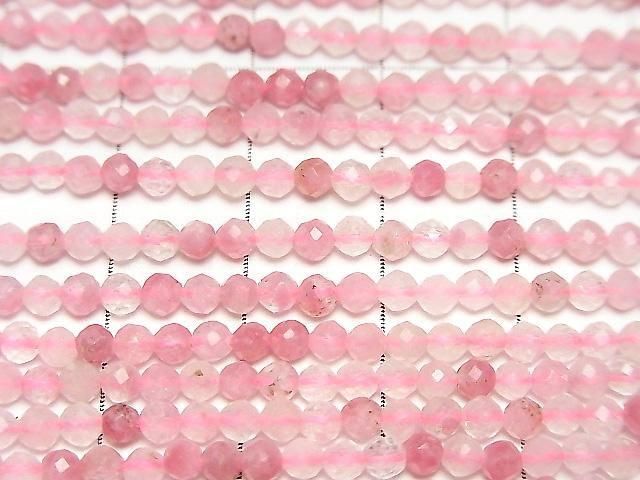
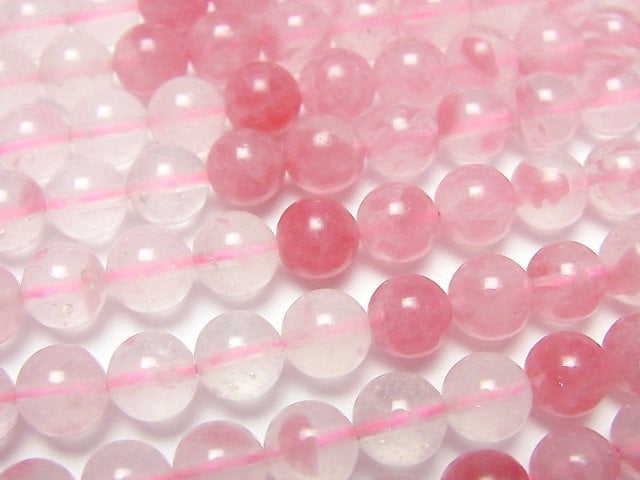
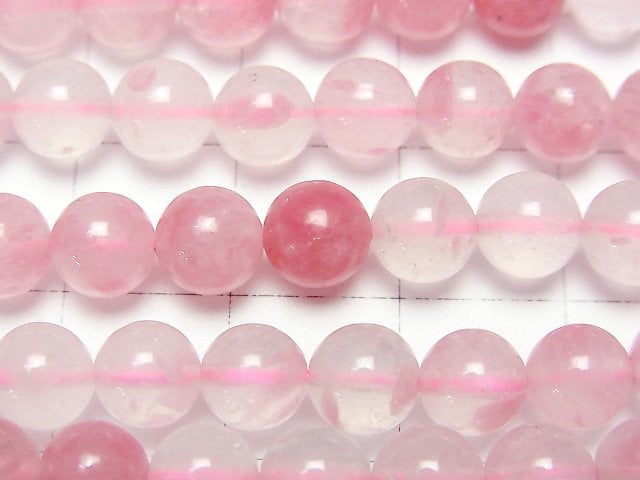
The classic form: a rose-pink to bubblegum-pink body with little to no dark veining (historically called "pink spar"). Evenly colored pink rhodonite is a popular choice for beads and cabochons, and pale Canadian material often shows a soft pastel hue.
Gem-Grade (Translucent) Rhodonite
Rare, near-transparent, ruby-like crystals - the most valuable form of rhodonite. Faceted gem rhodonite is a collector's stone; most comes from a handful of deposits and commands high per-carat prices. Broken Hill in Australia is especially known for sharp, sometimes gem-quality crystals.
Dendritic and Banded Rhodonite
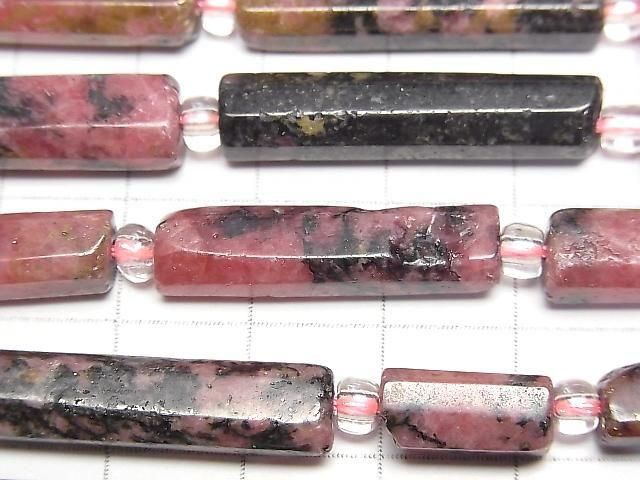
Dendritic rhodonite displays black, tree-like manganese veins across a pink base - the look most people picture when they think of rhodonite. Heavily veined stones (with black exceeding a third of the surface) were historically used for monuments and inlay. Banded rhodonite from Argentina, with alternating pink, brown, and gray stripes, is also known as "Inca stone."
Fowlerite and Bustamite
Fowlerite is a zinc-bearing variety with yellow-brown spots, famously associated with Franklin, New Jersey. Bustamite shows gray-pink to brownish tones with dark streaks. Both are favorites among mineral collectors rather than jewelry buyers.
Rhodonite Healing Properties and Benefits
In crystal healing tradition, rhodonite is one of the stones most often turned to for emotional recovery - sometimes nicknamed the "rescue stone" or an emotional first-aid stone for the heart. These are traditional beliefs, not medical claims.
Emotional Healing Benefits
In crystal lore, rhodonite is traditionally associated with emotional wellbeing. Practitioners have long turned to it to:
- Encourage a sense of calm and emotional balance during stressful times
- Support forgiveness and the release of anger or resentment
- Rebuild self-confidence and self-worth after emotional setbacks
- Offer comfort during grief and while processing difficult past experiences
Many people like to wear a rhodonite bracelet or carry a tumbled stone during challenging periods. These are traditional beliefs, not medical claims, and are not a substitute for professional mental-health or medical care.
Physical Healing Associations
In folk and lithotherapy traditions, rhodonite has been associated with the heart, with the skin (including minor irritations and insect bites), and with restful sleep. These associations come from crystal lore, not from scientific or clinical evidence.
These are traditional beliefs, not medical claims. Rhodonite is not a treatment for any condition and should never replace professional healthcare - please consult a qualified physician for any medical concern.
How to Use Rhodonite
- Wear it: a bracelet or pendant keeps the stone close to the heart chakra throughout the day.
- Meditate: hold a palm stone over your chest and focus on releasing resentment or fear.
- Carry it: keep a tumbled stone in your pocket as an on-the-spot grounding reminder.
- Place it: set rhodonite in the bedroom or a shared living space to encourage open, honest communication.

Metaphysical Properties of Rhodonite
Metaphysically, rhodonite is a heart-centered stone: in crystal lore it is believed to awaken unconditional love, build self-confidence, and help you recognize and develop your hidden talents - then use them in service of others.
Chakra Associations
Rhodonite primarily resonates with the heart chakra - the center of love, compassion, and forgiveness. Darker, black-veined varieties are also linked to the root chakra, adding grounding and stability. This dual action, opening the heart while keeping you grounded, is what many practitioners feel sets rhodonite apart from lighter pink stones.
Crystal Pairings for Rhodonite
Rhodonite pairs naturally with other heart stones: rose quartz softens and amplifies its loving energy, emerald is said to deepen heart healing, and garnet is thought to add drive for turning intentions into action.

Rhodonite vs. Rhodochrosite: What's the Difference?
Rhodonite and rhodochrosite are frequently confused - both are pink manganese minerals with similar names, but they are different stones.
| Property | Rhodonite | Rhodochrosite |
|---|---|---|
| Mineral type | Silicate (MnSiO3) | Carbonate (MnCO3) |
| Hardness (Mohs) | 5.5-6.5 | 3.5-4 |
| Typical look | Pink with black veins | Pink with white-to-cream banding |
| Durability | Good for most jewelry | Soft; needs protective settings |
| Price | Affordable | Generally higher |
Quick rule: black veining almost always means rhodonite; white banding points to rhodochrosite.
How to Identify Real Rhodonite
Rhodonite is affordable enough that fakes are less common than with rarer stones, but dyed howlite, dyed magnesite, and glass imitations do circulate online. A few quick checks before you buy:
- Veining: natural rhodonite shows irregular black manganese veins; dye tends to pool in surface cracks.
- Color: real stones shift subtly from pink to rose - a perfectly uniform hot pink is a warning sign.
- Hardness: rhodonite (Mohs 5.5+) will scratch glass; dyed howlite (about 3.5) will not.
- Feel: like most true minerals, it feels cool to the touch and warms slowly, unlike plastic or resin.
Under the FTC Jewelry Guides, any imitation or treated material (such as dyed howlite sold as rhodonite) should be clearly disclosed. When in doubt, buy from a seller who describes exactly what the material is.
How to Cleanse and Care for Rhodonite
Physical care: clean with lukewarm water, mild soap, and a soft cloth. Avoid ultrasonic cleaners, harsh chemicals, and prolonged soaking - the manganese-rich veins can be porous. Because rhodonite has perfect cleavage, protect it from sharp knocks, and store it separately from harder stones such as quartz and topaz to prevent scratches.
Energetic cleansing: in crystal tradition, practitioners recommend moonlight, sound (singing bowls), or smoke cleansing. A brief rinse is fine, but avoid salt water.
Where Is Rhodonite Found?
Some of the classic ornamental rhodonite has historically come from Russia's Ural Mountains. Several other localities stand out for their quality or history:
- Russia (Ural Mountains): the classic source of massive, uniformly pink ornamental rhodonite used for carving and architecture.
- Australia (Broken Hill): world-famous for sharp, sometimes gem-quality crystals in manganese-rich ore bodies.
- Sweden (Pajsberg and Langban): historically important European localities that yielded well-crystallized specimens for early mineralogical study.
- United States: Massachusetts (the official state gemstone), Franklin, New Jersey (famous for fowlerite), plus Colorado and California.
- Canada: manganese-rich deposits with attractive pink rhodonite, particularly in British Columbia.
- Also notable: Peru, Argentina, Brazil, Japan, China, and Madagascar.
Because supply is stable across many countries, good-quality rhodonite remains one of the more budget-friendly pink gemstones available.
Uses of Rhodonite: Ornamental and Industrial
Rhodonite has a dual identity that few pink gemstones can claim: it is both an ornamental stone and, in some deposits, an industrial mineral.
In the decorative arts, its vivid color and dramatic veining make it a favorite for cabochons, beads, bracelets, earrings, and carved pieces. Because it takes a high polish, lapidaries use it to bring out the depth of its rose tones against the sharp black manganese oxide. Historically, massive rhodonite was carved into figurines, spheres, vases, and inlay panels, and Russian artisans even used it as an architectural material in churches and palaces.
Where rhodonite occurs in massive, dark, or heavily altered forms without ornamental value, it has also been mined as a manganese ore. Manganese is important in steelmaking, where it improves strength, hardness, and wear resistance, and it appears in some alloy and battery chemistries. In many historic manganese camps, attractive rhodonite specimens were simply a byproduct of ore extraction - pieces that collectors and museums now prize.
Frequently Asked Questions About Rhodonite
What is rhodonite good for?
In crystal tradition, rhodonite is used mainly for emotional wellbeing - supporting forgiveness, self-love, and a sense of calm during stressful times. It is a popular heart chakra stone. These are traditional beliefs, not medical claims.
What does rhodonite do spiritually?
Spiritually, rhodonite is believed to open and balance the heart chakra, ground emotional energy, and help you discover your natural talents and use them for the greater good.
Is rhodonite rare or valuable?
Ornamental rhodonite is common and affordable - tumbled stones cost a few dollars, and beaded strands typically run about USD $10-40. Gem-grade translucent rhodonite, however, is genuinely rare and commands high per-carat prices.
Can rhodonite go in water?
Brief contact with water for cleaning is fine, but avoid long soaks and salt water, which can dull the polish and affect the manganese veins.
Rhodonite vs. rose quartz - which should I choose?
Both are heart stones. Rose quartz carries a soft, comforting energy, while rhodonite is more grounding and action-oriented - often chosen for active emotional recovery rather than general comfort.
Is rhodonite ever dyed or treated?
Natural rhodonite is usually sold untreated, but dyed howlite, dyed magnesite, and glass imitations are sometimes passed off as rhodonite. Reputable sellers disclose any dye, treatment, or imitation material, as the FTC Jewelry Guides require.
Where does rhodonite come from?
Historic material comes from Russia's Ural Mountains, with other important sources in Australia (Broken Hill), Sweden, the United States (Massachusetts and New Jersey), Canada (British Columbia), Peru, Argentina, Brazil, Japan, China, and Madagascar.
Shop Authentic Rhodonite at KenKenGems
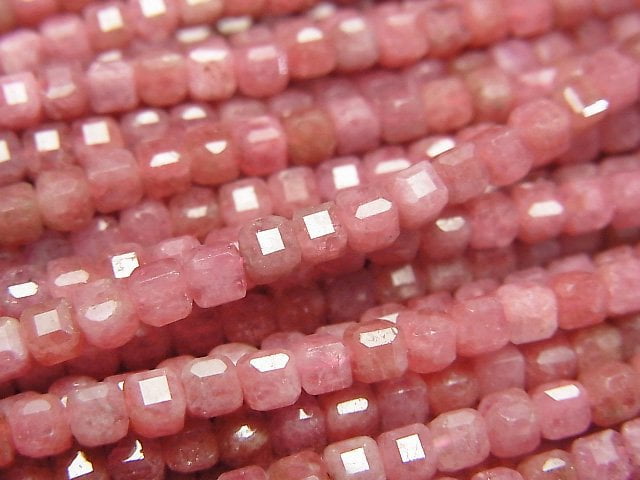
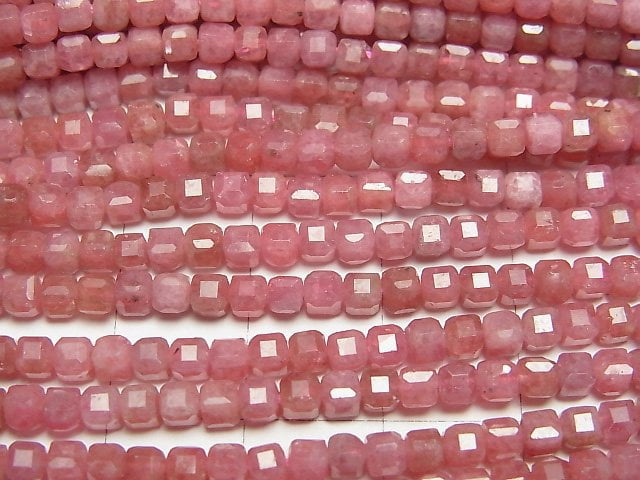
Ready to add the stone of compassion to your collection? KenKenGems offers a wide selection of natural, untreated rhodonite - evenly pink stones, dramatic black-veined dendritic pieces, and multicolored varieties - available as full strands, half strands, and finished components for jewelry making. Every strand is hand-inspected in Japan, priced for makers, and shipped quickly to the U.S. and Canada.

Looking for more gemstone guides? Explore our guides to citrine and amazonite.




![[Einzigartig] Imperial Rhodonit AAA- Rund 11mm Armband NO.5](http://store.kenkengems.com/cdn/shop/files/189732499.jpg?v=1768900793&width=640)
![[Einzigartig] Imperial Rhodonit AAA- Rund 11mm Armband NO.5](http://store.kenkengems.com/cdn/shop/files/189732499_o1.jpg?v=1768900779&width=640)


![[Einzigartig] Rhodonit Silica AA++ 2-Loch Rechteck 1strang Perlen (Armband) Nr. 7](http://store.kenkengems.com/cdn/shop/files/191371912.jpg?v=1779179620&width=640)
![[Einzigartig] Rhodonit Silica AA++ 2-Loch Rechteck 1strang Perlen (Armband) Nr. 7](http://store.kenkengems.com/cdn/shop/files/191371912_o1.jpg?v=1779179614&width=640)
![[Einzigartig] Hochwertiger Rhodonit AAA lose Stein facettiert 1 Stück Nr. 1](http://store.kenkengems.com/cdn/shop/files/183374241.jpg?v=1732074181&width=640)
![[Einzigartig] Hochwertiger Rhodonit AAA lose Stein facettiert 1 Stück Nr. 1](http://store.kenkengems.com/cdn/shop/files/183374241_o1.jpg?v=1732074176&width=640)