
TOC
- 1. What Is Pietersite Stone?
- 2. Pietersite Meaning and Origin
- 3. Pietersite Properties: Color, Chatoyancy, and Composition
- 3-1. Pietersite Hardness and Mohs Scale
- 3-2. Pietersite Gemological Properties
- 4. Pietersite Colors: Blue, Golden, and Red
- 5. Namibian vs Chinese Pietersite
- 6. Pietersite vs Tiger's Eye and Hawk's Eye
- 7. Pietersite Meaning in Crystal Lore
- 8. Pietersite Value: What to Look For
- 9. How to Use Pietersite in Jewelry Making
- 10. How to Care for Pietersite
- 11. How to Choose Pietersite Beads and Cabochons
- 12. Pietersite for Sale at KenKenGems
- 13. Pietersite FAQ
- 13-1. What is pietersite stone?
- 13-2. Is pietersite a crystal?
- 13-3. What is pietersite hardness on the Mohs scale?
- 13-4. What does pietersite mean?
- 13-5. Where is pietersite found?
- 13-6. What colors does pietersite come in?
- 13-7. Is pietersite the same as tiger's eye?
- 13-8. Is pietersite treated or dyed?
- 13-9. Is pietersite good for rings?
- 13-10. How do you clean pietersite?
- 13-11. Is petersite stone the same as pietersite?

What Is Pietersite Stone?
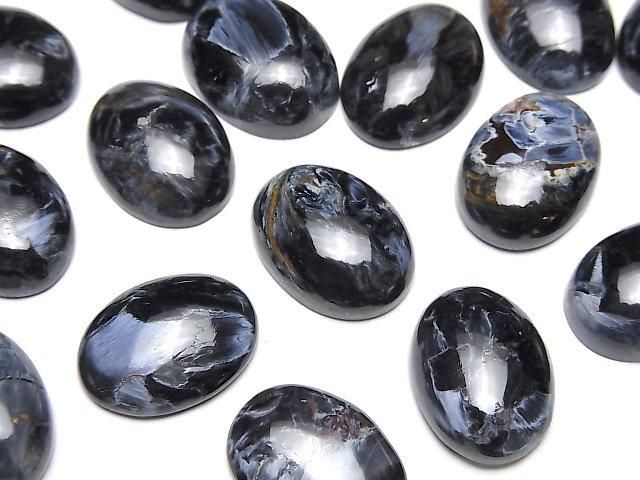
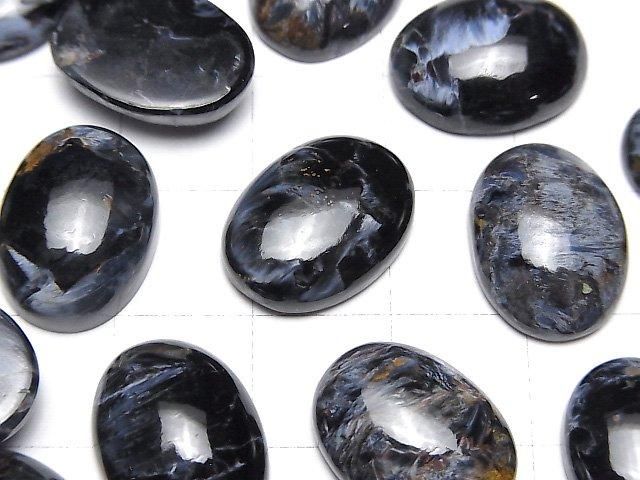
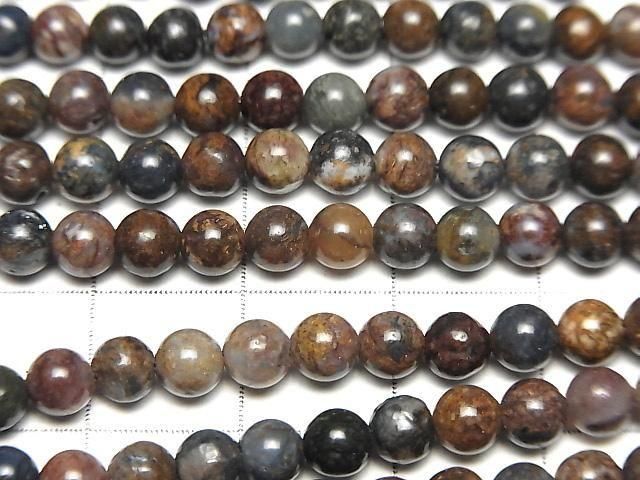
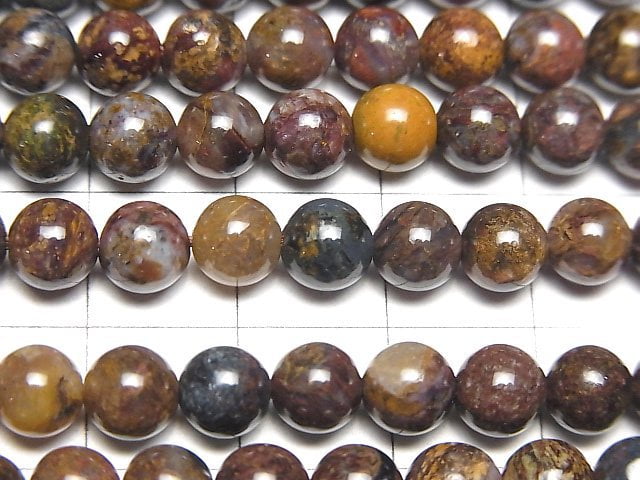
Pietersite is a striking, chatoyant variety of chalcedony (a form of quartz) famous for storm-like swirls of blue-gray, gold, brown, and red. Often called the Tempest Stone or Storm Stone, pietersite is prized by collectors and jewelry makers for its chaotic chatoyancy - shifting flashes of light that seem to move across the surface when the stone is cut and polished.
Gemologically, pietersite is quartz that contains fibers of a fibrous amphibole mineral (crocidolite). These fibers create the cat's-eye-like sheen, while the broken, brecciated texture gives each piece a unique, painterly pattern. It is mined mainly in Namibia and China and is popular for pietersite beads and cabochons used in jewelry making.
This guide explains what pietersite is, where it comes from, its colors and key physical properties, its meaning in crystal lore, how to judge value, and how to choose and care for pietersite beads and cabochons.

| Property | Detail |
|---|---|
| Mineral family | Quartz group; a chatoyant variety of chalcedony with amphibole (crocidolite) fibers |
| Chemical composition | Quartz (SiO2) with crocidolite inclusions |
| Colors | Blue-gray, golden yellow, brown, red-brown, and cream |
| Optical effect | Chatoyancy - a chaotic, storm-like flash |
| Mohs hardness | About 6.5 to 7 |
| Refractive index | About 1.544 to 1.553 |
| Specific gravity | About 2.50 to 2.74 |
| Cleavage | None |
| Transparency | Opaque |
| Luster | Silky to vitreous when polished |
| Main sources | Namibia and China |
| Common cuts | Cabochons and beads |
Pietersite Meaning and Origin
The name pietersite honors Sid Pieters, who first described the material from Namibia. The Namibian find was documented in 1962, and a separate deposit was later discovered at Xichuan in Henan Province, China, in 1966. Gemological references describe pietersite as a brecciated, chatoyant quartz colored and lit by fibrous crocidolite - the same kind of mineral responsible for tiger's eye and hawk's eye.
Its broken, swirling, storm-like patterns are the reason many crystal enthusiasts call it the Tempest Stone. In crystal lore, pietersite meaning is often linked with change, focus, inner direction, and the feeling of moving through a storm with purpose. These meanings are cultural and symbolic; they are not medical or guaranteed effects.

Pietersite Properties: Color, Chatoyancy, and Composition
Pietersite properties are defined by color, texture, and light. Most pieces show a mix of blue-gray, golden yellow, brown, red-brown, and white or cream areas. The most desirable pieces often have strong contrast and a lively flash that appears to move when the stone is turned.
Gemologically, pietersite is quartz (chalcedony) with embedded amphibole fibers (crocidolite) in varying degrees of alteration. Those fibers create the chatoyancy - the cat's-eye-like sheen seen in polished cabochons and well-cut beads. Because the material is brecciated (broken and re-cemented), each stone has a unique, painterly pattern rather than the straight bands seen in classic tiger's eye.

Pietersite Hardness and Mohs Scale
Pietersite hardness is generally around 6.5 to 7 on the Mohs scale, close to many quartz-family gems. This makes pietersite suitable for beads, pendants, earrings, and cabochons when worn with normal care. For rings, choose protected settings and avoid hard knocks, because the Mohs scale measures scratch resistance, not overall toughness - and pietersite's brecciated, fractured structure can make it more prone to chipping along old fractures.
For cleaning, use warm water, mild soap, and a soft cloth. Avoid harsh chemicals, acids, ultrasonic cleaners, steam cleaners, and long soaking, especially for finished jewelry with metal parts or adhesives.
Pietersite Gemological Properties
For collectors and jewelry makers who want the technical details, here are the typical gemological properties reported for pietersite. Values can vary because pietersite is an aggregate of quartz and fibrous crocidolite rather than a single transparent crystal.
| Gemological property | Typical value |
|---|---|
| Chemical composition | Quartz (SiO2) with crocidolite fibers |
| Crystal system | Trigonal (quartz), fibrous aggregate |
| Color | Brownish-red, orange, golden yellow to brown, blue, gray |
| Mohs hardness | 6.5 to 7 |
| Refractive index | 1.544 to 1.553 |
| Specific gravity | 2.50 to 2.74 |
| Cleavage | None |
| Transparency | Opaque |
| Luster | Silky on fractures; vitreous when polished |
| Optical effect | Chaotic chatoyancy (cat's-eye flash) |
Pietersite Colors: Blue, Golden, and Red
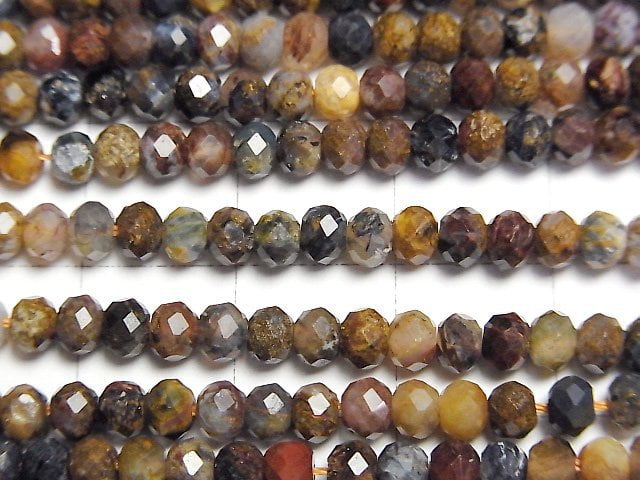
Pietersite is loved for its range of colors within a single stone. The body color and the chatoyant swirls can differ from piece to piece, which is part of its appeal for one-of-a-kind jewelry.
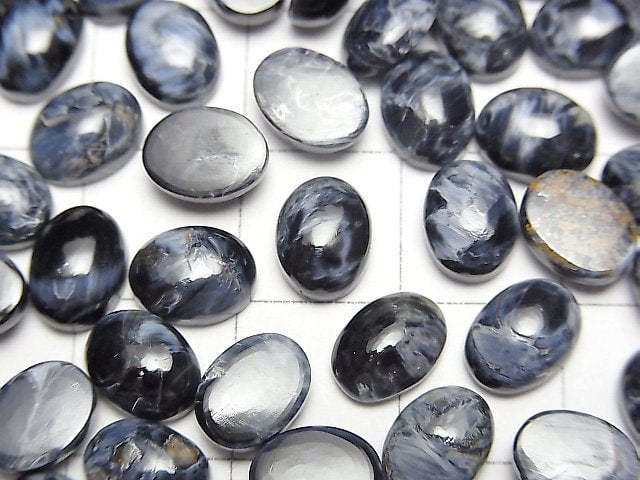
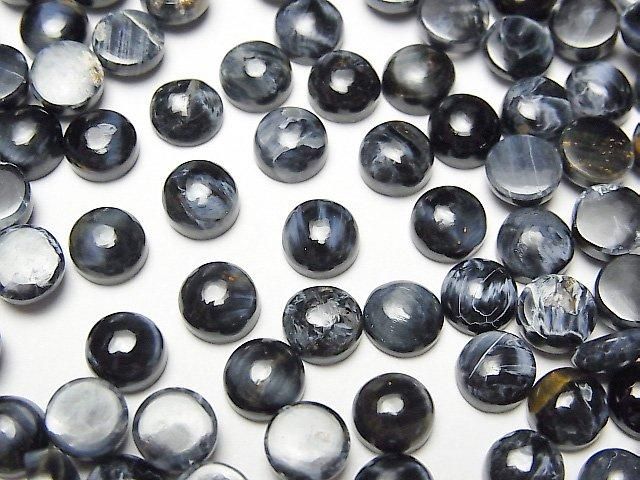
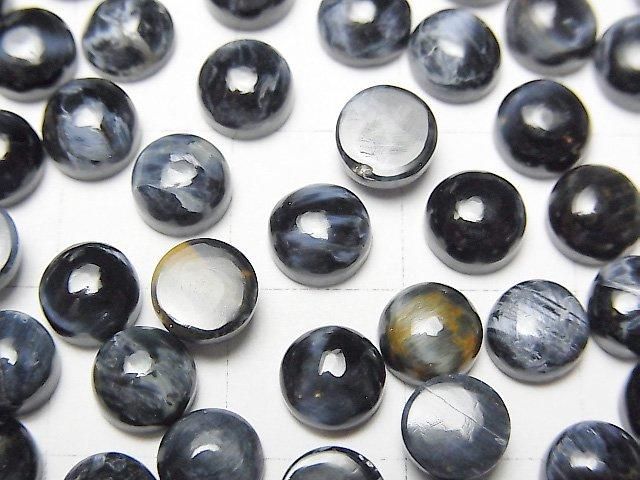
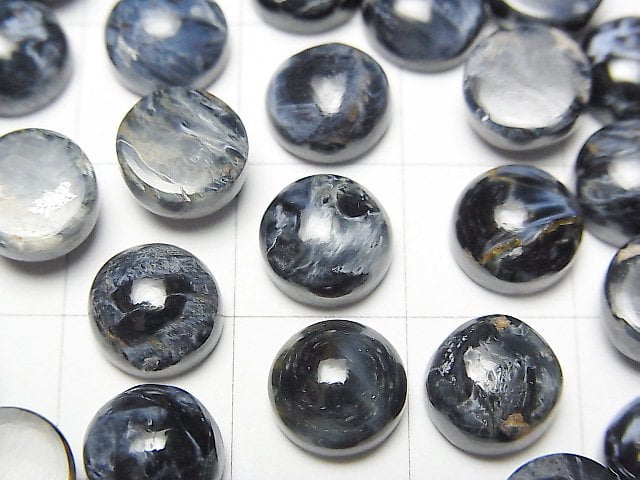
- Blue pietersite - Blue-gray to deep midnight-blue body color with silvery-blue flash. Strong, even blue is the most sought-after look and is closely associated with Namibian material.
- Golden and yellow pietersite - Warm golden, honey, and yellow swirls of crocidolite that flash like tiger's eye. These tones often appear alongside blue and brown in the same stone.
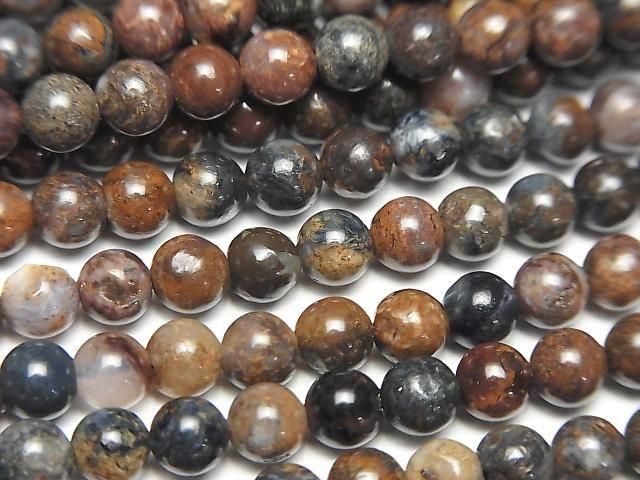
- Red and brown pietersite - Red-brown to orange body colors, more common in Chinese material, sometimes with fiery red or copper swirls.
- Mixed and "green" pietersite - Many stones blend blue, gold, and brown, and some blue-and-gold combinations can read as gray-green depending on the light and cut.
The liveliest stones combine high color contrast with a bright, mobile flash. Color alone does not set value - the strength and movement of the chatoyancy matter just as much.
Namibian vs Chinese Pietersite
Pietersite is mined mainly in two regions, and the two sources tend to look a little different. When origin is advertised, it should be stated accurately, since origin can affect both appearance and price.
| Origin | Typical appearance |
|---|---|
| Namibia (Erongo region) | First described in 1962. Predominantly chatoyant blue-gray, with less common red-brown and golden areas. Prized for strong, even blue. |
| China (Xichuan, Henan Province) | Discovered in 1966. Predominantly reddish-brown body color with regions of chatoyant blue and yellow. Often more affordable and widely available. |
Both origins can produce beautiful stones. If a specific origin matters to you, ask the seller to confirm it rather than assuming it from color alone, because color overlaps between the two sources.
Pietersite vs Tiger's Eye and Hawk's Eye
Pietersite is often compared with tiger's eye and hawk's eye because all three get their chatoyancy from the same kind of fibrous mineral (crocidolite). They are related, but they are not identical.
- Tiger's eye - Golden-brown chatoyant quartz with straight, parallel fibers that produce a single, banded eye of light.
- Hawk's eye - The blue-gray version, with the same straight, parallel fibers.
- Pietersite - Brecciated (broken and re-cemented), so the fibers point in many directions. This gives the chaotic, swirling, storm-like flash instead of a single straight band.
You may see pietersite described as a "brecciated tiger's eye," which is a helpful shorthand for its look. Strictly speaking, pietersite is not simply a brecciated form of tiger's eye or hawk's eye; it is a related chatoyant quartz that shares the same crocidolite that creates their flash.
Pietersite Meaning in Crystal Lore
Many people are drawn to pietersite because its stormy look feels energetic and dramatic. In crystal lore, pietersite stone meaning is traditionally associated with transformation, motivation, intuition, and confidence - the idea of finding calm and clear direction in the middle of a storm. Some people keep a pietersite crystal on a desk, altar, or bedside table as a visual reminder to pause, reflect, and choose a clear direction.
In folkloric and metaphysical traditions, pietersite is often linked with the throat and third-eye chakras and connected to zodiac signs such as Leo. It is sometimes nicknamed the "Tempest Stone" for these themes. These are traditional beliefs, not medical claims.
These associations are part of gemstone tradition and personal belief. Pietersite jewelry and crystals are not intended to diagnose, treat, cure, or prevent any condition, and are best enjoyed as a symbolic or mindful object rather than a source of health outcomes. These are traditional beliefs, not medical claims.

Pietersite Value: What to Look For
Pietersite is valued mainly for its chatoyancy and color rather than for clarity, since it is opaque. When comparing stones, look at these factors:
- Chatoyancy - A bright, mobile, well-defined flash is the single most important value factor.
- Color and contrast - Strong, saturated blue is usually the most prized, but vivid gold, red, and high-contrast mixes are also desirable.
- Pattern - Lively, well-distributed swirls tend to be preferred over flat or dull areas.
- Polish and cut - A smooth, high polish and a cabochon oriented to catch the flash add value.
- Size - Larger clean cabochons with strong flash are less common and command higher prices.
Treatment and disclosure: Natural pietersite is generally sold untreated. However, some material on the market may be dyed or heat-enhanced to intensify color, and lower-grade pieces are sometimes stabilized. Reputable sellers should disclose any dyeing, heat treatment, or stabilization, so it is reasonable to ask about treatment - and about origin - before you buy. At KenKenGems we describe our pietersite as it is sold.
How to Use Pietersite in Jewelry Making
Pietersite is especially effective in designs that let its chatoyancy catch the light. Cabochons work well as pendants, statement rings with protective bezels, and wire-wrapped focal pieces. Pietersite beads can be used in bracelets, necklaces, and earrings, where the mix of blue, gold, brown, and gray pairs beautifully with sterling silver, gold-filled components, brass, leather, and neutral gemstones.
For jewelry makers in the United States and Canada, pietersite is a strong choice for one-of-a-kind designs because every bead or cabochon has a different pattern. If you want a dramatic look, choose larger focal beads or cabochons with vivid blue and gold flashes. For subtle pieces, use smaller round beads or faceted shapes as accents.

How to Care for Pietersite
To keep pietersite looking polished, wipe it with a soft cloth after wearing. For a deeper clean, use lukewarm water with mild soap, then dry it completely before storage. Store pietersite separately from harder gemstones such as sapphire or diamond, which can scratch softer materials.
Remove pietersite jewelry before swimming, cleaning, gardening, exercising, or applying perfume and lotions. Even though pietersite has useful scratch resistance for everyday jewelry styles, its brecciated structure means careful handling helps preserve the polish, drilled holes, and metal settings. Avoid ultrasonic and steam cleaners, harsh chemicals, and prolonged soaking.
How to Choose Pietersite Beads and Cabochons
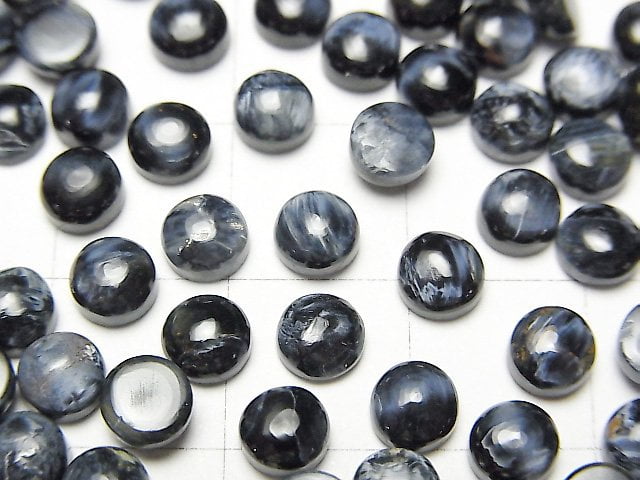
When shopping for pietersite, look for a bright chatoyant flash, attractive color contrast, a smooth polish, and patterns that suit your design. Blue pietersite is often the most popular, but golden, brown, red-brown, and mixed-color stones can be just as striking when the pattern is strong.
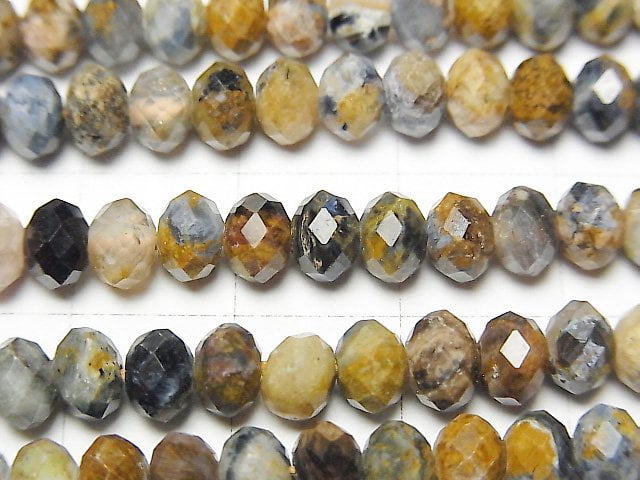
For beads, check the size, hole position, shape consistency, and strand photos. For cabochons, check the dome height, polish, back shape, and orientation of the flash. Natural surface features and color variation are normal, but unexpected cracks or poor drilling may make a piece harder to use in jewelry.
Pietersite for Sale at KenKenGems
KenKenGems offers pietersite beads, cabochons, and loose stones for jewelry making. Browse the pietersite collection to compare colors, shapes, sizes, and finishes, then choose the piece that best matches your design. Because pietersite patterns vary from stone to stone, product photos are especially important when selecting a focal bead, pendant, or cabochon.
Explore pietersite beads and cabochons for jewelry making.

Pietersite FAQ
Below are quick answers to common questions about pietersite stone meaning, properties, hardness, colors, and care.
What is pietersite stone?
Pietersite stone is a chatoyant chalcedony (quartz) material known for storm-like swirls of blue-gray, gold, brown, and red-brown. It is related in appearance to tiger's eye and hawk's eye, but its brecciated structure creates more chaotic, painterly patterns.
Is pietersite a crystal?
Pietersite is often called a pietersite crystal in jewelry and metaphysical contexts. Gemologically, it is better described as a chalcedony/quartz aggregate with crocidolite fibers rather than a single transparent crystal.
What is pietersite hardness on the Mohs scale?
Pietersite hardness is usually listed around 6.5 to 7 on the Mohs scale. It can be used in jewelry, but rings and bracelets should be worn with more care than pendants or earrings because they receive more impact.
What does pietersite mean?
Pietersite meaning is commonly connected with the Tempest Stone nickname. In crystal lore, it is traditionally associated with change, focus, courage, and moving through uncertain moments with clearer intention. These meanings are symbolic. These are traditional beliefs, not medical claims.
Where is pietersite found?
The best-known pietersite sources are Namibia (first described in 1962) and China (discovered at Xichuan, Henan Province, in 1966). Availability can vary, so shoppers often compare color, pattern, polish, and origin when choosing beads or cabochons.
What colors does pietersite come in?
Pietersite ranges from blue-gray and deep blue to golden yellow, brown, and red-brown, often mixed in one stone. Namibian material tends toward blue-gray, while Chinese material is often reddish-brown with blue and yellow swirls.
Is pietersite the same as tiger's eye?
No. They are related and share the same fibrous crocidolite that creates their flash, but tiger's eye has straight, parallel fibers and a single banded eye, while pietersite is brecciated with fibers pointing in many directions, giving a chaotic, swirling flash.
Is pietersite treated or dyed?
Natural pietersite is generally sold untreated, but some material may be dyed, heat-enhanced, or stabilized to improve color or durability. Ask the seller to disclose any treatment and to confirm origin before buying.
Is pietersite good for rings?
Pietersite can be used in rings, especially in protected settings, but it is often easier to care for as a pendant, bead, cabochon focal, or earring. If used in a ring, avoid impacts and remove it before heavy work.
How do you clean pietersite?
Clean pietersite with lukewarm water, mild soap, and a soft cloth. Avoid harsh chemicals, acids, ultrasonic cleaners, steam cleaners, and long soaking.
Is petersite stone the same as pietersite?
Yes. Petersite stone is a common misspelling of pietersite stone. The standard spelling is pietersite, named after Sid Pieters.