TOC
- 1. What Is a Selenite Crystal? Definition and Meaning at a Glance
- 1-1. Selenite Quick Facts
- 1-2. How to Pronounce Selenite
- 1-3. Is Selenite a Rock, a Mineral, or Gypsum?
- 2. Selenite Crystal Meaning and Symbolism
- 2-1. Selenite Spiritual Meaning
- 3. Selenite Healing Properties and Metaphysical Benefits
- 3-1. Energetic Cleansing and Clarity
- 3-2. Emotional Calm and Peace
- 3-3. Selenite Chakra Connections
- 4. Types of Selenite: Satin Spar, Desert Rose, Gypsum Flower, and Colors
- 4-1. Desert Rose Selenite
- 4-2. Satin Spar vs. Selenite: What's the Difference (and Does It Matter)?
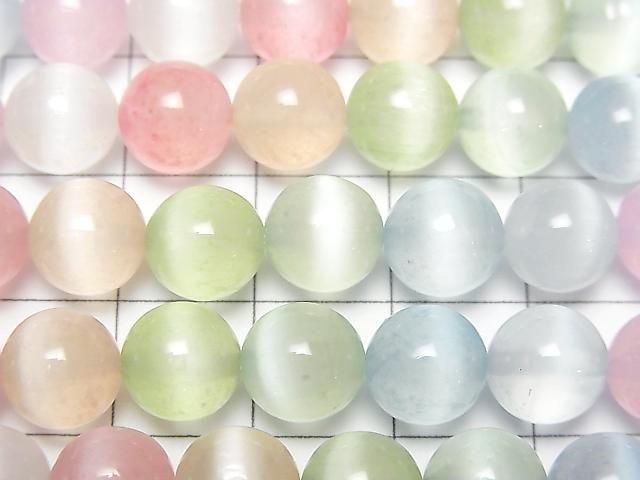
- 4-3. Selenite Colors: White, Orange, Green, Blue — Natural or Dyed?
- 5. How to Use Selenite Crystals (and What Selenite Is Good For)
- 5-1. How to Cleanse Other Crystals with Selenite
- 5-2. Meditation, Wands, and Home Placement
- 5-3. Can You Wear Selenite? Selenite in Jewelry
- 6. How to Care for Selenite: Water, Sunlight, Cleaning, and Storage
- 7. Where Is Selenite Found? Sources in the U.S., Canada, and Worldwide
- 8. Selenite Value: How Much Does Selenite Cost in the U.S. and Canada?
- 9. How to Tell If Selenite Is Real
- 10. Buying Selenite Beads for Jewelry Making: Sizes, Strands, and Tips
- 11. Frequently Asked Questions About Selenite Crystals
- 12. Shop Selenite Beads for Jewelry Making at KenKenGems
- 12-1. Browse Our Selenite Bead Collection
- 13. Reviewed by the KenKenGems Gemstone Editorial Team

Selenite Crystal: Meaning, Healing Properties, Uses, and Care
A selenite crystal is a transparent-to-pearly form of the mineral gypsum, prized in crystal practice as a stone of clarity, peace, and energetic cleansing. Practitioners use it to clear spaces and recharge other crystals, and it is one of the softest stones you can own (Mohs 2), which is why it must be kept dry and handled gently.
This guide covers what selenite crystal is, what it means, how to use it, the difference between selenite and satin spar, where it is found, what it costs in USD, and how to choose real selenite beads for jewelry making. Everything here is written for readers and makers in the United States and Canada.

What Is a Selenite Crystal? Definition and Meaning at a Glance
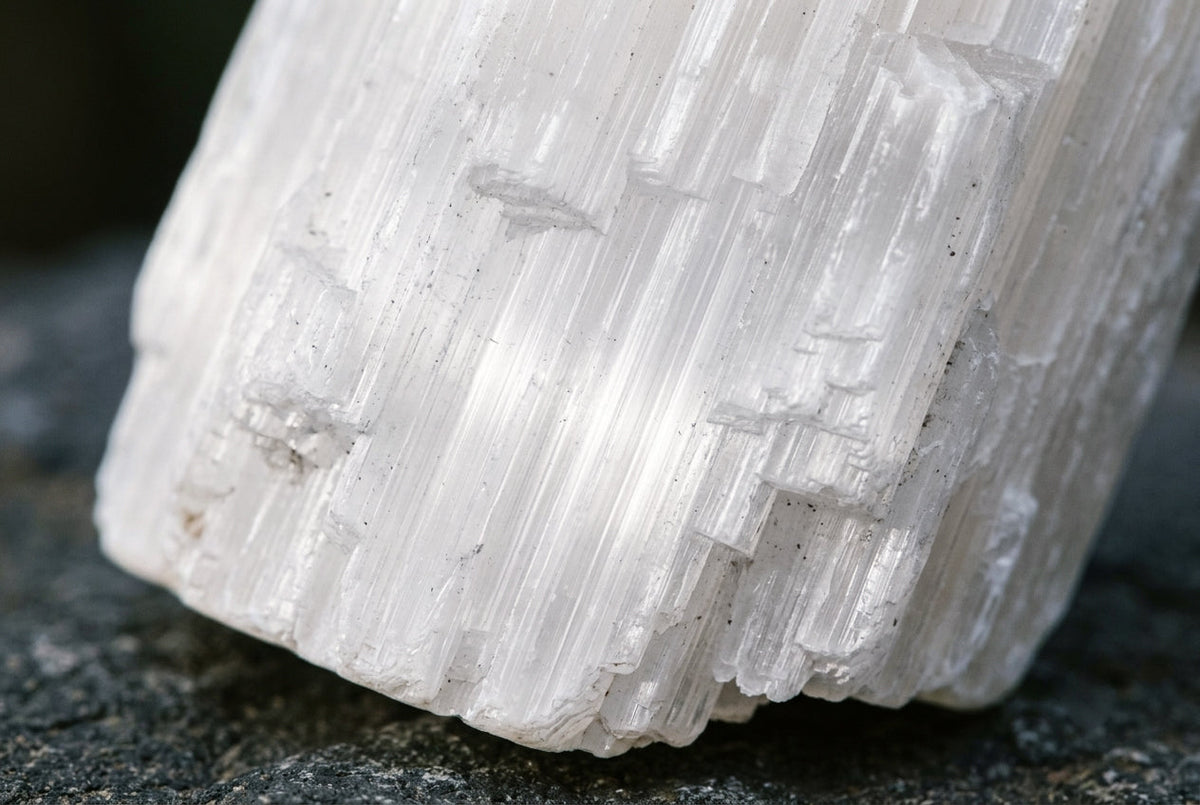
By definition, selenite is a crystalline variety of gypsum — hydrated calcium sulfate (CaSO₄·2H₂O). It's typically translucent to transparent with a soft, satiny or glass-like sheen, and it's very soft: just 2 on the Mohs hardness scale, soft enough to scratch with a fingernail.
In crystal traditions, selenite is known as a stone of clarity, purification, and peace. Its signature reputation is energetic cleansing — it's the crystal most often used to clear and recharge other stones. The name comes from the Greek selene (moon), a nod to its luminous, moonlit appearance.
Quick note: "selenite" is often used loosely for all clear or white gypsum, including satin spar — the fibrous, silky material most "selenite" wands, plates, and beads are actually made from. The two look different but share the same chemistry and care rules (see Types below).
Selenite Quick Facts
| Mineral | Gypsum (hydrated calcium sulfate, CaSO₄·2H₂O) |
| Crystal system | Monoclinic |
| Color | Colorless to pearly white; also orange, peach, gray; green and blue are rare in nature |
| Hardness (Mohs) | 2 (very soft — scratches with a fingernail) |
| Luster | Vitreous to pearly (selenite); silky (satin spar) |
| Cleavage | Perfect in one direction — splits into thin sheets |
| Water safety | No — dissolves and clouds when wet |
| Chakras | Crown (and third eye) |
| Zodiac signs | Commonly linked to Taurus and Cancer |
| Name origin | Greek selēnē (moon) |
| Main sources | Mexico, Morocco, United States (Oklahoma, Utah), Canada, Madagascar, Australia, Poland |
| Keywords | Cleansing, clarity, peace, protection |
| Bead sizes at KenKenGems | 6 mm, 8 mm, 10 mm rounds, ~15-inch strands |
How to Pronounce Selenite
Selenite is pronounced "SEL-uh-nite" (/ˈsɛlɪnaɪt/) — three syllables, with the stress on the first. The name traces back to the Greek moon goddess Selene, the same root behind words like "selenology" (the study of the moon).
Is Selenite a Rock, a Mineral, or Gypsum?
Selenite is a mineral, not a rock: it is the crystalline form of gypsum. "Selenite rock" is a common search term, but strictly speaking a rock is a mixture of minerals, while selenite is a single mineral with a fixed formula (CaSO₄·2H₂O).
So what is the difference between gypsum and selenite? None in chemistry — every selenite crystal is gypsum. The difference is in form. Gypsum is the general name for the mineral, including the massive, chalky material used to make drywall and plaster of Paris. Selenite is gypsum that has grown into clear, well-formed crystals. Satin spar (fibrous), desert rose (sandy rosettes), and gypsum flower (curved cave formations) are the other crystalline varieties of the same mineral.
| Name | What it is | Typical look |
| Gypsum | The mineral itself (CaSO₄·2H₂O) | Massive, chalky, white to gray |
| Selenite | Transparent crystalline gypsum | Glassy, clear "blades" or plates |
| Satin spar | Fibrous crystalline gypsum | Silky white with a cat's-eye shimmer |
| Desert rose | Bladed gypsum with sand inclusions | Tan to brown rosettes |
| Gypsum flower | Curved fibrous gypsum from caves | Delicate curling clusters |
Selenite Crystal Meaning and Symbolism
The core selenite meaning is clarity and purity. Its clear, light-filled appearance has long symbolized a clean slate — mental clarity, emotional calm, and a fresh, high-vibration start. Because it seems to glow from within, selenite is also tied to the moon, intuition, and spiritual connection.
In modern crystal practice, selenite represents:
- Cleansing and purification of energy
- Mental clarity and calm decision-making
- Peace, serenity, and stress relief
- Protection — creating a "bubble" of clear energy around a space
- Spiritual connection and heightened intuition
Because of these themes, selenite is a go-to crystal for beginners setting up an altar or crystal collection, and for anyone who wants a calm, clear home environment.
Historically, the name reflects an ancient belief that the stone waxed and waned with the moon. In medieval lapidaries it was said to hold an image of the moon inside it, and thin selenite sheets were even used as window panes — most famously at the Basilica of Santa Sabina in Rome — which is part of why it is still associated with light and clarity today.
Selenite Spiritual Meaning
Spiritually, selenite is regarded as a stone of light and higher connection. Practitioners describe its energy as gentle but high-vibration — associated with clearing mental fog, deepening meditation, and connecting to intuition or a sense of the divine. It's often called a "liquid light" stone and is linked to the crown chakra, the energy center of spiritual awareness. Many people use selenite to set intentions and to create a peaceful, protected space for reflection.

Selenite Healing Properties and Metaphysical Benefits
In crystal traditions, selenite is prized above all as a cleanser and clarity stone. Practitioners reach for it to clear stagnant energy, calm a busy mind, and lift the atmosphere of a room.
Important note: the properties described here reflect metaphysical traditions and personal practice, not scientific or medical fact. Crystals are not a substitute for professional medical or mental-health care. Enjoy selenite as part of a mindful routine, not as treatment.
Energetic Cleansing and Clarity
Selenite's most famous use is energetic cleansing. Practitioners believe it:
- Clears stagnant or heavy energy from a person, object, or room
- Recharges and cleanses other crystals (its signature role — see the how-to below)
- Clears mental fog and supports focus and clear decisions
- Creates a calm, protected "bubble" of clear energy in a space
Its gentle, high-vibration reputation is why selenite is often the first tool crystal collectors buy to look after the rest of their collection.
Emotional Calm and Peace
Emotionally, selenite is used to ease stress and quiet anxious thoughts. Practitioners describe its energy as soothing and stabilizing — helpful for releasing tension, letting go of old emotional patterns, and encouraging self-acceptance. Kept by the bedside, it's a traditional companion for calm, restful sleep. As with all crystal practices, these are traditional beliefs rather than proven effects.
Selenite Chakra Connections
Selenite is most strongly associated with the crown chakra (Sahasrara), the energy center of spiritual awareness and connection to higher consciousness. Its clear, light energy is used to open and align this chakra, and some practitioners use it at the third eye to support intuition and clarity. Because it's considered a master cleanser, selenite is also used to clear and align all the chakras in one gentle sweep — often with a wand moved slowly over the body.
Types of Selenite: Satin Spar, Desert Rose, Gypsum Flower, and Colors
"Selenite" is used as an umbrella term for the four crystalline forms of gypsum. All share the same softness, water sensitivity, and cleansing reputation; the differences are in how they grew, how they look, and what products they are usually turned into.
| Variety | How to recognize it | Common products |
| Selenite (classic) | Glassy, transparent blades and plates; splits into thin sheets | Raw crystals, plates, cut beads |
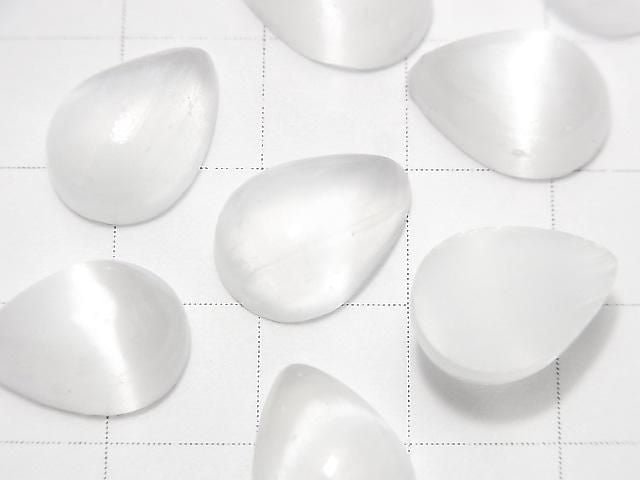
| Satin spar | Silky, fibrous, pearly white with a moving cat's-eye shimmer | Most wands, towers, charging plates, and round beads |
| Desert rose | Tan rosettes of flat blades with sand inside and out | Natural specimens for altars and decor |
| Gypsum flower | Delicate, curling fibrous clusters from caves | Collector specimens (rarely sold as decor) |
Colored selenite also exists: orange or peach selenite is tinted by iron oxide, and some pieces are gray from clay or sand. Bright green, blue, pink, or purple selenite is almost always dyed satin spar — more on that in the Colors section below.
Desert Rose Selenite
Desert rose is a rosette-shaped form of selenite (or the closely related mineral barite) that grows in arid, sandy environments. As gypsum crystallizes in the desert, it incorporates grains of sand, forming flat blades that fan out like flower petals — hence the name. In crystal practice, desert rose is associated with clearing mental clutter, dissolving self-imposed limits, and quiet focus, making it a popular meditation and intention stone. Each rose is unique, and the sandy tones set it apart from clear white selenite.
Tip: gypsum desert roses can be scratched with a fingernail; barite desert roses are noticeably heavier and harder. Both are sold under the same name in the United States, so check which one you are buying.
Satin Spar vs. Selenite: What's the Difference (and Does It Matter)?
This trips up a lot of buyers. Technically, selenite, satin spar, desert rose, and gypsum flower are all varieties of the same mineral, gypsum. In everyday trade, though, "selenite" usually means the transparent, glassy crystals, while satin spar is the fibrous, silky, pearly material with a moving cat's-eye shimmer. Almost all the wands, towers, and charging plates sold as "selenite" are actually satin spar.
How to tell them apart in seconds:
- Look through it. True selenite is glassy and see-through, like frosted or clear window glass. Satin spar is opaque-to-translucent white with fine parallel fibers.
- Tilt it under a light. Satin spar shows a bright band of light that moves as you turn it (chatoyancy). Selenite does not.
- Check the edge. Selenite splits into flat sheets; satin spar breaks into fibrous splinters.
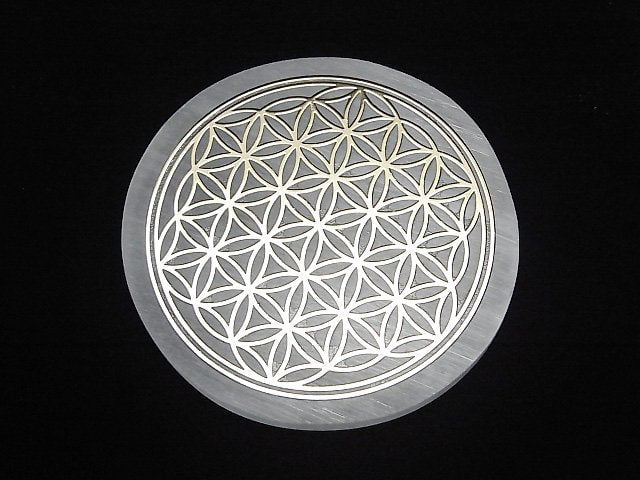
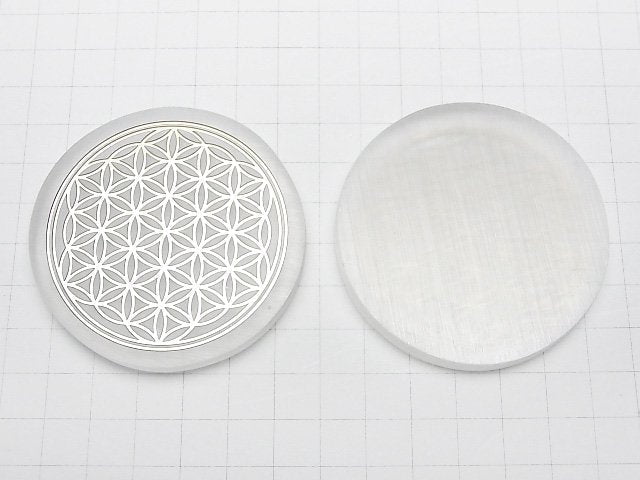
Does it matter? For metaphysical use and care, no — they share the same softness, water sensitivity, and cleansing reputation. For buying, yes: you should know exactly what you are paying for, and honest sellers label satin spar as satin spar. At KenKenGems, our round "selenite" beads are cut from satin spar gypsum, which is the only form durable enough to be drilled and strung.
Selenite Colors: White, Orange, Green, Blue — Natural or Dyed?
Natural selenite is colorless to white. The only colors that occur regularly in nature are orange, peach, and brownish tones from iron oxide, and gray from clay or sand inclusions. Naturally green or blue selenite exists but is rare and rarely reaches the bead and decor market.
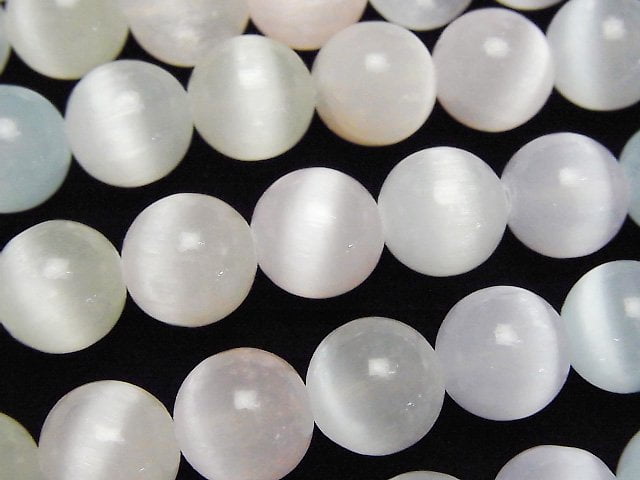
Most green, blue, pink, purple, yellow, and "rainbow" selenite sold today is dyed satin spar. Because gypsum is porous, it takes dye evenly, and the result can be attractive — but it should be sold as color-treated. In the United States, the FTC Jewelry Guides call for disclosing treatments that are not permanent or that require special care, and dyed gypsum is one of them: strong sunlight can fade the color, and water can lift it.
Our position at KenKenGems: our white selenite beads are untreated satin spar. Our colored selenite beads are color-enhanced (dyed) and are labeled that way on each product page so you can describe them accurately to your own customers.

How to Use Selenite Crystals (and What Selenite Is Good For)
What is selenite good for in daily life? Its uses fall into four main categories: cleansing (crystals and spaces), meditation and intention work, calm home placement, and — for makers — lightweight jewelry. Because selenite is so soft and water-sensitive, the best ways to use it are dry, gentle, and hands-on.
How to Cleanse Other Crystals with Selenite
This is selenite's signature use. To cleanse and recharge other stones:
1. Place a selenite (satin spar) charging plate, slab, or bowl on a flat surface.
2. Set your other crystals directly on top of it.
3. Leave them for several hours — many practitioners suggest overnight, or around 24 hours for a full "reset."
You can also lay a selenite wand across a cluster of stones, or store smaller crystals beside a selenite tower. Because selenite is considered self-clearing by many practitioners, it's a low-maintenance way to keep a whole collection feeling fresh — no water or salt required.
Maker's tip: a strand of selenite beads laid in a bowl works the same way as a plate for cleansing finished jewelry pieces overnight.
Meditation, Wands, and Home Placement
For meditation, hold a selenite wand or place a piece at the crown of the head to encourage a clear, calm mind. Some practitioners slowly move a wand around the body to "comb" the aura. At home, selenite is placed in room corners or on windowsills to keep a space feeling calm and protected, or on a nightstand for restful sleep. A selenite tower or lamp also doubles as soft, glowing decor — just keep it somewhere dry.
Can You Wear Selenite? Selenite in Jewelry
Yes, you can wear selenite — with realistic expectations. At Mohs 2 it is one of the softest materials used in jewelry, so it belongs in pieces that do not take knocks: earrings, pendants, mala-style necklaces, and occasional-wear bracelets. It is not suited to rings or everyday stacking bracelets, where it will scratch and chip within weeks.
A few rules keep selenite jewelry looking good:
- Put it on last and take it off first — after lotion, perfume, and hairspray, before washing hands or showering.
- Store it in its own pouch. Harder beads (quartz, agate, hematite) will scratch it.
- Keep it out of the gym, the pool, and the rain.
- If a bead dulls, buff it gently with a dry microfiber cloth; never use water or ultrasonic cleaners.
Selenite is also extremely lightweight — roughly 2.3 g/cm³ versus about 2.65 for quartz — so even a long strand of 10 mm beads is comfortable to wear.
How to Care for Selenite: Water, Sunlight, Cleaning, and Storage
Selenite needs more care than most crystals for one big reason: water. Because it's a hydrated calcium sulfate, selenite can slowly dissolve, cloud, or flake if it gets wet — so never soak it, rinse it, or use it in gem water, and keep it out of humid bathrooms. It's also very soft (Mohs 2), so it scratches and chips easily; store it separately and handle it gently.
To clean it physically, just dust it or wipe it with a dry, soft cloth (a barely damp cloth is acceptable for a quick wipe of raw pieces, but dry it immediately and never use this on dyed beads). To cleanse it energetically, use dry methods: smoke (sage or palo santo), sound, moonlight, or simply let it rest — many practitioners consider selenite self-cleansing and say it rarely needs it.
Can selenite be in the sun? Short periods are fine, but long exposure can dry and craze raw crystals and will fade dyed colors, so avoid leaving it on a sunny windowsill for weeks. Can selenite be cleansed with salt? Skip it — salt draws moisture and can pit the surface. Store selenite in a dry drawer or pouch, away from harder stones, and away from steam.

Where Is Selenite Found? Sources in the U.S., Canada, and Worldwide
Selenite forms in evaporite deposits — places where mineral-rich water has dried up, such as deserts, salt flats, and caves. Major sources include Mexico, Morocco (the leading source of satin spar wands and beads), the United States, Canada, Madagascar, Australia, Poland, and Brazil.
In North America, selenite is close to home. The Great Salt Plains of Oklahoma produce the famous "hourglass" selenite crystals with sand trapped inside, and the Salt Plains National Wildlife Refuge lets visitors dig them by hand in season. Utah, New York, and the gypsum belts of Nova Scotia, Ontario, and Manitoba also produce selenite crystals.
The most spectacular example anywhere is Mexico's Cueva de los Cristales (Cave of Crystals) in the Naica Mine, Chihuahua, where selenite crystals grew to about 36 feet (11 m) long and 55 tons — among the largest natural crystals ever found.
Selenite Value: How Much Does Selenite Cost in the U.S. and Canada?
Selenite is one of the most affordable crystals, largely because gypsum is abundant on every continent. Typical retail ranges in the United States (expect roughly 30–40% higher figures in CAD):
- Small tumbled pieces and chips: about $1–$8
- Wands and towers: roughly $5–$30 depending on size
- Charging plates and slabs: about $8–$40
- Large towers, lamps, and fine desert roses: from tens of dollars upward
- Round bead strands (6–10 mm, ~15 inches): typically a few dollars to the low teens per strand at wholesale, more at craft retail
- Exceptional clear specimens and large carvings: higher, based on size and clarity
Because selenite is inexpensive, most "value" questions are really quality questions: look for good translucency or an even silky shimmer, minimal chips, uniform drilling on beads, and honest labeling of satin spar vs. clear selenite and natural vs. dyed color. Its softness means it's valued as a display, metaphysical, and light-jewelry stone rather than as a durable everyday gem.

How to Tell If Selenite Is Real
Real selenite is easy to verify because almost nothing else is this soft and this light. Fakes are uncommon, but glass, resin, and fibrous calcite are occasionally sold as selenite. Run these checks:
1. Fingernail test. Genuine selenite and satin spar scratch with a fingernail (Mohs 2). Glass, resin, and calcite will not.
2. Temperature. Selenite feels slightly warm and chalky; glass feels cold and slick.
3. Weight. Selenite is noticeably lighter than glass or quartz of the same size.
4. Structure. Look for either flat, sheet-like cleavage (selenite) or fine parallel fibers with a moving shimmer (satin spar). Perfectly uniform material with no fibers or cleavage is suspect.
5. Color. Bright green, blue, pink, or purple is dyed — not fake, but it should be disclosed as color-treated.
If a bead strand passes the fingernail test and shows fibers, it is genuine satin spar gypsum, regardless of color.
Buying Selenite Beads for Jewelry Making: Sizes, Strands, and Tips
For jewelry designers, selenite comes mainly as round satin-spar beads on temporary strands. Here is what to expect and how to work with them.
| Bead size | Beads per ~15-inch (38 cm) strand | Best for |
| 6 mm | about 62 | Delicate necklaces, earrings, mixed-stone bracelets |
| 8 mm | about 47 | Standard bracelets, layered necklaces |
| 10 mm | about 37 | Statement necklaces, mala-style pieces, cleansing bowls |
Choosing a strand:
- Natural white satin spar gives the classic moonlit glow; check that the shimmer runs evenly across the beads.
- Color-enhanced (dyed) strands offer green, blue, pink, purple, yellow, and multicolor options for seasonal designs — plan for indoor, occasional wear and disclose the treatment to your customers.
- Look at the drill holes: clean, centered holes with no chipping around the rim are the sign of careful cutting.
Working with selenite beads:
- String on soft materials — silk, nylon cord, or coated beading wire with a smooth finish. Avoid bare steel wire, which cuts into the hole.
- Use bead caps or small spacer beads between selenite and harder stones so they do not grind against each other.
- Do not over-tighten crimps; a little slack prevents pressure cracks.
- Skip any wet finishing step (tumbling, ultrasonic cleaning, steam).
KenKenGems stocks 6 mm, 8 mm, and 10 mm selenite (gypsum) rounds in natural white and color-enhanced shades, sold by the strand and half strand, with USD pricing and shipping to the United States and Canada.

Frequently Asked Questions About Selenite Crystals
What is selenite good for?
Selenite is best known for energetic cleansing — clearing stagnant energy from spaces and recharging other crystals. It's also used for mental clarity, calm, meditation, creating a peaceful home, and, for makers, lightweight jewelry.
Can selenite go in water?
No — keep selenite dry. It's a form of gypsum that can dissolve, cloud, or flake when wet, so avoid soaking, rinsing, and gem water. Clean it with a dry cloth and cleanse it energetically with smoke, sound, or moonlight instead.
Is selenite the same as satin spar?
They're both varieties of gypsum. In the trade, "selenite" usually means the clear, glassy crystal, while "satin spar" is the silky, fibrous material most wands, plates, and beads are made from. They share the same properties and care needs.
Is selenite a rock or a mineral?
A mineral. Selenite is the crystalline form of gypsum (CaSO₄·2H₂O). "Selenite rock" is a common search term, but a rock is a mix of minerals, while selenite is one mineral.
What chakra is selenite associated with?
Mainly the crown chakra, the center of spiritual awareness, and sometimes the third eye. It's also used to clear and align all the chakras.
Does selenite need to be cleansed?
Many practitioners consider selenite self-cleansing, so it rarely needs it. If you like, cleanse it gently with smoke, sound, or moonlight — never water or salt.
Can selenite be in the sun?
Briefly, yes. Avoid weeks of direct sun: it can dry and craze raw crystals and will fade dyed colors.
Can you wear selenite jewelry every day?
It's best for occasional wear. At Mohs 2 it scratches easily, so choose earrings, pendants, or necklaces over rings and stacking bracelets, and take it off before water.
How can you tell if selenite is real?
Real selenite is very soft (a fingernail scratches it), lightweight, feels slightly warm, and is either glassy with flat cleavage or silky with visible fibers. Bright green, blue, pink, or purple pieces are dyed satin spar, which is genuine gypsum but should be labeled as color-treated.
Is selenite the same as moonstone?
No. Both are named for the moon, but moonstone is a feldspar (Mohs 6–6.5) with a blue-white sheen and is much more durable. Selenite is gypsum (Mohs 2).
Shop Selenite Beads for Jewelry Making at KenKenGems
Ready to add selenite's calm, moonlit glow to your designs? KenKenGems is a Japan-based gemstone bead supplier trusted by jewelry makers across the United States and Canada. Because selenite is soft and water-sensitive, we select strands for even shimmer, clean drill holes, and minimal chipping. In our selenite collection you'll find:
- Natural white selenite (satin spar) rounds in 6 mm, 8 mm, and 10 mm
- Color-enhanced selenite rounds in green, blue, pink, purple, yellow, and multicolor
- Full strands (about 15 inches) and half strands for small-batch designs
Prices are listed in USD, we ship to the United States and Canada, and every strand is graded under our Quality Rating system.
Browse Our Selenite Bead Collection

Reviewed by the KenKenGems Gemstone Editorial Team
Sources for the mineral facts in this article: Mindat.org (gypsum/selenite locality and property data), Wikipedia — Selenite (gypsum), and the Gemological Institute of America (GIA) gem encyclopedia. Traditional meanings are drawn from widely cited crystal reference works and are presented as folklore, not fact.

![Selenit (Gips) Rund 6mm [Pink] 1 Strang Perlen (ca. 15 Zoll/37 cm)](http://store.kenkengems.com/cdn/shop/files/182181771.jpg?v=1726578649&width=640)
![Selenit (Gips) Rund 6mm [Pink] 1 Strang Perlen (ca. 15 Zoll/37 cm)](http://store.kenkengems.com/cdn/shop/files/182181771_o1.jpg?v=1726578559&width=640)



![Selenit (Gips) Rund 6mm [Grün x Pink] 1Strang Perlen (ca. 15 Zoll/37 cm)](http://store.kenkengems.com/cdn/shop/files/182058027.jpg?v=1726579021&width=640)
![Selenit (Gips) Rund 6mm [Grün x Pink] 1Strang Perlen (ca. 15 Zoll/37 cm)](http://store.kenkengems.com/cdn/shop/files/182058027_o1.jpg?v=1726579015&width=640)
![Selenit (Gips) Rund 10mm [Hellblau] halb oder 1 Strang Perlen (ca. 15 Zoll/37 cm)](http://store.kenkengems.com/cdn/shop/files/182189886.jpg?v=1726579632&width=640)
![Selenit (Gips) Rund 10mm [Hellblau] halb oder 1 Strang Perlen (ca. 15 Zoll/37 cm)](http://store.kenkengems.com/cdn/shop/files/182189886_o1.jpg?v=1726579627&width=640)
![Selenit (Gips) Rund 10mm [Mehrfarbig] halb oder 1 Strang Perlen (ca. 15 Zoll/37 cm)](http://store.kenkengems.com/cdn/shop/files/178935839_o1.jpg?v=1716402063&width=640)
![Selenit (Gips) Rund 8mm [Hellblau] 1 Strang Perlen (ca. 15 Zoll/37 cm)](http://store.kenkengems.com/cdn/shop/files/182189742.jpg?v=1726586095&width=640)
![Selenit (Gips) Rund 8mm [Hellblau] 1 Strang Perlen (ca. 15 Zoll/37 cm)](http://store.kenkengems.com/cdn/shop/files/182189742_o1.jpg?v=1726586088&width=640)