
TOC
- 1. What Is Amazonite? Crystal Meaning and Definition at a Glance
- 1-1. Amazonite Quick Facts
- 2. Amazonite Meaning and Symbolism: The Stone of Truth and Courage
- 2-1. Amazonite Spiritual Meaning
- 2-2. Amazonite Crystal Meaning by Color: Blue, Green, and Multi-Colored Amazonite
- 3. Amazonite History and the Story Behind Its Name
- 4. Amazonite Physical Properties: Hardness, Color, and Geology
- 4-1. Amazonite Mineral Properties Table
- 4-2. What Causes Amazonite’s Blue-Green Color?
- 4-3. Amazonite vs. Turquoise vs. Aquamarine vs. Chrysocolla: How to Tell Them Apart
- 5. Where Is Amazonite Found? Sources in North America and Worldwide
- 5-1. Amazonite Varieties by Origin: Peruvian, Russian, African, and Colorado
- 6. Amazonite Healing Properties and Benefits
- 6-1. Emotional and Communication Benefits
- 6-2. Traditional Physical Associations
- 7. Amazonite Metaphysical Properties
- 7-1. Amazonite Chakra Connections
- 7-2. Zodiac Signs and Birthstone Connections
- 7-3. Best Crystals to Pair with Amazonite
- 8. How to Use Amazonite Crystal
- 8-1. Wearing Amazonite Jewelry
- 8-2. Meditation, Placement, and Everyday Rituals
- 8-3. Amazonite Crystal Forms: Raw, Tumbled, Palm Stones, Towers, and Beads
- 9. How to Clean, Cleanse, and Care for Amazonite
- 9-1. Is Amazonite Safe? Lead Content and Water Elixirs
- 10. How to Tell If Amazonite Is Real
- 11. Amazonite Value: How Much Is It Worth?
- 12. Amazonite Beads Buying Guide for Jewelry Makers
- 12-1. Grades, Cuts, and Sizes
- 12-2. Stringing and Design Tips
- 13. Frequently Asked Questions About Amazonite Crystal
- 13-1. What is amazonite crystal good for?
- 13-2. Is amazonite the same as turquoise?
- 13-3. Where is amazonite found?
- 13-4. Is amazonite safe to wear?
- 13-5. Can amazonite go in water?
- 13-6. Does amazonite fade in sunlight?
- 13-7. What chakra is amazonite associated with?
- 13-8. How can I tell if amazonite is real?
- 13-9. Is amazonite a birthstone?
- 13-10. Is amazonite expensive?
- 14. Shop Amazonite Beads, Cabochons, and Loose Stones at KenKenGems
- 14-1. Wide variety of our Amazonite collection

Amazonite Crystal Meaning, Properties, and Uses: The Complete Guide
Amazonite is a blue-green variety of microcline feldspar, and in crystal traditions it is the stone of truth and courage: a calming gem believed to help you communicate honestly, set boundaries, and stay steady under pressure. This guide covers the amazonite crystal meaning, its physical and healing properties, where it comes from, how to spot the real thing, what it is worth, and how to choose amazonite beads for jewelry making.

What Is Amazonite? Crystal Meaning and Definition at a Glance
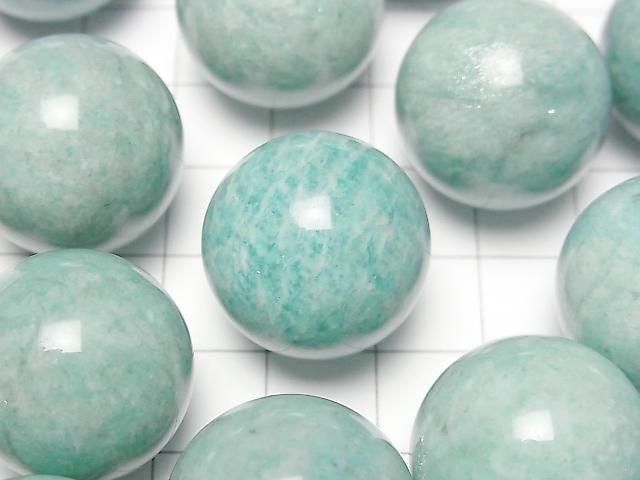
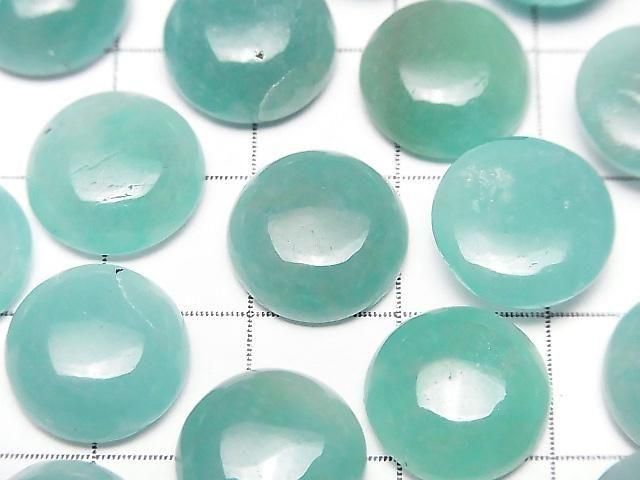
Amazonite is a blue-green to teal variety of microcline, a potassium feldspar (KAlSi₃O₈), and one of the most affordable gemstones in the bead and jewelry trade. Its calming color — somewhere between turquoise and a tropical sea — comes mainly from traces of lead and water locked in the crystal structure, not from copper as older books claimed.
In crystal traditions, the core amazonite meaning is truth and courage: a gently empowering stone believed to help you speak honestly, set boundaries, and stay calm under pressure. Despite its name, amazonite isn’t mined in the Amazon basin — we’ll untangle that story below.
Pronunciation: uh-MAZ-uh-nite. Also known as Amazon stone or amazonstone.
Amazonite Quick Facts
| Mineral | Microcline (potassium feldspar) |
| Chemical formula | KAlSi₃O₈ |
| Color | Blue-green to teal, often with white streaks |
| Hardness (Mohs) | 6–6.5 |
| Luster | Glassy to slightly pearly |
| Crystal system | Triclinic; perfect cleavage (can chip) |
| Chakras | Heart and throat |
| Zodiac Signs | Commonly linked to Virgo |
| Main Sources | USA (Colorado, Virginia), Peru, Russia, Brazil, Madagascar, Mozambique, Ethiopia |
| Keywords | Truth, courage, calm, communication |
| Typical price | US$2–15 for tumbled stones; US$5–40 per bead strand |
| Care Note | Soft-ish; avoid knocks, heat, and prolonged sun; never use in drinking-water elixirs |
Amazonite Meaning and Symbolism: The Stone of Truth and Courage
The core amazonite meaning is truth. Nicknamed the stone of truth and courage, amazonite is believed to help its owner communicate honestly, filter out other people’s noise, and find their own voice. Its cool blue-green color also ties it to calm, balance, and emotional healing.
In modern crystal practice, the amazonite stone meaning includes:
- Honest, clear communication and speaking your truth
- Courage to set boundaries and make decisions
- Calm — soothing anxiety, worry, and overthinking
- Emotional balance and harmony in relationships
- Hope and good fortune (it’s sometimes called the “gambler’s stone” or stone of luck)
- Peacemaking — it is often called the “peacemaker stone” because it is believed to cool arguments and help both sides hear each other
Because of these themes, amazonite is a popular choice for anyone facing hard conversations, creative blocks, or a season of change.
Amazonite Spiritual Meaning
Spiritually, amazonite is regarded as a filter stone: practitioners believe it screens out the mental chatter of other people’s opinions and expectations so you can hear your own inner voice. It is associated with integrity, self-trust, and the courage to live by your own values. Many also use it as a stone of hope — a reminder that calm and honesty can carry you through uncertainty.
Because it is linked to both the heart and the throat, the spiritual meaning of amazonite is often summed up as “say what you feel, and feel what you say” — aligning inner conviction with outward expression. Practitioners also set intentions with it: hold the stone, state your goal aloud in the present tense, and carry it as a reminder of that commitment.
Amazonite Crystal Meaning by Color: Blue, Green, and Multi-Colored Amazonite
Color shifts the emphasis but not the core meaning. Blue amazonite — the pale, sky-toned material typical of Peru and much of Colorado — is the favorite for throat-chakra work and calm communication. Green amazonite, the deeper Russian and some African material, leans toward the heart chakra: emotional healing, hope, and abundance. Multi-colored strands that mix teal with strong white albite lattice, and the paler, semi-translucent “ice” amazonite, are prized by collectors and are described as balancing both centers. In practice, choose the shade you are drawn to; there is no “wrong” amazonite.

Amazonite History and the Story Behind Its Name
Amazonite has been carved for at least 3,000 years. Bronze Age Egyptians mined it in the Eastern Desert and cut it into beads, scarabs, and inlays — amazonite jewelry was among the treasures recovered from Tutankhamun’s tomb — and the stone was also worked in ancient Mesopotamia and India. Curiously, no ancient or medieval author describes it by name: it was first recognized as a distinct mineral in the 18th century, when it was traded as “Amazon stone,” and the name amazonite was formalized by the German mineralogist August Breithaupt in 1847.
The name is a puzzle. Amazonite was named after the Amazon River, yet no notable deposits have ever been found there — the green stones that inspired the name were most likely a different mineral. A second theory ties the name to the legendary Amazon warriors, who were said to wear green stones into battle. Either way, the association with strength and courage stuck, which is why amazonite is still nicknamed the Stone of Courage today.
Amazonite Physical Properties: Hardness, Color, and Geology
Amazonite is the blue-green gem variety of microcline, a potassium feldspar (KAlSi₃O₈). It forms in granites and pegmatites, sometimes as large, well-shaped crystals, and often grows intergrown with white albite — which is what creates amazonite’s signature white streaks and grid-like patterns. At 6–6.5 on the Mohs scale it’s firm enough for everyday jewelry, though its feldspar cleavage means it can chip on a hard knock.
Amazonite Mineral Properties Table
| Chemical formula | KAlSi₃O₈ (potassium aluminum silicate) |
| Mineral group | Feldspar — variety of microcline |
| Crystal system | Triclinic |
| Mohs hardness | 6–6.5 |
| Cleavage | Perfect in two directions |
| Fracture | Uneven, splintery |
| Luster | Vitreous (glassy) to pearly on cleavage faces |
| Specific gravity | 2.56–2.58 |
| Refractive index | 1.522–1.530 |
| Streak | White |
| Transparency | Translucent to opaque |
| UV fluorescence | Usually none; occasionally weak olive-green |
| Sources | Mindat, gemdat, Schumann “Gemstones of the World” |
What Causes Amazonite’s Blue-Green Color?
For decades the color was assumed to come from copper. A 1985 spectroscopic study by Hoffmeister and Rossman (American Mineralogist) showed that the blue-green results from small amounts of lead combined with water in the feldspar structure, activated by natural radiation over geologic time. Later research has linked hue differences to trace rubidium, thallium, and divalent iron, which is why material from different deposits ranges from pale sky-blue to deep teal green. The practical takeaway: because the color is a radiation-induced effect, prolonged heat or strong sunlight can lighten it, so amazonite is best enjoyed as jewelry you wear rather than a stone left in a sunny window.
Amazonite vs. Turquoise vs. Aquamarine vs. Chrysocolla: How to Tell Them Apart
Amazonite is often confused with turquoise, aquamarine, and chrysocolla, but a few checks tell them apart:
- Amazonite: opaque blue-green with white feldspar streaks and a grid-like pattern; a glassy-to-pearly luster. Affordable
- Turquoise: opaque sky-blue to green, usually with brown or black veining (matrix), not white grid lines; often more expensive, and frequently stabilized or imitated
- Aquamarine: transparent to translucent pale blue; it’s a beryl, much harder (7.5–8), and typically faceted rather than cut as beads or cabochons
- Chrysocolla: patchy blue and green with a waxy to earthy luster and brown or black matrix; much softer unless it is silicified (“gem silica”), and never shows the white feldspar lattice
Quick rule of thumb: white streaks + opaque + budget-friendly = amazonite; see-through pale blue = aquamarine; brown veining = turquoise; patchy waxy blue-green = chrysocolla.

Where Is Amazonite Found? Sources in North America and Worldwide
Amazonite is not rare, but fine-colored material comes from a limited number of granite and pegmatite districts.
United States: Colorado’s Pikes Peak region — Crystal Peak, Lake George, and Devils Head in Teller, Park, El Paso, and Douglas Counties — produces the world’s most celebrated amazonite crystals, often perched on smoky quartz, and these specimens are collector favorites and a point of pride for US rockhounds. Amazonite is also found at the Morefield Mine in Amelia County, Virginia, a classic collecting locality, and in Delaware County, Pennsylvania.
Canada: small occurrences are reported from granite pegmatites in Ontario and Quebec, but Canadian material is rarely seen in the trade; most amazonite sold in Canada is imported.
Worldwide: Russia’s Ilmensky Mountains near Miass in the Urals were the main historic source, later joined by the Kola Peninsula. Today Peru supplies much of the pale blue-green bead material, while Brazil, Madagascar, Mozambique, Namibia, Ethiopia (the Konso region yields giant crystals), India, Mongolia, and Norway are also producers.
Amazonite Varieties by Origin: Peruvian, Russian, African, and Colorado
Origin names are used loosely in the bead trade, but they are a reliable shorthand for color and price:
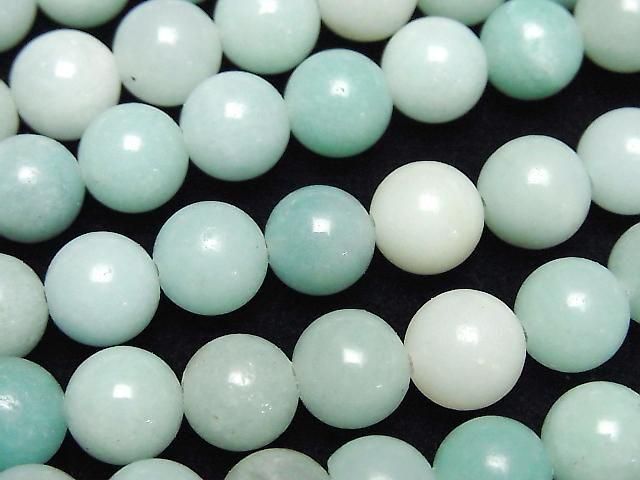
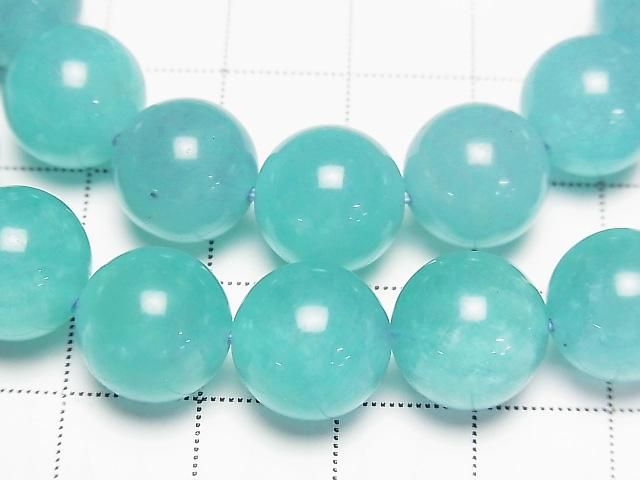
- Peruvian amazonite — soft, milky sky-blue to mint green; the most common bead material and the most budget-friendly
- Russian amazonite — vivid green to blue-green with a strong white lattice; the classic “amazonstone” look
- Mozambique and other African amazonite — saturated teal, often slightly translucent; the usual source of higher grades (AA++ to AAA)
- Colorado amazonite — deep blue-green crystals sold as specimens rather than cut into beads
You may also see additional trade names on strands (for example, “Amazonite Silica” at KenKenGems); the listing notes explain what each name refers to.
Amazonite Healing Properties and Benefits
In crystal healing tradition, amazonite is the great soother: the stone people reach for to calm anxiety, quiet an overactive mind, and communicate without heat. Its energy is described as cooling and balancing — like a deep breath in stone form.
Important note: the amazonite benefits described below reflect metaphysical traditions and personal practice, not medical science. Crystals are not a substitute for professional medical or mental-health care.
Emotional and Communication Benefits
Amazonite is above all a communication stone. Practitioners work with it to:
- Speak honestly and calmly during difficult conversations
- Soothe anxiety, worry, and the habit of overthinking
- Balance strong emotions instead of bottling them or overreacting
- Set boundaries and say no without guilt
- Ease tension between partners, family, and coworkers
A common practice: wear amazonite as a necklace or hold a tumbled stone at the throat before a hard talk or a presentation, using it as a cue to slow down and speak from a calm, honest place.
Traditional Physical Associations
In folk and energy-healing traditions, amazonite has been linked to soothing the nervous system, easing physical tension, and supporting restful sleep — associations that fit its calming reputation. Some also associate it with general stress relief that eases tension headaches. Again, these are traditional beliefs rather than proven medical effects: enjoy amazonite as part of a calming self-care ritual, not as treatment.

Amazonite Metaphysical Properties
Metaphysically, amazonite is considered a stone of harmony and hope. Practitioners believe it:
- Calms and clears communication in the home and workplace
- Absorbs stress and dispels negative energy from a space
- Balances masculine and feminine energies within a person
- Attracts luck and opportunity — hence its reputation as a gambler’s or manifestation stone
- Supports harmony in relationships and family life
- Is traditionally kept near computers and phones as a “filter” against electromagnetic clutter — a belief, not a measurable effect
Kept in a shared space, amazonite is a traditional choice for smoothing tension and encouraging open, honest conversation.
Amazonite Chakra Connections
Amazonite works primarily with the throat and heart chakras. At the throat chakra, it supports honest, calm self-expression — the source of its reputation as a communication stone. At the heart chakra, its green energy soothes emotional wounds and encourages compassion. Worn as a necklace, amazonite sits perfectly between the two, which is why pendants and beaded chokers are such a natural way to wear it.
Zodiac Signs and Birthstone Connections
Amazonite is not a traditional birthstone, but it is most often linked to Virgo — the sign associated with clear thinking, honesty, and communication, all amazonite themes. Some also connect it to Aries for its courage-boosting side, and a few modern lists add Aquarius and Pisces. As with most crystals, traditions consider amazonite beneficial for any sign, especially during times that call for honest words and steady nerves.
Best Crystals to Pair with Amazonite
In crystal practice, amazonite is most often paired with:
- Smoky quartz and black tourmaline — grounding stones amazonite naturally grows alongside in Colorado pegmatites
- Chrysocolla, aquamarine, turquoise, and blue lace agate — fellow throat-chakra stones for communication
- Rose quartz — for heart-centered, compassionate honesty
For jewelry design, amazonite’s matte teal sits naturally beside turquoise-family stones, white howlite or magnesite, freshwater pearls, and warm metals: copper, brass, and 14K gold-filled findings make the blue glow, while sterling silver keeps the palette cool. Avoid stringing it hole-to-hole against much harder faceted stones such as quartz or topaz, which can scratch feldspar over time.
How to Use Amazonite Crystal
What is amazonite good for in daily life? Its uses fall into three categories: wearing it, keeping it in your space, and using it in focused moments like meditation or hard conversations. Here’s how to get the most from the stone of truth.
Wearing Amazonite Jewelry
Wearing amazonite keeps its calming, truth-telling energy with you all day. Necklaces and chokers are ideal because they sit near the throat and heart chakras; earrings and bracelets work well too. At Mohs 6–6.5 amazonite handles daily wear, but its feldspar cleavage means you should remove rings and bracelets before workouts and chores, and store pieces where they won’t knock against harder gems.
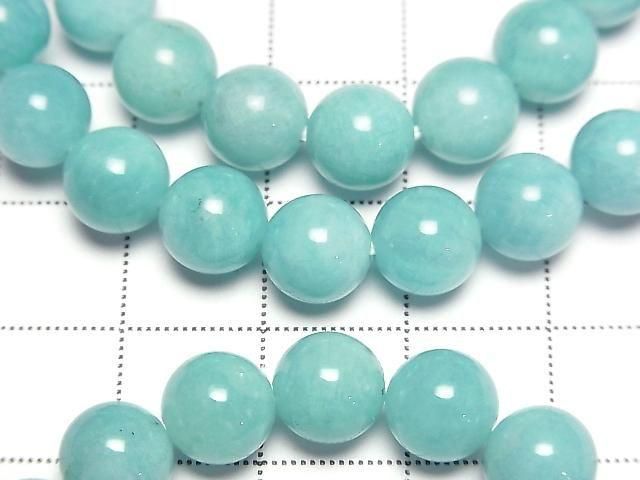
An amazonite crystal bracelet of 8 mm rounds is the most popular everyday format in the US and Canada; if you prefer a ring, choose a bezel setting that protects the edges of the cabochon.
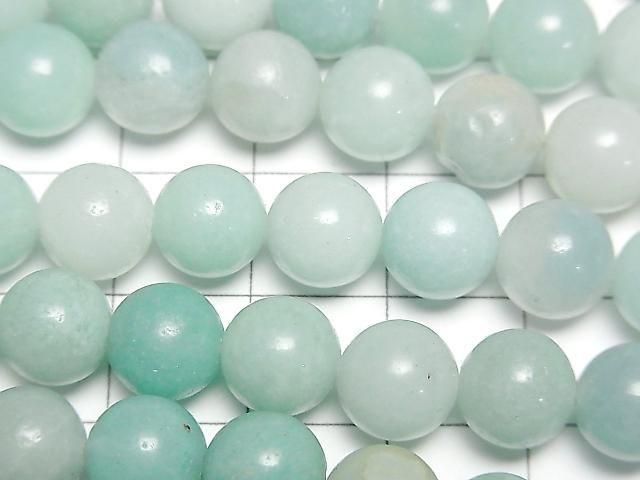
For jewelry makers, amazonite beads are a favorite for their soft color and matte-to-glassy finish — 6 mm to 10 mm rounds pair beautifully with silver, gold, and other blue-green stones. Choose strands with attractive white streaking for character, or solid color for a cleaner look. See the buying guide below for grades, cuts, and stringing tips.
Meditation, Placement, and Everyday Rituals
For calm and clarity, hold amazonite or place it at your throat during meditation and focus on slow, even breathing. Keep a tumbled stone on your desk to steady nerves during stressful work, or on a bedside table to quiet a busy mind before sleep. In feng shui, blue-green stones are placed in living and family areas to encourage peaceful communication. Some people also tuck a small amazonite into a bag or pocket as a discreet “courage stone” for interviews and difficult meetings.
Amazonite Crystal Forms: Raw, Tumbled, Palm Stones, Towers, and Beads
Amazonite is sold in every common crystal format, and the right one depends on how you plan to use it:
- Raw amazonite (rough chunks and natural crystals) — best for display, altars, and crystal grids; shows the white lattice and, in Colorado and Ethiopian pieces, attached smoky quartz
- Tumbled amazonite — the classic pocket stone; smooth, inexpensive (about US$2–5), and easy to carry
- Palm stones and hearts — flat, hand-sized pieces for meditation and worry-stone use (about US$8–20)
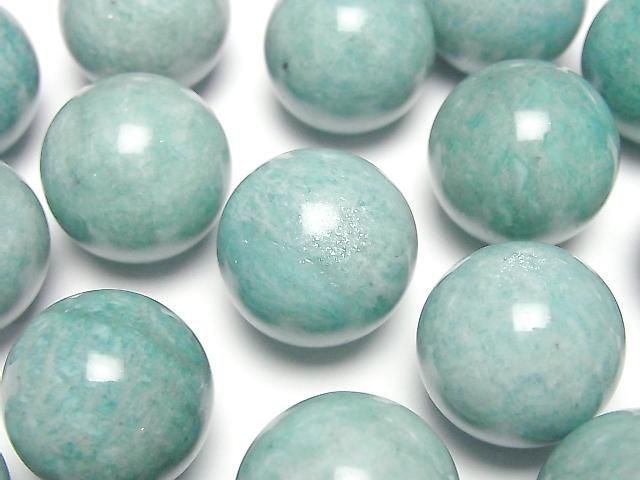
- Towers, spheres, and eggs — decor and grid centerpieces; priced by size and color saturation
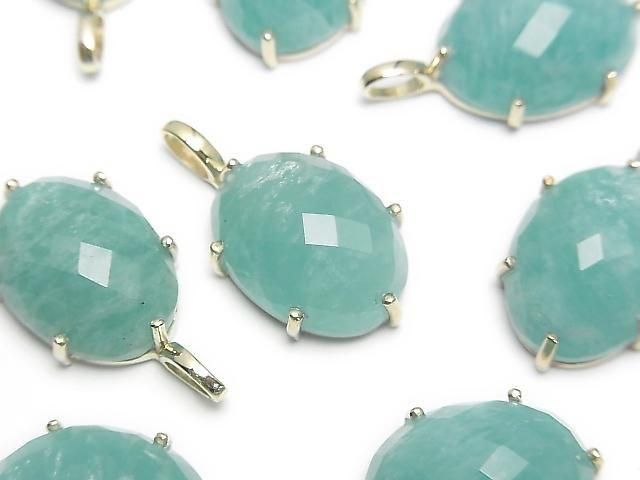
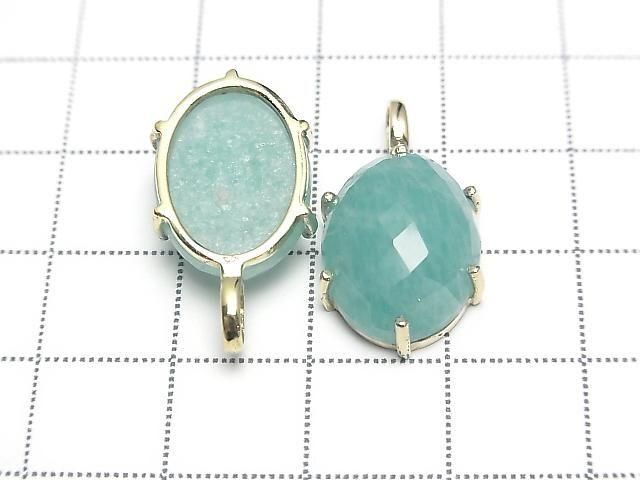
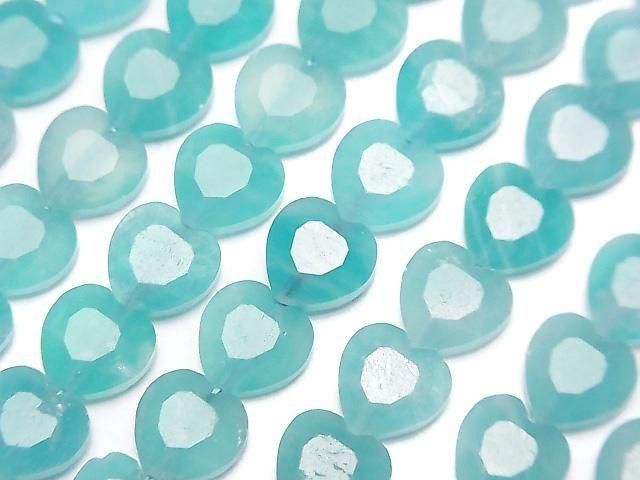
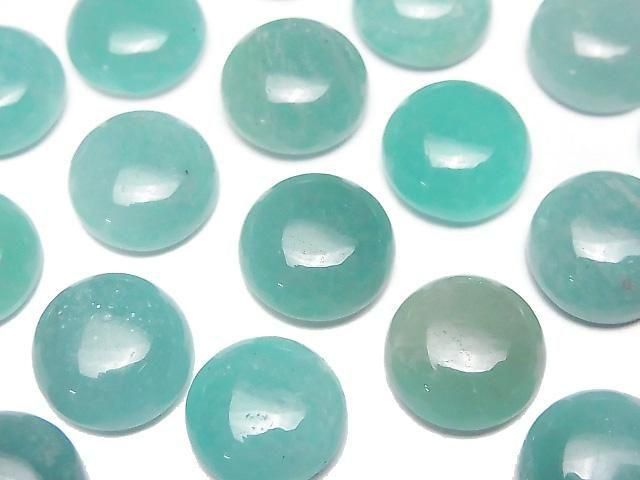
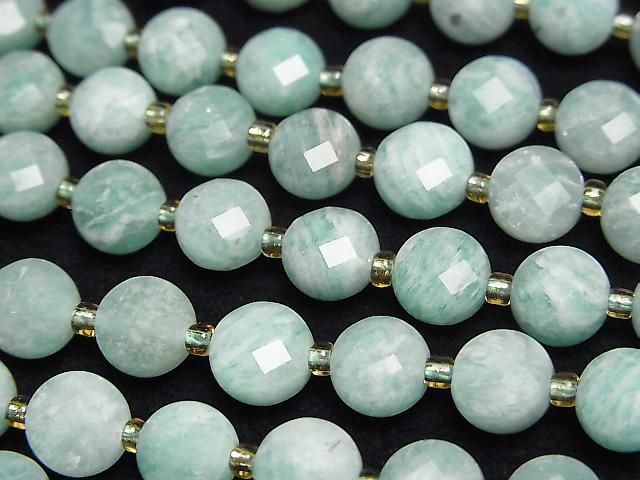
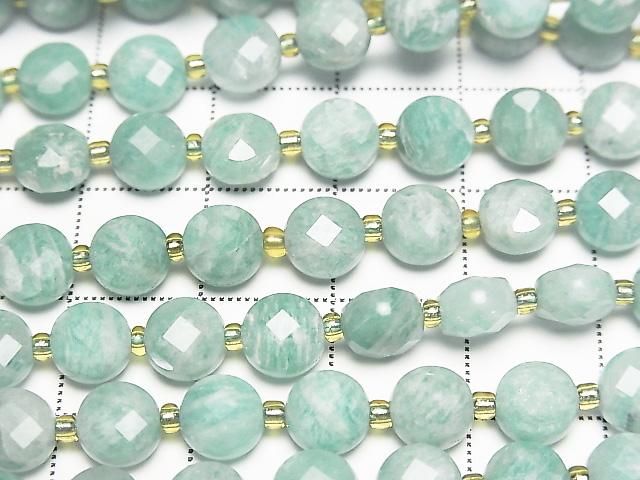
- Beads, cabochons, and bracelets — the most practical way to keep amazonite close all day, and the format jewelry makers work with most

How to Clean, Cleanse, and Care for Amazonite
Physical care: wipe amazonite with a soft, slightly damp cloth and dry it promptly. A quick rinse is fine, but avoid long soaks, salt water, ultrasonic and steam cleaners, and harsh chemicals. Because amazonite can fade, keep it out of prolonged direct sunlight and away from heat, and store it separately so harder stones like quartz don’t scratch it.
For energetic cleansing, use gentle methods: smoke from sage or palo santo, sound from a singing bowl, a selenite plate, or brief moonlight. Skip long water and salt cleanses, which aren’t kind to feldspar.
Is Amazonite Safe? Lead Content and Water Elixirs
Wearing and handling amazonite is safe: the trace lead that gives it its color is bound inside the feldspar structure and does not rub off on skin. Two precautions are worth knowing. In 2021 the German gemstone-testing institute EPI reported that lead leached from an amazonite sample into an acidic solution simulating saliva at roughly five times the EU toy-safety limit (EN 71-3). For that reason, do not place amazonite directly in drinking water or “crystal elixir” bottles, and keep small pieces away from young children who may mouth them. If you want a water-charged ritual, use the indirect method — set the stone beside the glass, not in it. Lapidaries should also cut and polish wet and wear a dust mask, as with any feldspar.
How to Tell If Amazonite Is Real
Real amazonite has a few tells that help you shop with confidence:
- Look for streaks: authentic amazonite usually shows white or pale albite streaks and a subtle grid-like pattern; perfectly uniform color can indicate dyed stone or imitation
- Check opacity and luster: amazonite is opaque with a glassy-to-pearly shine — a see-through blue stone is more likely aquamarine or glass
- Watch the color: natural amazonite is a muted blue-green; an intense, candy-bright turquoise color may be dyed howlite or magnesite sold as amazonite
- Feel the temperature: like most stones, real amazonite feels cool and warms slowly; plastic warms fast and feels light
- Check the price: natural amazonite is inexpensive, so a “bargain” is rarely a red flag on its own — but a strand priced like plastic usually is
- Buy from suppliers who identify the material and disclose any dyeing or treatment
Amazonite is rarely synthesized; what you will meet instead are dyed howlite, glass, resin, and reconstituted composites. KenKenGems lists composite and glass look-alikes separately under Glass & Composite, so natural amazonite and imitations are never mixed in one collection.

Amazonite Value: How Much Is It Worth?
Amazonite is one of the most affordable gemstones — quality material stays budget-friendly. Typical US retail ranges:
- Tumbled stones and palm stones: about $2–$15
- Bead strands (15–16 in): roughly $5–$40 depending on origin, grade, and cut
- Cabochons: a few dollars to about $40
- Raw/rough pieces and clusters: from a few dollars; Colorado specimens with smoky quartz can reach much more
- Fine crystallized specimens (especially Pikes Peak amazonite-smoky quartz): collector prices from tens into hundreds of dollars
Canadian shoppers can expect similar figures in CAD adjusted for the exchange rate. Value is driven by color (vivid, even blue-green is best), attractive streaking, translucency, and — for specimens — crystal form and locality. Deep-colored Russian and well-formed Colorado material command the highest prices.
Amazonite Beads Buying Guide for Jewelry Makers
If you are buying amazonite for jewelry making rather than for a crystal collection, three things determine whether a strand is worth the money: grade, cut, and how the beads are drilled and strung. Here is how a wholesale supplier evaluates amazonite.
Grades, Cuts, and Sizes
Grade: at KenKenGems, AA means good color with some white albite and natural texture; AA++ means even color and minimal inclusions; AAA- is the top tier for color saturation and translucency. Our Quality Rating page explains the scale in detail.
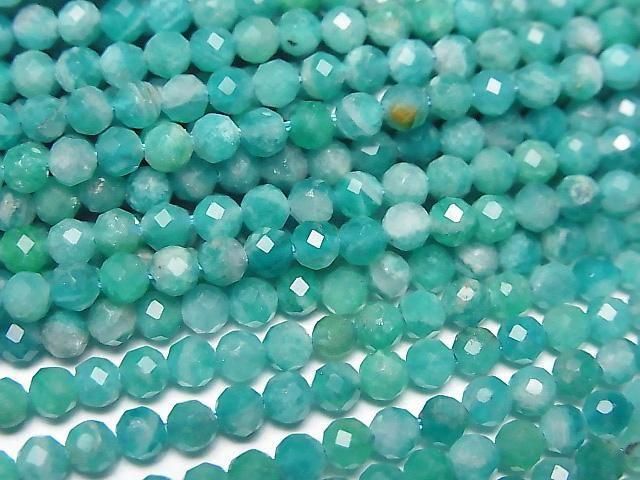
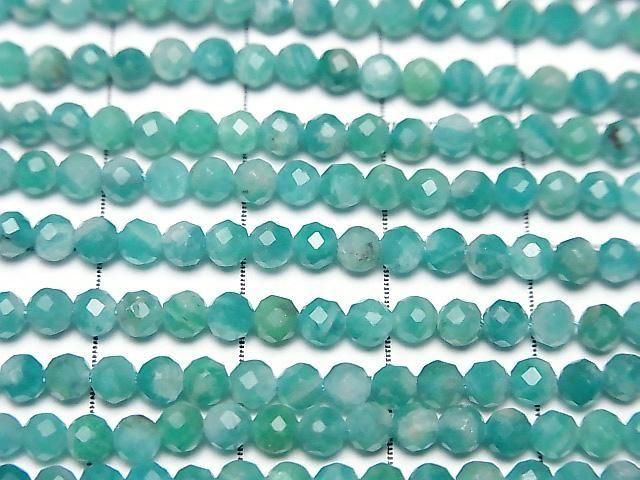
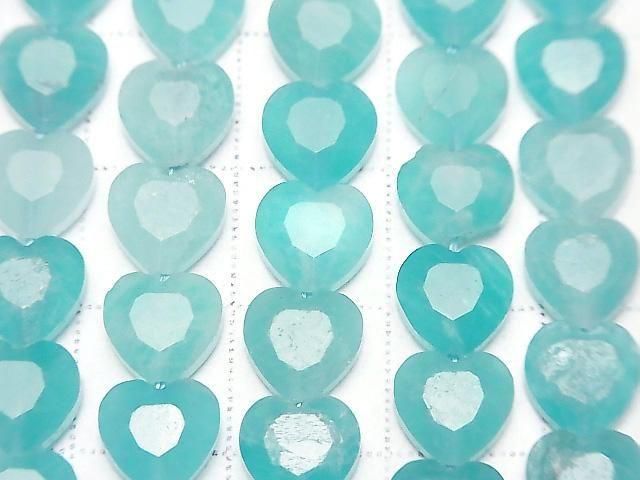
Cuts: smooth rounds (4–10 mm) for classic strands; faceted rounds (6–8 mm) to add sparkle to an otherwise matte stone; faceted button rondelles (4×2 mm) and heishi for delicate layering necklaces; 2 mm cubes for seed-bead-style work; chips and small nuggets for budget bracelets; pear drops, coins, and hearts for earrings and pendants.
Sizes and bead counts: strands run about 15 inches (36–38 cm). A 15-inch strand holds roughly 95 beads at 4 mm, 62 at 6 mm, 47 at 8 mm, and 37 at 10 mm; a standard 7.5-inch stretch bracelet needs about 24 beads at 8 mm.
Prices: expect roughly US$5–8 per strand for chips, heishi, and AA rounds, US$9–15 for AA++ and AAA- faceted cuts, and US$25–40 for finished 8–10 mm bracelets. All prices are in USD; the store can be switched to CAD for Canadian customers.
Stringing and Design Tips
- Because feldspar cleaves, do not over-tighten wire: use 49-strand nylon-coated stainless wire (0.018–0.020 in) with crimps for necklaces, and 0.7–0.8 mm stretch cord for bracelets
- Place a small metal or seed-bead spacer between 8–10 mm rounds so the beads do not grind against each other
- Check the drill hole size in each listing (commonly about 0.8–1.0 mm) before ordering headpins or cord
- Pair Peruvian blue with silver and pearls for a coastal look; pair deeper Mozambique or Russian green with brass, copper, or 14K gold-filled for a bohemian palette
- Tell your customers to remove amazonite jewelry before swimming, showering, and workouts — it protects both the stone and the finish on plated findings

Frequently Asked Questions About Amazonite Crystal
What is amazonite crystal good for?
Amazonite is used for honest communication, calm, and courage. People wear it for difficult conversations, keep it on a desk to soothe stress, and meditate with it to quiet an overactive mind. It’s nicknamed the stone of truth and the Stone of Courage.
Is amazonite the same as turquoise?
No. Amazonite is a feldspar with white streaks and a grid-like pattern, and it’s usually more affordable. Turquoise is a different mineral, typically sky-blue with brown or black veining. They look similar but are easy to tell apart once you know the signs.
Where is amazonite found?
The most famous crystals come from the Pikes Peak region of Colorado, USA. Historic material came from the Ilmensky Mountains in Russia’s Urals, and today most bead-grade amazonite is mined in Peru, Mozambique, Madagascar, Brazil, and India.
Is amazonite safe to wear?
Yes. Wearing and handling amazonite is safe; the trace lead that colors it stays locked in the crystal. The only real precautions are not to place it in drinking water or elixir bottles and to keep small pieces away from young children.
Can amazonite go in water?
A quick rinse is fine, but don’t soak it — and never drink water it has sat in. Amazonite is a feldspar that dislikes long water and salt exposure, and prolonged wetness can dull its polish over time. Clean it with a soft, damp cloth instead.
Does amazonite fade in sunlight?
It can. Amazonite’s color may lighten with prolonged heat and strong sun, so wear it and store it out of sunny windows to keep the color vivid.
What chakra is amazonite associated with?
Mainly the throat chakra (honest communication) and the heart chakra (emotional balance) — which is why it’s such a natural stone to wear as a necklace.
How can I tell if amazonite is real?
Look for white albite streaking, an opaque glassy-to-pearly surface, and a muted blue-green color. Uniform, candy-bright color or a see-through look suggests dyed stone, glass, or a different gem.
Is amazonite a birthstone?
No, amazonite is not an official birthstone for any month. It is most often associated with Virgo, and some lists also connect it with Aries, Aquarius, and Pisces.
Is amazonite expensive?
No. Amazonite is one of the most affordable gemstones: tumbled stones cost a few dollars, bead strands run about US$5–40, and only fine Colorado crystal specimens reach collector prices.
Shop Amazonite Beads, Cabochons, and Loose Stones at KenKenGems
Ready to bring amazonite’s calm blue-green into your designs? KenKenGems is a Japan-based gemstone bead supplier trusted by jewelry makers worldwide, and every amazonite strand we list is hand-selected for color and clean cutting. You’ll find:
- Amazonite bead strands and half-strands — rounds, faceted cuts, and fancy shapes
- Cabochons and loose stones for rings, pendants, and one-of-a-kind pieces
- Large polished pieces and raw specimens that make striking display stones
Prices are listed in USD (switch the store currency to CAD for Canada), we ship to the United States and Canada, and worldwide shipping is free on orders over US$300.