
TOC
- 1. What Is Strawberry Quartz?
- 1-1. Strawberry Quartz vs. Strawberry Aventurine: Crystal or Quartzite?
- 1-2. Other Names for Strawberry Quartz (Strawberry Crystal, Scarlet Quartz, Cherry Quartz)
- 1-3. Where Strawberry Quartz Is Found
- 2. Strawberry Quartz Meaning: Love, Gratitude, and Emotional Balance
- 2-1. Strawberry Quartz Spiritual Meaning
- 2-2. History of the Name: From Scarlet Quartz to Strawberry Quartz
- 3. Strawberry Quartz Properties: Physical and Gemological Data
- 4. Strawberry Quartz Healing Properties
- 5. Strawberry Quartz Metaphysical Properties and Benefits
- 5-1. Strawberry Quartz and the Heart Chakra (and Root Chakra)
- 5-2. Strawberry Quartz Benefits
- 5-3. How to Use Strawberry Quartz: Bracelets, Meditation, and Zodiac Signs
- 6. Is Strawberry Quartz Real? Strawberry Quartz vs. Cherry Quartz Glass
- 6-1. 5 Ways to Tell Real Strawberry Quartz From Glass
- 6-2. Strawberry Quartz vs. Rose Quartz: What Is the Difference?
- 6-3. Look-Alikes Compared: Cherry Quartz, Strawberry Aventurine, Cherry Tanzurine, Fire Quartz
- 7. Strawberry Quartz Beads: A Buying Guide for Jewelry Makers
- 7-1. Grades, Shapes, Sizes, and What They Cost
- 7-2. How to Care for Strawberry Quartz Jewelry
- 8. Frequently Asked Questions About Strawberry Quartz
- 8-1. What is strawberry quartz?
- 8-2. What does strawberry quartz mean spiritually?
- 8-3. Is strawberry quartz the same as cherry quartz?
- 8-4. How can I tell if strawberry quartz is real?
- 8-5. Which chakra is strawberry quartz?
- 8-6. What is the difference between strawberry quartz and rose quartz?
- 8-7. Is strawberry quartz rare, and how much does it cost?
- 8-8. Can strawberry quartz go in water?
- 9. Shop Natural Strawberry Quartz Beads, Pendants, and Loose Stones at KenKenGems
- 9-1. Strawberry Quartz for Jewelry Making by Kenkengems

Strawberry Quartz: Meaning, Properties, and How to Tell Real From Fake
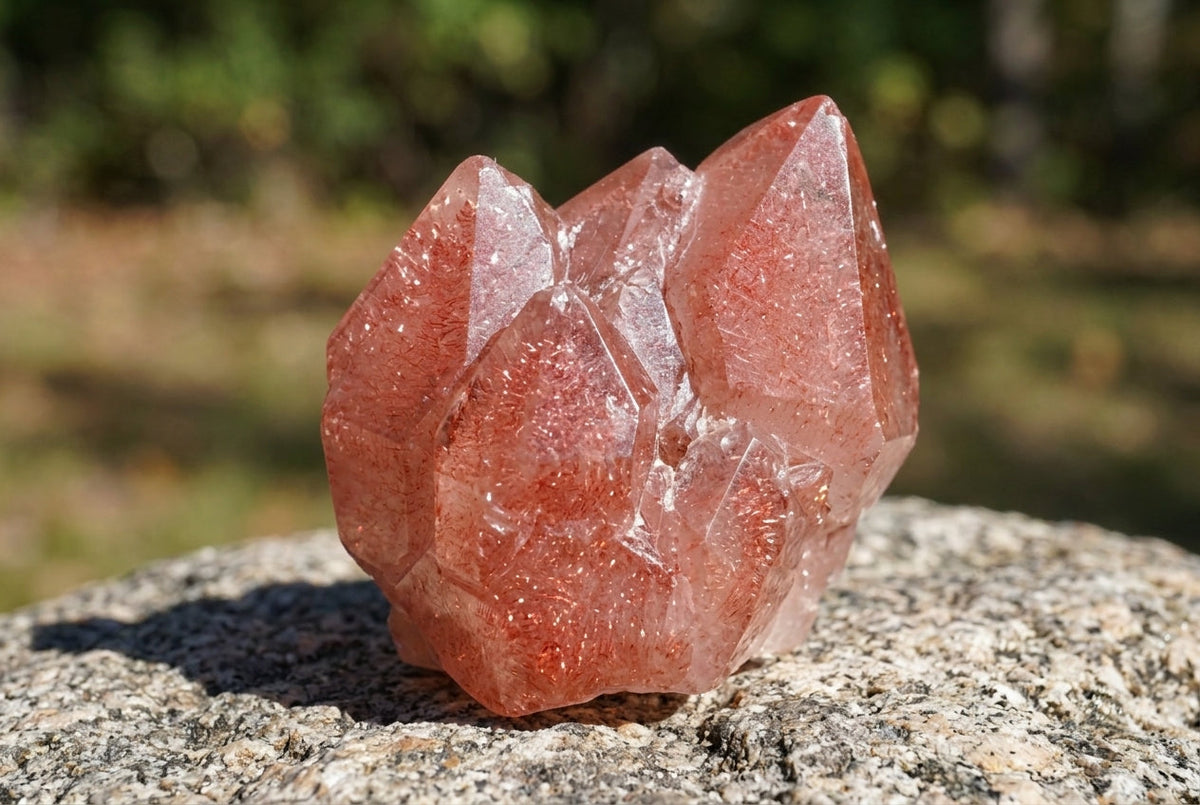
Strawberry quartz is natural quartz colored pink to red by tiny flakes of iron minerals—most often hematite, sometimes lepidocrocite or goethite—scattered through the crystal like the seeds of a strawberry. In crystal tradition it is known as a stone of love, gratitude, and emotional balance. In the bead trade it is also one of the most frequently imitated quartz varieties: much of the bright, evenly colored "cherry quartz" sold online is glass, not stone.
This guide covers what strawberry quartz is, its meaning and properties, how to tell real stone from imitation, and what to look for when buying strawberry quartz beads for jewelry making.

What Is Strawberry Quartz?
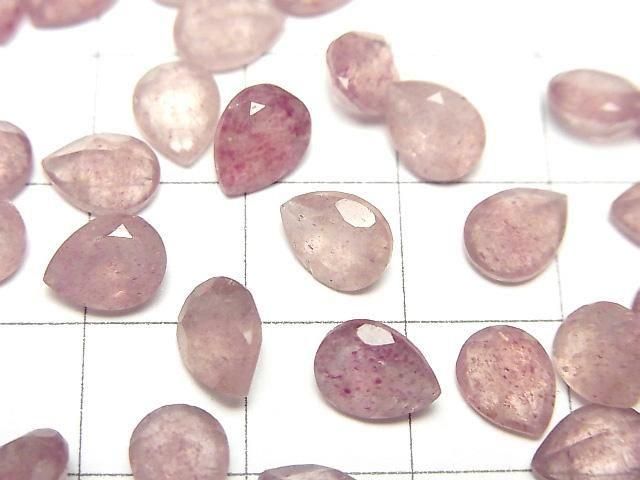
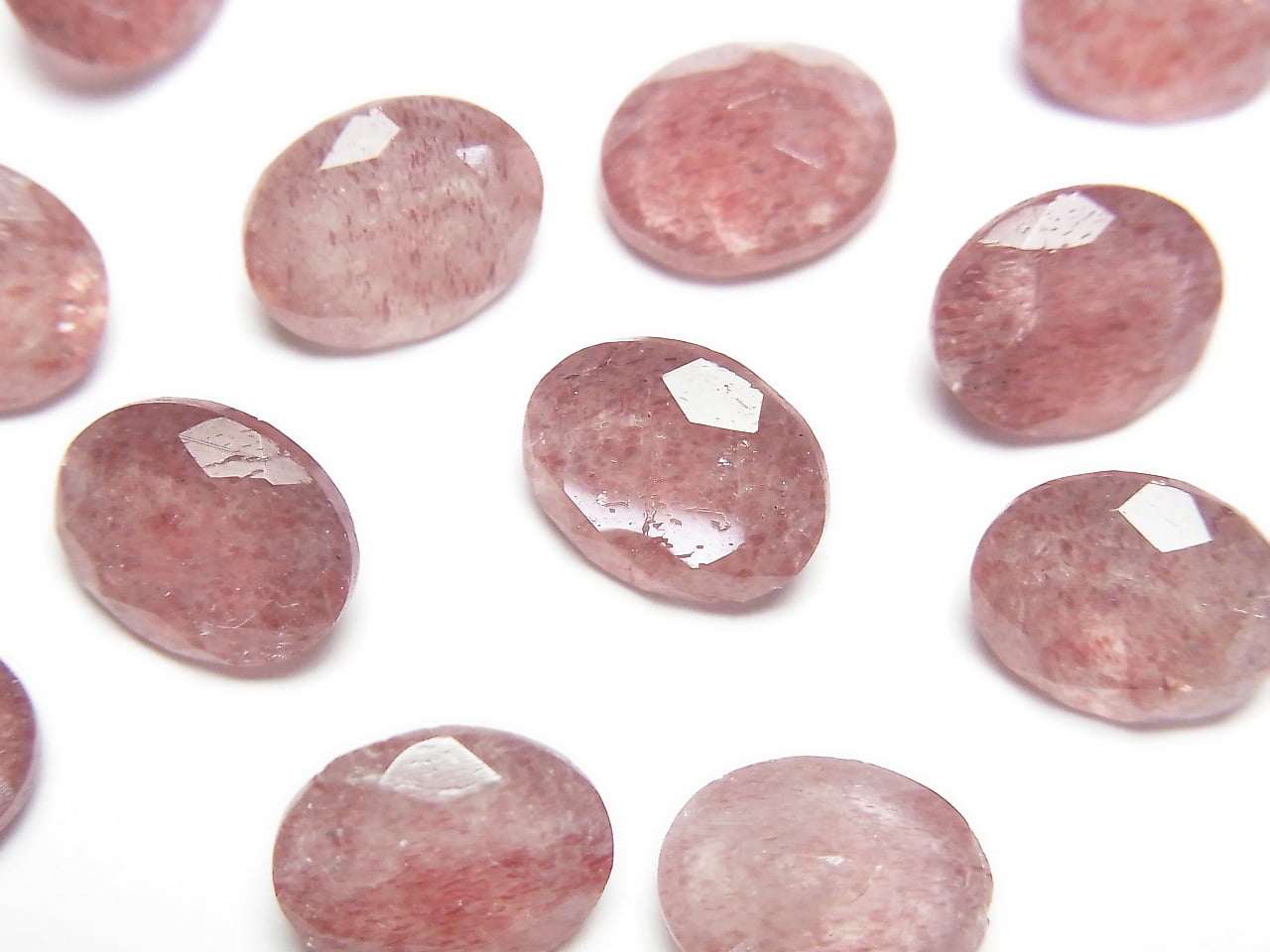
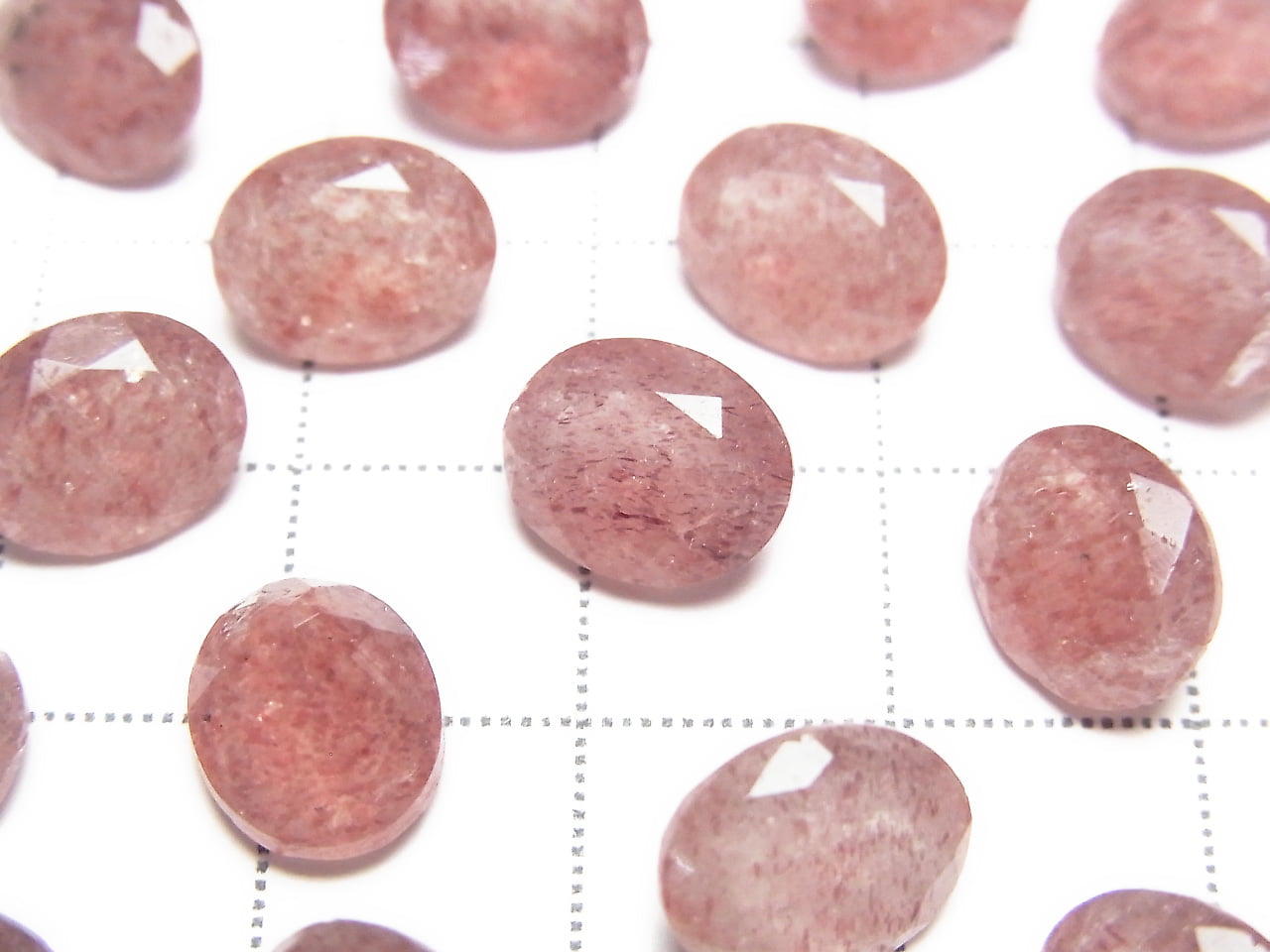
Strawberry quartz is a variety of quartz (silicon dioxide, SiO₂) whose color comes from eye-visible mineral inclusions rather than from the quartz itself. The base crystal is colorless; the pink-to-red tone comes from included platelets or needles of hematite and, in some material, lepidocrocite, goethite, or red-to-pink micas such as lepidolite and alurgite. The more inclusions, the deeper and cloudier the color, ranging from pale pink through raspberry to wine red.
Because "strawberry quartz" describes an appearance rather than a single mineral species, gemologists treat it as a trade name. Key facts at a glance:
- Mineral: quartz with iron-mineral inclusions (mostly hematite)
- Color: pink, raspberry, red; occasionally orange-red or purplish red
- Hardness: 7 on the Mohs scale
- Transparency: transparent to translucent (the best gem grades show the inclusions clearly)
- Treatment: normally none—cut and polished only
Natural strawberry quartz is uncommon. Genuine material shows uneven color, feathery or flake-like inclusions, and small natural fractures; no two pieces look alike.
Strawberry Quartz vs. Strawberry Aventurine: Crystal or Quartzite?
Two different natural materials are sold under the strawberry name.
Single-crystal strawberry quartz is transparent quartz with red inclusions. It is what most collectors and jewelry designers mean by the term, and it can be faceted or cut into clear cabochons and beads.
Strawberry aventurine (also sold as pink aventurine) is quartzite—a granular metamorphic rock made of many small quartz grains—colored by aligned flakes of pink lepidolite or red alurgite mica. Because the flakes line up during metamorphism, they reflect light together and produce the glittery sheen called aventurescence. Strawberry aventurine is opaque and is usually cut into tumbled stones, round beads, and cabochons.
Both are genuine, untreated natural stones; they simply are not the same material, and bead listings should name which one you are getting. A Fall 2021 note in GIA's Gems & Gemology documented pink aventurine quartz colored by alurgite inclusions.
Other Names for Strawberry Quartz (Strawberry Crystal, Scarlet Quartz, Cherry Quartz)
You will see the same material under several names—some scientific, some marketing terms:
- Strawberry crystal, strawberry stone, strawberry gemstone: casual names for the same stone
- Scarlet quartz: the original late-19th-century name for hematite-included quartz from Cumbria, England (recorded on Mindat)
- Lepidocrocite in quartz, hematite in quartz: mineralogical descriptions that name the inclusion
- Red quartz, ferruginous quartz: general terms for iron-colored quartz
- Fire quartz, hematoid quartz: quartz with red-to-orange hematite; usually more orange-brown than pink, though some sellers use the names loosely
- Cherry quartz: in today's bead market this almost always means man-made glass (see the real vs. fake section below)
"Strawberry quarts" is simply a common misspelling of the same stone.
Where Strawberry Quartz Is Found
Fine strawberry quartz comes from a small number of localities. Historically significant sources include the iron-mining district of Cumbria, England (the original "scarlet quartz"), and a deposit near Chihuahua, Mexico, that produced hematite-packed crystals in the 1970s before running out. Today most commercial material comes from Kazakhstan (the Shymkent region) and Russia, with smaller amounts reported from Brazil, Madagascar, South Africa, China, and the United States. Because supply is limited, consistent bead-grade material is scarce—one reason imitation glass is so common.
Strawberry Quartz Meaning: Love, Gratitude, and Emotional Balance
The meaning of strawberry quartz centers on love, gratitude, and gentle emotional healing. It is often described as a warmer, more energizing relative of rose quartz: rose quartz is associated with unconditional love and comfort, while strawberry quartz adds a spark of vitality that tradition attributes to its iron inclusions. People keep it as a reminder to appreciate what they have, to nurture relationships, and to approach new beginnings with an open heart.
These meanings come from crystal tradition and folklore, not from any measurable property of the stone.
Strawberry Quartz Spiritual Meaning
Spiritually, strawberry quartz is regarded as a stone of universal love and gratitude. In crystal tradition it is associated with opening the heart, appreciating life's blessings, and carrying a calm, loving energy into daily life. It is often chosen for self-love and for nurturing relationships. In practice this looks like carrying a tumbled stone, wearing a strawberry quartz bracelet, or holding a piece during a gratitude meditation. These are cultural and spiritual associations rather than proven effects.
History of the Name: From Scarlet Quartz to Strawberry Quartz
Unlike amethyst or rose quartz, strawberry quartz has little ancient history; it is largely a 20th-century gem. The earliest documented reference is "scarlet quartz," used in the late 1800s for fine-grained hematite-included quartz from the Cumbria iron mines in England. The strawberry name spread with the Mexican material of the 1970s and, later, with Kazakh and Russian production. Its popularity also produced imitation glass sold under the same name, which is why some mineral dealers treat the term with caution.

Strawberry Quartz Properties: Physical and Gemological Data
Strawberry quartz shares the physical properties of quartz, which is why it is durable enough for everyday jewelry. The included minerals affect color and transparency but not hardness or structure.
| Property | Value |
| Mineral | Quartz (silicon dioxide, SiO₂) with iron-mineral inclusions |
| Color cause | Hematite platelets; also lepidocrocite, goethite, or lepidolite/alurgite mica |
| Color | Pink, raspberry, red, wine; milky or opaque variants |
| Hardness (Mohs) | 7 |
| Crystal system | Trigonal (hexagonal family) |
| Refractive index | 1.544–1.553 |
| Specific gravity | 2.65 |
| Luster | Vitreous (glassy) |
| Transparency | Transparent to translucent; strawberry aventurine (quartzite) is opaque |
| Cleavage | None (conchoidal fracture) |
| Treatment | Usually none |
| Look-alike | "Cherry quartz" is normally man-made glass |
The values above are the standard constants for quartz as published by gemological references such as GIA and the International Gem Society.

Strawberry Quartz Healing Properties
In crystal-healing tradition, strawberry quartz is described as a soothing, heart-centered stone associated with love, calm, and gratitude. It is important to understand these as traditional beliefs and personal practices, not medical facts.
Important: strawberry quartz and other crystals are not medicine. They cannot diagnose, treat, cure, or prevent any illness—including anemia, blood pressure, thyroid, or immune conditions—and they are not a substitute for professional medical care. Crystals are not a substitute for prenatal or any other medical care, and should not be used to treat pregnancy, infants, or children.
Within those traditions, people simply keep strawberry quartz as a calming reminder—for meditation or stress relief. Any sense of ease that comes from a mindful routine is a personal experience rather than a property of the stone. If you use it alongside a wellness routine, treat it as a personal ritual object—like a journal or a favorite piece of jewelry—rather than a remedy.

Strawberry Quartz Metaphysical Properties and Benefits
Among its traditional metaphysical properties, strawberry quartz is known as a stone of love, harmony, and fresh starts. In folklore it is said to attract good fortune, strengthen relationships and self-love, foster a peaceful home, and help balance the emotions. These are cultural and spiritual beliefs rather than established facts.
Strawberry Quartz and the Heart Chakra (and Root Chakra)
Strawberry quartz is a classic heart-chakra (Anahata) stone. Its warm pink-red color is associated in tradition with love, compassion, and emotional balance, much like rose quartz but with an added spark of vitality from its hematite inclusions. Practitioners wear it near the heart or hold it during meditation focused on gratitude, self-love, and gentle emotional release.
Because of its hematite content, some practitioners also link strawberry quartz to the root chakra (Muladhara), associating it with grounding and stability. That dual association—heart for love, root for grounding—is part of its appeal in bracelet and pendant designs.
Strawberry Quartz Benefits
Within crystal lore, strawberry quartz is associated with:
- Love, gratitude, and self-acceptance
- Emotional calm and balance
- Harmony in relationships and the home
- A gentle, uplifting energy for fresh starts
- Grounding and steadiness, attributed to its hematite inclusions
These descriptions reflect spiritual traditions and personal experiences, not proven physical or psychological effects.
How to Use Strawberry Quartz: Bracelets, Meditation, and Zodiac Signs
Common ways to work with strawberry quartz in crystal practice:
- Strawberry quartz bracelet: 6–8 mm round beads (about 1/4 to 5/16 inch) are the standard bracelet size; many practitioners wear it on the left wrist, traditionally the "receiving" side
- Pendant or necklace: worn near the heart, matching its heart-chakra association
- Meditation: held in the hand or placed over the chest during gratitude or self-compassion practice
- Home: kept in a bedroom or shared living space for a calm atmosphere
Astrologically it is most often paired with Libra and Gemini; some traditions also link it to Scorpio and Taurus, and there is no single agreed birthstone assignment. These are traditional practices rather than proven effects.

Is Strawberry Quartz Real? Strawberry Quartz vs. Cherry Quartz Glass
Natural strawberry quartz is a real, durable gemstone—but a large share of what is sold as "strawberry quartz" or "cherry quartz" online, especially in perfectly matched bead strands, is manufactured glass. The imitation is made by melting a pink glass base and stirring in red particles to mimic inclusions; done well, it looks convincing in product photos. Selling it as imitation is legal when disclosed; selling it as natural stone is not. Here is how to tell the difference before you buy.
5 Ways to Tell Real Strawberry Quartz From Glass
| Check | Natural strawberry quartz | Glass imitation ("cherry quartz") |
| 1. Color | Uneven; varies within the stone and from bead to bead | Flat, uniform candy pink or glowing red; every bead identical |
| 2. Inclusions | Irregular flakes, needles, or feathery patches; small natural fractures | Rounded particles that look suspended; tiny round gas bubbles under magnification |
| 3. Hardness | Mohs 7—scratches window glass; a steel key will not scratch it | Mohs about 5.5—scratched far more easily |
| 4. Feel and weight | Cool to the touch and stays cool; specific gravity 2.65 | Warms quickly in the hand; often slightly lighter for its size |
| 5. Price and supply | Limited supply; strands priced well above common quartz | Very cheap and available in unlimited matched quantity |
A 10x jeweler's loupe is the single most useful tool: gas bubbles are a definitive sign of glass. Most important, buy from sellers who state plainly whether the material is natural quartz, quartzite, or glass.
Strawberry Quartz vs. Rose Quartz: What Is the Difference?
Both are pink members of the quartz family, but their color has different causes. Rose quartz is colored throughout by microscopic fibrous inclusions (a pink variety of dumortierite) and trace elements, giving it a soft, uniform, cloudy pink. Strawberry quartz is colorless quartz with visible red flakes of hematite or related minerals, so its color is speckled and can appear far redder.
Rose quartz is abundant and inexpensive; natural strawberry quartz is scarcer and priced higher. In crystal tradition, rose quartz is the stone of unconditional love, while strawberry quartz is associated with love plus gratitude and vitality. For jewelry the two combine well—many designers pair rose quartz rounds with strawberry quartz accents.
(Rose quartz color origin: Goreva, Ma & Rossman, American Mineralogist, 2001.)
Look-Alikes Compared: Cherry Quartz, Strawberry Aventurine, Cherry Tanzurine, Fire Quartz
| Name | What it actually is | Natural? | How to recognize it |
| Strawberry quartz | Quartz crystal with hematite, lepidocrocite, or goethite inclusions | Yes | Transparent to translucent; speckled, uneven red |
| Strawberry (pink) aventurine | Quartzite colored by lepidolite or alurgite mica | Yes | Opaque, glittery sheen; pale pink to brick red |
| Cherry tanzurine | Trade name for pink mica-colored quartz from Tanzania | Yes | Similar to pink aventurine; verify locality with the seller |
| Fire quartz / hematoid quartz | Quartz with red-orange hematite | Yes | More orange or brown than pink; often opaque red patches |
| Cherry quartz | Man-made glass with red particles | No | Uniform glowing pink, gas bubbles, very low price |
Note: "strawberry agate" is a separate marketing name for pink-banded agate and is unrelated to strawberry quartz.

Strawberry Quartz Beads: A Buying Guide for Jewelry Makers
For designers and small jewelry brands, the goal is natural material at a price that works for finished pieces. Here is what to check when sourcing strawberry quartz beads, cabochons, and pendants.
Grades, Shapes, Sizes, and What They Cost
Grade. Bead wholesalers grade strawberry quartz by transparency, color saturation, and how attractively the inclusions are distributed. At KenKenGems, AAA denotes the clearest material with well-defined red inclusions and minimal surface-reaching pits; AA is slightly cloudier or less evenly colored; A is translucent to milky with heavier inclusions (see our quality rating guide: /pages/about-quality-rank). Cloudier grades are not "worse" for every design—opaque raspberry material makes striking cabochons.
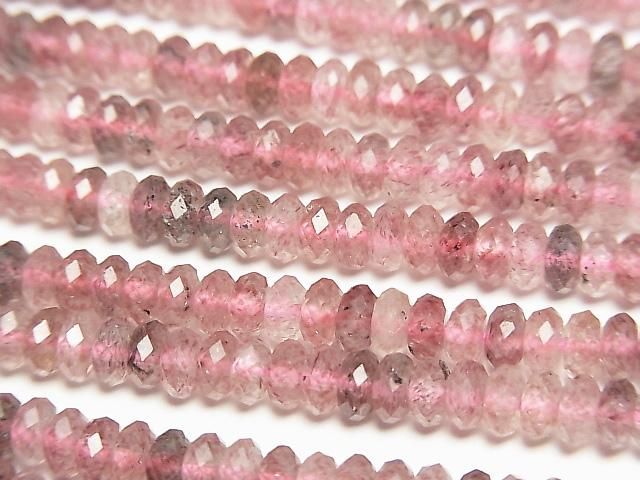
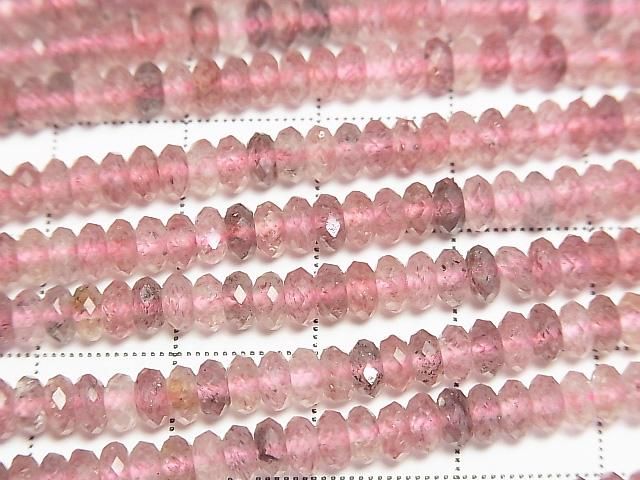
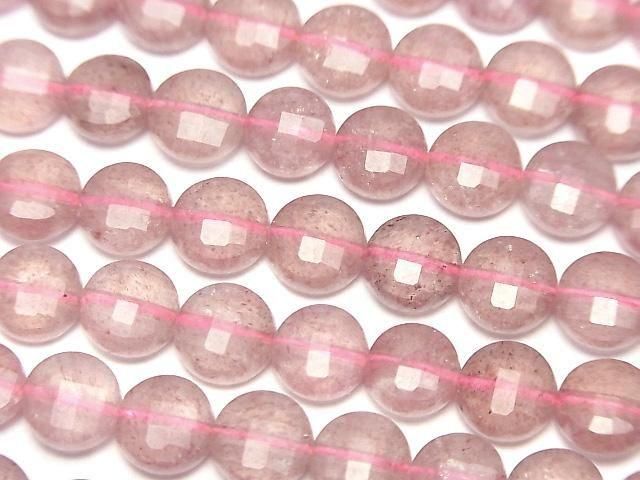
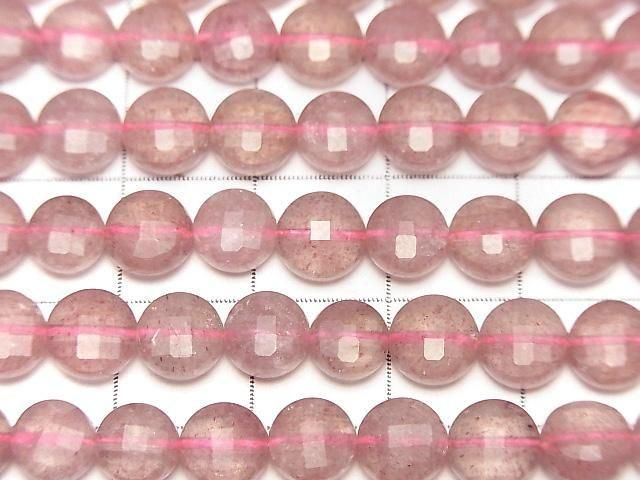
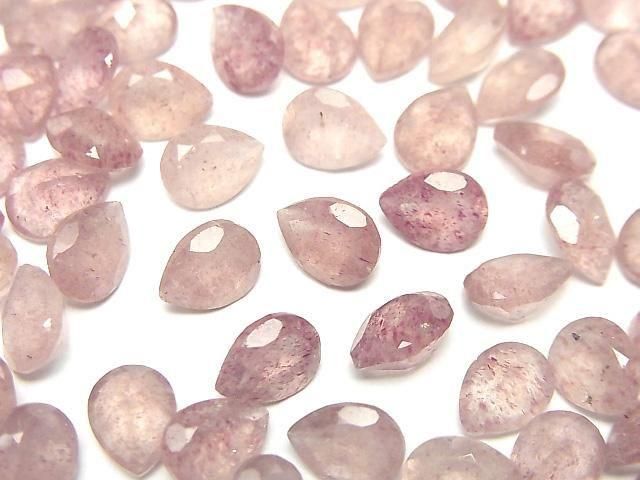
Shapes. Round beads in 4, 6, 8, and 10 mm (about 5/32 to 3/8 inch) for bracelets and strung necklaces; faceted rondelles and briolettes for earrings; strawberry-shaped carved beads and drops as focal pieces; oval and freeform cabochons for bezel settings; and sterling silver (925) pendants for finished lines.
Strand length. Full strands run about 15 inches (38 cm) and half strands about 7 inches (18 cm). One 15-inch strand of 8 mm rounds holds roughly 48 beads—enough for six to seven bracelets with spacers.
Price. Natural strawberry quartz sits toward the top of quartz bead pricing. Published dealer price lists put gem-grade faceted stones at roughly USD 7–20 per carat and cabochons at USD 4–10 per carat at wholesale; strand prices vary widely by grade and bead size. A full strand of flawless, identical "strawberry quartz" priced like glass beads is glass. KenKenGems ships worldwide, with free shipping on orders over USD 300.
How to Care for Strawberry Quartz Jewelry
Strawberry quartz can be worn daily. Clean it with warm water, mild soap, and a soft brush, then dry with a lint-free cloth. Avoid ultrasonic and steam cleaners: the inclusions and natural fractures can act as weak points. Brief contact with water is fine, so rinsing is not a problem, but skip long soaks and harsh chemicals such as bleach or commercial jewelry dips. Store pieces separately—quartz will scratch softer stones such as pearl or opal, and harder stones such as sapphire will scratch it. Prolonged direct sunlight does not noticeably affect strawberry quartz, unlike rose quartz, which can fade.
Frequently Asked Questions About Strawberry Quartz
What is strawberry quartz?
Strawberry quartz is natural quartz colored pink to red by tiny inclusions of hematite, lepidocrocite, or goethite that resemble strawberry seeds. It is a trade name based on appearance rather than a separate mineral species.
What does strawberry quartz mean spiritually?
In crystal tradition, strawberry quartz is a stone of love, gratitude, and gentle emotional healing, and is most often associated with the heart chakra. These are spiritual associations, not proven effects.
Is strawberry quartz the same as cherry quartz?
No. Natural strawberry quartz is quartz with mineral inclusions, while "cherry quartz" sold today is almost always man-made glass with red particles. Reputable sellers label the glass as imitation.
How can I tell if strawberry quartz is real?
Look for uneven color and irregular, feathery inclusions; check for round gas bubbles with a loupe (a sign of glass); test hardness—real quartz scratches glass; and be wary of very cheap, perfectly identical strands.
Which chakra is strawberry quartz?
Strawberry quartz is primarily a heart-chakra stone. Because of its hematite content, some practitioners also associate it with the root chakra for grounding.
What is the difference between strawberry quartz and rose quartz?
Rose quartz is uniformly pink from microscopic inclusions and trace elements; strawberry quartz is clear quartz with visible red flakes, so it looks speckled and often redder. Rose quartz is far more common and less expensive.
Is strawberry quartz rare, and how much does it cost?
Natural strawberry quartz is one of the scarcer quartz varieties. Gem-grade faceted stones typically run about USD 7–20 per carat at wholesale and cabochons about USD 4–10 per carat; bead strands vary by grade and size.
Can strawberry quartz go in water?
Yes, briefly. With a Mohs hardness of 7 it tolerates rinsing and gentle washing; avoid long soaks, harsh chemicals, and ultrasonic cleaners, and dry it after cleaning.

Shop Natural Strawberry Quartz Beads, Pendants, and Loose Stones at KenKenGems
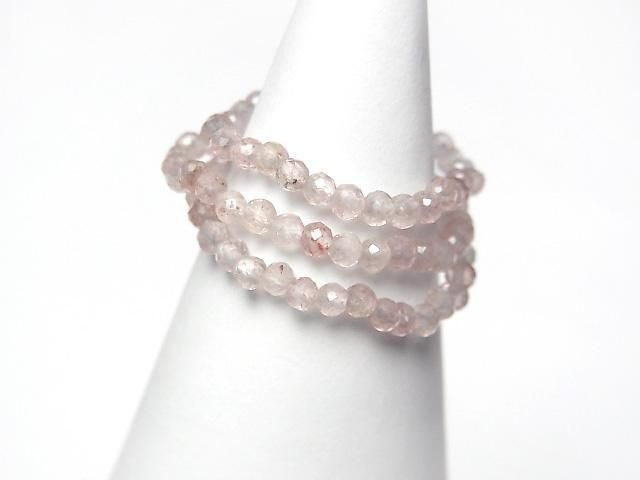
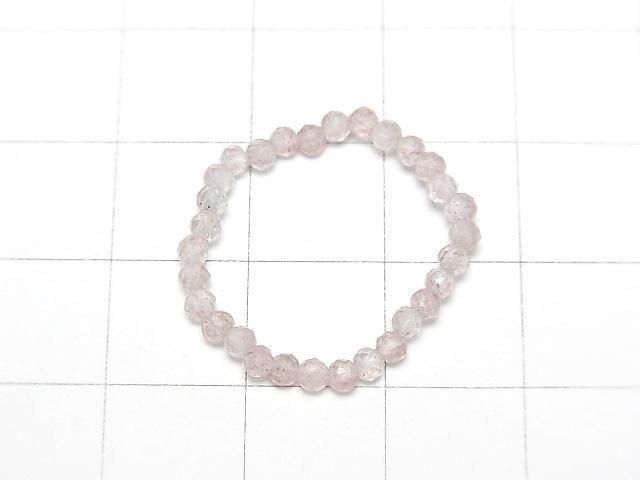
KenKenGems carries more than 200 natural strawberry quartz listings—AAA one-of-a-kind pendants set in sterling silver (925), strand beads in rounds and faceted shapes, carved strawberry-shaped beads, loose stones, and cabochons—graded by our published quality rating and priced in USD. Every listing states whether the material is natural quartz or glass; our imitation "cherry quartz" glass beads are sold in a separate collection so nothing is mislabeled. We ship to the United States and Canada, with free shipping on orders over USD 300.

![[Einzigartig] Natürlicher Erdbeerquarz AAA Anhänger Silber925 NO.127](http://store.kenkengems.com/cdn/shop/files/185557752.jpg?v=1744878258&width=640)
![[Einzigartig] Natürlicher Erdbeerquarz AAA Anhänger Silber925 NO.127](http://store.kenkengems.com/cdn/shop/files/185557752_o1.jpg?v=1744878265&width=640)




![[Einzigartig] Natürlicher Erdbeerquarz AAA Anhänger Silver925 NO.115](http://store.kenkengems.com/cdn/shop/files/184614116.jpg?v=1739862217&width=640)
![[Einzigartig] Natürlicher Erdbeerquarz AAA Anhänger Silver925 NO.115](http://store.kenkengems.com/cdn/shop/files/184614116_o1.jpg?v=1739862210&width=640)
![[Einzigartig] Natürliche Erdbeerquarz AAA Erdbeerperlen 1 Stück Nr. 16](http://store.kenkengems.com/cdn/shop/files/190101642.jpg?v=1772535292&width=640)
![[Einzigartig] Natürliche Erdbeerquarz AAA Erdbeerperlen 1 Stück Nr. 16](http://store.kenkengems.com/cdn/shop/files/190101642_o1.jpg?v=1772535278&width=640)
![[Einzigartig] Natürliche Erdbeerquarz AAA Erdbeerperlen 1 Stück Nr. 17](http://store.kenkengems.com/cdn/shop/files/190101643.jpg?v=1772535264&width=640)
![[Einzigartig] Natürliche Erdbeerquarz AAA Erdbeerperlen 1 Stück Nr. 17](http://store.kenkengems.com/cdn/shop/files/190101643_o1.jpg?v=1772535250&width=640)
![[Einzigartig] Natürliche Erdbeerquarz AAA Erdbeerperlen 1 Stück Nr. 11](http://store.kenkengems.com/cdn/shop/files/190101636.jpg?v=1772535384&width=640)
![[Einzigartig] Natürliche Erdbeerquarz AAA Erdbeerperlen 1 Stück Nr. 11](http://store.kenkengems.com/cdn/shop/files/190101636_o1.jpg?v=1772535370&width=640)


