

TOC
- 1. What Is Dumortierite?
- 2. History and Meaning of Dumortierite
- 3. Physical and Chemical Properties
- 4. Dumortierite vs. Dumortierite Quartz (Blue Moon Quartz)
- 5. Colors, Trade Names and Types
- 6. Where Dumortierite Is Found
- 7. Dumortierite Value and Price
- 8. How to Identify Dumortierite
- 9. Dumortierite in Jewelry and Other Uses
- 10. Care and Cleaning
- 11. Dumortierite Meaning and Folklore
- 12. Dumortierite for Sale at KenKenGems
- 13. Frequently Asked Questions
- 13-1. Is dumortierite a type of quartz?
- 13-2. What color is dumortierite?
- 13-3. How hard is dumortierite and can I wear it daily?
- 13-4. Is dumortierite treated or dyed?
- 13-5. Where does dumortierite come from?
- 13-6. What is dumortierite used for?

What Is Dumortierite?
Its name may not ring a bell, but its deep denim-blue color is hard to forget. Dumortierite is a distinct aluminum borosilicate mineral prized for its rich blue tones, and it is a favorite among gem collectors, bead artists and DIY jewelry makers.
This guide covers what dumortierite is, how it differs from dumortierite quartz (often sold as "blue moon quartz"), its physical properties, colors and trade names, where it is mined, how to judge value, how to identify and care for it, and the folklore traditionally associated with the stone. Browse the full selection in our dumortierite collection.

History and Meaning of Dumortierite
Dumortierite was first described in 1881 by the French mineralogist Ferdinand Gonnard, who identified the blue mineral in gneiss at Beaunan, near Chaponost in the Lyon area of France. Rather than name the new species after himself, Gonnard honored the French paleontologist Eugène Dumortier (1801-1876) of Lyon.
Because its saturated blue can resemble lapis lazuli, dumortierite is thought to have been used far earlier and mistaken for other blue stones. Today it is valued in its own right for its unusual color and rarity.

Physical and Chemical Properties
Correcting a common myth: dumortierite is not a variety of quartz. It is a distinct mineral, an aluminum borosilicate, with its own chemistry and crystal structure. (The stone sold as "dumortierite quartz" is a separate material, explained in the next section.)
Dumortierite crystallizes in the orthorhombic system, typically forming fibrous or columnar aggregates and massive material rather than large single crystals. It is usually opaque with a vitreous luster once polished, and it shows strong pleochroism: depending on the viewing angle the color can shift between blue, violet and reddish or near-colorless.
| Property | Detail |
|---|---|
| Mineral class | Aluminum borosilicate (nesosilicate / borosilicate) |
| Crystal system | Orthorhombic |
| Mohs hardness | 7 |
| Density | Approx. 3.26-3.41 g/cm3 |
| Luster | Vitreous (glassy) when polished |
| Transparency | Usually opaque; rarely translucent |
| Colors | Blue, violet-blue, greenish-blue, pink, red, brown |
| Optical effect | Strong pleochroism; weak luminescence |
Color variation comes largely from iron and titanium substituting for aluminum in the structure. Some pale or whitened material is heat-treated with cobalt nitrate to restore or deepen a blue color; any such treatment should be disclosed at the point of sale.

Dumortierite vs. Dumortierite Quartz (Blue Moon Quartz)
These two names are often confused, so it helps to separate them clearly:
- Dumortierite is the mineral itself: an aluminum borosilicate, usually opaque and cut as cabochons or beads.
- Dumortierite quartz is quartz (rock crystal or quartzite) that contains abundant dumortierite inclusions. The quartz is the host; the blue needles inside it are dumortierite. It is sometimes sold under the trade name "blue moon quartz."
Gemologists at the GIA have documented rock crystal quartz from Bahia, Brazil filled with vibrant blue acicular (needle-like) dumortierite inclusions, some showing brownish staining and strong blue-to-colorless pleochroism. So when you see "dumortierite quartz" or "blue moon quartz," you are looking at quartz with dumortierite inside it, not a type of dumortierite and not a variety of dumortierite that is also quartz.
Colors, Trade Names and Types
Dumortierite is best known for denim to royal blue, but it also occurs in violet-blue, greenish-blue, pale blue, pink, red and brown. You will also encounter several marketing (trade) names that describe appearance rather than a separate species:
- Blue moon quartz - a trade name for quartz containing dumortierite inclusions (see the section above).
- Blue denim stone - a descriptive marketing name for the mottled mid-blue, denim-like massive material.
- Sunset Dumortierite - a marketing name for blue-violet material with dusky undertones and patterning across shades of blue.
These are informal trade names, not official mineral species. Where blue color has been enhanced by heat or cobalt treatment, that should be disclosed. When you shop, ask whether a stone is natural dumortierite, dumortierite quartz, or treated material.
Where Dumortierite Is Found
Dumortierite forms in high-temperature, aluminum-rich metamorphic rocks and pegmatites. Notable sources include:
- Brazil (Bahia), Madagascar and Sri Lanka
- United States (Nevada and California)
- Canada, Russia and Namibia
- France, Poland, Austria, the Czech Republic and Australia
Although it occurs in many countries, gem- and bead-quality dumortierite is relatively uncommon. It is rarely found as isolated crystals; more often it is intergrown with quartz and separated during processing, which is one reason clean blue material is prized.

Dumortierite Value and Price
Dumortierite is generally affordable relative to its rarity, which is part of its appeal. Value is driven mainly by color, evenness and workmanship rather than by carat weight:
- Color - deep, even denim to royal blue is the most sought after; patchy or pale material is less valuable.
- Purity of color - fewer distracting brown or gray patches usually means a higher price.
- Cut and finish - well-polished cabochons and evenly matched bead strands command more than rough or uneven pieces.
- Type - clear dumortierite quartz (blue moon quartz) with attractive inclusions can be priced differently from massive dumortierite.
- Treatment - untreated natural material is typically preferred over heat- or cobalt-treated stones; disclosure affects value.
Because it is most often sold as beads and cabochons, dumortierite is an accessible choice for jewelry makers. See current options and pricing in the KenKenGems dumortierite collection.
How to Identify Dumortierite
A few practical checks help distinguish dumortierite from look-alikes such as lapis lazuli, sodalite and dyed stones:
- Color and pattern - denim to violet-blue, often mottled or fibrous, without the pyrite flecks typical of lapis lazuli.
- Hardness - Mohs 7, harder than lapis lazuli and sodalite (both softer than 6).
- Opacity - usually opaque with a fibrous or columnar texture rather than glassy transparency.
- Pleochroism - loose or translucent pieces can show a color shift between blue, violet and reddish tones.
- Inclusions - in dumortierite quartz, you can often see blue needle-like inclusions suspended in clear quartz.
If color seems unusually uniform and vivid, ask whether the stone is dyed or cobalt-treated. Reputable sellers disclose treatments.
Dumortierite in Jewelry and Other Uses
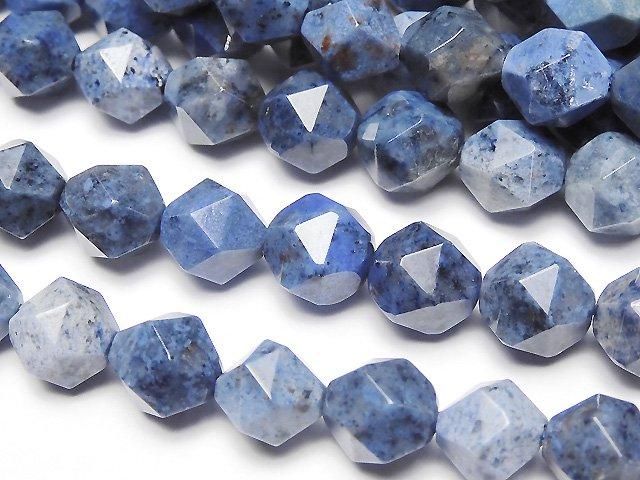
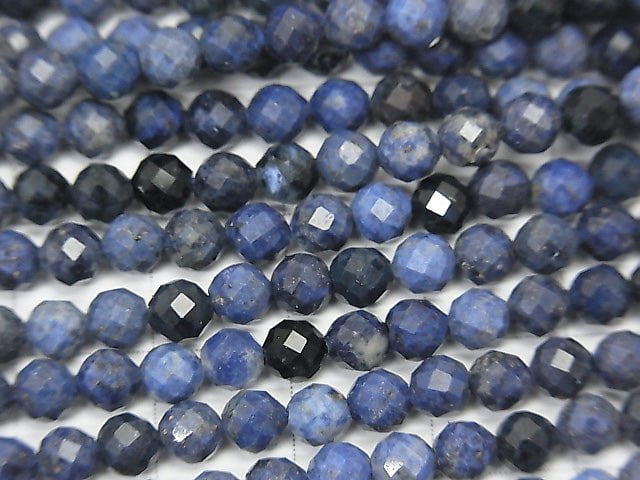
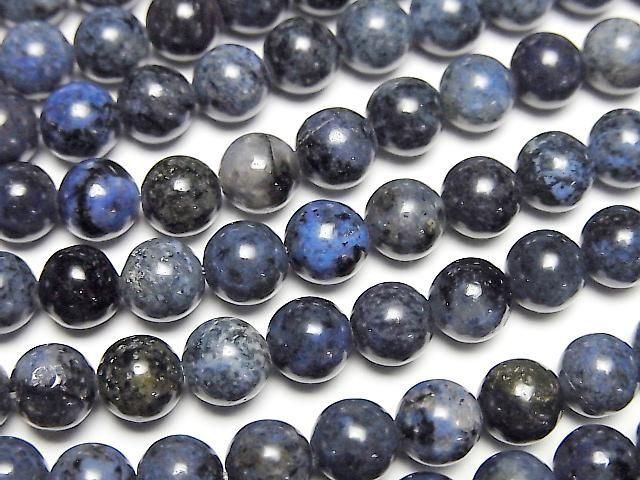
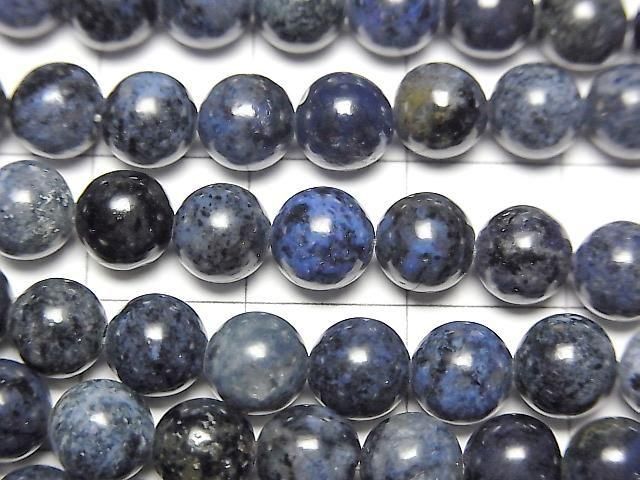
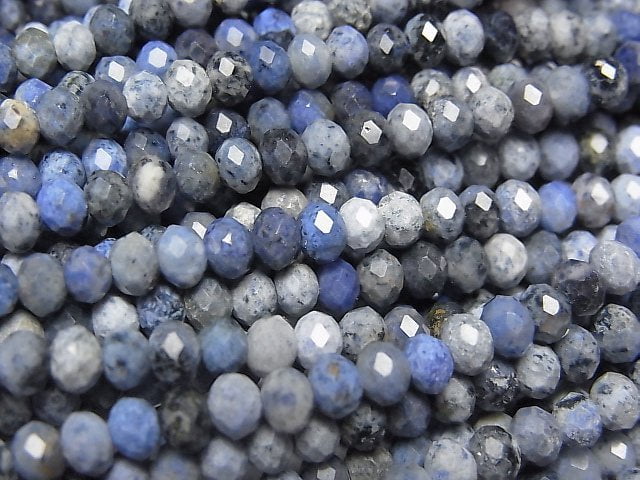
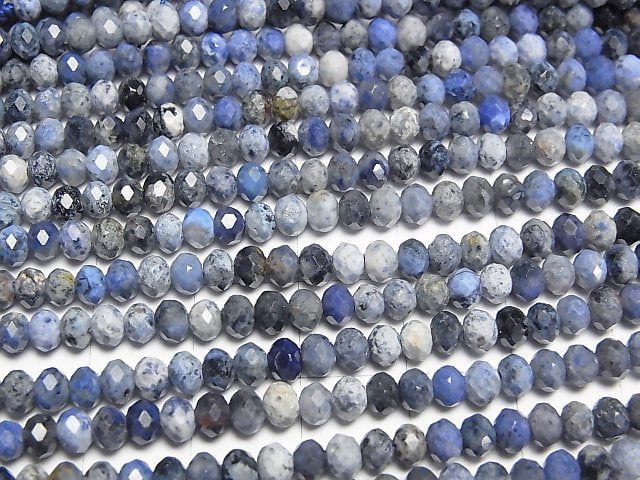
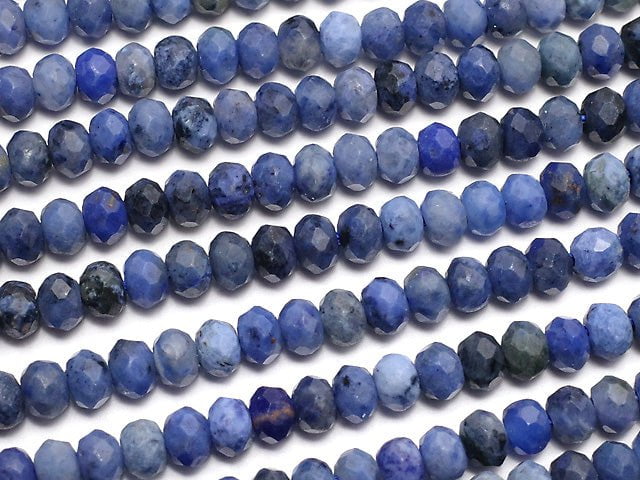
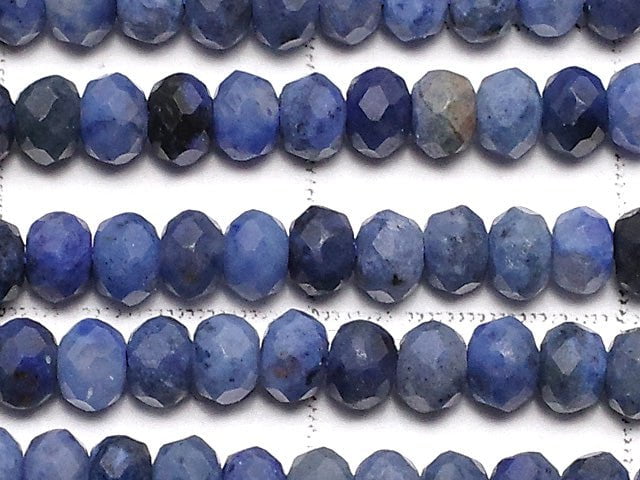
Because it is usually opaque, dumortierite is most often cut as cabochons, beads and tumbled stones rather than faceted gems. It suits pendants, bracelets, strung necklaces and beaded designs, and its deep blue pairs well with silver and gold settings.
- Beads and strands - round, nugget, faceted, rectangle and other shapes for stringing and wire work.
- Cabochons - domed pieces for pendants, rings and statement jewelry.
- Carvings and collector specimens - massive material and dumortierite quartz for display.
Beyond jewelry, dumortierite is also used industrially as a raw material in the manufacture of high-grade porcelain and ceramics, thanks to its aluminum content.

Care and Cleaning
- Clean with lukewarm water, mild soap and a soft cloth; rinse and dry thoroughly.
- Avoid ultrasonic and steam cleaners, harsh chemicals and prolonged heat, which can affect treated material.
- Although it is a hard stone (Mohs 7), store it separately to prevent scratching softer gems and to avoid knocks.
- Keep treated or dyed pieces away from strong solvents so the enhanced color is not affected.
Dumortierite Meaning and Folklore
In crystal lore, dumortierite has long been called a stone of clarity and focus. The themes below are cultural and folkloric traditions, offered for interest only.
- Focus and organization - traditionally associated with a calm, orderly mind and staying on task.
- Patience and calm - in crystal lore, believed to help ease worry and bring a sense of simplicity.
- Communication - traditionally linked to clear self-expression and honest conversation.
- Creativity - a stone many artists, writers and performers have kept as a symbol of inspiration.
- Learning - folklore associates it with study, memory and clear thinking.
These are traditional beliefs, not medical claims. Dumortierite is not a substitute for professional medical care, and no health outcomes are claimed.

Dumortierite for Sale at KenKenGems
Dumortierite is a rare yet affordable, striking and versatile mineral that lends itself beautifully to jewelry and to collecting. Whether you want a keepsake stone or a standout piece of jewelry, it is an easy blue to fall for.
KenKenGems offers dumortierite strands and loose stones in a range of cuts and shapes - round, nugget, faceted and rectangle among them - with attractive prices and reliable service. Explore the full dumortierite collection to find your stones.

Frequently Asked Questions
Is dumortierite a type of quartz?
No. Dumortierite is a distinct aluminum borosilicate mineral, not a variety of quartz. "Dumortierite quartz" (also called blue moon quartz) is a different material: quartz that contains dumortierite inclusions.
What color is dumortierite?
Most commonly denim to royal blue, but it also occurs in violet-blue, greenish-blue, pale blue, pink, red and brown. Deep, even blue is the most sought after.
How hard is dumortierite and can I wear it daily?
It is 7 on the Mohs scale, so it is durable enough for everyday jewelry. Because it is usually opaque, it is most often set as cabochons or strung as beads. Store it separately to avoid scratches and knocks.
Is dumortierite treated or dyed?
Some material is heat-treated with cobalt to restore or deepen a blue color, and some look-alikes are dyed. Reputable sellers disclose any treatment, so ask whether a stone is natural, treated or dyed.
Where does dumortierite come from?
Sources include Brazil, Madagascar, Sri Lanka, the USA (Nevada and California), Canada, Russia, Namibia, France, Poland, Austria, the Czech Republic and Australia.
What is dumortierite used for?
Chiefly beads, cabochons and tumbled stones for jewelry and collecting. It is also used industrially as a raw material for high-grade porcelain and ceramics.








![[Video] Dumortierit Runde 8mm Halb- oder 1-Strang Perlen (ca. 15 Zoll/36 cm)](http://store.kenkengems.com/cdn/shop/files/98840541.jpg?v=1773455453&width=640)
![[Video] Dumortierit Runde 8mm Halb- oder 1-Strang Perlen (ca. 15 Zoll/36 cm)](http://store.kenkengems.com/cdn/shop/files/98840541_o1.jpg?v=1773455440&width=640)


