
TOC
- 1. November Birthstone: Citrine & Topaz
- 2. Citrine: November's Golden Birthstone
- 3. Citrine Colors & How It's Made: Natural vs. Heat-Treated
- 4. Citrine Meaning & Symbolism
- 5. Topaz: November's Birthstone
- 6. Topaz Colors, Treatment & Care
- 7. Topaz Meaning & Symbolism
- 8. How to Identify Citrine & Topaz: Natural vs. Treated vs. Synthetic vs. Imitation
- 9. November Birthstone FAQ
- 9-1. What is the birthstone for November?
- 9-2. Why does November have two birthstones?
- 9-3. Is most citrine heat-treated?
- 9-4. Is blue topaz natural or treated?
- 9-5. What is mystic topaz?
- 9-6. How do I care for topaz jewelry?
- 9-7. Which zodiac signs are born in November?
- 10. Shop November Birthstones at KenKenGems
products available in this collection.
Shop NowNovember Birthstone: Citrine & Topaz
November has two birthstones: warm, golden citrine and cool, luminous topaz (most famously blue topaz). Together they capture the mood of late autumn — the last warm light of the year and the deep, clear sky before winter. If you are shopping for someone born this month, either stone makes a classic, meaningful gift.
November is home to two zodiac signs, Scorpio (October 23 – November 21) and Sagittarius (November 22 – December 21), so a November birthstone is a natural pick for a birthday present, an anniversary, or a self-purchase.
Below we cover what each stone is, its real colors and how those colors are produced, the common treatments you should know about before you buy, care tips, and the folklore and symbolism collectors love. You can browse both stones in our citrine collection, our topaz collection, and the full November birthstone collection.
Citrine: November's Golden Birthstone
Citrine is the golden-to-orange variety of quartz (silicon dioxide, SiO2). Its name comes from the Latin "citrus" / French "citron" (lemon), a nod to its sunny yellow color. Historically citrine has been associated with warmth, abundance, and good cheer, which is part of why it remains such a popular gift stone.
For a long time citrine was confused with yellow topaz, and it was only recognized as a distinct mineral in the 18th century. You may still see it sold under old trade names such as "Spanish topaz" or "Bohemian topaz" — but these are misnomers: citrine is quartz, not topaz.
Its color ranges from pale lemon and honey to rich golden orange. The hue comes from trace iron in the quartz structure. Naturally colored citrine tends to be a light, soft yellow; deeper, more saturated golden-orange material is usually the result of heat treatment (see the next section).

Citrine Colors & How It's Made: Natural vs. Heat-Treated
This is the single most important thing to understand before buying citrine: most deep-color citrine on the market today is heat-treated amethyst or smoky quartz, not naturally golden quartz. Amethyst and citrine are both quartz, and controlled heating changes amethyst's purple to yellow, orange, or reddish-brown tones. This is a stable, widely accepted trade practice — but under FTC guidance it should be disclosed, so a reputable seller will tell you whether a stone is natural or heat-treated.
Naturally colored citrine is comparatively rare and usually shows softer, paler yellows. Heat-treated material typically shows the stronger, more uniform golden-orange and "Madeira" tones many shoppers picture. Neither is fake — both are genuine quartz — but the distinction affects value and how the stone is described.
| Type | What it is | Typical color | Notes |
|---|---|---|---|
| Natural citrine | Quartz colored by nature | Pale to soft golden yellow | Less common; often lighter tone |
| Heat-treated citrine | Amethyst or smoky quartz heated to change color | Deep golden to orange-brown | Very common; stable; should be disclosed |
| "Spanish / Bohemian topaz" | Old misnomer for citrine | Yellow | Not topaz — it is quartz |
Practical tips: buy from sellers who state treatment status, and expect naturally colored citrine to be described (and priced) as such. Store citrine away from prolonged intense sunlight to help preserve its color.

Citrine Meaning & Symbolism
These are traditional beliefs, not medical claims. Crystals are not medicine and cannot diagnose, treat, cure, or prevent any illness; consult a qualified professional.
With that said, citrine has a rich place in crystal lore. Traditionally it is called the "merchant's stone" and is believed to be associated with optimism, confidence, and prosperity — which is why some people like to keep a piece near a cash register or workspace.
In crystal lore, citrine's sunny color is believed to reflect warmth and positivity, and it is often chosen as a stone for encouragement, creativity, and new beginnings. Folk traditions that link the color yellow to good fortune are cultural beliefs, not scientific findings.
- Symbolism: warmth, abundance, optimism, and fresh starts (traditional associations).
- Zodiac: a popular choice for Scorpio and Sagittarius born in November.
- Everyday use: worn or displayed as a cheerful, meaningful keepsake — not a health product.
Topaz: November's Birthstone
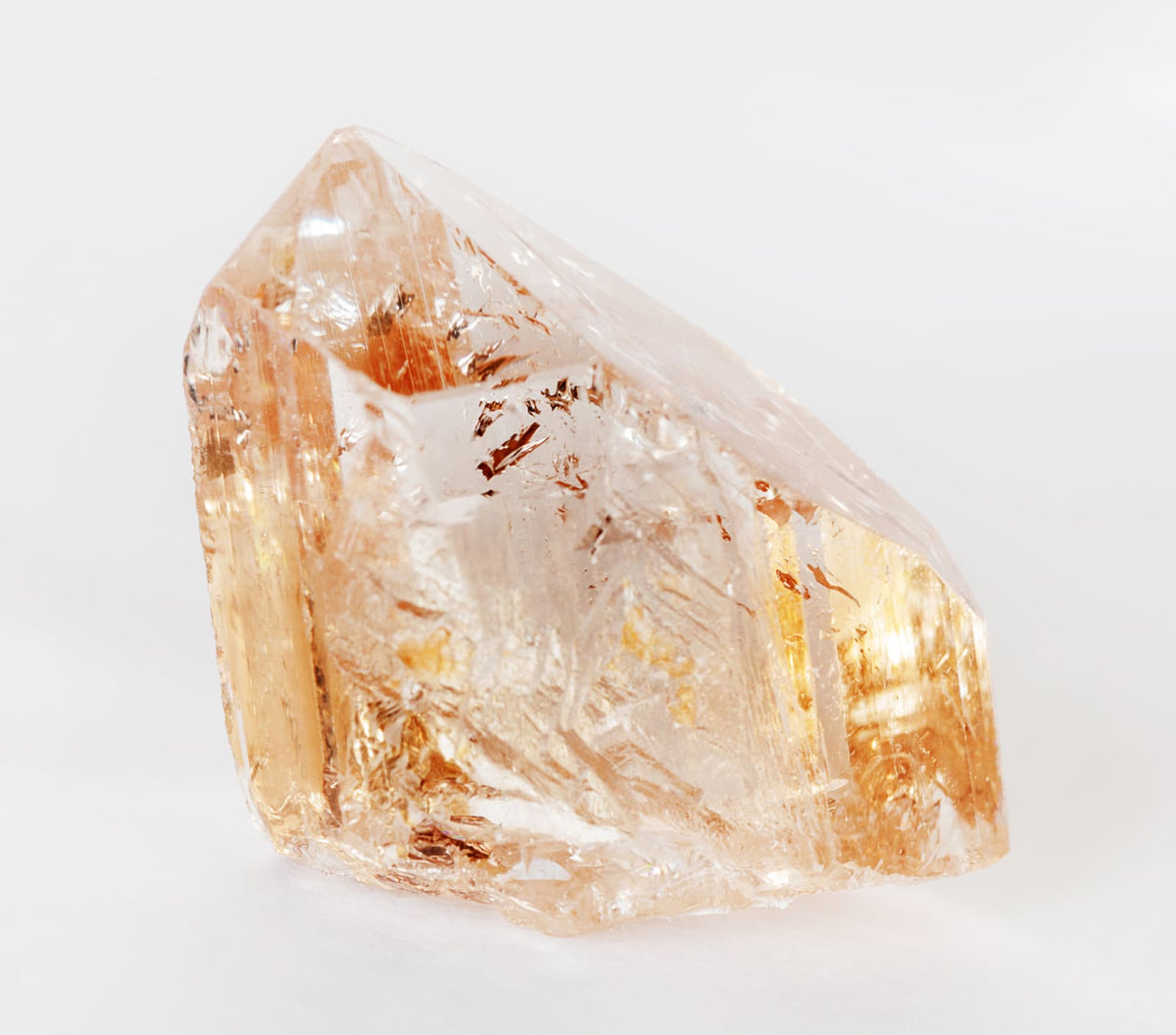
Topaz is a distinct mineral (an aluminum silicate fluoride hydroxide) — unrelated to quartz. In nature it occurs colorless and in yellow, brown, orange, pink, and pale blue, and it is prized for its clarity and brilliance. Topaz has been historically associated with royalty and prestige, though such stories are folklore rather than documented fact.
The word "topaz" is very old; one common explanation links it to the Sanskrit "tapas" ("fire" or "heat"), while another traces it to the island once called Topazios in the Red Sea. Either way, topaz has been a valued talisman and jewelry stone for thousands of years.
Blue is by far the most popular topaz color, and specific shades carry established trade names: Sky Blue (light, gentle), Swiss Blue (bright, vivid), and London Blue (deep, slightly greenish). Important to know: the vivid blues you see almost always come from treatment — see the next section.
Mystic topaz is another popular variety, shimmering with rainbow greens and purples. It is not natural: it is colorless (white) topaz finished with a thin titanium / metal-oxide surface coating. It is a genuine but coated/treated stone, and the coating is a surface layer that requires gentle care.

Topaz Colors, Treatment & Care
Here is the disclosure the original article left out: almost all blue topaz on the market is produced by treating colorless (white) topaz with irradiation followed by heat. Natural blue topaz exists but is pale and uncommon; the strong Sky, Swiss, and London Blue colors are treatment results. The color is stable and permanent, and treated blue topaz is sold legitimately worldwide — but under FTC guidance the irradiation + heat treatment should be disclosed, so ask your seller.
Some fancy colors and effects are also treatment-based. As noted above, mystic topaz gets its rainbow shimmer from a titanium/metal-oxide coating, not from nature.
Care. Topaz is hard (Mohs 8) so it resists scratching, but it has perfect cleavage, which means a sharp knock in the wrong direction can split it. Handle it gently:
- Avoid hard knocks, ultrasonic and steam cleaners, and sudden temperature changes.
- Clean with mild soap, lukewarm water, and a soft brush; dry with a soft cloth.
- For coated stones like mystic topaz, avoid abrasives and harsh chemicals so the surface layer is not worn or scratched.
- Store separately from harder gems and prolonged strong sunlight.

Topaz Meaning & Symbolism
These are traditional beliefs, not medical claims. Crystals are not medicine and cannot diagnose, treat, cure, or prevent any illness; consult a qualified professional.
In crystal lore, topaz is believed to be a stone of clarity and truth — traditionally associated with confidence, honesty, and setting clear intentions. Blue topaz in particular is a traditional favorite for calm reflection and meditation.
Various cultural traditions (including references in Ayurveda) associate topaz with wisdom and insight. These are longstanding beliefs and symbolism, not scientific or medical facts.
- Symbolism: clarity, truth, confidence, and focus (traditional associations).
- Zodiac: a classic November choice for Scorpio and Sagittarius.
- Everyday use: worn or kept as a meaningful gift or intention stone — not a health product.
How to Identify Citrine & Topaz: Natural vs. Treated vs. Synthetic vs. Imitation
Both November birthstones come in several forms, and knowing the difference helps you buy with confidence and compare prices fairly:
- Natural: mined stone with its color from nature. Naturally golden citrine and naturally blue topaz both exist but are less common.
- Treated: genuine stone whose color or appearance has been enhanced — e.g. heat-treated citrine (from amethyst) and irradiated + heated blue topaz. Common, stable, and legitimate when disclosed.
- Coated: a genuine stone with a surface layer, such as mystic topaz (titanium/metal-oxide coating). Requires gentle care.
- Synthetic (lab-created): same chemistry as the natural mineral but grown in a lab; must be described as lab-created or synthetic.
- Imitation / simulant: glass or another material made to look like the gem; must be clearly labeled as imitation.
When you shop, ask for the stone's identity and any treatments in writing, and favor sellers who disclose them plainly. You can read how we grade and describe our stones on our quality rank guide. For more background, see our columns on citrine and topaz.
November Birthstone FAQ
What is the birthstone for November?
November has two birthstones: citrine (golden quartz) and topaz (most popularly blue topaz). Either one is a traditional gift for someone born in November.
Why does November have two birthstones?
Modern birthstone lists include more than one stone for several months, giving shoppers a choice of color and price. For November, that means warm golden citrine or cool blue topaz.
Is most citrine heat-treated?
Yes. Most deep golden-orange citrine on the market is heat-treated amethyst or smoky quartz. It is genuine quartz, but reputable sellers should disclose the treatment. Naturally colored citrine tends to be paler and less common.
Is blue topaz natural or treated?
Almost all blue topaz is treated: colorless topaz is irradiated and then heated to create Sky, Swiss, and London Blue colors. The color is stable and permanent, and the treatment should be disclosed at purchase.
What is mystic topaz?
Mystic topaz is white (colorless) topaz finished with a thin titanium/metal-oxide surface coating that creates its rainbow shimmer. It is a genuine but coated stone and needs gentle care to protect the coating.
How do I care for topaz jewelry?
Topaz is hard (Mohs 8) but has perfect cleavage, so avoid hard knocks, ultrasonic/steam cleaners, and sudden temperature changes. Clean with mild soap, lukewarm water, and a soft brush, and store it separately from harder stones.
Which zodiac signs are born in November?
November covers Scorpio (through November 21) and Sagittarius (from November 22), so both stones make fitting birthday gifts.
Shop November Birthstones at KenKenGems
Whether you were born in November or you are shopping for a Scorpio or Sagittarius, both birthstones make a beautiful, meaningful gift. At KenKenGems you will find hand-picked citrine and topaz — loose stones, faceted cuts, and gemstone beads — ready for jewelry making and collecting.
Browse the citrine collection, the topaz collection, or the full November birthstone collection to find your stone. We describe each stone's treatment status so you can buy with confidence.


