
TOC
- 1. March Birthstone: Aquamarine and Bloodstone
- 2. Aquamarine: March's Birthstone
- 3. Aquamarine Colors, Treatment & Value
- 4. Aquamarine Meaning & Symbolism
- 5. Bloodstone: March's Birthstone
- 6. Bloodstone Meaning & Symbolism
- 7. How to Identify and Care for March Birthstones
- 8. March Birthstone FAQ
- 8-1. What is the birthstone for March?
- 8-2. Which zodiac signs are linked to March birthstones?
- 8-3. Is aquamarine treated?
- 8-4. What is bloodstone made of?
- 8-5. How can I tell natural March birthstones from imitations?
- 8-6. How do I care for aquamarine and bloodstone?
- 9. Shop March Birthstones at KenKenGems
products available in this collection.
Shop NowMarch Birthstone: Aquamarine and Bloodstone
March is one of the lucky months with two birthstones. People born in March can choose between aquamarine, the blue variety of beryl, and bloodstone, a green chalcedony marked with red spots. Together they capture the mood of early spring: the cool clarity of meltwater and the first green shoots of the season.
Both stones are traditional March birthstones and both are linked to the March zodiac signs, Pisces (roughly February 19 to March 20) and Aries (roughly March 21 to April 19). This guide explains what each stone is, how to judge color and value, what they have traditionally symbolized, and how to tell natural material from treated or imitation goods.

Aquamarine: March's Birthstone
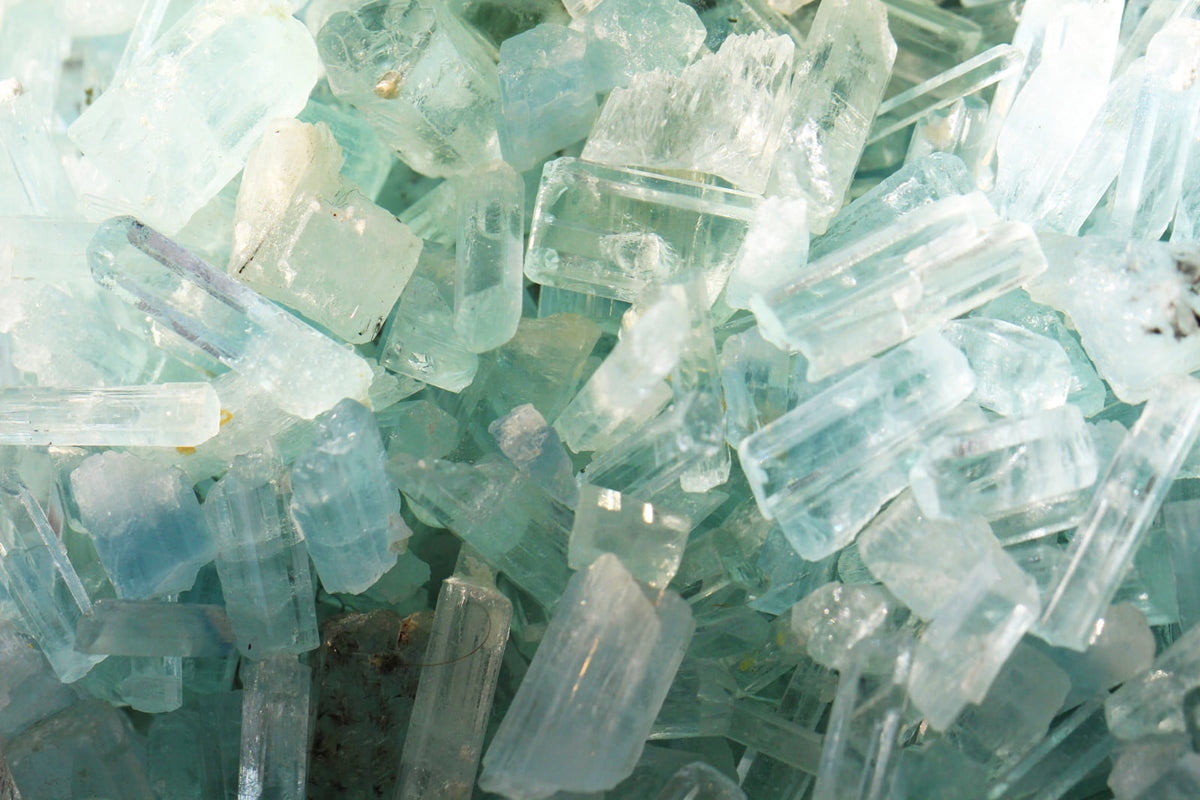
Aquamarine is the blue to blue-green variety of the mineral beryl (beryllium aluminum silicate, Be3Al2Si6O18), the same mineral family as emerald. Its blue color comes mainly from traces of iron. On the Mohs scale aquamarine rates about 7.5 to 8, which makes it a durable choice for everyday jewelry, though like most faceted stones it can chip if struck hard.
The name comes from the Latin words aqua (water) and marinus (of the sea), a fitting description recorded by the Roman writer Pliny the Elder, who was among the first to connect beryls, emeralds and aquamarines as relatives that differ chiefly in color.
Aquamarine has been prized since antiquity. Sumerian culture linked it with health, happiness and youth, and in Rome it was worn by sailors as a talisman of the sea. It rose to particular fashion in the 18th century, when the Rococo taste for soft pastel colors made aquamarine and multi-colored topaz especially popular.

Aquamarine Colors, Treatment & Value
Aquamarine occurs in a range of blues, from pale sky blue to deeper blue and blue-green, with the exact hue depending on iron content. Most commercial aquamarine on the market is routinely heat-treated: gently heating greenish or yellowish beryl drives off the green component and leaves a cleaner, more even blue. This heat treatment is stable and permanent, and it is standard practice in the trade. Under the FTC Jewelry Guides a seller should disclose that a stone has been treated, so we note it here as a matter of routine.
Rare aquamarines show a cat's-eye effect or, more unusually, asterism (a star). These optical specimens are uncommon and can command a premium among collectors.
| Factor | What to look for |
|---|---|
| Color | Even, moderately saturated blue to blue-green; very pale stones are common and less valued |
| Clarity | Aquamarine is often eye-clean; visible inclusions lower value |
| Treatment | Commonly heat-treated to improve blue; stable and should be disclosed by the seller |
| Durability | Mohs 7.5 to 8; suitable for daily wear with normal care |
| Special effects | Cat's-eye or star (asterism) stones are rare and collectible |

Aquamarine Meaning & Symbolism
These are traditional beliefs, not medical claims. Crystals are not medicine and cannot diagnose, treat, cure, or prevent any illness; consult a qualified professional.
In crystal lore, aquamarine has long been called a stone of calm, clear communication and courage. It is traditionally associated with the sea, and sailors once carried it as a talisman for safe passage; modern travelers sometimes keep it for the same symbolic reassurance on journeys over water.
The stone is also believed, in tradition, to encourage honesty and steady self-awareness, and it has been given as a token of enduring love and loyalty between partners. Folklore even held that a clear aquamarine mirrored a calm heart, while a clouded one reflected inner turmoil, a poetic idea rather than a physical fact.
These meanings are cultural and symbolic. They describe how people have valued the stone over time, not any effect on the body or mind.
Bloodstone: March's Birthstone
Bloodstone, also called heliotrope, is a variety of chalcedony, which is cryptocrystalline (microcrystalline) quartz, silicon dioxide (SiO2). It is typically dark green, colored by inclusions of chlorite or amphibole and by green jasper, and is scattered with red to reddish-brown spots of iron oxide (hematite) that give the stone its name. When the spots are yellow rather than red, the material is sometimes called plasma.
The name heliotrope comes from the Greek helios (sun) and trepein (to turn). Bloodstone rates about 7 on the Mohs scale and takes a good polish; it is usually cut as cabochons, beads or carvings rather than faceted, because the material is opaque to translucent.
Bloodstone has a long history as a carving and amulet stone. It was known in the ancient world, praised in early texts, and in the Middle Ages the red-spotted green stone was tied to Christian legend, which is one reason it was so often used for religious carvings.

Bloodstone Meaning & Symbolism
These are traditional beliefs, not medical claims. Crystals are not medicine and cannot diagnose, treat, cure, or prevent any illness; consult a qualified professional.
In crystal lore, bloodstone is often described as a grounding, steadying stone associated with courage, vitality and perseverance. Because of its striking green-and-red appearance it was traditionally seen as a stone of strength, and it was a favorite of people who practiced ceremonial traditions, who linked it with insight and clear thinking.
Across various cultures it has been kept as a talisman for motivation and resilience, and given as a symbolic token of endurance. These associations are traditional and symbolic; they reflect folklore and personal meaning, not any medical or physical effect.

How to Identify and Care for March Birthstones
Aquamarine: natural, treated, synthetic and imitation. Most natural aquamarine is heat-treated to improve its blue, and this should be disclosed. Laboratory-grown (synthetic) beryl also exists and must be described as synthetic or lab-created. Blue glass and blue-dyed stones are sometimes sold as aquamarine look-alikes; genuine aquamarine is harder than glass, and a reputable seller will state exactly what a stone is.
Bloodstone: natural versus imitation. Natural bloodstone shows an uneven, organic pattern of green with red or brownish spots. Some green chalcedony is dyed, and glass or plastic imitations with painted-on spots do appear, so look for natural variation and buy from sellers who describe their material accurately.
- Ask about treatment and origin: a trustworthy seller will disclose heat treatment, dyeing, or synthetic origin.
- Check hardness and feel: quartz and beryl are cool and hard; plastic imitations feel warm and light.
- Look at the pattern: natural bloodstone spots are irregular, not evenly printed.
- Care: clean both stones with mild soap, warm water and a soft cloth; avoid harsh chemicals, ultrasonic cleaners and sudden temperature changes; store separately to avoid scratches.
To understand how we grade and describe our material, see our quality rank guide.

March Birthstone FAQ
What is the birthstone for March?
March has two birthstones: aquamarine, the blue variety of beryl, and bloodstone, a green chalcedony with red spots. You can choose whichever appeals to you.
Which zodiac signs are linked to March birthstones?
March covers Pisces (about February 19 to March 20) and Aries (about March 21 to April 19), and both aquamarine and bloodstone are traditionally connected with these March-born signs.
Is aquamarine treated?
Most aquamarine on the market is heat-treated to improve and even out its blue color. This treatment is stable and permanent, and a reputable seller will disclose it.
What is bloodstone made of?
Bloodstone, also called heliotrope, is a variety of chalcedony (cryptocrystalline quartz). It is green from mineral inclusions and marked with red to brown spots of iron oxide.
How can I tell natural March birthstones from imitations?
Ask the seller about treatment and origin, check that the material has the hardness of beryl or quartz, and look for natural color variation rather than perfectly even glass or dyed look-alikes.
How do I care for aquamarine and bloodstone?
Clean them with mild soap, warm water and a soft cloth, avoid harsh chemicals and sudden temperature changes, and store them separately so harder stones do not scratch them.
Shop March Birthstones at KenKenGems
If you were born in March, you have two birthstones to choose from. Aquamarine carries the cool, clear feel of water, while bloodstone brings the earthy green-and-red character of early spring. Whichever you prefer, you can find it in the KenKenGems catalog.
Browse our aquamarine collection and our bloodstone collection, or explore both together in our March birthstone collection. Whether you want a jewelry-ready stone or a meaningful keepsake, there is a good selection waiting for you.


