
TOC
- 1. August Birthstone
- 2. Peridot: August's Birthstone
- 3. Peridot Meaning & Symbolism
- 4. Spinel: August's Birthstone
- 5. Spinel Meaning & Symbolism
- 6. Sardonyx, Care & Identification
- 7. August Birthstone FAQ
- 7-1. What is the birthstone for August?
- 7-2. Why is peridot green?
- 7-3. Is spinel the same as ruby?
- 7-4. Is spinel natural or lab-created?
- 7-5. How do I care for peridot?
- 8. Shop August Birthstones
products available in this collection.
Shop Now
August Birthstone
August is one of the months with more than one birthstone. Its two modern birthstones are peridot and spinel, while sardonyx is a traditional August birthstone that older lists still recognize. People born in August fall under the zodiac signs Leo (July 23 to August 22) and Virgo (August 23 to September 22).
Peridot brings a warm, lime-to-olive green, spinel offers a wide range of colors from red to blue, and sardonyx adds banded reddish-brown and white. In this guide we cover what each stone actually is, its colors and sources, the meaning and symbolism people have attached to it, and the buyer facts that matter, including natural versus synthetic, treatment disclosure, and care.

Peridot: August's Birthstone
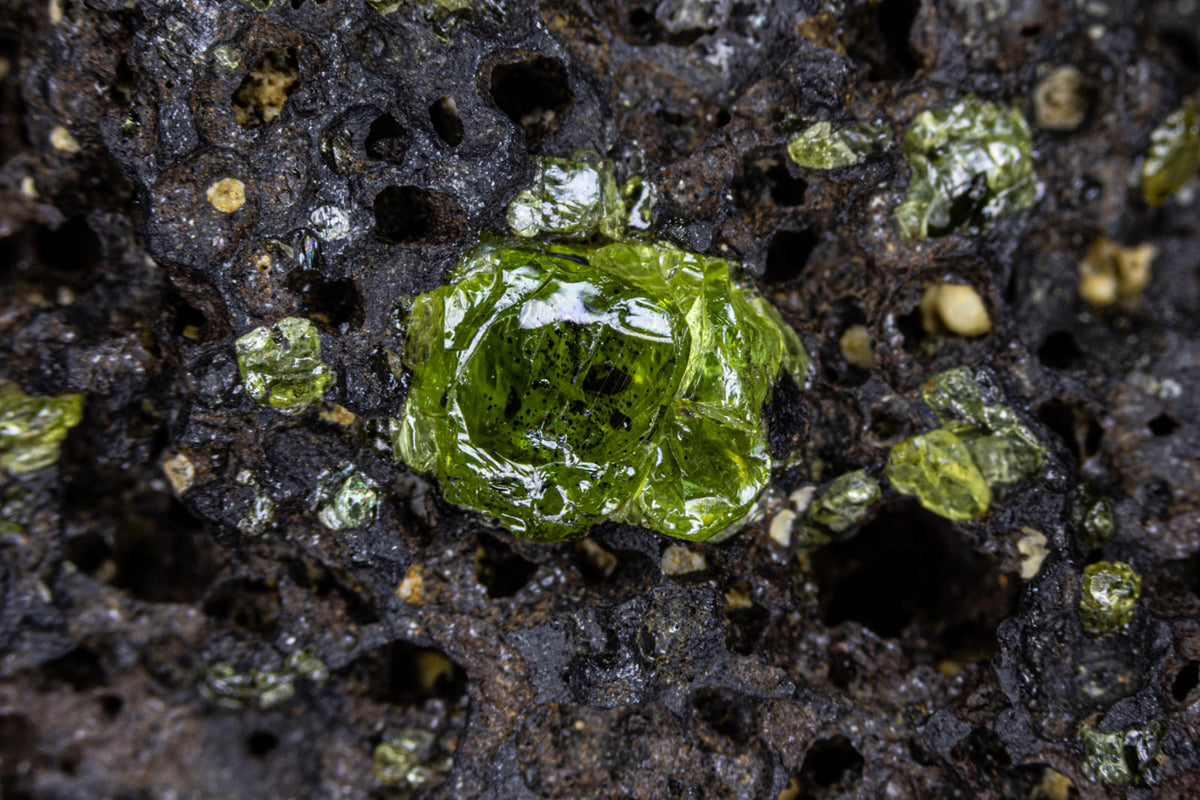
Peridot is the gem-quality variety of the mineral olivine, a magnesium iron silicate with the formula (Mg,Fe)2SiO4. Unlike gems that get their color from trace impurities, peridot is idiochromatic: its yellowish-green to green color comes from iron that is an essential part of the mineral itself, so peridot is always some shade of green. Note that peridot is olivine, not a member of the quartz family.
On the Mohs scale peridot rates about 6.5 to 7, so it is reasonably hard but softer than quartz or spinel and benefits from careful wear. Its color ranges through lime, yellowish-green, and olive; the most prized stones show a rich, pure green with little brown or yellow.
Peridot has been mined for thousands of years. The Egyptian island now called Zabargad (St. John's Island) in the Red Sea was an ancient source, and stones from there were known in antiquity. Peridot was historically called chrysolite, and some green stones long admired as emeralds, such as those on the Shrine of the Three Kings in Cologne Cathedral, are now understood to be peridot. Today important sources include Arizona in the United States (notably the San Carlos Apache Reservation), Pakistan, Myanmar, and China. Peridot is also one of the few gems found in some meteorites.

Peridot Meaning & Symbolism
These are traditional beliefs, not medical claims. Crystals are not medicine and cannot diagnose, treat, cure, or prevent any illness; consult a qualified professional for any health concern.
In crystal lore, peridot has traditionally been associated with light, warmth, and renewal, echoing its sunny green color and its links to the late-summer month of August. It is often described as a stone of positivity and fresh starts, and it has long been considered a talisman for those born under Leo and Virgo.
Across various cultures peridot has been believed to encourage patience, clarity, and confident decision-making, and it was traditionally carried as a protective amulet. These meanings are folklore and symbolism rather than statements of fact, and none of them describe a physical or medical effect.
As a gift, peridot carries an upbeat, optimistic message, which makes it a popular choice for summer birthdays and for celebrating new beginnings.
Spinel: August's Birthstone
Spinel is magnesium aluminum oxide (MgAl2O4), a mineral that crystallizes in the cubic system. It rates about 8 on the Mohs scale, making it harder and more durable than peridot, and it comes in a striking range of colors, including red, hot pink, orange, violet, blue (especially the cobalt-blue stones), and black. Jewelers of America recognized spinel as an additional August birthstone in 2016.
For centuries red spinel was confused with ruby, because both can occur in the same deposits and share a similar red color. Some of history's most famous "rubies" are actually spinels: the Black Prince's Ruby set in the British Imperial State Crown, and the Timur Ruby, are both large red spinels rather than true ruby (which is corundum). Spinel was only recognized as a distinct mineral species in the late 18th century.
Buyers should know the difference between natural, synthetic, and imitation spinel. Natural spinel is often untreated, which is part of its appeal, though it is best to confirm this with the seller rather than assume it for every stone. Synthetic (lab-grown) spinel also exists, produced by flame-fusion (Verneuil) and flux methods; it has been widely used both as a gem in its own right and as an imitation of other stones, so it must be described as synthetic, lab-grown, or created and never sold simply as spinel.

Spinel Meaning & Symbolism
These are traditional beliefs, not medical claims. Crystals are not medicine and cannot diagnose, treat, cure, or prevent any illness; consult a qualified professional for any health concern.
In crystal lore, spinel is traditionally described as a stone of energy and encouragement, said to support motivation and a positive outlook. Because it occurs in so many colors, different hues have picked up their own traditional associations.
- Red spinel is traditionally linked with vitality, passion, and confidence.
- Pink spinel is associated in lore with warmth, kindness, and affection.
- Blue spinel is described as a stone of calm reflection and clear thinking.
- Purple and violet spinel are traditionally tied to intuition and creativity.
As with all such lore, these are cultural and symbolic meanings, not medical or physical effects. They make spinel a thoughtful, personal gift for an August birthday, letting the giver choose a color and its traditional message.

Sardonyx, Care & Identification
Sardonyx is the traditional August birthstone that appears on older birthstone lists. It is a banded variety of chalcedony (cryptocrystalline quartz) that combines layers of sard or carnelian, in reddish-brown to orange, with the white or black bands of onyx. It rates about 6.5 to 7 on the Mohs scale.
A buyer note on chalcedony: much of the banded agate, onyx, and sardonyx on the market is dyed to deepen or even out its color. Dyeing is an accepted practice, but it should be disclosed, so ask whether a stone's color is natural or enhanced.
Care differs by stone, so match your routine to the gem:
- Peridot (Mohs 6.5 to 7) is the most delicate of the three. Avoid ultrasonic and steam cleaners, acids, and sudden temperature changes, all of which can harm it. Clean it with lukewarm water, mild soap, and a soft brush, then rinse and dry gently.
- Spinel (Mohs 8) is durable and generally easy to care for. Warm water, mild soap, and a soft brush are safe; still, store it separately so harder stones do not scratch it and softer stones are protected from it.
- Sardonyx (Mohs 6.5 to 7) is best cleaned with a soft cloth, lukewarm water, and mild soap. Keep dyed pieces away from harsh chemicals and prolonged sunlight, which can affect some dyes.
- Store each stone in a soft pouch or a lined box, and remove birthstone jewelry before sports, cleaning, or heavy work.
If you want certainty about whether a stone is natural, synthetic, or treated, ask for a report from an independent gemological laboratory. At KenKenGems we describe treatment and origin to the best of our knowledge so you know what you are buying; see our quality rank guide for how we grade our stones.
August Birthstone FAQ
What is the birthstone for August?
August has two modern birthstones, peridot and spinel, plus the traditional birthstone sardonyx. Peridot is the green gem-quality variety of olivine, spinel comes in many colors and was once mistaken for ruby, and sardonyx is a banded chalcedony.
Why is peridot green?
Peridot is idiochromatic, meaning its color comes from iron that is an essential part of the olivine mineral rather than from a trace impurity. Because the iron is always present, peridot is always a shade of yellowish-green to green.
Is spinel the same as ruby?
No. Spinel and ruby are different minerals; ruby is a red variety of corundum, while spinel is magnesium aluminum oxide. For centuries red spinels were mistaken for rubies, and famous examples such as the Black Prince's Ruby are actually spinel.
Is spinel natural or lab-created?
Both exist. Natural spinel is often untreated, which is part of its appeal. Synthetic spinel is also made by flame-fusion and flux methods and should be clearly described as lab-grown, synthetic, or created rather than sold simply as spinel.
How do I care for peridot?
Clean peridot with lukewarm water, mild soap, and a soft brush, then rinse and dry gently. Avoid ultrasonic and steam cleaners, acids, and sudden temperature changes, which can damage it, and store it away from harder gems so it does not get scratched.
Shop August Birthstones
Whether you prefer the fresh green of peridot or the many colors of spinel, an August birthstone makes a meaningful gift for a Leo or Virgo, or for yourself. Our collections include faceted stones, cabochons, beads and strands, and loose gems for custom jewelry, across a range of colors and price points.
Browse our peridot collection and our spinel collection, and check the quality rank guide to see how we grade every stone we sell.


