
TOC
- 1. June Birthstone
- 2. Pearl: June's Birthstone
- 3. Pearl Meaning & Symbolism
- 4. Alexandrite: June's Birthstone
- 5. Alexandrite Meaning & Symbolism
- 6. Moonstone: June's Birthstone
- 7. Moonstone Meaning & Symbolism
- 8. Care & How to Identify
- 9. June Birthstone FAQ
- 9-1. What is the birthstone for June?
- 9-2. What color is the June birthstone?
- 9-3. Are June birthstones natural or created?
- 9-4. Is most alexandrite real or lab-created?
- 9-5. How do I care for pearls and moonstone?
- 10. Shop June Birthstones
products available in this collection.
Shop NowJune Birthstone
If you were born in June you have an unusually rich choice of birthstones. June is one of the few months with three: pearl, alexandrite, and moonstone. Together they are sometimes called June's birthstone trio, and they are the traditional gift stones for people born under Gemini (May 21 to June 20) and Cancer (June 21 to July 22).
The three could hardly be more different. Pearl is an organic gem grown inside a mollusk, alexandrite is a rare color-change mineral, and moonstone is a feldspar prized for its floating glow. This guide explains what each stone actually is, how to tell natural material from cultured, lab-created, or imitation, the meaning people have long attached to them, and how to care for and shop them.

Pearl: June's Birthstone
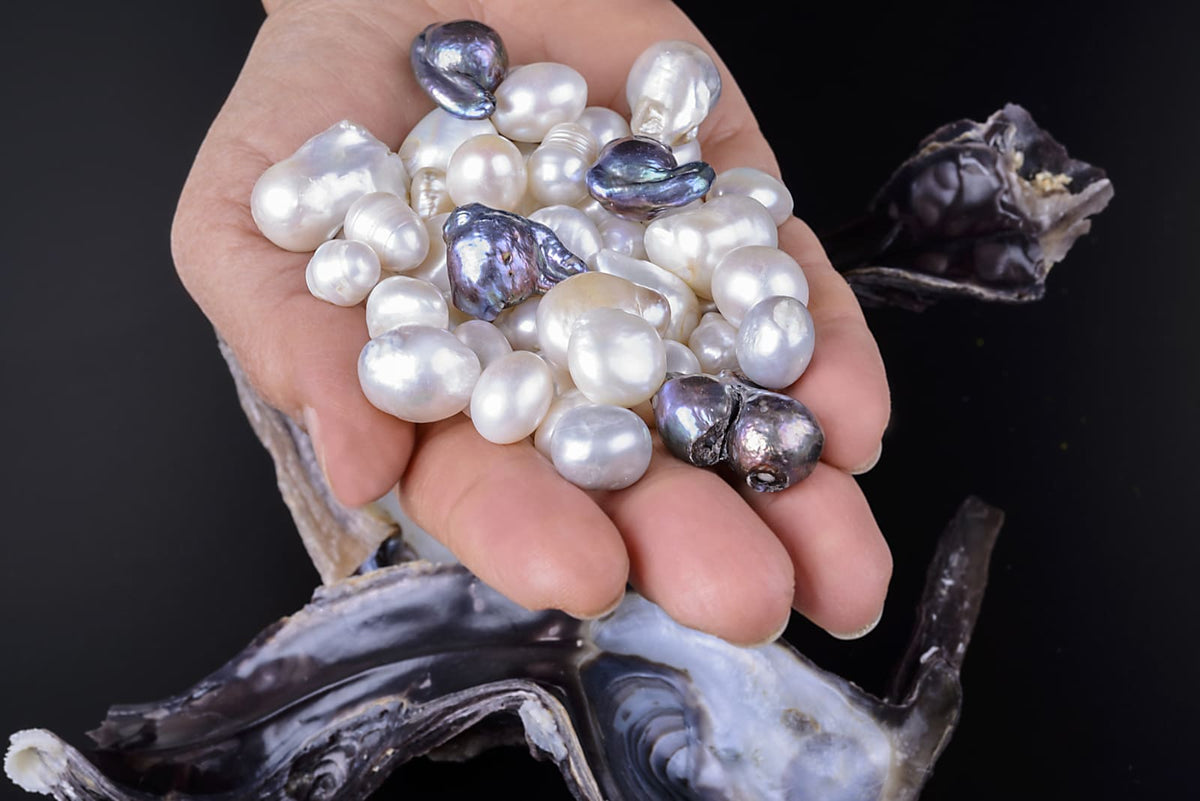
A pearl forms inside a living mollusk when it coats an irritant with layer after layer of nacre, the same material that lines the shell. Pearls are the only widely worn gems that grow inside a living creature, which is part of their appeal as a June birthstone.
Naming matters. Under the FTC Jewelry Guides, the word "pearl" used alone implies a natural pearl formed without human help, and genuinely natural pearls are rare and expensive today. The great majority of pearls sold now are cultured, meaning a farmer deliberately inserts a bead or piece of tissue so the mollusk grows the pearl. Cultured pearls are real pearls, but they must be described as "cultured." Anything made of glass, plastic, or coated beads is an imitation or faux pearl and should be labeled clearly as imitation, never sold simply as "pearl."

Cultured pearls fall into a few broad types. Knowing them helps you compare what you are buying:
- Freshwater pearls are grown in mussels in lakes and ponds, mostly in China. They come in many shapes and colors, are widely available, and are usually the most affordable.
- Akoya pearls are saltwater pearls known for a bright, round, classic look, traditionally farmed in Japan.
- Tahitian pearls are saltwater pearls in naturally dark colors, from gray and green to "peacock," grown in French Polynesia.
- South Sea pearls are large saltwater pearls in white to golden tones from Australia, Indonesia, and the Philippines, and are among the most valuable cultured pearls.
Common, accepted treatments include bleaching to even out color and dyeing to add color; reputable sellers disclose these. When you shop our pearl collection we describe whether pearls are freshwater or saltwater and note any treatment so you know exactly what you are getting.

Pearl Meaning & Symbolism
These are traditional beliefs, not medical claims. Crystals and gemstones are not medicine and cannot diagnose, treat, cure, or prevent any illness; consult a qualified professional for any health concern.
Pearls have carried meaning for thousands of years. Across many cultures they have traditionally symbolized purity, wisdom, and the calm of the sea, which is why they are a classic choice for weddings and coming-of-age gifts. In crystal lore, pearls are believed to represent feminine energy and emotional balance, and they were long given as tokens of love and lasting commitment.
Historical legends add to their romance. It is famously said that Cleopatra dissolved a pearl in wine, and that pearls were worn by queens and priestesses as emblems of status and beauty. Stories like these are folklore that reflect how highly the gem has been prized; they are not statements of fact or of any health benefit.
Alexandrite: June's Birthstone
Alexandrite is the rarest of June's birthstones. It is a color-change variety of the mineral chrysoberyl, famous for appearing green to bluish-green in daylight and purplish-red under warm incandescent light. Gem lovers sum up the effect as "emerald by day, ruby by night."
The stone was identified in the 19th century in Russia's Ural Mountains, at first mistaken for emerald because of its green color until the dramatic color change was noticed. It was named after the young Tsar Alexander II, and its rarity gave it a reputation as a royal gem.

Natural vs. lab-created. Fine natural alexandrite that shows a strong color change is one of the rarest and most valuable colored gems in the world, and large natural stones are seldom seen. Because of this, most "alexandrite" on the market is lab-created (synthetic) alexandrite, which has the same chemistry and color change as the natural stone but is grown in a laboratory, or a simulant such as color-change corundum (sometimes sold decades ago as "synthetic alexandrite" but chemically a different material). Under the FTC Jewelry Guides, lab-created and simulant material must be clearly disclosed as such and never described simply as "alexandrite." When you shop our alexandrite collection we state whether a stone is natural or lab-created.
Alexandrite Meaning & Symbolism
These are traditional beliefs, not medical claims. Crystals and gemstones are not medicine and cannot diagnose, treat, cure, or prevent any illness; consult a qualified professional for any health concern.
Because alexandrite seems to hold two colors in one stone, tradition has long tied it to balance and to the two sides of human nature. In crystal lore it is believed to symbolize both passion and reason, and it has been called a stone of good fortune and self-discipline. Some collectors simply enjoy it as a symbol of transformation, a fitting idea for a gem that changes with the light.
As a relatively modern gem discovered in Russia, alexandrite also carries associations with prosperity and prestige. These meanings are cultural and symbolic rather than literal, and they say nothing about health.
Moonstone: June's Birthstone
Moonstone is a variety of feldspar, the same mineral group that makes up much of the Earth's crust. Its signature is adularescence, a soft blue or white light that seems to float just under the surface and drift as you tilt the stone. The effect comes from light scattering between microscopic layers inside the gem, and it is what gives moonstone its cool, moonlit look.
Classic moonstone is a translucent, near-colorless to white stone with a blue or silvery sheen, and it is usually cut as a cabochon to show that glow. Moonstone is typically untreated, which is one of its attractions. One naming point worth knowing: stones sold as "rainbow moonstone," with a broad play of spectral colors, are actually a variety of labradorite rather than true moonstone, though the trade name is widely used. Browse our moonstone collection to see the range.


Moonstone Meaning & Symbolism
These are traditional beliefs, not medical claims. Crystals and gemstones are not medicine and cannot diagnose, treat, cure, or prevent any illness; consult a qualified professional for any health concern.
Moonstone takes its name from its resemblance to moonlight, so it is no surprise that its traditional meanings center on the moon. Across cultures it has been associated with new beginnings, intuition, and cycles of change. In crystal lore, moonstone is often called a traveler's stone and a symbol of calm and inner balance.
Because of its gentle glow, moonstone has long been given as a token of love and as a stone of feminine energy. Many people simply enjoy wearing it in a silver setting to play up its cool, moonlit color. These are cultural and symbolic associations, not health claims.
Care & How to Identify
June's three birthstones differ a lot in hardness and durability, so each needs its own care. Pearl and moonstone in particular are softer and more delicate than most faceted gems.
- Pearls are soft (about 2.5 to 4.5 on the Mohs scale) and sensitive to acids, perfume, hairspray, and sweat. Put them on last and take them off first, wipe them with a soft damp cloth after wearing, avoid ultrasonic and steam cleaners, and store them flat and separate so they are not scratched.
- Alexandrite is hard and durable (about 8.5 on the Mohs scale) and is the most wearable of the three for everyday jewelry; clean it with mild soap and warm water and a soft brush.
- Moonstone is more moderate (about 6 to 6.5) and can be brittle, so avoid knocks, ultrasonic cleaners, and harsh chemicals; clean gently with lukewarm water and a soft cloth.
A few identification pointers, in line with the FTC Jewelry Guides: a genuinely natural pearl is rare and should come with documentation, while most real pearls are cultured and should be described that way, and glassy, perfectly matched "pearls" at very low prices are usually imitation. Most alexandrite you will see is lab-created rather than natural, and a strong daylight-to-incandescent color change at a low price is a sign of a synthetic or simulant. With moonstone, remember that "rainbow moonstone" is labradorite. For anything valuable, ask for a report from an independent gemological laboratory, and see our quality rank guide to understand how we grade our stones.
June Birthstone FAQ
What is the birthstone for June?
June has three birthstones: pearl, alexandrite, and moonstone. Any of the three is a traditional June birthstone, which gives people born that month an unusually wide choice. They are also the gift stones for the zodiac signs Gemini and Cancer.
What color is the June birthstone?
It depends on the stone. Pearls range from white and cream to pink, gold, gray, and near black; moonstone is typically white to near-colorless with a blue or silvery sheen; and alexandrite changes color, looking green to bluish-green in daylight and purplish-red under warm indoor light.
Are June birthstones natural or created?
All three occur in nature, but the market varies. Most pearls sold today are cultured (grown with human help) and must be described as cultured, while imitation pearls should be labeled as such. Most alexandrite is lab-created because natural alexandrite is very rare. Moonstone is usually natural and untreated.
Is most alexandrite real or lab-created?
Fine natural alexandrite is one of the rarest gems in the world, so the great majority of alexandrite on the market is lab-created (synthetic) or a simulant. Under the FTC Jewelry Guides these must be disclosed and not sold simply as "alexandrite."
How do I care for pearls and moonstone?
Both are soft and delicate. Keep them away from perfume, acids, and harsh chemicals, avoid ultrasonic and steam cleaners, wipe pearls with a soft damp cloth after wearing, clean moonstone gently with lukewarm water, and store both separately so harder stones do not scratch them.
Shop June Birthstones
KenKenGems supplies a wide range of loose gemstones, strands, and finished pieces. If you are looking for a June birthstone for someone born under Gemini or Cancer, all three stones are easy to shop with us: browse pearls, alexandrite, and moonstone, or see the whole June birthstone collection together.
We describe each stone honestly, including whether a pearl is freshwater or saltwater and cultured, whether alexandrite is natural or lab-created, and any treatment, so you can choose with confidence. See our quality rank guide to understand how we grade what we sell.


